BELLINGHAM, Wash.--(BUSINESS WIRE)--Oct 1, 2025--
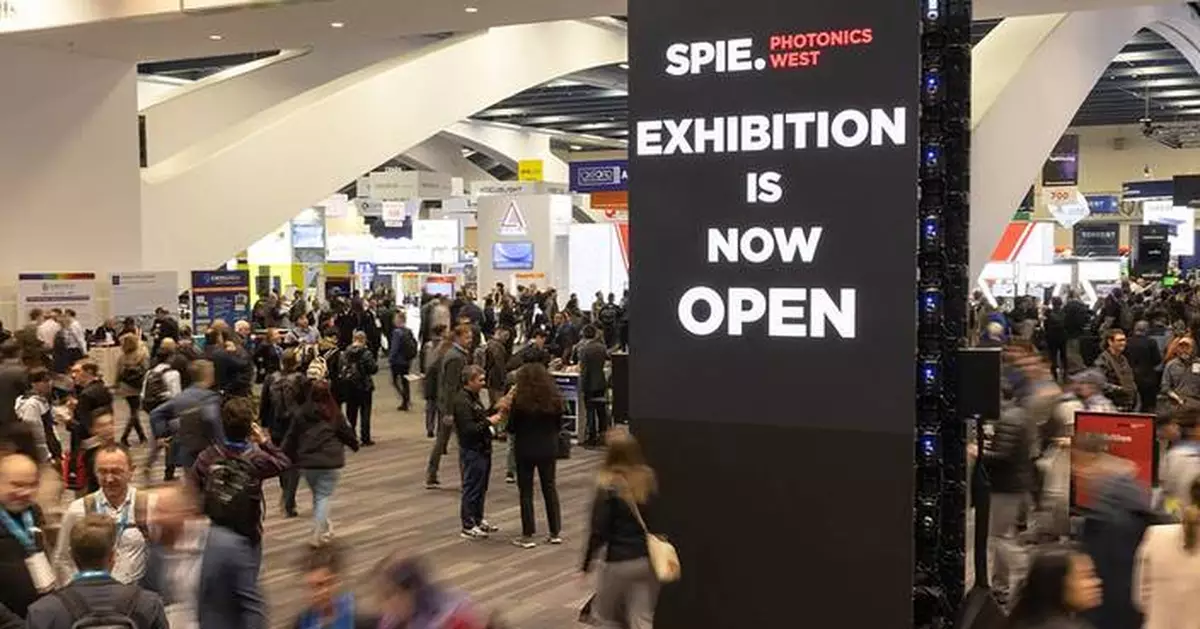
Registration has opened for SPIE Photonics West 2026, which will run from 17 to 22 January at San Francisco’s Moscone Center. The largest annual conference and exhibition in optics and photonics, Photonics West brings together researchers, innovators, engineers, and business leaders from across the globe for an exciting week of research sharing, thought leadership, and innovation-inspiring exchanges. With more than 100 technical conferences and 150 special events complementing the 1,200-plus companies at the exhibitions, the dynamic week will once again provide all attendees with an exhilarating experience that showcases the best of photonics.
This press release features multimedia. View the full release here: https://www.businesswire.com/news/home/20251001765437/en/
SPIE Photonics West will have six major application areas presenting the latest technologies and discoveries that utilize optics and photonics. BiOS highlights new research in biophotonics, biomedical optics, and imaging for diagnostics and therapeutics; LASE focuses on the laser industry and its diverse applications; OPTO covers optoelectronics, photonic materials, and optical devices; Quantum West features quantum 2.0 technologies from quantum sensing and information systems to quantum-enabled materials, devices, and biology; AR | VR | MR focuses on augmented, virtual, and mixed reality and the vital role that optics and photonics play in hardware and headset development; and, new in 2026, Vision Tech will highlight emerging vision technologies including AI, 3D sensing, hyperspectral and multispectral imaging, and embedded vision.
The five exhibitions during Photonics West feature more than 1,200 companies, with industry-focused presentations, product launches, live demonstrations, and cutting-edge technologies representing the diverse applications of a healthy and growing photonics industry.
The BiOS Expo, featuring new and transformative technologies for biomedical optics and healthcare applications, runs 17-18 January. The AR | VR | MR Expo — with a focus on headsets and hardware for XR applications — takes place on 20-22 January. The Quantum West Expo, 20-22 January, will showcase international providers of the latest quantum-enabled and -enabling technologies. The newest exhibition at Photonics West, Vision Tech Expo, which runs 20-22 January, will highlight innovative vision, sensing, and imaging technologies. And the Photonics West Exhibition, running 20-22 January, encompasses the latest products from laser manufacturers and suppliers as well as other innovative optics and photonics devices, components, systems, and services. A dynamic, informative SPIE industry program offers a critical understanding of the markets and applications shaping the photonics industry.
Complementing the wide-ranging SPIE industry program are the Quantum West Business Summit, addressing the latest efforts that are moving quantum technologies to market; the popular SPIE Prism Awards gala evening, honoring the best industry innovations; and the fast-paced SPIE Startup Challenge, highlighting new and emerging companies.
“We’re thrilled to welcome the global photonics community back to San Francisco for SPIE Photonics West 2026,” said SPIE Senior Director of Events and Exhibition Services Jenifer Dodds. “This is where the future of photonics takes center stage. Year after year, I’m amazed by the buzz on the show floor and the groundbreaking technologies our exhibitors unveil. From the latest in biomedical optics, to quantum breakthroughs and next-generation laser solutions, attendees will walk away energized, inspired, and equipped with new connections and opportunities to accelerate their work.”
An impressive lineup of plenary speakers will spotlight the latest innovative research breakthroughs throughout the week. Speakers include University of Colorado at Boulder’s Scott Diddams; Icahn School of Medicine at Mount Sinai’s HelenFeltovich; Cornell University’s Debdeep Jena; Max-Planck-Institut für Biochemie’s Ralf Jungmann; ICFO’s Frank Koppens; Oura’s Heli Koskimäki; University of Sydney’s Sergio Leon-Saval; McGill University’s Odile Liboiron-Ladouceur; Baylor College of Medicine’s Irina Larina; Stanford University’s Jonathan T.C. Liu; Aston University’s Igor Meglinski; OmniVision Technologies’ Bo Mu; Vision Markets’ Ronald Mueller; UCLA’s Prineha Narang; the United States Army SBIR|STTR’s Portfolio Manager, DEVCOM Army Research Lab, Strategic Partnerships Office’s Paul Reid; Boston University’s Michelle Sander; Teledyne FLIR’s Stephen Se; Morgridge Institute for Research’s Melissa Skala; European Space Agency’s Zoran Sodnik; RIKEN Institute’s Masao Takamoto; the United States Army SBIR|STTR Program Manager, Office of the Assistant Secretary of the Army for Acquisition, Logistics, and Technology’s Zeke Topolosky; the Howard Hughes Medical Institute Janelia Research Campus’ Meng Wang; University of Queensland’s Andrew White; Duke University’s Junjie Yao; and University of California at Davis’ Robert Zawadzki.
Alongside the conferences and exhibitions, Photonics West will also offer 60 technical courses, including 13 new courses on topics such as optical imaging signals using machine learning, 2D to 3D integrated circuits, Fourier optics, practical optics for working technicians, and — in alignment with the brand-new Vision Tech conference — camera noise sources. The wide-ranging educational program complements numerous professional development workshops and valuable networking opportunities for attendees.
New in 2026, the SPIE Career Hub will offer a dynamic suite of resources and opportunities designed to empower professionals at every career stage, including thematic networking, professional headshots, a job fair and job board, informative talks, career speed mentoring, mock interviews, resumé review, and more.
Co-located with Photonics West, SPIE will also host its third Global Business Forum on 19 January. This one-day event will focus on current and emerging trends across the international optics and photonics industry and markets and will provide actionable insights for business leaders, including the release of SPIE’s annual report on the state of the optics and photonics industry. Registration for the Global Business Forum is separate from Photonics West and will be available via the event website.
“Photonics West remains the premier event for the global optics and photonics community to present their research, hear about the latest innovations from the world’s top research labs, and to engage and network with peers,” said SPIE Senior Director of Science, Technology & Industry Programs Bob Hainsey. “With an insightful industry program, our new Vision Tech conference and exhibition, and a terrific slate of speakers from across the geographic and technical spectrum, Photonics West 2026 will once again be the most important event of the year on the optics and photonics calendar.”
For more information and to register, please visit https://spie.org/pw.
About SPIE
SPIE, the international society for optics and photonics, brings engineers, scientists, students, and business professionals together to advance light-based science and technology. The Society, founded in 1955, connects and engages with our global constituency through industry-leading conferences and exhibitions; publications of conference proceedings, books, and journals in the SPIE Digital Library; and career-building opportunities. Over the past five years, we have invested more than $25 million in the international optics community through our advocacy and support, including scholarships, educational resources, travel grants, endowed gifts, and public-policy development. www.spie.org.
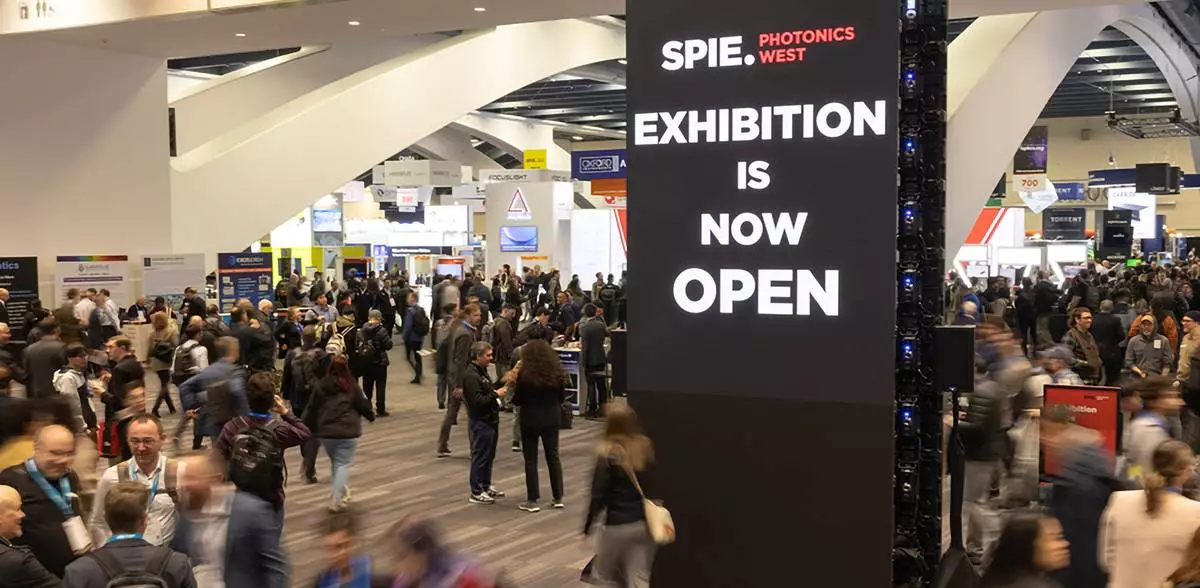
A bustling Moscone Center in San Francisco during 2025's SPIE Photonics West.