A powerful earthquake that struck Cebu province in the central Philippines on Tuesday night has killed at least 72 people and injured 200, the Philippines' Office of Civil Defense (OCD) said Wednesday.
As rescue operations continue, survivors in the worst-hit city of Bogo are confronting widespread power outages, destroyed homes, and overwhelmed medical facilities.
Many residents have been forced to sleep outdoors in tents or their vehicles, gathering in open spaces to collect relief supplies as darkness fell.
In affected neighborhoods, houses sustained severe damage as terraces collapsed, and wooden and sheet-metal structures were destroyed. Some residents remained in their damaged homes despite the danger.
Fear of aftershocks and structural damage forced the Cebu Provincial Hospital in Bogo to move bed-bound patients outside to receive treatment, including intravenous drips and oxygen, in the parking lot. The hospital is also functioning as a coordination center for rescue operations and casualty reporting.
Early on Wednesday, military vehicles carrying critical aid arrived in the affected areas of Cebu, delivering much-needed supplies to the devastated communities.

Philippines earthquake kills 72, leaves survivors facing blackouts, damaged homes
On the 55th anniversary of the restoration of the lawful seat of the People's Republic of China (PRC) in the United Nations (UN), China is highlighting its push for global civilizational dialogue, with the UN having adopted a China-proposed resolution designating June 10 as the International Day for Dialogue among Civilizations.
On October 25, 1971, the 26th Session of the UN General Assembly adopted Resolution 2758, restoring all the lawful rights of the PRC in the UN.
Today the UN has 193 member states, each with its own language, culture and history. Stephane Dujarric, spokesperson for the secretary-general, who has served the UN for more than 25 years, said understanding across those differences begins with giving every voice room to be heard.
"I've been in the UN now for almost for more than 25 years and I've learned so much. And what has helped me learn about different people and different cultures is listening, right? And it's taken me a long time to learn that listening is the most important thing. And what I've learned is to listen and to ensure that people who may not speak are given the space to speak," said Dujarric.
To deepen understanding among countries with different histories and cultures, China proposed the Global Civilization Initiative in 2023. A year later, it put forward a proposal at the UN to establish an international day for dialogue among civilizations.
In June 2024, the 78th Session of the UN General Assembly adopted by consensus the China-proposed resolution, designating June 10 as the International Day for Dialogue among Civilizations.
Fu Cong, China's permanent representative to the UN, recalled the scene inside the General Assembly hall when the resolution passed.
"What I remember vividly is the moment in the General Assembly hall when the president struck the gavel and announced the resolution had been adopted by consensus, and all member states burst into warm applause. This is a successful practice of China's implementation of the Global Civilization Initiative, and it fully demonstrates that Chinese concepts are increasingly expanding into international consensus, showing strong leadership and vitality," he said.
The resolution has since moved from paper to practice, with the first commemorative event for the International Day for Dialogue among Civilizations held at UN Headquarters in 2025.
On June 10 this year, China joined several permanent missions and partners, including the UN Alliance of Civilizations and the UN Educational, Scientific and Cultural Organization (UNESCO), in hosting another high-level event that drew nearly 300 representatives.
"China is working with all parties to actively implement the spirit of the relevant UN General Assembly resolution and strive to build platforms for equal dialogue among different civilizations. A series of colorful commemorative events at UN Headquarters and around the world are like trickling streams converging into a river of understanding and mutual trust," Fu said.
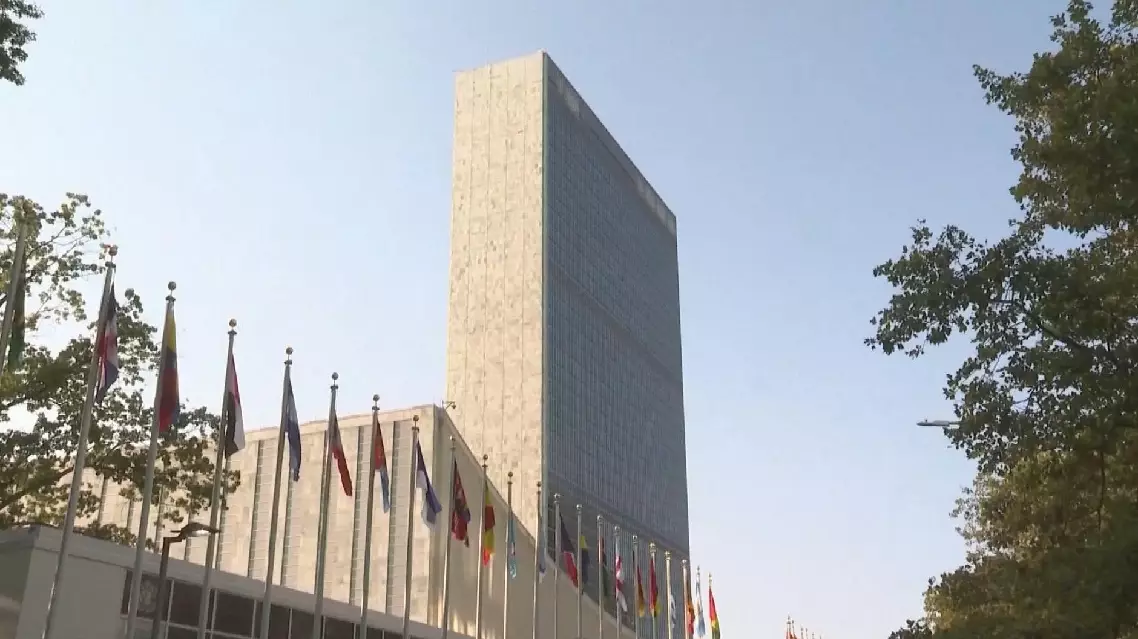
China committed to promoting dialogue among civilizations in UN