The International Committee of the Red Cross (ICRC) said in a statement on Wednesday that, due to the intensification of Israel's military operations in Gaza City in the northern Gaza Strip, the organization has temporarily closed its local office and relocated staff to other offices in the southern Gaza Strip to ensure their safety.
The statement said that civilians are being killed, forcibly displaced and made to endure dire conditions. First responders, including the Palestine Red Crescent Society and Civil Defense, have been working relentlessly to provide relief, "but their movement and ability to safely reach the civilian population has been severely constrained."
According to the statement, the ICRC will continue to support civilians in Gaza City through its offices in Deir al-Balah and Rafah whenever circumstances allow, and will return to Gaza City as soon as the situation improves.
The statement called for an immediate ceasefire and urged Israel to ensure that the basic needs of civilians are met. It stressed that medical and rescue personnel and their facilities must be respected and protected, and that humanitarian aid should be allowed to pass rapidly and without obstruction.
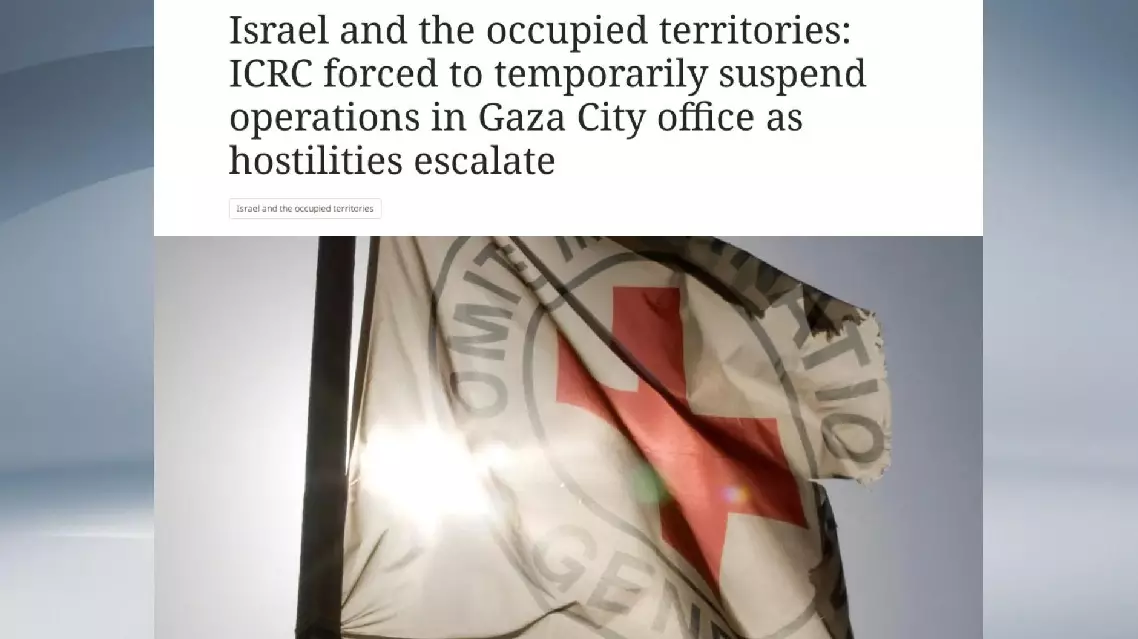
ICRC closes Gaza City office amid escalating Israeli military operations
China's first Hualong One nuclear power project in the northern part of the country saw completion of the dome installation for its No. 1 unit in Weihai City of Shandong Province on Saturday, marking a key step forward in the construction of nuclear power generation facilities in northern China, according to China Huaneng Group.
Dome installation is a major milestone in any nuclear power project construction, as the reactor's steel liner is a core safety barrier, ensuring the plant's integrity and airtightness to contain radioactivity. The No. 1 unit's dome is the top structure of the nuclear island's reactor steel liner, composed of 70 wall panels, weighing 227.9 tons and covering an area the size of four basketball courts.
"Hualong One is China's independently developed third-generation pressurized water reactor nuclear technology. It features a double-layer safety containment design and a dual active and passive safety system, with international-leading safety performance. The rate of domestically sourced key equipment exceeds 90 percent, and each unit has a 1.2 million kilowatt capacity. The first phase expansion project of the Shidao Bay has led to the first application of Hualong One in in northern China and provides valuable experience for similar projects going forward in northern China," said Chang Chongxi, general manager of Huaneng Shidao Bay Nuclear Power Development Co., Ltd.
The Huaneng Shidao Bay base is China's first major advanced nuclear power base to simultaneously apply homegrown third- and fourth-generation nuclear technologies. It is already home to the world's first fourth-generation high-temperature gas-cooled reactor demonstration plant, and will be expanded with four Hualong One pressurized water reactors in two phases. Upon completion, the base will be capable of generating 35 billion kilowatt-hours of electricity annually, enough to power 17 million three-person households for a year.
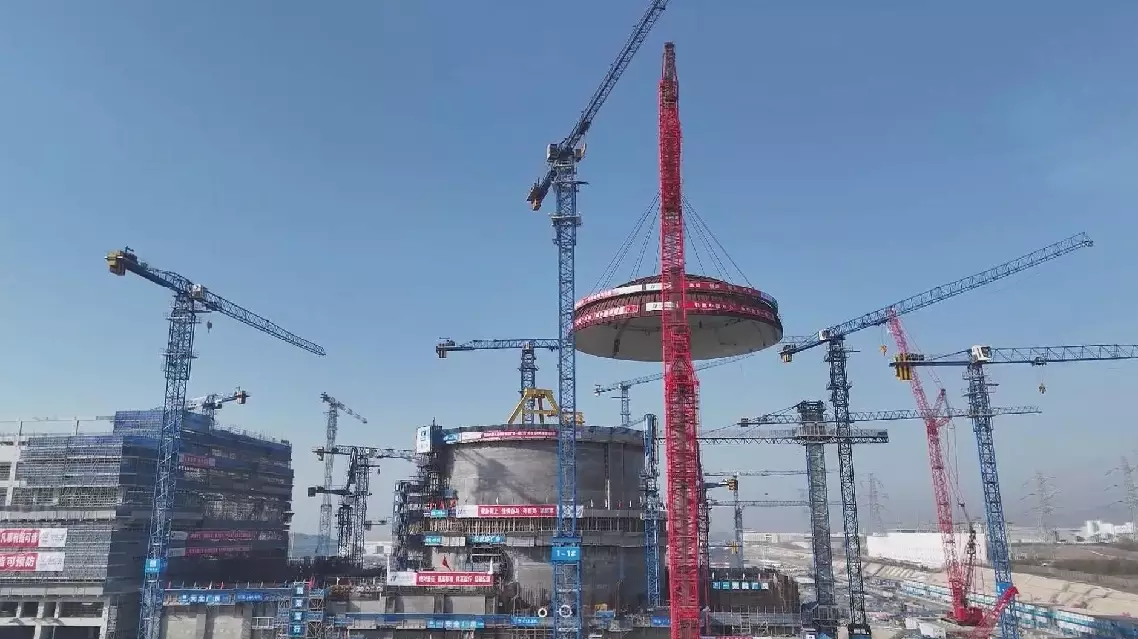
Shidao Bay nuclear plant of 35 billion kilowatt-hours annual output hits major construction milestone