KYOTO, Japan--(BUSINESS WIRE)--Oct 2, 2025--
teamLab Biovortex Kyoto, art collective teamLab’s permanent art museum, is set to open in Minami-ku, Kyoto, as part of the Kyoto Station Southeast Area Project on October 7, 2025.
This museum, located within walking distance of Kyoto Station, will be teamLab's largest exhibition in Japan, spanning over 10,000 square meters.
This press release features multimedia. View the full release here: https://www.businesswire.com/news/home/20251001418827/en/
teamLab, Megaliths © teamLab
The museum will feature more than 50 artworks, including Massless Amorphous Sculpture, an artwork that has never been exhibited in Japan, based on Environmental Phenomena, a concept that the environment which produces the various phenomena causes the artworks to exist. Other artworks include the newly unveiled Megaliths, Transient Abstract Life and Return, as well as Athletics Forest, a complex, multi-dimensional creative athletic space, and Future Park, a collaborative space for co-creation, which are both part of teamLab’s educational projects.
Tickets are now available on the official website.
https://www.teamlab.art/e/kyoto/
This project, a collaboration with several companies based in Kyoto and Osaka, involves establishing and operating a facility on city-owned land in the southeastern area of Kyoto Station. The complex aims to be a "creative hub for generating and disseminating new value," with plans including a complex cultural facility featuring teamLab's art museum and an art center, among other attractions.
Through this project, teamLab aims to support Kyoto City's vision for urban development in the Kyoto Station Southeast Area, centered around culture, art, and youth.
teamLab Biovortex Kyoto
Opening October 7th, 2025
21-5 Higashikujo Higashi-Iwamotocho, Minami-ku, Kyoto
Ticket Prices
Entrance Pass (Admission time is specified)
* This is a timed-entry ticket.
* Adult admission fees are based on a variable pricing system, so the price varies depending on the date and time. Please check the official website for details.
Adults (18 and above): JPY 3,400 ~
13–17 years: JPY 2,800
4–12 years: JPY 1,800
3 years and under: Free
Visitors with disabilities: 50% off the adult price
Flexible Pass (Admission time is not specified):
* This is a date-specific ticket. You can enter anytime during our open hours on your selected date.
Flexible Pass: JPY 12,000
Ticket
https://www.teamlab.art/e/kyoto/
Sponsorship
CHIEF, Klook, THIRDWAVE
For Media
Press Kit: https://www.dropbox.com/scl/fo/93lvrprtgnfgv7fetmdkh/AEWRAiT_cvPAO96U6t39MTo?rlkey=lthlq82v8w9ar71j3vyh3j6oq&st=b447so0p&dl=0
Official Website: https://www.teamlab.art/e/kyoto/

teamLab, Transient Abstract Life and Return © teamLab
ISLAMABAD (AP) — The United States and Iran began negotiations Saturday in Pakistan, days after a fragile, two-week ceasefire was announced, as the war that has killed thousands of people and shaken global markets entered its seventh week.
Iran's state-run news agency said three-party talks had begun after Iranian preconditions, including a reduction in Israeli strikes on southern Lebanon, were met, and after U.S. and Iranian officials met separately with Pakistani Prime Minister Shehbaz Sharif. There were no immediate further details, nor U.S. comment.
The U.S. delegation led by Vice President JD Vance and the Iranian delegation led by Parliament Speaker Mohammad Bagher Qalibaf were discussing how to advance the ceasefire already threatened by deep disagreements and Israel's continued attacks against the Iranian-backed Hezbollah in Lebanon.
“I cannot say whether they are sitting in the same room or in separate rooms, but talks have started and are progressing well,” said one Pakistani official with knowledge of the peace efforts, speaking on condition of anonymity because they were not authorized to talk to the media.
Iran doubled down on parts of its earlier proposal, with its delegation telling Iranian state television it had presented some of the plan’s ideas as “red lines” in meetings with Sharif. Those included compensation for damage caused by the U.S.-Israeli strikes that launched the war on Feb. 28 and releasing Iran’s frozen assets.
The war has killed at least 3,000 people in Iran, 1,953 in Lebanon, 23 in Israel and more than a dozen in Gulf Arab states. Iran's chokehold on the vital Strait of Hormuz has largely cut off the Persian Gulf and its oil and gas exports from the global economy, sending energy prices soaring. Attacks have caused lasting damage on infrastructure in half a dozen countries in the Middle East.
In Tehran, residents told The Associated Press they were skeptical yet hopeful about the talks after weeks of airstrikes left destruction across their country of some 93 million people. Some said the path to recovery would be long.
“Peace alone is not enough for our country, because we’ve been hit very hard, there have been huge costs,” 62-year-old Amir Razzai Far said.
Meanwhile, Israel pressed ahead with strikes in Lebanon after saying there is no ceasefire there. Iran and Pakistan have disagreed. The Lebanese state-run news agency reported at least three people killed. There were no reported strikes in the afternoon.
U.S. and Iranian officials claimed leverage and issued new demands and preconditions as talks approached. President Donald Trump posted repeatedly on social media leading up to Saturday, saying Iranian officials “have no cards” to negotiate with.
“The only reason they are alive today is to negotiate!” he wrote.
He accused Iran of using the Strait of Hormuz, a key artery for global energy supplies, for extortion, and told reporters Friday it would be opened “with or without them.”
On Saturday, Trump said on social media that the U.S. had begun “clearing out” the strait, but it was unclear whether he was referring to the reported use of mines there or Iran’s broader ability to control the area.
Islamabad was deserted as security forces sealed roads and authorities urged residents to stay inside.
Vance said Friday that the U.S. was optimistic about the talks, but warned: “If they’re going to try and play us, then they’re going to find that the negotiating team is not that receptive.”
Iranian Foreign Minister Abbas Araghchi had said Tehran was entering negotiations with “deep distrust” after strikes on Iran during previous rounds of talks. Araghchi, who is part of Iran’s delegation in Pakistan, said Saturday that his country was prepared to retaliate if attacked again.
Iran and the United States outlined competing proposals ahead of the talks reflecting the wide gulf on key issues.
Iran’s 10-point proposal called for a guaranteed end to the war and sought control over the Strait of Hormuz. It included ending fighting against Iran’s “regional allies," explicitly calling for a halt to Israeli strikes on Hezbollah.
The United States’ 15-point proposal includes restricting Iran’s nuclear program and reopening the strait.
Negotiations between Israel and Lebanon are expected to begin Tuesday in Washington, Lebanese President Joseph Aoun’s office said Friday, after Israel's surprise announcement authorizing talks despite the countries lack of official relations.
Israel wants the Lebanese government to assume responsibility for disarming Hezbollah, much like was envisaged in a November 2024 ceasefire. But it is unclear whether Lebanon's army can confiscate weapons from the militant group, which has survived efforts to curb its strength for decades.
Israel’s insistence that the ceasefire in Iran does not include a pause in its fighting with Hezbollah has threatened to sink the deal. The militant group joined the war in support of Iran in the opening days. Israel followed up with airstrikes and a ground invasion.
The day the Iran ceasefire deal was announced, Israel pounded Beirut with airstrikes, killing more than 300 people in the deadliest day in Lebanon since the war began, according to the country's Health Ministry.
Iran’s closure of the Strait of Hormuz has proved its biggest strategic advantage in the war. Commercial vessels have avoided the strait, effectively blocking the passage of oil, natural gas and fertilizer.
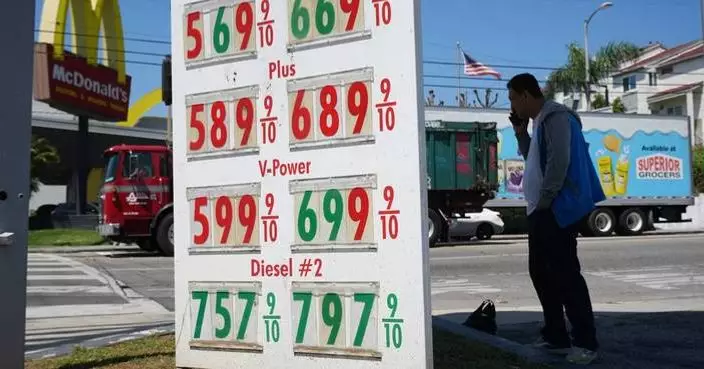
The spot price of Brent crude, the international standard for oil prices, was above $94 on Saturday, up more than 30% since the war started.
Before the conflict, around a fifth of the world’s traded oil typically passed through the strait on more than 100 ships a day. With the ceasefire in place, only 12 have been recorded transiting.
Iran has floated the idea of charging ships passing through as part of a peace deal, though the idea has been widely rejected by countries including the United States and Iran's neighbor Oman.
Metz reported from Jerusalem, Castillo from Beijing and Magdy from Cairo.
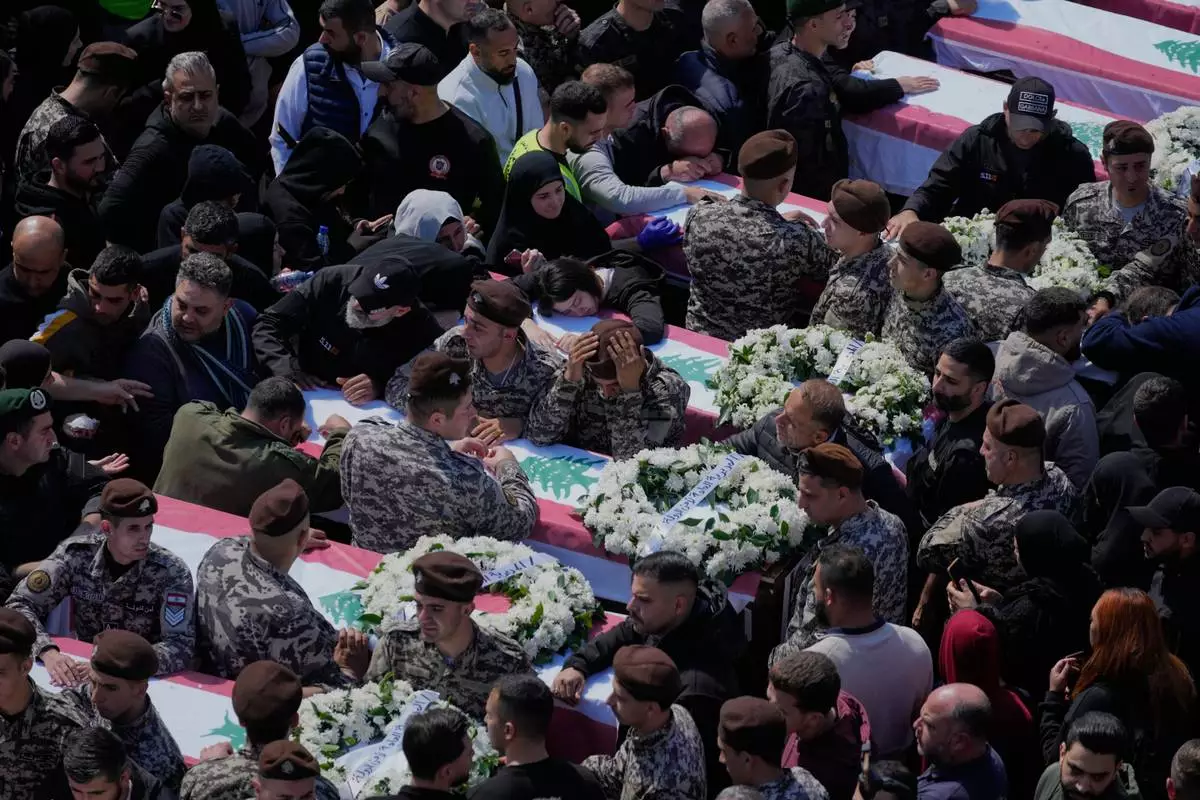
Colleagues mourn over the coffins during the funeral of 13 state security officers killed the previous day in an Israeli strike in the Lebanese coastal city of Sidon, Saturday, April 11, 2026. (AP Photo/Mohammed Zaatari)
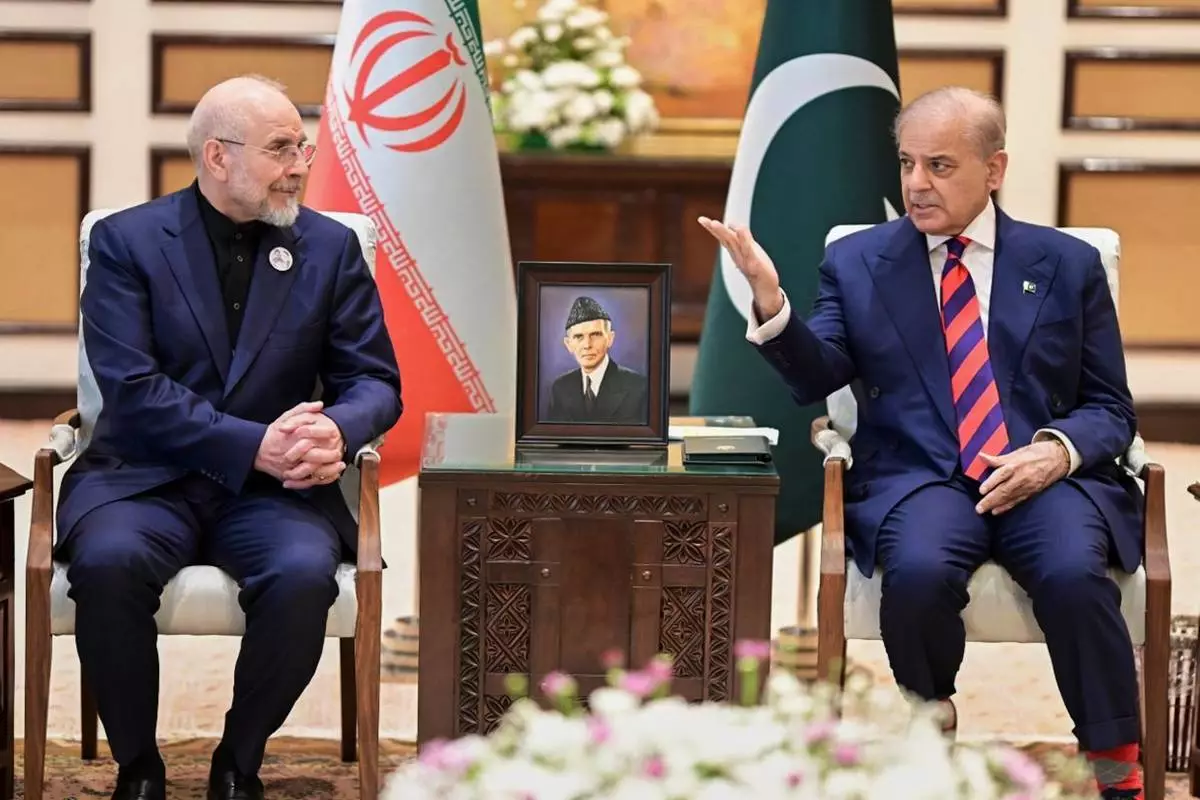
In this photo released by the Pakistan Prime Minister Office, Iran's Parliament Speaker Mohammad Bagher Ghalibaf, left, meets with hand with Pakistani Prime Minister Shehbaz Sharif, in Islamabad, Pakistan, Saturday, April 11, 2026 (Pakistan Prime Minister Office via AP)
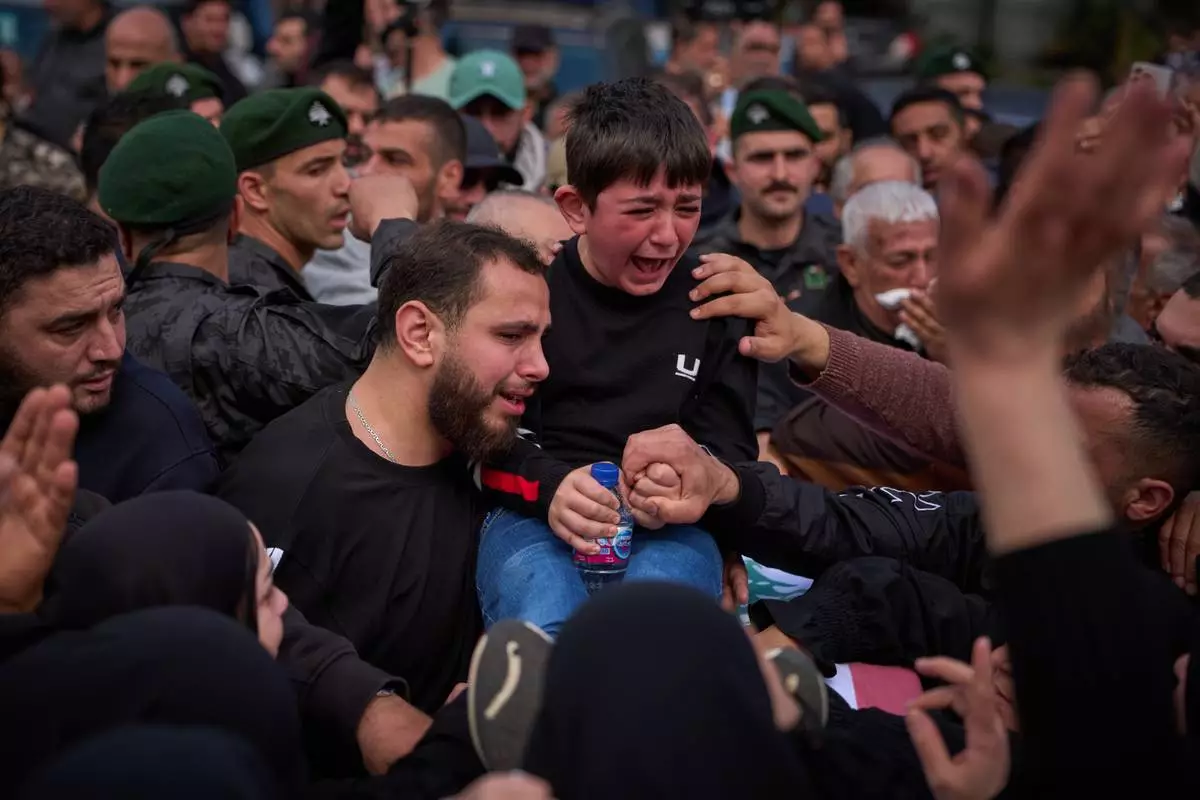
Mohammed, 8, weeps next to the coffin of his father, Hussein Makkah, during the funeral of 13 state security officers killed the previous day in an Israeli strike in Lebanon’s coastal city of Sidon, Lebanon, Saturday, April 11, 2026. (AP Photo/Emilio Morenatti)
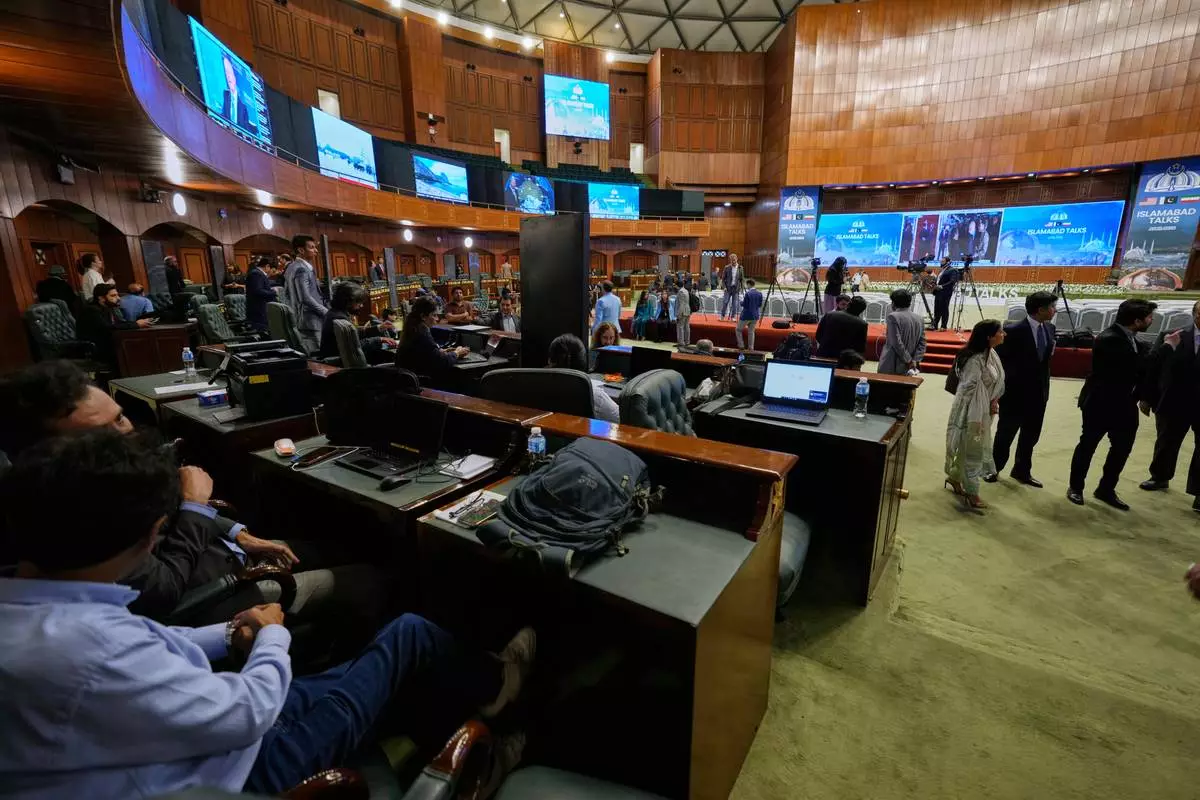
Members of the media work at a media center setup for the coverage of the US-Iran talks, in Islamabad, Pakistan, Saturday, April 11, 2026. (AP Photo/Anjum Naveed)
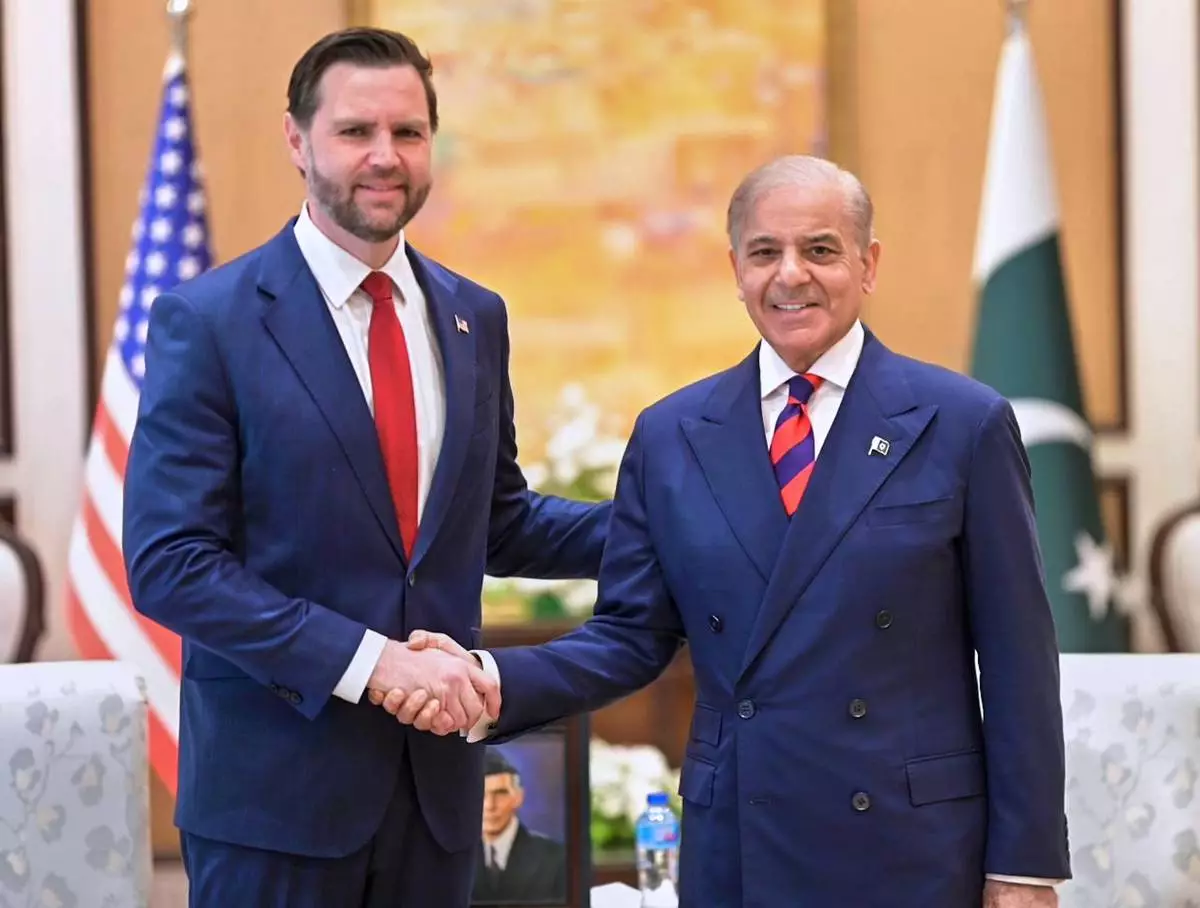
In this photo released by the Pakistan Prime Minister Office, U.S. Vice President JD Vance, left, shakes hand with Pakistani Prime Minister Shehbaz Sharif prior to their meeting, in Islamabad, Pakistan, Saturday, April 11, 2026 (Pakistan Prime Minister Office via AP)
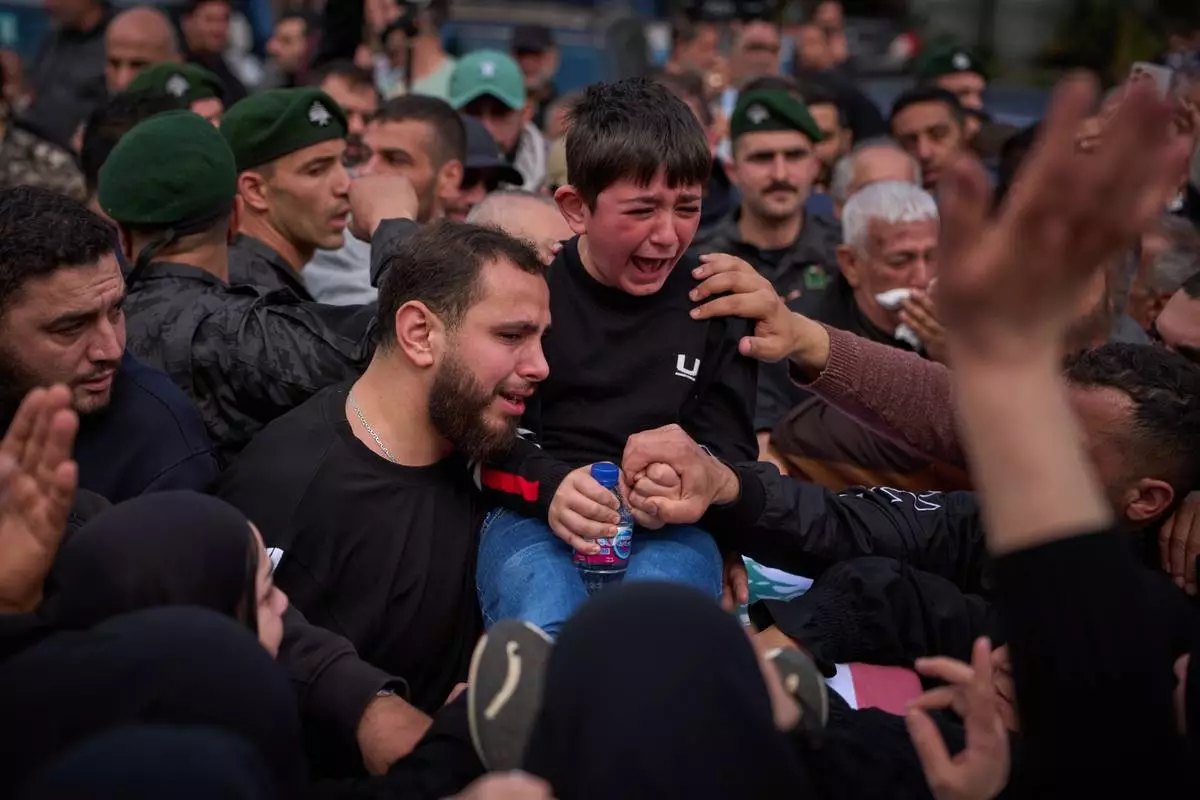
Mohammed, 8, weeps next to the coffin of his father, Hussein Makkah, during the funeral of 13 state security officers killed the previous day in an Israeli strike in Lebanon’s coastal city of Sidon, Lebanon, Saturday, April 11, 2026. (AP Photo/Emilio Morenatti)
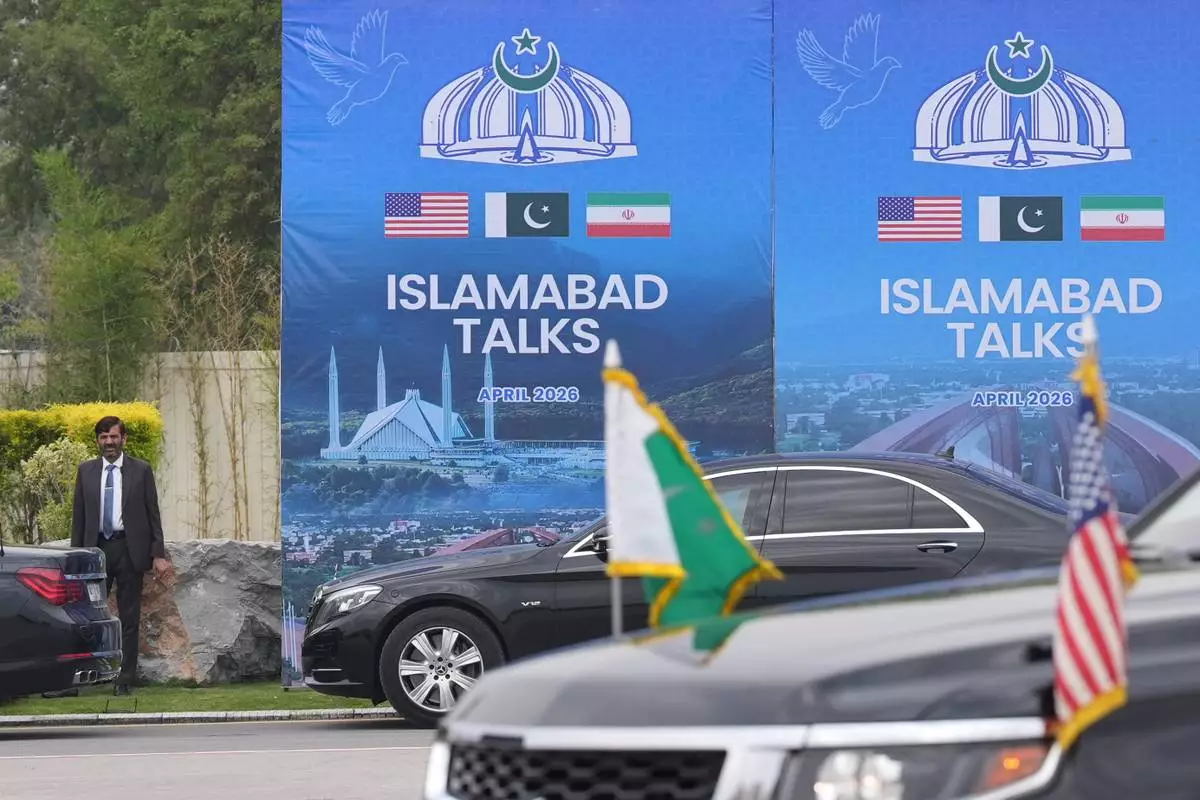
A Pakistani official is seen during the arrival of the U.S. Vice President JD Vance for talks with Iranian officials in Islamabad, Pakistan, Saturday, April 11, 2026. (AP Photo/Jacquelyn Martin, Pool)
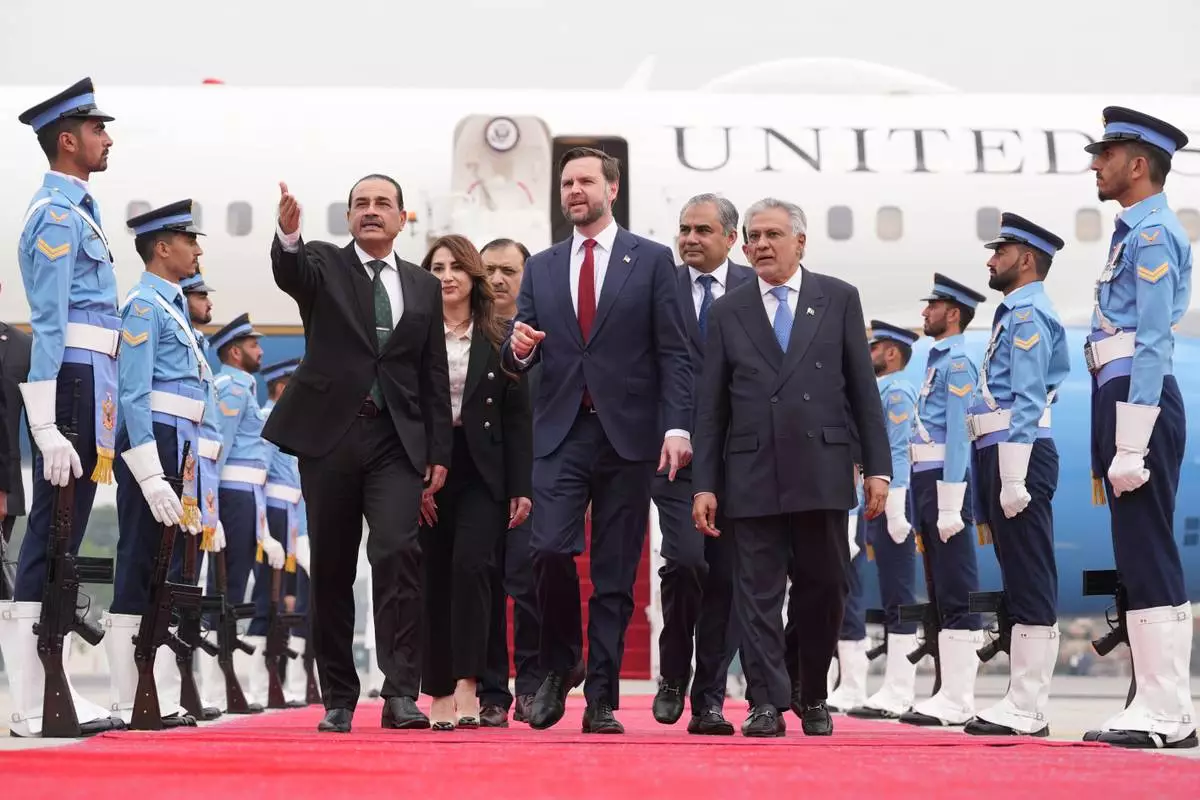
U.S. Vice President JD Vance, center, walks with Pakistan's Chief of Defence Forces and Chief of Army Staff Field Marshall Asim Munir, left, and Pakistani Deputy Prime Minister and Foreign Minister Mohammad Ishaq Dar after arriving for talks with Iranian officials in Islamabad, Pakistan, Saturday, April 11, 2026. (AP Photo/Jacquelyn Martin, Pool)
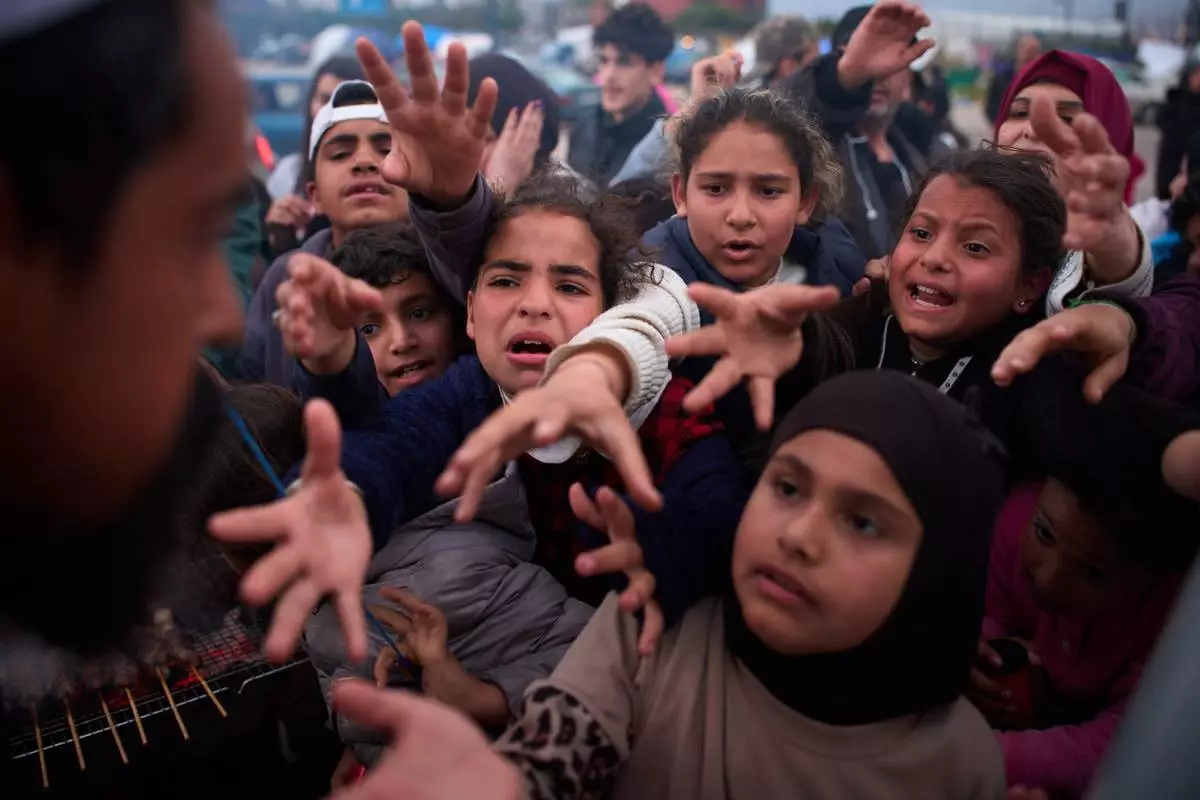
Displaced families extend their hands while waiting for donated food beside the tents they use as shelters after fleeing Israeli bombardment in southern Lebanon, in Beirut, Lebanon, Thursday, April 9, 2026. (AP Photo/Emilio Morenatti)
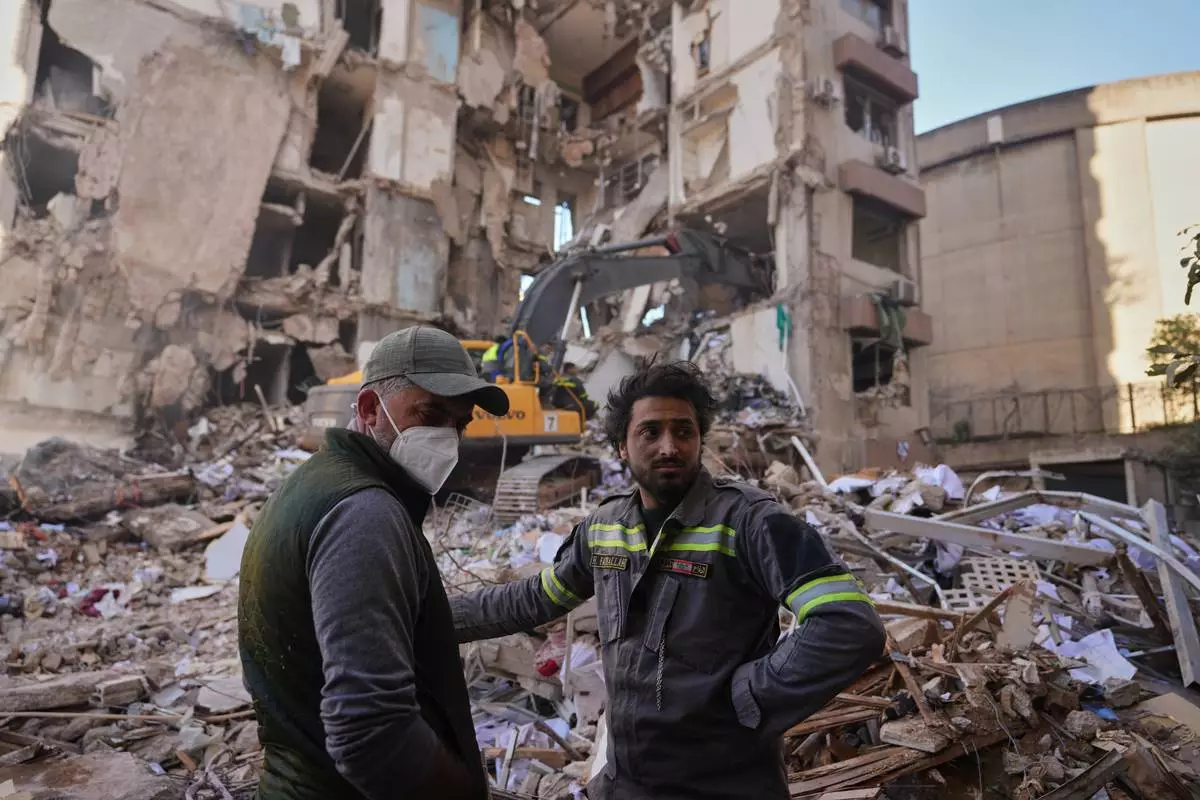
A Lebanese civil defense worker, right, stands with a resident at the site of a building destroyed in an Israeli airstrike a day earlier in central Beirut, Lebanon, Thursday, April 9, 2026. (AP Photo/Hassan Ammar)
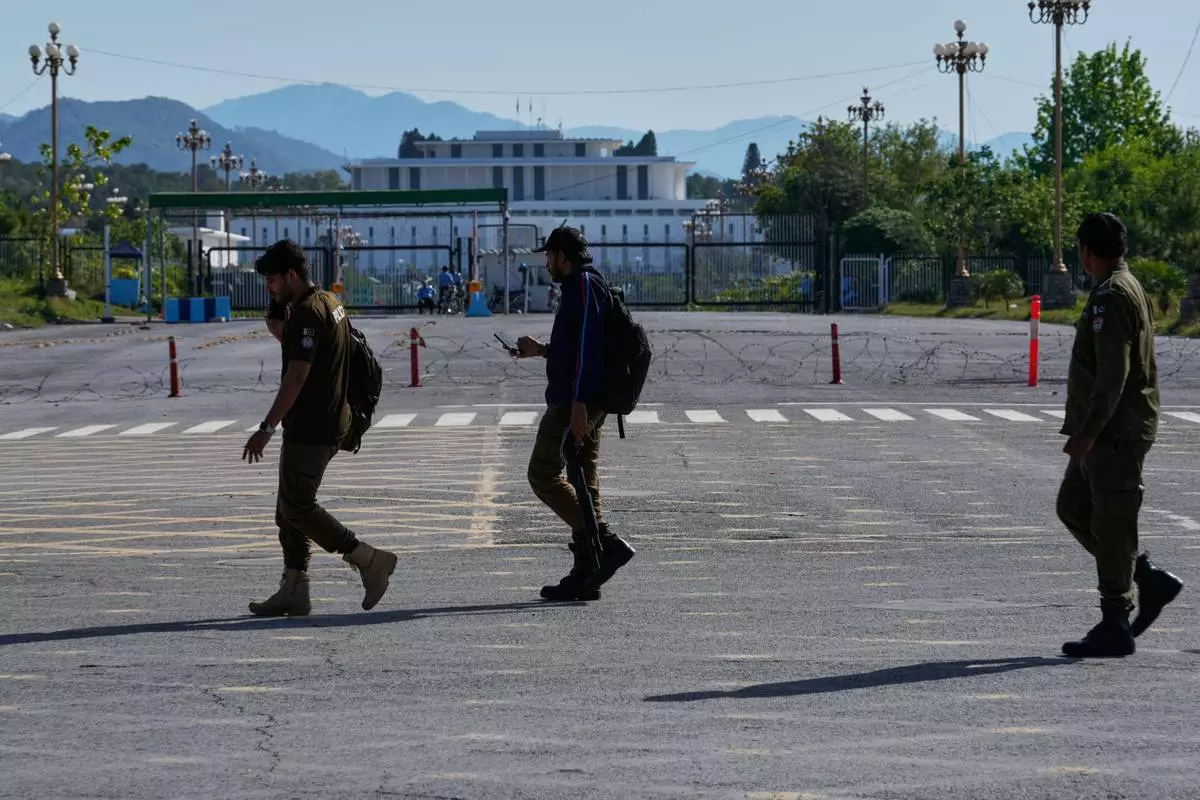
Police officers take position in Islamabad, Pakistan, to ensure security ahead of possible negotiations between Iran and the United States, Friday, April 10, 2026. (AP Photo/Anjum Naveed)
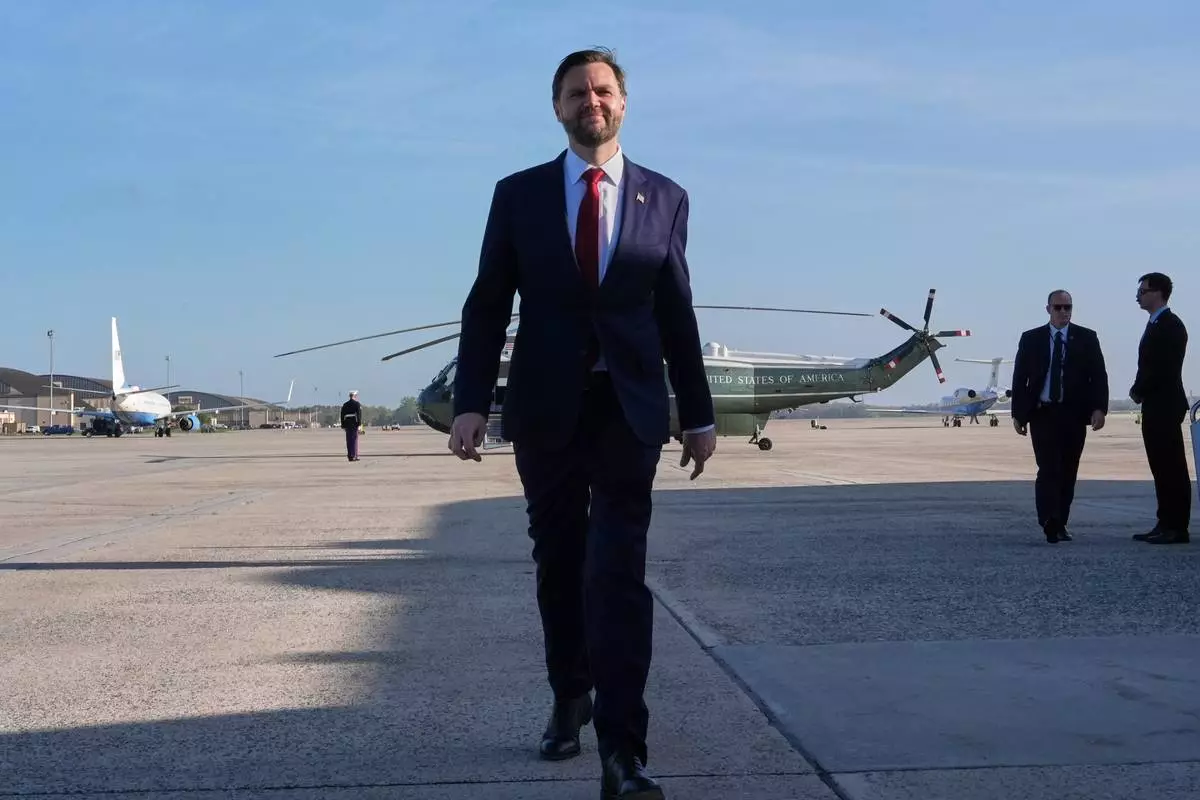
Vice President JD Vance walks to speak with the Press before boarding Air Force Two, Friday, April 10, 2026, at Joint Base Andrews, Md., for expected departure to Pakistan, for talks on Iran. (AP Photo/Jacquelyn Martin, pool)
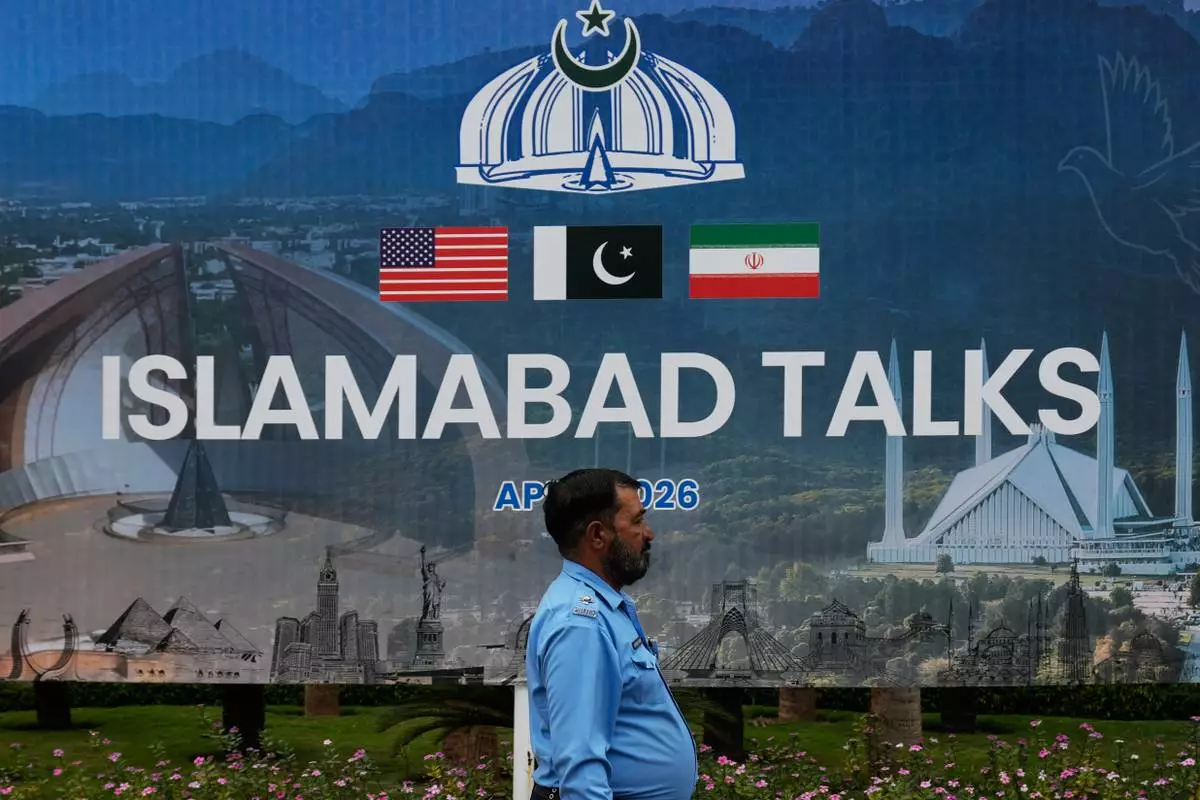
A police officer walks past a billboard regarding the United States and Iran negotiations, outside a media facilitation center in Islamabad, Pakistan, Saturday, April 11, 2026. (AP Photo/Anjum Naveed)