VATICAN CITY (AP) — The world’s oldest army has new uniforms.
But don’t worry: The Swiss Guards’ famed blue, yellow and red Renaissance-style billowy garb isn’t going anywhere. Rather, the pope’s army on Thursday unveiled an additional uniform for nonceremonial, formal occasions, such as a diplomatic reception or official dinner outside the Vatican walls.
Click to Gallery
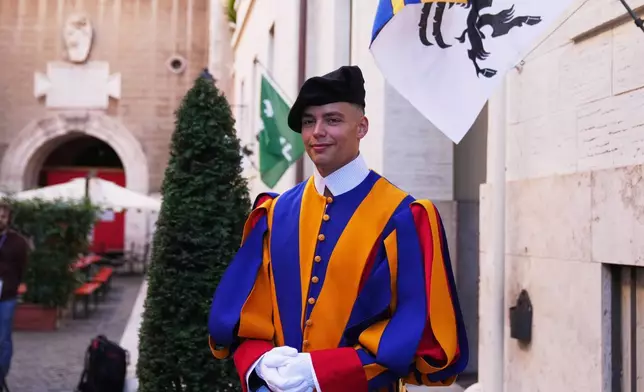
Dario, a new Swiss Guard poses for photos in the Swiss Guard Barracks at the Vatican, Thursday, Oct. 2, 2025. (AP Photo/Alessandra Tarantino)
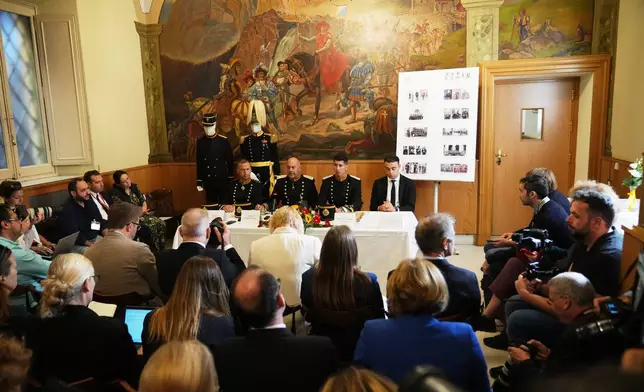
From left, Captain Lorenz Keusch, Colonel Christoph Graf, Lieutenant Colonel Loic Marc Rossier, and Vice-Corporal Eliah Cinotti attend a press conference on the occasion of the presentation of the Swiss Guard Mezza-Gala uniform in the Swiss Guard Barracks at the Vatican, Thursday, Oct. 2, 2025. (AP Photo/Alessandra Tarantino)
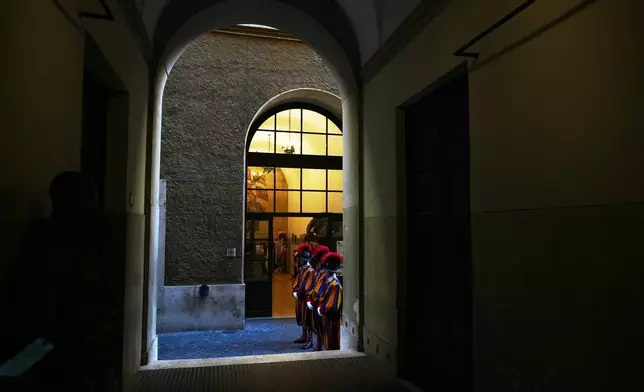
A view of the Swiss Guard Barracks at the Vatican, Thursday, Oct. 2, 2025. (AP Photo/Alessandra Tarantino)
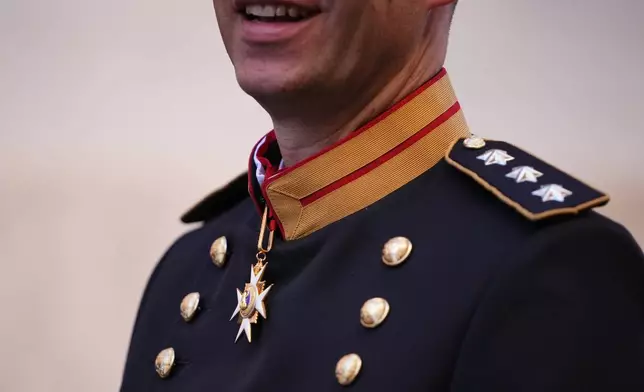
Captain Lorenz Keusch poses for reporters during the presentation of the Swiss Guard Mezza-Gala uniform in the Swiss Guard Barracks at the Vatican, Thursday, Oct. 2, 2025. (AP Photo/Alessandra Tarantino)
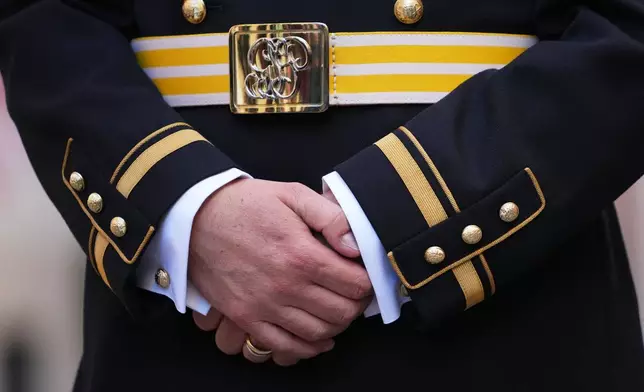
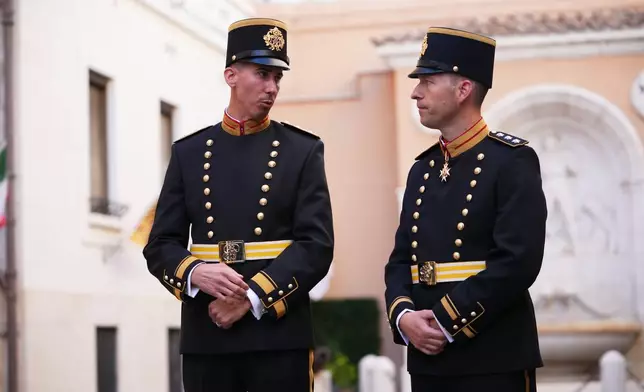
Lieutenant Colonel Loic Marc Rossier, left, and Captain Lorenz Keusch pose for reporters as they present the Swiss Guard Mezza-Gala uniform in the Swiss Guard Barracks at the Vatican, Thursday, Oct. 2, 2025. (AP Photo/Alessandra Tarantino)
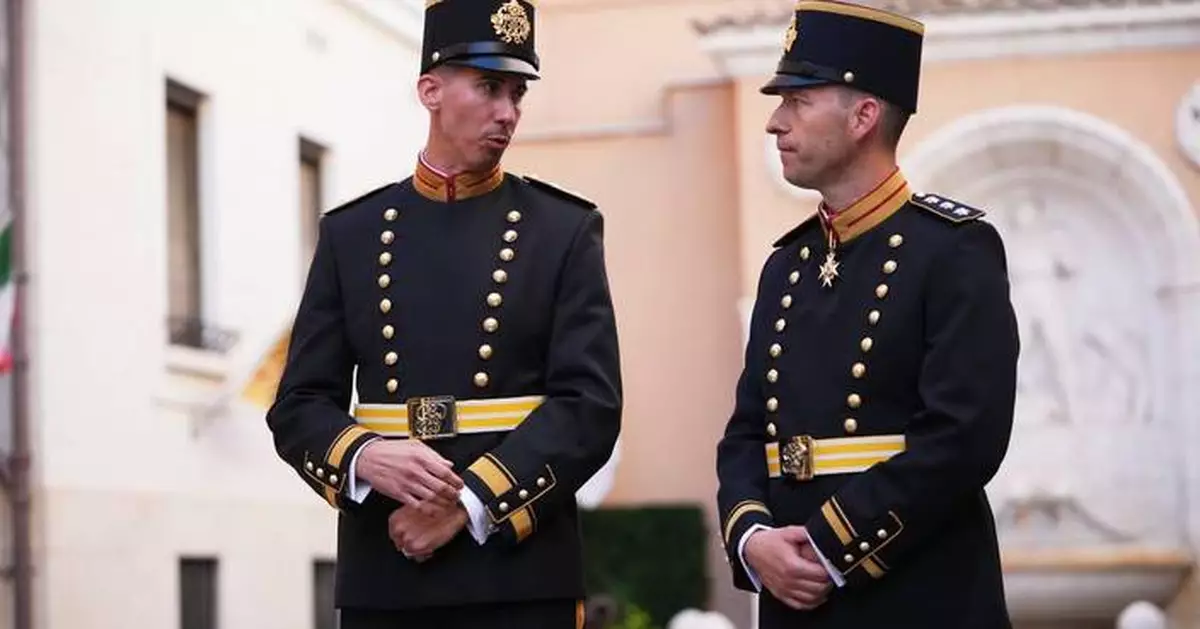
Col. Christoph Graf, the Swiss Guards commander, donned the new duds at a presentation ceremony in the army's barracks ahead of the annual swearing-in ceremony Saturday of 27 new recruits.
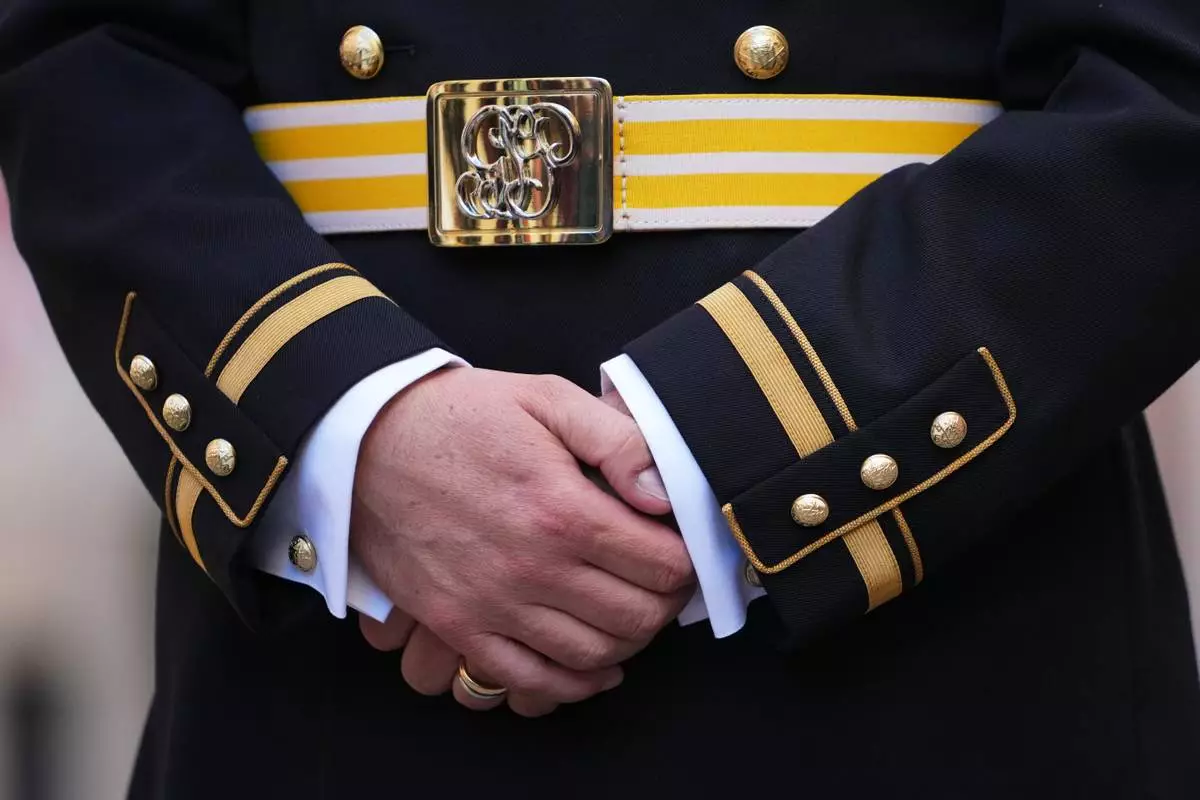
Graf explained that the new black wool uniform, with two rows of buttons, a yellow and white belt and Mao-style collar, is actually a faithful rendition of a centuries-old suit worn by Swiss Guard officials that went out of use in 1976.
The corps tried an update a decade ago, didn’t like it, and commissioned a more faithful version that will get its first official use at a gala reception Friday on the eve of the swearing-in. An unnamed benefactor footed the bill for the uniforms, worn by just the senior ranks, which cost around 2,000 euros (2,300 dollars) apiece, officials said.
The corps, which historians consider the oldest standing army in the world, was founded in 1506 by Pope Giulio II. Tradition has it that he was so impressed by the bravery of Swiss mercenaries that he asked them to defend the Vatican. Ever since, for more than 500 years, Switzerland has been supplying soldiers to the Vatican to staff an army of 135 men.
Usually, the swearing-in ceremony is held on or near May 6 to commemorate the day in 1527 when 147 guardsmen died while protecting Pope Clement VII during the Sack of Rome.
This year’s ceremony was postponed following the death in April of Pope Francis and the conclave that elected Pope Leo XIV.
The new uniform is one of several outfits the guards wear. The most famous is the “Gala Uniform,” which despite popular legend was not designed by Michelangelo. Rather, it was designed by Commander Jules Repond in the early 1900s and is based on the colors of the Medici family, according to the corps' website.
Visitors to the Vatican will also see guards policing the city state's main entrances in navy uniforms topped with a beret.
This year’s ceremony comes as plans are progressing to renovate the aging barracks for the guards to make better use of the space and increase the number of dormitory-style rooms that could, in theory, one day allow for female recruits.
There are currently no such plans, but the barracks’ cramped housing has long been cited as one of the reasons why women couldn’t be admitted. The new architectural plans call for a flexible configuration of the buildings that could, if the pope were to approve it one day, allow for a female section, said Jean-Pierre Roth, president of the foundation created in 2016 to raise money for the renovation of the barracks.
“This is not our decision,” he stressed. “The only thing we have done is that when everything is ready, if we want a special section for females, it’s possible, no problem.”
The renovation process is complicated given Vatican City is a UNESCO World Heritage Site, which means any renovation must be approved by the U.N. body’s technical experts. The Vatican received the first green light to its architectural plans in 2023 and is expected to present revised plans in the coming weeks, Roth said.
Roth, the former president of the Swiss National Bank, said 48 million euros had so far been raised in cash and financial pledges, but that construction costs in Rome had increased significantly since the first budgets were prepared and that a new fundraising appeal would be launched in 2026.
Originally, there were hopes to unveil the new barracks in 2027, the 500th anniversary of the Sack of Rome. Now, the hopes are that the construction can begin in 2027, Roth said.
The criteria for entry into the army are strict: Guards must be Swiss, male, practicing Catholics, aged 19-30, at least 1.74-meters (5-foot-7-inch) tall and have an “impeccable reputation. They must be in good health, have a high school diploma or equivalent and have completed Swiss military training.
They need a driver’s license and be willing to serve for at least 26 months. Most guards are unmarried, but recruits 25 and older are allowed to marry if they have already served for five years and pledge to stay on for another three.
One of the new recruits being sworn-in on Saturday, identified by the corps by his first name, Dario, for security reasons, said he grew up knowing of the guards because his father had served from 1989-1991, and decided to join himself after attending a friend's swearing-in ceremony in 2023.
Dario started in January, and has already been on duty during one of the most momentous years in recent Vatican history: A Jubilee year that brought millions of pilgrims to Rome, and the death of one pope and the election of another.
“What we have experienced now in this one year alone, other Swiss Guards haven't experienced in their whole service time,” he said. Speaking in the barracks' courtyard, Dario said there were a lot of hours of extra work, but that's what the job is all about.
“You are here to serve, not to go on vacation in Rome,” he said.
Associated Press religion coverage receives support through the AP’s collaboration with The Conversation US, with funding from Lilly Endowment Inc. The AP is solely responsible for this content.
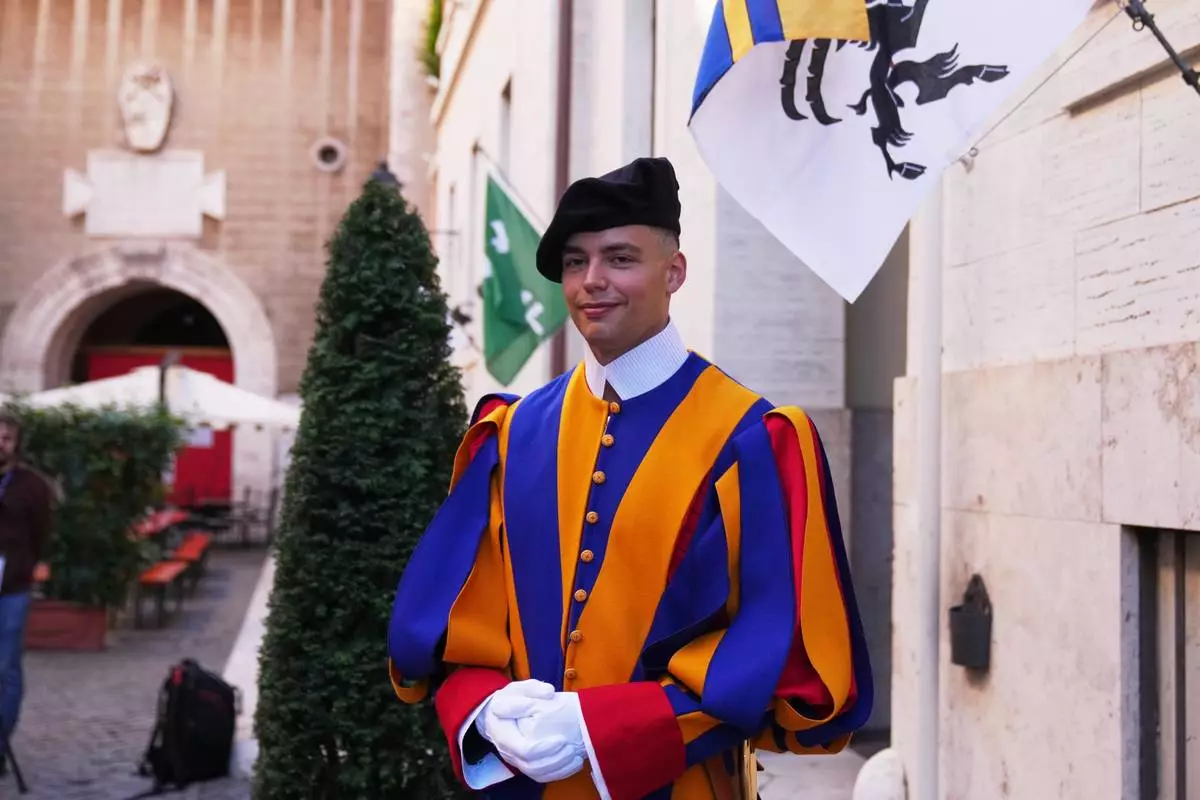
Dario, a new Swiss Guard poses for photos in the Swiss Guard Barracks at the Vatican, Thursday, Oct. 2, 2025. (AP Photo/Alessandra Tarantino)
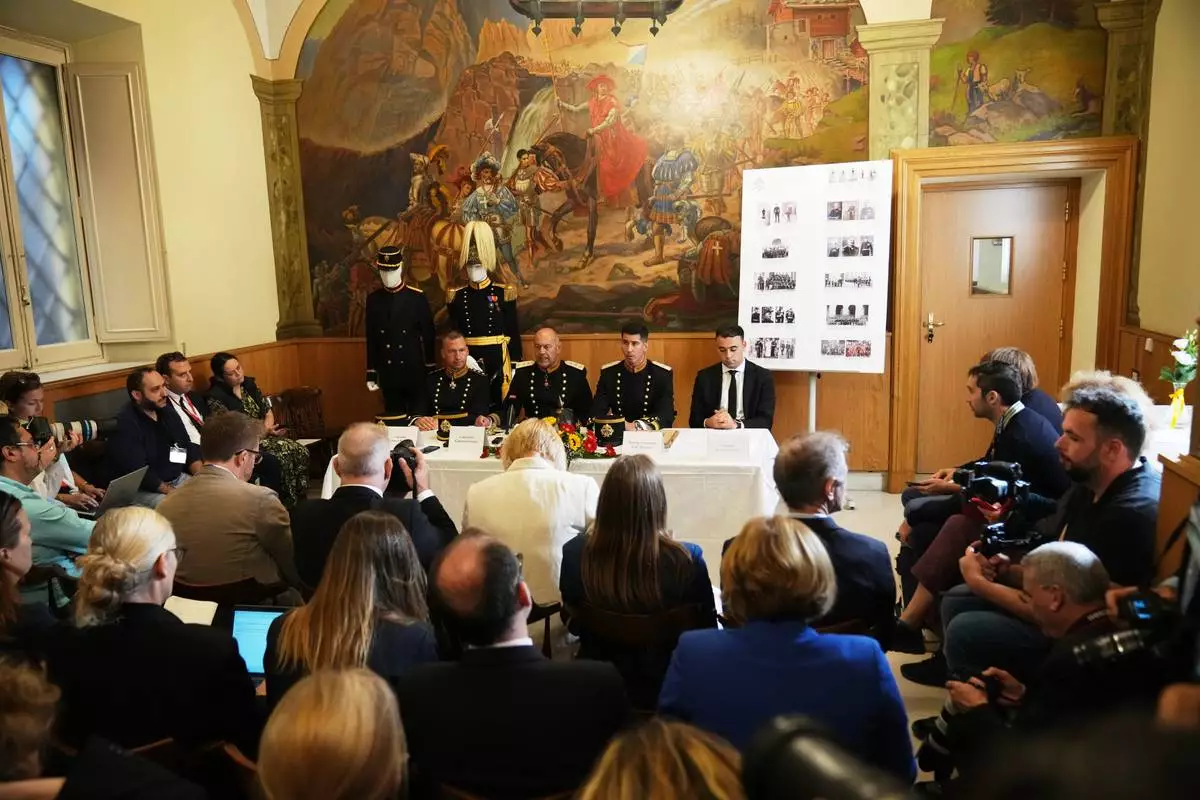
From left, Captain Lorenz Keusch, Colonel Christoph Graf, Lieutenant Colonel Loic Marc Rossier, and Vice-Corporal Eliah Cinotti attend a press conference on the occasion of the presentation of the Swiss Guard Mezza-Gala uniform in the Swiss Guard Barracks at the Vatican, Thursday, Oct. 2, 2025. (AP Photo/Alessandra Tarantino)
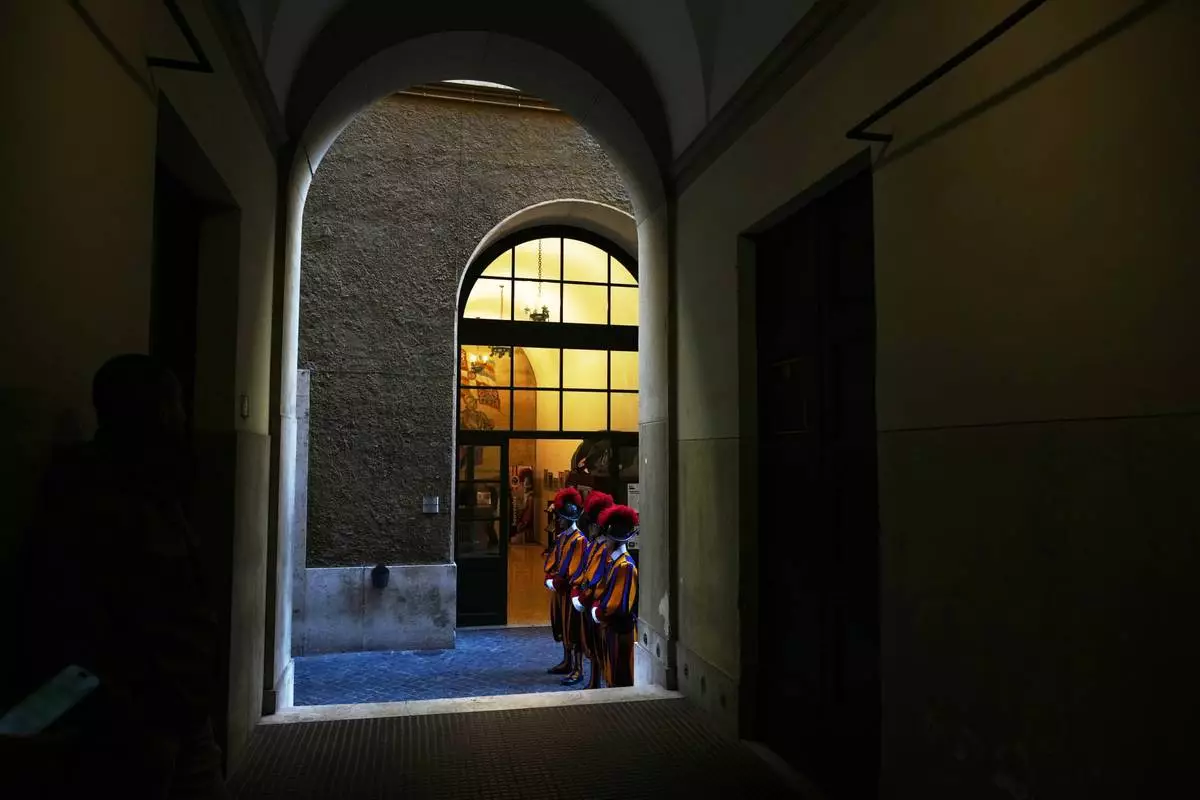
A view of the Swiss Guard Barracks at the Vatican, Thursday, Oct. 2, 2025. (AP Photo/Alessandra Tarantino)
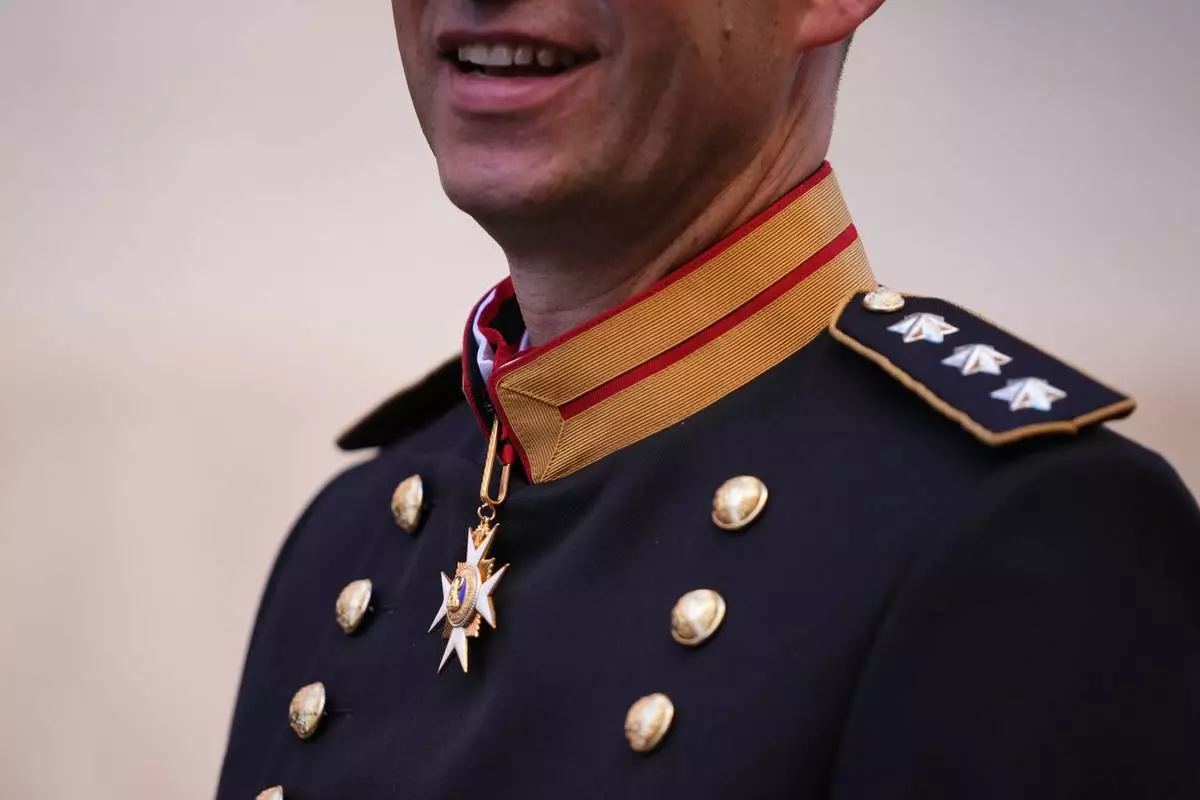
Captain Lorenz Keusch poses for reporters during the presentation of the Swiss Guard Mezza-Gala uniform in the Swiss Guard Barracks at the Vatican, Thursday, Oct. 2, 2025. (AP Photo/Alessandra Tarantino)
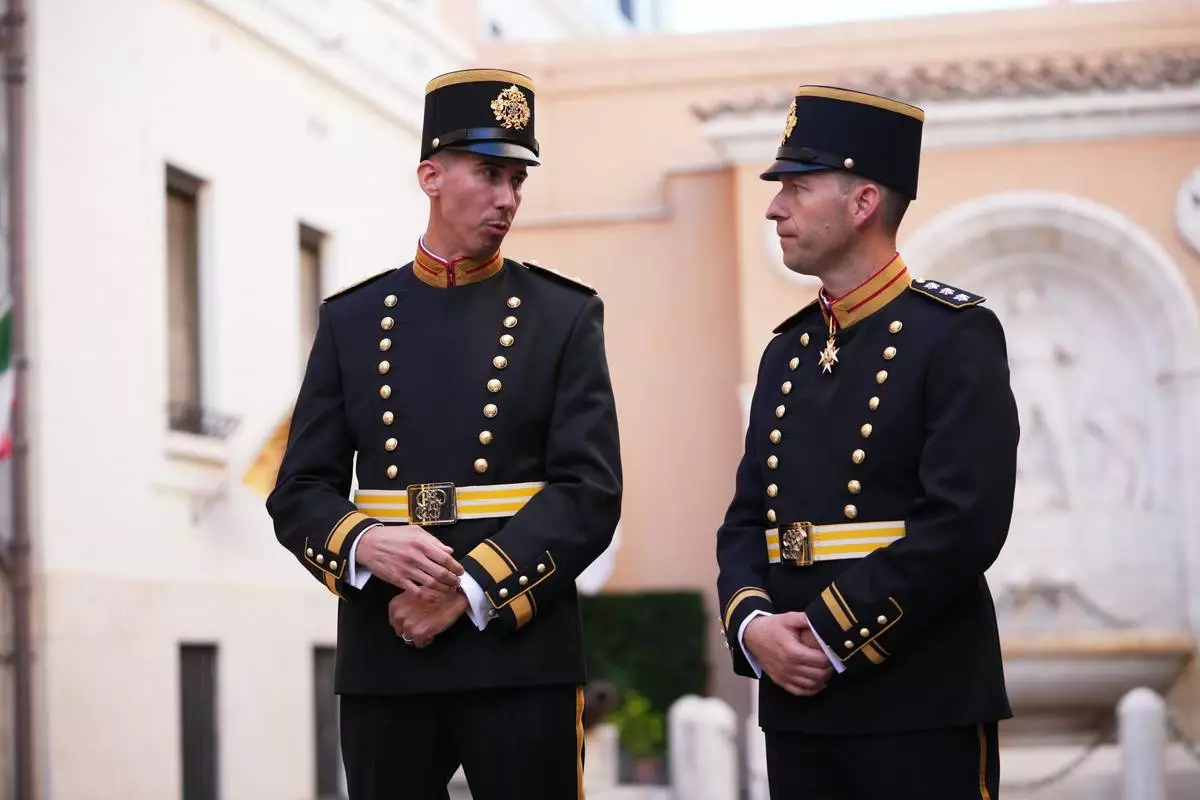
Lieutenant Colonel Loic Marc Rossier, left, and Captain Lorenz Keusch pose for reporters as they present the Swiss Guard Mezza-Gala uniform in the Swiss Guard Barracks at the Vatican, Thursday, Oct. 2, 2025. (AP Photo/Alessandra Tarantino)
VATICAN CITY (AP) — Pope Leo XIV made a historic apology on Monday for the Holy See's role in legitimizing slavery and for having failed to condemn it for centuries, calling the Vatican’s record a “wound in Christian memory.”
Past popes have apologized for Christians’ involvement in the trans-Atlantic slave trade. But no pope had ever publicly acknowledged, much less apologized for, the role that past popes played in giving European sovereigns explicit authority to subjugate and enslave “infidels.”
History’s first U.S.-born pope, whose family history includes both enslaved people and slave owners, delivered the apology in his first encyclical, “Magnifica Humanitas,” (Magnificent Humanity), which was released Monday.
The sweeping manifesto is about safeguarding humanity in an era of increasing reliance on artificial intelligence. Leo raised the slave trade in relation to what he called the new forms of slavery and colonialism that the digital revolution is fueling.
Black American Catholics, activists and scholars have long called for the Holy See to atone for its role in the colonial-era trade in human beings, beyond generic apologies for the involvement of individual Christians.
“It is impossible not to feel deep sorrow when contemplating the immense suffering and humiliation endured by so many in stark contrast to their immeasurable dignity as persons infinitely loved by the Lord,” Leo wrote. “For this, in the name of the church, I sincerely ask for pardon.”
Shannen Dee Williams, historian at the University of Dayton and author of the 2022 history of American Black Catholic nuns, “Subversive Habits,” welcomed the apology as a "monumental step toward the kind of essential truth-telling and reparation that many Catholics have prayed and worked to witness.”
“The Catholic Church has never been an innocent bystander in the history of white supremacy," said Williams. “Black Catholics have waited a long time to hear the Vatican speak honestly about the church’s leading roles in the trans-Atlantic slave trade and chattel slavery--and thus by extension the enduring systems of anti-Black racism in the world today.”
The Vatican has insisted that it always upheld the dignity of all human beings as children of God. But a series of 15th-century directives from the Vatican authorized Portuguese sovereigns to conquer Africa and the Americas and enslave non-Christians.
In 1452, for example, Pope Nicholas V issued the papal bull Dum Diversas, which gave the Portuguese king and his successors the right “to invade, conquer, fight and subjugate” and take all possessions — including land — of “Saracens, and pagans, and other infidels, and enemies of the name of Christ” anywhere.
The bull also gave the Portuguese permission “to reduce their persons to perpetual slavery.”
That bull and another issued three years later, Romanus Pontifex, formed the basis of the Doctrine of Discovery, the theory that legitimized the colonial-era seizure of land in Africa and the Americas.
Nicholas V’s permissions to the Portuguese were confirmed or renewed by Pope Callixtus III in 1456, Pope Sixtus IV in 1481 and Pope Leo X in 1514, according to the Rev. Christopher J. Kellerman, a Jesuit priest and author of “All Oppression Shall Cease: A History of Slavery, Abolitionism, and the Catholic Church.”
Spanish kings received the rights for the Americas.
In 2023, the Vatican formally repudiated the Doctrine of Discovery, but it never formally rescinded, abrogated or rejected the bulls themselves. The Vatican insists that a later bull, Sublimis Deus in 1537, reaffirmed that Indigenous peoples shouldn’t be deprived of their liberty or the possession of their property, and weren't to be enslaved.
In his encyclical, Leo recalled that his namesake, Pope Leo XIII, was the first pope to explicitly condemn slavery in 1888, long after many countries had abolished it. Before that, in antiquity and the Middle Ages, church institutions and even popes — Gregory the Great — had slaves, Kellerman said.
In acknowledging the 15th century papal bulls, Leo wrote in his encyclical: “Already in the early modern period, the Apostolic See of Rome, responding to the requests of sovereigns, intervened several times in order to regulate and legitimize forms of subjugation, and, in certain cases, including the enslavement of ‘infidels.’”
Leo said it wasn't possible to judge the morality of the decisions with today’s standards.
“Yet neither can we deny or diminish the delay with which both society and the church came to denounce the scourge of slavery,” he said.
The pope said that the church has long affirmed the dignity of every human being as the basis of its doctrine, “even if it took eighteen centuries for its full incompatibility with slavery to be explicitly recognized.”
“This constitutes a wound in Christian memory, one from which we cannot consider ourselves detached,” he said.
Leo said that the church must firmly condemn all forms of trafficking related to the digital technological revolution “if we want to avoid the need to ask for pardon again in the future for having failed to respect the treasure of human dignity that is required by our faith.”
Anthea Butler, senior fellow at the Koch History Center, Oxford University, said Leo needed to acknowledge and atone for the church's complicity in historic slavery if he wanted to credibly “speak to the current issues of technological enslavement.”
“For descendants of enslaved persons, this is once again a much needed apology from the pope,” said Butler, who is Black.
Kellerman, the scholar, welcomed Leo’s apology but said more needs to be done to further acknowledge how the Catholic Church legitimized and expanded slavery.
“Pope Leo has strengthened the moral credibility of the church with this admission and apology today,” he told The Associated Press. “Hopefully a future document will explain in more detail the church’s involvement with slaveholding. As a scholar I have some quibbles with the wording, but this is a truly remarkable moment.”
During a 1985 visit to Cameroon, St. John Paul II asked forgiveness of Africans for the slave trade on behalf of Christians who participated in it, but not the popes. In a 1992 visit to Goree Island, Senegal, which was the largest slave-trading center in West Africa, he denounced the injustice of slavery and called it a “tragedy of a civilization that called itself Christian.”
According to genealogical research published by Henry Louis Gates Jr., 17 of Leo’s American ancestors were Black, listed in census records as mulatto, Black, Creole or a free person of color. His family tree includes slaveholders and enslaved people, Gates wrote in The New York Times.
During a visit to Angola last month, Leo prayed at a Catholic shrine at the site of an important hub of the African slave trade during Portugal’s colonial rule. While at the Sanctuary of Mama Muxima, Leo recalled the “sorrow and great suffering” Angolans endured for centuries, but he didn’t refer specifically to slavery.
Winfield reported from Middletown, Connecticut.
Associated Press religion coverage receives support through the AP’s collaboration with The Conversation US, with funding from Lilly Endowment Inc. The AP is solely responsible for this content.
Pope Leo XIV speaks during the presentation of his first encyclical, "Magnifica humanitas: On Safeguarding the Human Person in the Time of Artificial Intelligence," at the Vatican, Monday, May 25, 2026. (AP Photo/Alessandra Tarantino)
Pope Leo XIV listens to Cardinal Víctor Manuel Fernández, prefect of the Dicastery for the Doctrine of the Faith, right, during the presentation of Pope Leo XIV's first encyclical, "Magnifica humanitas: On Safeguarding the Human Person in the Time of Artificial Intelligence," at the Vatican, Monday, May 25, 2026. (AP Photo/Alessandra Tarantino)
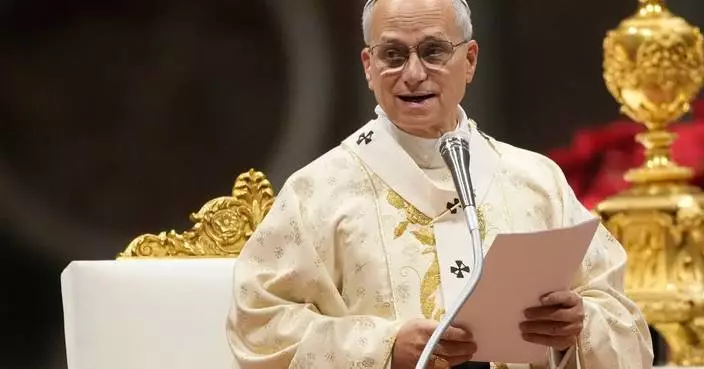
Pope Leo XIV, left, attends the presentation of his first encyclical, "Magnifica humanitas: On Safeguarding the Human Person in the Time of Artificial Intelligence," at the Vatican, Monday, May 25, 2026. (AP Photo/Alessandra Tarantino)
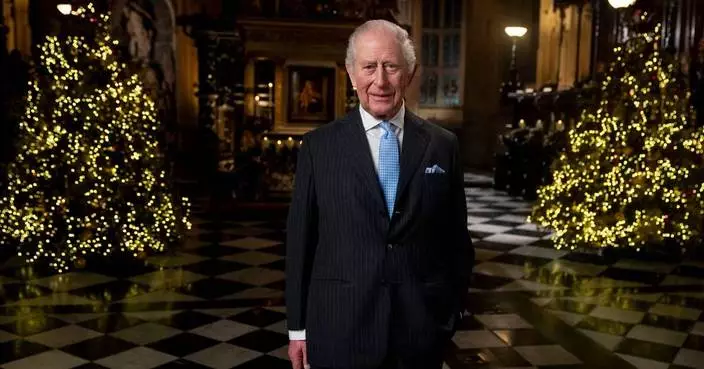
Pope Leo XIV, left, arrives with Vatican Secretary of State Cardinal Pietro Parolin for the presentation of his first encyclical, "Magnifica humanitas: On Safeguarding the Human Person in the Time of Artificial Intelligence," at the Vatican, Monday, May 25, 2026. (AP Photo/Alessandra Tarantino)

Vatican Secretary of State Cardinal Pietro Parolin, right, talks to theologian Leocadie Lushombo during the presentation of his first encyclical, "Magnifica humanitas: On Safeguarding the Human Person in the Time of Artificial Intelligence," at the Vatican, Monday, May 25, 2026. (AP Photo/Alessandra Tarantino)

Pope Leo XIV holds the pastoral staff as he celebrates the Pentecost Mass in St. Peter's Basilica, at the Vatican, Sunday, May 24, 2026. (AP Photo/Gregorio Borgia)