WASHINGTON (AP) — Shutdowns of the federal government usually don't leave much economic damage. But the one that started Wednesday looks riskier, not least because President Donald Trump is threatening to use the standoff to permanently eliminate thousands of government jobs and the state of the economy is already precarious.
For now, financial markets are shrugging off the impasse as just the latest failure of Republicans and Democrats to agree on a budget and keep the government running.
Click to Gallery
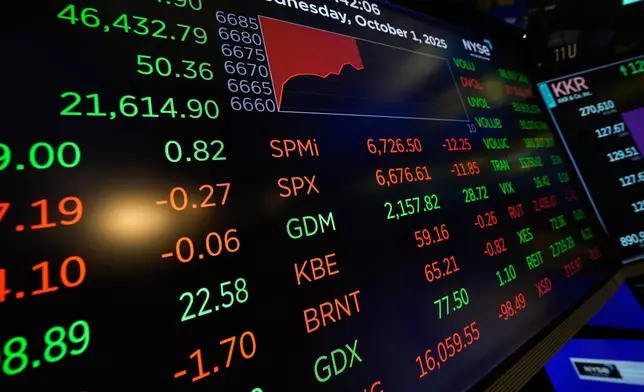
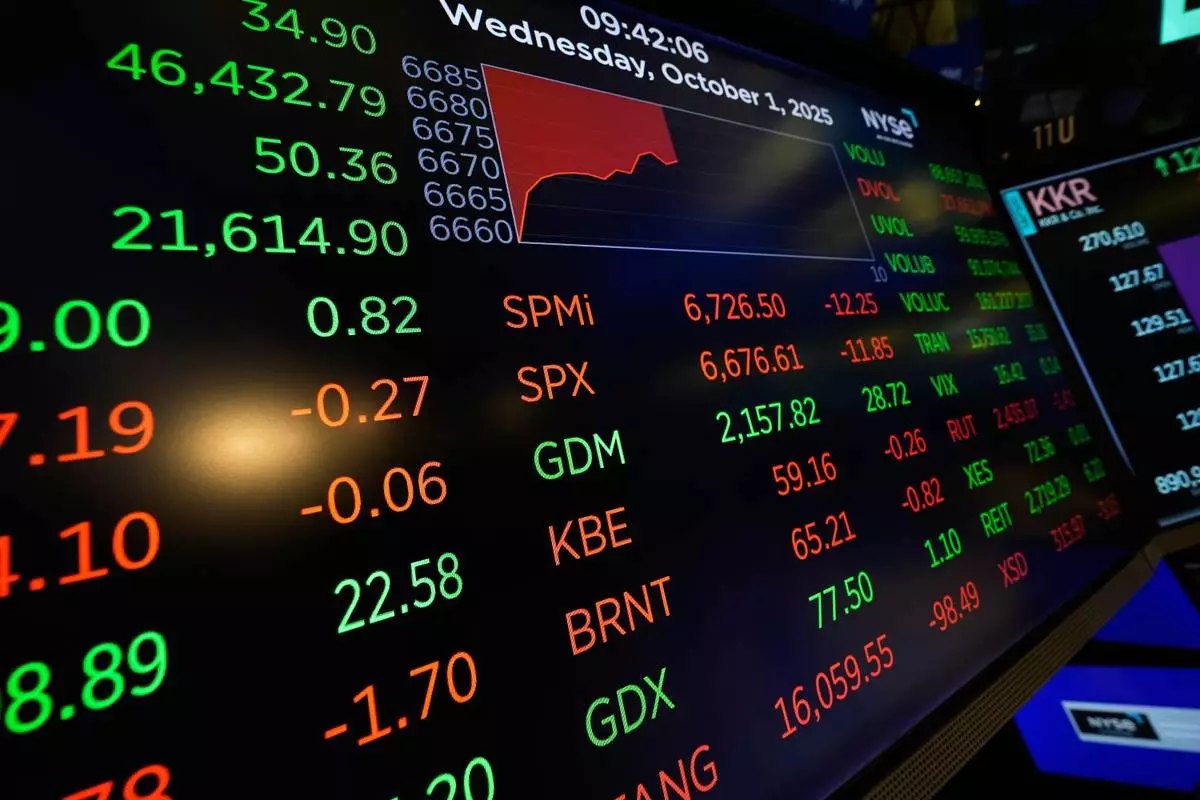
Financial information is displayed as traders work on the floor at the New York Stock Exchange in New York, Wednesday, Oct. 1, 2025. (AP Photo/Seth Wenig)
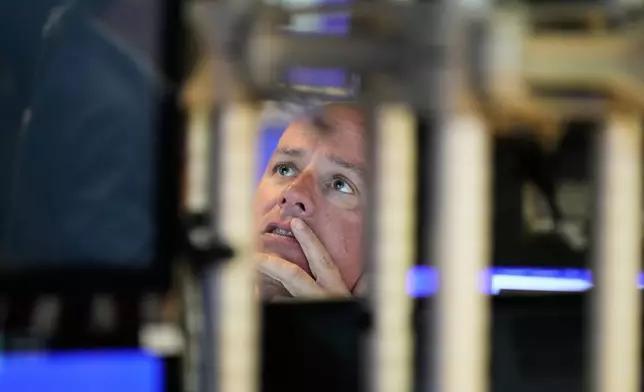
John O'Hara works on the floor at the New York Stock Exchange in New York, Wednesday, Oct. 1, 2025. (AP Photo/Seth Wenig)
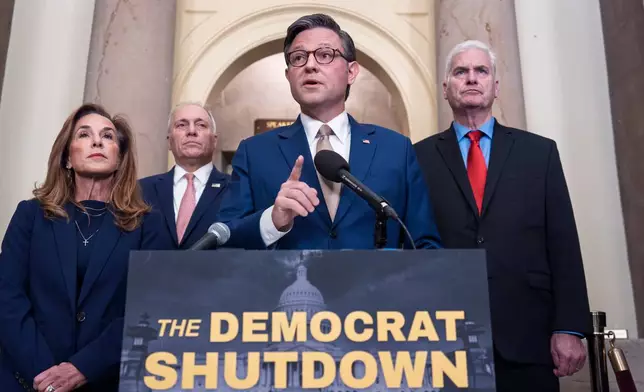
Speaker of the House Mike Johnson, R-La., and GOP leaders, from left, Rep. Lisa McClain, R-Mich., Majority Leader Steve Scalise, R-La., and Majority Whip Tom Emmer, R-Minn., blame the government shutdown on Democrats during a news conference at the Capitol in Washington, Thursday, Oct. 2, 2025. (AP Photo/J. Scott Applewhite)
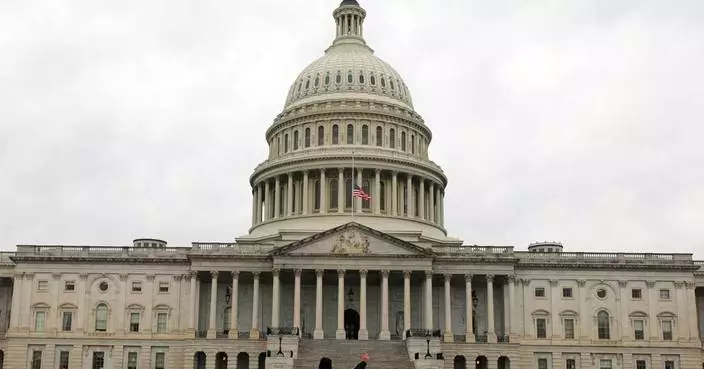
The U.S. Capitol is seen, Thursday, Oct. 2, 2025, in Washington. (AP Photo/Mariam Zuhaib)
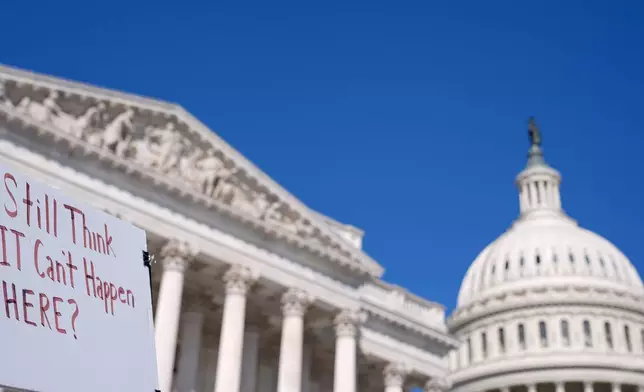
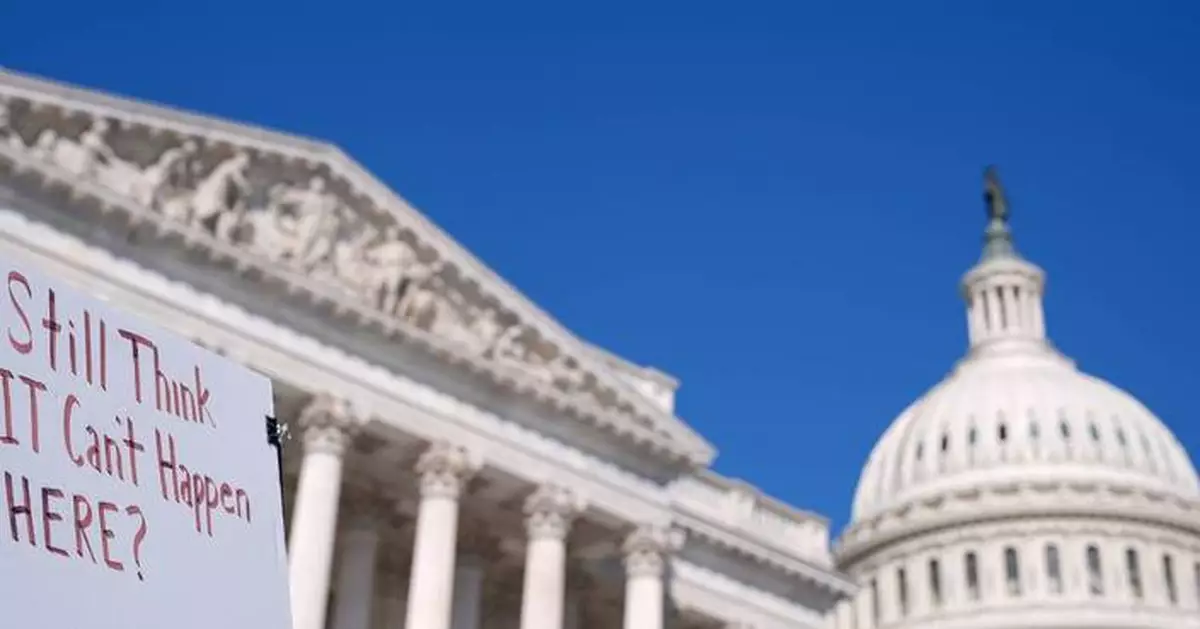
The US. Capitol is photographed, Wednesday, Oct. 1, 2025, on Capitol Hill in Washington. (AP Photo/Mariam Zuhaib)
“Everyone seems quite complacent about the shutdown, assuming the Democrats and Republicans will come to terms and life will go on, as has been the case in past shutdowns,” the independent economist Ed Yardeni wrote in a commentary Thursday. "History could certainly repeat, especially with a man known for dealmaking sitting in the Oval Office.''
But given the chasm separating the two political parties, Yardeni added, "the lack of caution is somewhat surprising.''
The U.S. government has now shut down 21 times in the past half century. The last of those shutdowns was the longest — stretching five weeks in December 2018 into January 2019 during Trump's first term.
Even that one barely left a mark on the world's biggest economy: The Congressional Budget Office estimates that it shaved just 0.02% off 2019 U.S. gross domestic product — the nation's output of goods and services.
The economic impact of shutdowns is usually fleeting. Federal workers get furloughed and the federal government delays some spending while they last. When they’re over, federal workers go back to their jobs and collect back pay, and the government belatedly spends the money it had withheld. It’s pretty much a wash.
“Government shutdowns are inconvenient and messy,″ said Scott Helfstein, head of investment strategy at the investment firm Global X. ”But there is little evidence that they have a significant impact on the economy. Typically, the lost economic activity, if meaningful in the first place, is recovered in the following quarter.″
Government benefit payments that provide crucial income support for millions of Americans, such as Social Security, and health care programs such as Medicare, won’t be disrupted by the shutdown.
Data from previous shutdowns have shown little impact on U.S. GDP unless they are extended, according to CBO Director Phillip Swagel. “The impact is not immediate, but over time, there is a negative impact of a shutdown on the economy,” he recently told The Associated Press.
The damage could be worse this go-around.
First, some government agencies dodged the 2018-2019 shutdown because they'd received funding in advance and could just continue operating. That hasn't happened this time: The CBO estimates that about 750,000 federal employees could be temporarily laid off.
Trump is also considering something more destructive: His budget office has threatened the mass firing of federal workers this time, not just putting them on temporary furlough.
A “reduction in force'' would not only lay off employees but eliminate their positions, threatening more upheaval for a workforce that’s already been purged by Trump. “We’d be laying off a lot of people that are going to be very affected, and they’re Democrats. They’re going to be Democrats," the president said Tuesday.
Thomas Ryan of Capital Economics wrote in a commentary that “it is reasonable to assume that (Trump’s mass layoff threat) is political bluster, aimed at pressuring Democrats to approve a funding extension without concessions.” But, he added, “if followed through, it could have longer-term consequences, prolonging government downsizing and keeping the sector as a drag on payrolls into next year."
Ryan Sweet, chief U.S. economist at Oxford Economics, estimates that the shutdown and temporary loss of income for federal workers could shave 0.1 to 0.2 percentage points from the nation's annual growth rate in the fourth quarter for each week the government is closed. Some of that will be recovered once it reopens.
“The economic costs of government shutdowns are normally minimal unless they last for several weeks,” Sweet wrote.
The showdown also comes at a time when the job market is already under strain, damaged by the lingering effects of high interest rates and uncertainty around Trump's erratic campaign to slap taxes on imports from almost every country on earth and on specific products — from copper to foreign films.
Labor Department revisions earlier this month showed that the economy created 911,000 fewer jobs than originally reported in the year that ended in March. That meant that employers added an average of fewer than 71,000 new jobs a month over that period, not the 147,000 first reported. Since March, job creation has slowed even more — to an average 53,000 a month. During the 2021-2023 hiring boom that followed COVID-19 lockdowns, by contrast, the economy was creating 400,000 jobs a month.
The September jobs report was supposed to come out Friday — forecasters had expected to see 50,000 new jobs last month — but has been delayed indefinitely by the shutdown.
The economy is sending mixed signals, however. GDP growth came in at a strong 3.8% annual pace from April through June, reversing a 0.6% drop in the first three months of the year. But it's not yet clear if that solid growth can continue, or if it will spur a rebound in hiring.
“The economy is very much on a ‘knife’s edge,’” said Michael Linden, senior policy fellow at the left-leaning Washington Center for Equitable Growth. “The economic data is pointing in different directions right now. Second-quarter GDP growth was strong, but how much of that was merely a bounce back from incredibly weak first quarter GDP is hard to know. What we know for sure is that the economy is creating fewer jobs, wage growth is slowing, and middle-class consumers are feeling pinched.”
Associated Press Writer Fatima Hussein in Washington contributed to this story.
Financial information is displayed as traders work on the floor at the New York Stock Exchange in New York, Wednesday, Oct. 1, 2025. (AP Photo/Seth Wenig)

John O'Hara works on the floor at the New York Stock Exchange in New York, Wednesday, Oct. 1, 2025. (AP Photo/Seth Wenig)
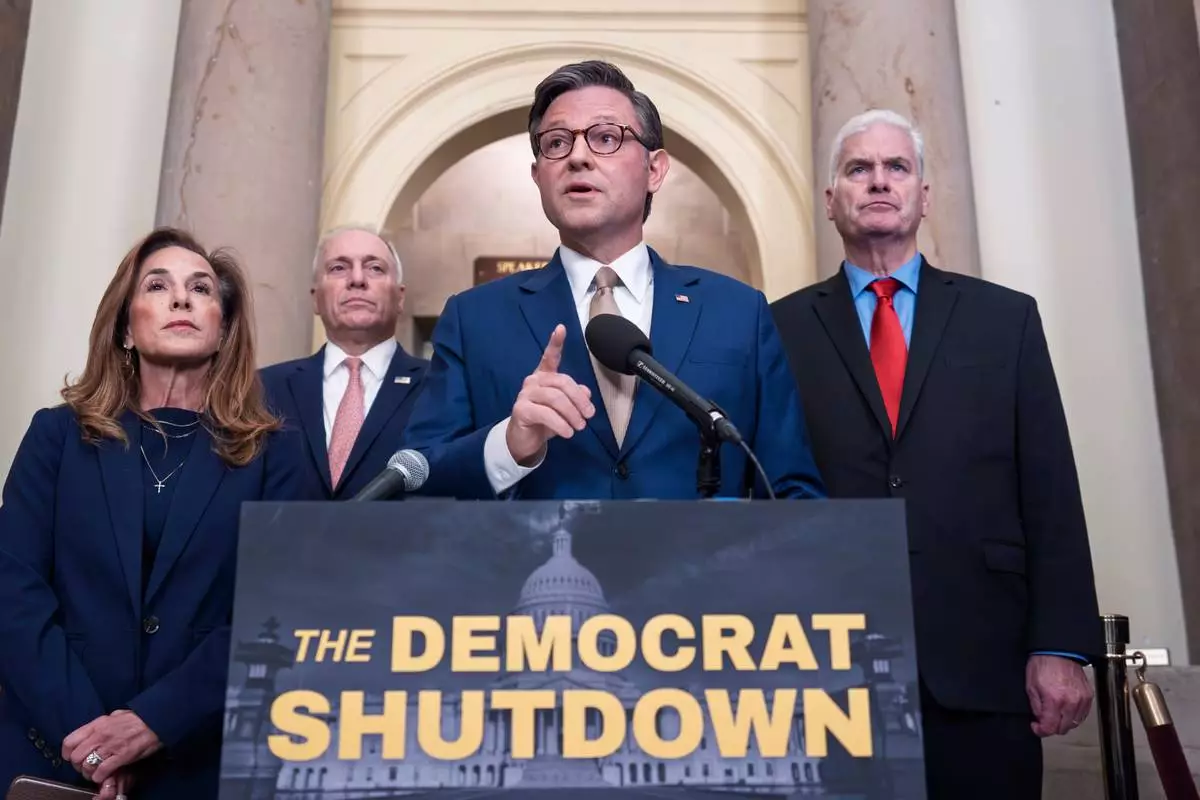
Speaker of the House Mike Johnson, R-La., and GOP leaders, from left, Rep. Lisa McClain, R-Mich., Majority Leader Steve Scalise, R-La., and Majority Whip Tom Emmer, R-Minn., blame the government shutdown on Democrats during a news conference at the Capitol in Washington, Thursday, Oct. 2, 2025. (AP Photo/J. Scott Applewhite)
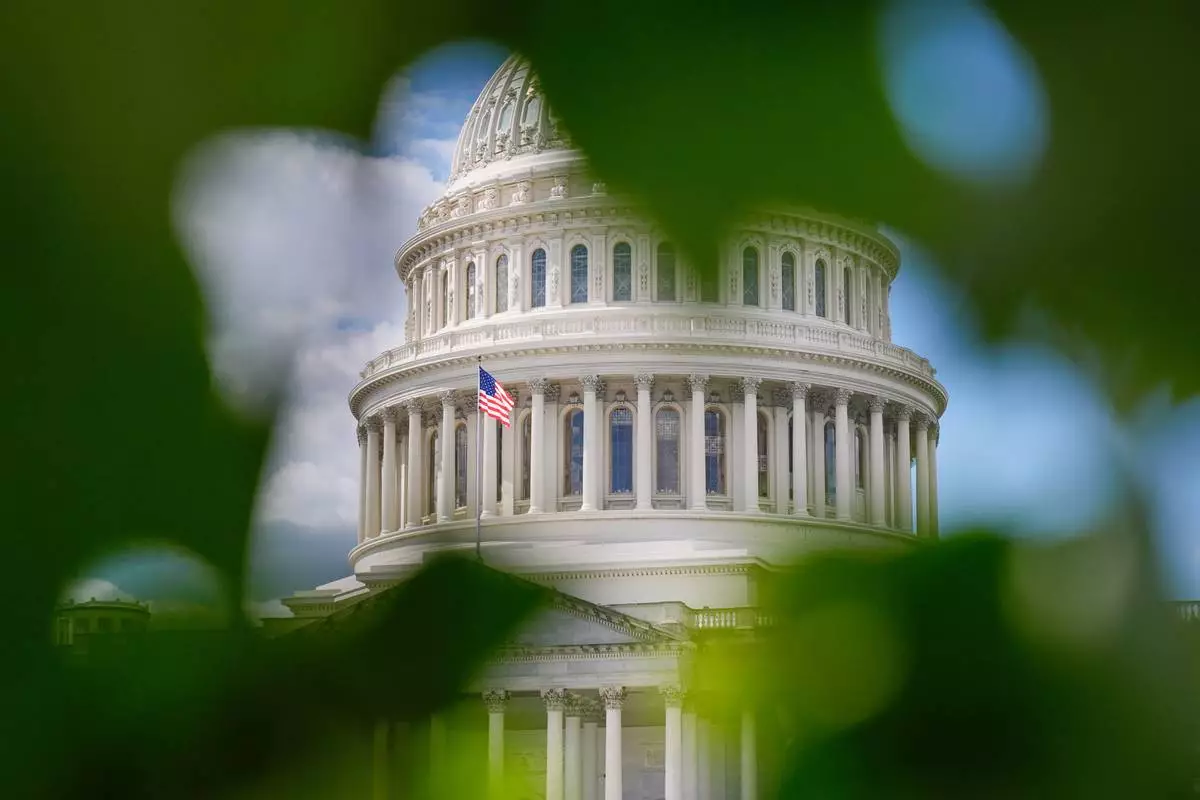
The U.S. Capitol is seen, Thursday, Oct. 2, 2025, in Washington. (AP Photo/Mariam Zuhaib)
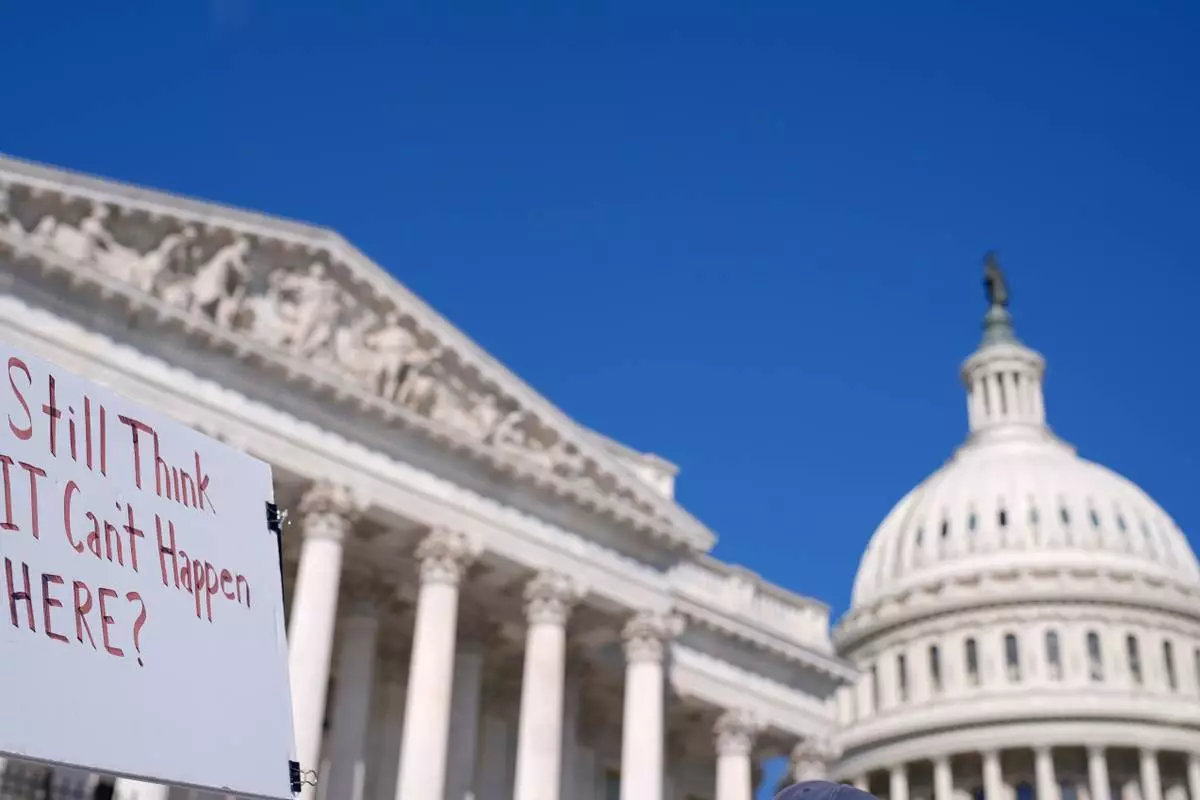
The US. Capitol is photographed, Wednesday, Oct. 1, 2025, on Capitol Hill in Washington. (AP Photo/Mariam Zuhaib)