Keynote speech by SFST at Redefining Hong Kong: Next Generation Wealth
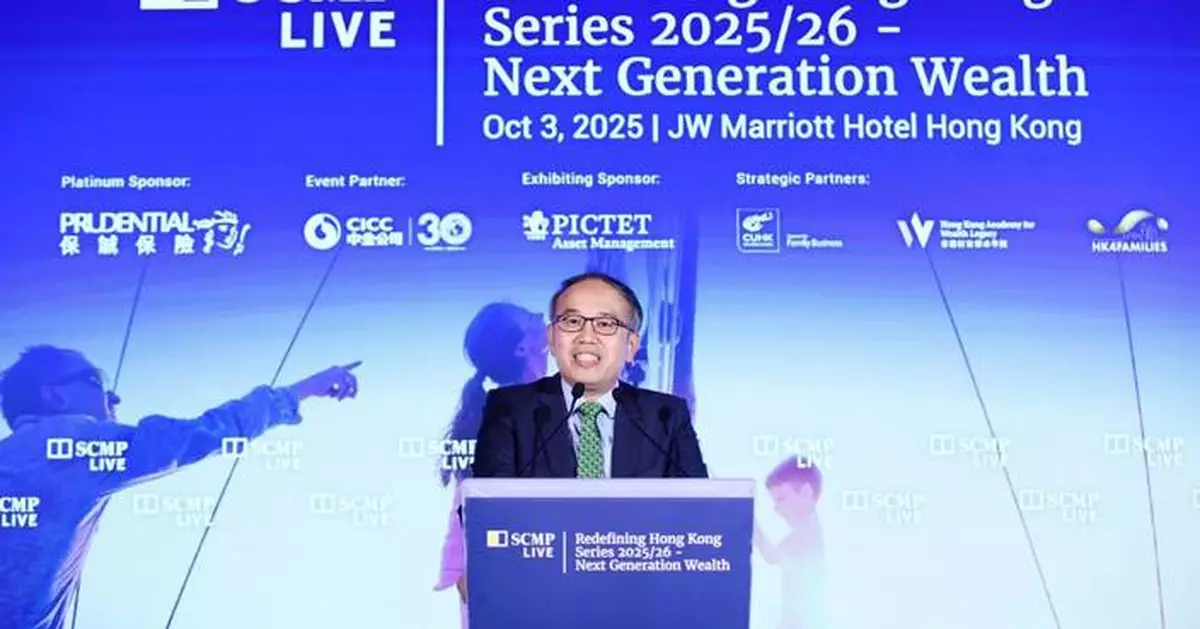
Following is the keynote speech by the Secretary for Financial Services and the Treasury, Mr Christopher Hui, at Redefining Hong Kong: Next Generation Wealth today (October 3):
Catherine (Chief Executive Officer of South China Morning Post (SCMP), Ms Catherine So), distinguished guests, ladies and gentlemen,
It is my great pleasure to join you all today. Themed around "Guiding Leadership, Innovation, and Legacy", today's event gathers family office leaders, next-gen successors, and wealth management professionals to explore together the future of family offices.
Hong Kong's strengths
Amid the current complex global landscape, Hong Kong stands out as a stable and strategic hub under the "one country, two systems" framework. It benefits from the strong support of the Chinese Mainland while maintaining global connectivity, making it ideal for enterprises to establish or expand their presence. Hong Kong acts as a "super-connector" and "super value-adder", serving as a springboard for Mainland companies to go global and attracting overseas firms. This unique positioning is reflected in top international rankings, where Hong Kong ranked as the world's freest economy and among the top three most competitive economies. Hong Kong also continues to rank third globally and first in the Asia-Pacific region in the latest Global Financial Centres Index released just last week.
As a leading asset and wealth management centre, Hong Kong's assets under management reached HK$35.1 trillion as of end-2024, with an 81 per cent surge in fund inflows amounting to HK$705 billion. Within this industry, the family office sector is a vital pillar. Hong Kong's private banking and private wealth management business attributed to family offices and private trusts clients reached over HK$1,550 billion, underscoring Hong Kong's appeal among ultra-high-net-worth individuals and reinforcing its status as a global family office hub.
Government's initiatives on family offices
To anchor Hong Kong's position as the nexus where family legacies and family office expertise converge, the Government has strategically prioritised the development of the family office sector. We have been pressing ahead at full steam to create a conducive environment for family offices, including introducing a preferential tax regime for single family offices, establishing the Hong Kong Academy for Wealth Legacy (HKAWL), and introducing and enhancing the New Capital Investment Entrant Scheme.
Our efforts have already borne fruit. Our city counted more than 2 700 single family offices, and the recent growth has been remarkable: Invest Hong Kong has successfully supported over 200 family offices in establishing or expanding their operations here, surpassing the target of attracting no less than 200 family offices by end-2025, as outlined in the 2022 Policy Address. As announced in the Policy Address last month, we target to attract an additional 220 family offices to Hong Kong from the year of 2026 to the year of 2028, bringing in an increasing volume of capital, talent, and business opportunities.
The sector's dynamism is exemplified by the success of the flagship Wealth for Good in Hong Kong (WGHK) Summit, held annually since 2023, highlighting the city's commitment to developing its asset and wealth management ecosystem and solidifying the city's family office industry. Looking ahead, we will sustain robust investment promotion efforts and deepen collaboration with key stakeholders.
Trends in family office sector
The global family office landscape is undergoing rapid transformation, driven by next-generation leadership transitions, growing interest in philanthropy and impact investing, emerging investment themes such as digital assets, and leveraging insurance as a tool for strategic capital management.
So in my coming speech, I will highlight these areas, in particular how we can help and facilitate the growth of family wealth in these areas.
Next-generation leadership transitions
Family offices are increasingly focused on smooth succession planning as leadership transitions to the next generation. In recent years, it is observed that emphasis is placed on the engagement of younger family members, like all of you, to ensure continuity of family values, vision, and also wealth preservation across generations.
Next generation wealth is defined as the transfer and stewardship of assets, financial resources, knowledge, and values from one generation to the next within a family. It encompasses not only the inheritance of tangible assets such as cash, investments, real estate, and businesses, but also the intangible assets like financial literacy, family values, entrepreneurial skills, and social capital that are crucial for preserving and growing wealth across generations. This concept is more than just inheritance; it involves long-term planning, education, governance, and the creation of systems to sustain wealth beyond the original generation. Preparing the next generation involves imparting financial knowledge, fostering responsible management skills, and engaging heirs early to build confidence and establish a lasting legacy.
In this regard, the HKAWL continues to focus on deepening the engagement with next generation wealth owners by curating training and development resources. The HKAWL just celebrated its two-year anniversary last month. Over the last two years, the HKAWL organised two Legacy Summits, which brought global speakers including leaders of prominent family foundations, such as the Rockefeller Foundation, and venture capital firms, to engage with global family principals and next-gens on discussions around philanthropy, impact investing, family governance and wealth management, fostering interaction and exchange within the industry, and facilitating families in creating impact and long-lasting legacies.
Growing interest in philanthropy and impact investing
Many asset owners are looking to incorporate philanthropic initiatives into the overall wealth management framework for social betterment. In light of this, we announced the launch of the Impact Link (iLink) initiative in 2024. The iLink, administered by the HKAWL, connects philanthropists with each other and with impactful charity projects, builds a strong community around peers, and offers learning-by-doing opportunities through tangible projects.
In June this year, the iLink Online Portal was launched, bringing together Strategic Partners with some 50 family partners, offering a dedicated platform for invited family philanthropists to discover scalable initiatives that address critical challenges in Hong Kong and beyond.
On capacity building, the HKAWL organised various events and activities under the iLink, engaging global philanthropic foundations such as the Gates Foundation, Yidan Prize Foundation and Fondation de France Asia. These events provided family philanthropists with additional perspectives on deploying philanthropic capital and opportunities to explore collaborative and strategic approaches to philanthropy and impact.
There is also an increasing interest in sustainable investments, which offer attractive risk-adjusted returns amid market uncertainties. The global impact investing market, valued at an estimated US$1.57 trillion, reflects a growing recognition of the need to address critical challenges such as climate change, poverty and inequality. This evolution in capital flows and sectoral allocation reflects a global investment trend with broader commitment to resilience and long-term value creation.
Hong Kong, as Asia's leading international financial centre and sustainable finance hub, stands to contribute much in this aspect. Our capital market offers a wide range of green and sustainable investment products with over 200 Environmental, Social and Governance (ESG) funds authorised by the SFC (Securities and Futures Commission) with assets under management of over HK$1.1 trillion. The number of ESG funds and assets under management recorded an increase of 51 per cent and 18 per cent respectively from three years ago.
In 2024, the total green and sustainable debt (including bonds and loans) issued in Hong Kong exceeded US$84 billion, representing a growth of around 50 per cent compared with 2021. Among them, the volume of green and sustainable bonds arranged in Hong Kong amounted to around US$43 billion, capturing around 45 per cent of the regional total and ranking first in the Asian market for seven consecutive years since 2018.
We also see the importance of building up market infrastructure to connect capital with climate-related products and opportunities in Hong Kong, the Mainland, Asia and beyond. In 2022, Hong Kong Exchange and Clearing Limited launched Core Climate, an international carbon marketplace to facilitate effective and transparent trading of carbon credits and instruments and to support the global transition to Net Zero.
Emerging investment themes: digital assets
Investment diversification is increasingly embracing non-traditional asset classes such as digital assets. Digital assets attract interest from family offices due to their innovation potential and portfolio diversification benefits, supported by growing regulatory clarity globally. A recent industry survey showed that over 70 per cent of family office professionals have either invested in cryptocurrencies or are exploring the possibility. With its unique strengths, Hong Kong is well positioned to bridge traditional finance with the digital asset era.
In June this year, we issued the Policy Statement 2.0 on the Development of Digital Assets in Hong Kong, setting out a vision for a trusted and innovative digital asset ecosystem that prioritises risk management and investor protection, while delivering concrete benefits to the real economy and financial markets. One of the key focuses of the Policy Statement 2.0 is enhancing the legal and regulatory framework that provides a solid foundation for the sustainable development of the digital asset sector.
The digital asset market is developing and evolving rapidly. Guided by the principle of "same activity, same risks, same regulation" under a risk-based approach, the Government will continue to enhance and establish a regulatory framework that reflects local circumstances and aligns with international standards and practices.
To ensure that family offices benefit from these developments in digital assets and sustainable investments, which I just mentioned, we propose including carbon credits and digital assets, among others, as qualifying assets eligible for tax concessions for funds and single family offices. Our target is to introduce the bill into the Legislative Council in the first half of 2026. If approved, the relevant measures will take effect from the current year of assessment (2025/26).
Insurance as tool for strategic capital management
For the next-generation stewards of wealth in this room, Hong Kong's insurance sector is a critical tool for strategic capital management. It has evolved far beyond basic protection into a sophisticated ecosystem for wealth preservation and risk mitigation.
The primary connection lies in comprehensive risk mitigation. The concentration of wealth in a family office creates a concentration of risk. These are not simple risks; they are complex, cross-border, and often unique to your family's profile. They encompass everything from directors' liability and cyberattacks targeting your family's digital footprint to the physical protection of a globally dispersed art collection, real estate portfolio, or fleet of private assets. Hong Kong's insurers specialise in crafting bespoke, flexible policies for these complex exposures. They act as a critical buffer, transferring major risks away from your core capital and protecting the family's balance sheet from unforeseen events that could otherwise erode wealth built over generations.
Furthermore, insurance is a powerful tool for legacy and succession planning. While Hong Kong does not have an estate duty, the challenge of transitioning control and assets seamlessly across generations remains. Life insurance products, when structured within a robust financial plan, provide immediate liquidity and can be instrumental in facilitating the smooth transfer of ownership and assets. They can help equalise inheritances among heirs without forcing the liquidation of a prized family business or other illiquid, emotional assets. This ensures that the family's vision and values are preserved, and that transition happens according to plan, not by force of circumstance.
Hong Kong's role as the gateway to the Greater Bay Area and the Mainland adds a layer of strategic necessity. As your family's investments and interests grow within this dynamic region, understanding and mitigating local risks becomes paramount. Hong Kong's insurers possess the deep regional expertise and innovative capacity to structure solutions that protect these assets and facilitate secure investment.
In essence, for a modern family office, partnering with Hong Kong's insurance sector is about building a resilient framework. It is a strategic alliance that empowers you to de-risk your portfolio, optimise your capital, secure your legacy, and protect your family's well-being, allowing you to focus on what matters most: growing and stewarding your wealth for the future.
Closing
With our multipronged approach and the concerted efforts of the Government, regulators and the industry, I am confident that Hong Kong will continue to flourish as a leading family office hub in the region. I look forward to joining hands with each of you in shaping a better future for the family office sector.
Last but not least, may I thank the SCMP again for the invitation to this gathering of bright minds. I wish you all a rewarding day of discussions. Thank you.

Keynote speech by SFST at Redefining Hong Kong: Next Generation Wealth Source: HKSAR Government Press Releases
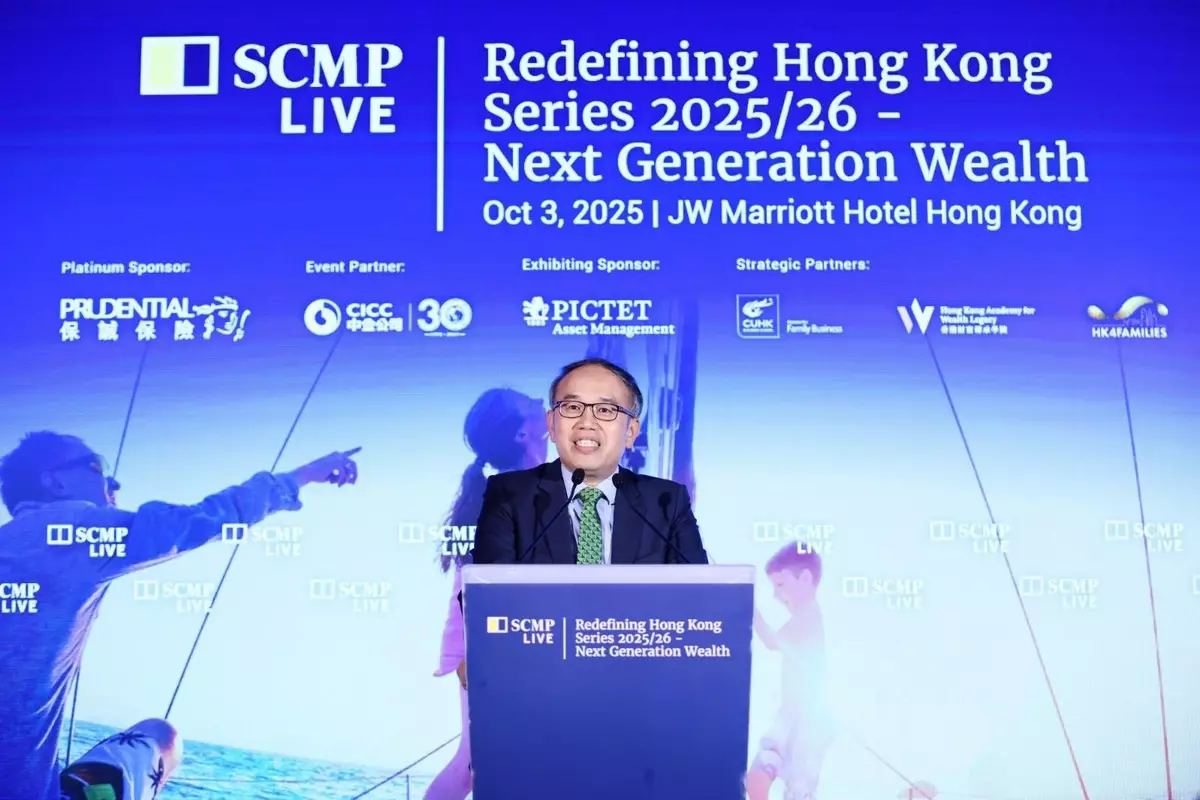
Keynote speech by SFST at Redefining Hong Kong: Next Generation Wealth Source: HKSAR Government Press Releases