The principal of the first senior high school in China to offer free education to girls from poor families has been lighting the torch of hope for communities in the mountains of the country.
Principal Zhang Guimei founded the Huaping High School for Girls in 2008 in a poor, mountainous area in Lijiang City of southwest China's Yunnan Province, with no fee or admission requirements, hoping to remove as many obstacles to girls' education as possible.
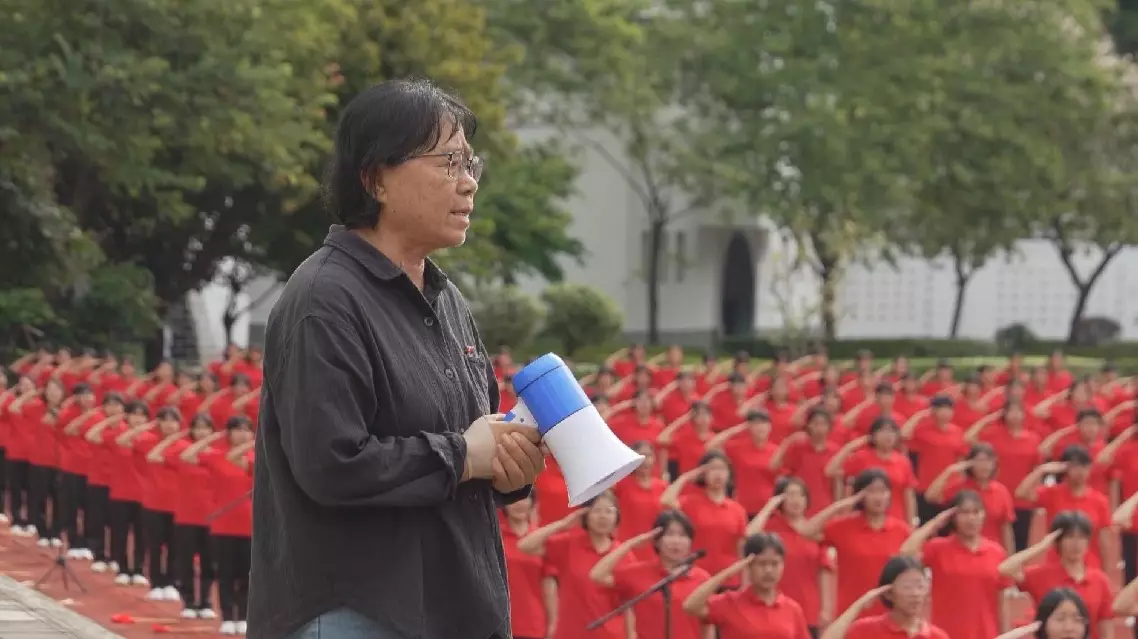
At 68 years old, the dedicated educator continues to wake up early to take up the girls and stays up late to ensure every student returns to their dorms. Often seen speaking through a loudspeaker, she offers words of encouragement to the girls and enjoys playing music to lift their spirits.
Most of all, she reminds them that their time is precious.
"This helps them adapt, whether in the army, in a factory, or anywhere else life may take them. In this way, they learn the value of time," the principal said. Zhang arrived in Huaping County in 1996, when the county was still mired in deep poverty, with many teenagers, especially girls, dropping out of school. It was then that she made a bold decision to build a free high school for rural girls.
"I've always believed that education is the fairest and most powerful ladder," she said.
Over the past few decades, Zhang has sent nearly 2,000 girls to universities and colleges one generation after another, effectively rewriting the fate of the graduates. Many have gone on to develop successful careers.
"If I hadn't gone to the Huaping High School for Girls, I don't know what I'd be doing now. Maybe I'd already be a full-time housewife, just drifting along, and that would be my whole life," said Ling Li, a former student of the school who now works as a doctor at the People's Hospital of Huaping County.
For the past few decades, Zhang has devoted herself entirely to the students. Every morning around 5:00, she is the first to rise, ready to lead them into a new day.
"Without courage, I can't get out of bed, as my legs and feet are too painful even to touch the floor. I suffer from rheumatoid arthritis. Once I rest, it takes a long time just to move again. I take several painkillers every day," Zhang said.
Well past the usual retirement age, she continues to stay in her position as principal, even living alongside the girls in the dormitory.
"These girls may exhaust me, but seeing them truly gives me the courage to go on. They've given me the strength to live. When I look at them, I think: I must stay alive to see how they do in next year's college entrance examination. And when they make it into university, I want to live a little longer to see what they'll do after graduation. It's by holding onto this hope, bit by bit, that I keep moving forward," she said.
Zhang hopes the torch of hope -- offering girls equal rights on education -- can be passed from one generation to another.
"One day, when I'm gone, this girls' high school should not just continue, but thrive. It cannot depend on me alone. I hope society will form a relay, because education in the mountains needs long-term care and support. Only by working together can we bring light to more children in these remote areas," she said.
Life-long educator inspires hope among girls in China's remote mountains