
BERLIN (AP) — Mysterious drone flights over the airspace of European Union member countries in recent weeks have alarmed the public and elected officials.
Intrusions into NATO’s airspace, some of them blamed on Russia, reached an unprecedented scale last month. Some European officials described the incidents as Moscow testing NATO’s response, which raised questions about how prepared the alliance is against Russia.
On Sept. 10, a swarm of Russian drones flew into Poland's airspace, forcing NATO aircraft to scramble to intercept them and shoot down some of the devices. It was the first direct encounter between NATO and Moscow since Russia launched its all-out war on Ukraine on Feb. 24, 2022.
Days later, NATO jets escorted three Russian warplanes out of Estonia’s airspace.
Since then, flyovers have occurred near airports, military installations and critical infrastructure, among other locations, elsewhere on the continent and prompted European defense ministers to agree to develop a “drone wall” along their borders to better detect, track and intercept drones violating Europe’s airspace.
Russia has been blamed for some of them, but denies that anything was done on purpose or that it played a role. European authorities haven't released much detail about the drone intrusions, with some not acknowledging the overflights publicly until days later.
Other times, authorities were unable to confirm a report of a sighting. At one point, Danish authorities were flooded with 500 tips of sightings over 24 hours — some of which turned out to be just stars in the sky.
Countries are scrambling to figure out how to respond in the moment, including weighing whether to allow authorities to shoot the drones down.
On Thursday, however, Russian military planes briefly violated Lithuania’s airspace in what the Lithuanian president called a blatant breach of the territorial integrity of his EU and NATO-member country.
Here's what we know about some of the recent sightings:
Germany’s Munich Airport was shut down twice earlier this month due to drone sightings.
In Denmark, drones flew over Copenhagen Airport on Sept. 22, causing a major disruption to air traffic in and out of Scandinavia's largest airport.
Danish Prime Minister Mette Frederiksen said that Russian involvement couldn’t be ruled out, calling it “the most serious attack on Danish critical infrastructure to date.”
Meanwhile, a report of a drone sighting occurred the same evening at Norway's Oslo Airport, forcing all traffic to one runway. Authorities were investigating whether there was a link between the two major airports.
Drones also flew over four smaller Danish airports between Sept. 24 and Sept. 25, including two that serve as military bases. Danish Defense Minister Troels Lund Poulsen said that a “professional“ actor was likely behind the ”systematic flights.”
In the same time frame, several Danish media outlets reported that one or more drones were seen near or above the Karup Air Base, which is Denmark’s biggest military base.
The defense ministry refused to confirm the sighting at Karup or elsewhere, and said that “for reasons of operational security and the ongoing investigation, the Defense Command Denmark does not wish to elaborate further on drone sightings.”
In Germany, authorities investigated claims that unidentified drones may have spied on critical infrastructure in the northern state of Schleswig-Holstein. Multiple drones were spotted on Sept. 25 over a power plant in the state capital of Kiel, as well as near a university hospital and a shipyard in the port city, according to a Der Spiegel report.
Regional Interior Minister Sabine Sütterlin-Waack told a committee of the state parliament that flying objects of “various types and sizes” had been spotted. Chief Public Prosecutor Stephanie Gropp said an investigation was underway.
Der Spiegel said that two small drones had been seen over the Kiel factory premises of TKMS, a maritime defense technologies provider.
Later, a “combined drone formation” was observed over the university hospital and a power plant, and other drone sightings were reported over governmental buildings and the Heide oil refinery in the area, the report said.
Further suspicious drones were spotted over a military base in Sanitz, in the Mecklenburg-Western Pomerania state to the east, the weekly reported.
Last month, Estonia summoned a Russian diplomat to protest after three Russian fighter aircraft entered its airspace without permission and stayed there for 12 minutes.
Weeks later, the Lithuanian armed forces said in a statement that about 6 p.m. local time Thursday, two Russian military aircraft flew into Lithuanian airspace for about 700 meters (765 yards), The SU-30 aircraft and IL-78 refueling aircraft flew away after roughly 18 seconds.
The Lithuanian armed forces believe the military planes might have been conducting refueling exercises in the neighboring Russian exclave of Kaliningrad.
Two Spanish fighter jets, which had been doing NATO air policing missions, were scrambled and flew out to the area.
Russia’s Defense Ministry, meanwhile, rejected the Lithuanian claim that Russian fighter jets had intruded into its airspace.
It said in a statement that Su-30 fighter jets on Thursday conducted training flights over its Kaliningrad region in strict compliance with the rules.
Baltic nations already have been on heightened alert over neighboring Russia’s aggression on Ukraine.
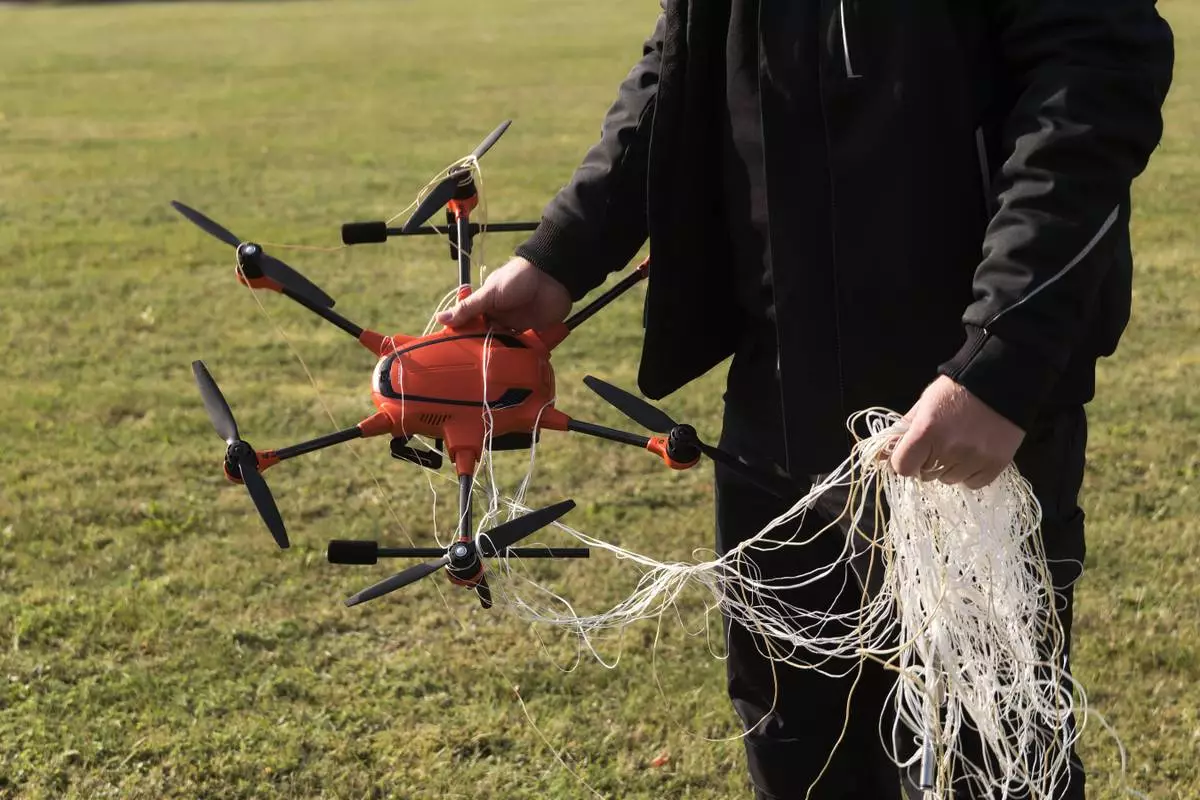
A person presents the interception of a drone by the A1-Falke interception drone from Argus Interception on the second day of the large-scale German forces Bundeswehr exercise "Red Storm Bravo" in Hamburg, Friday, Sept. 26, 2025. (Marcus Golejewski/dpa via AP)
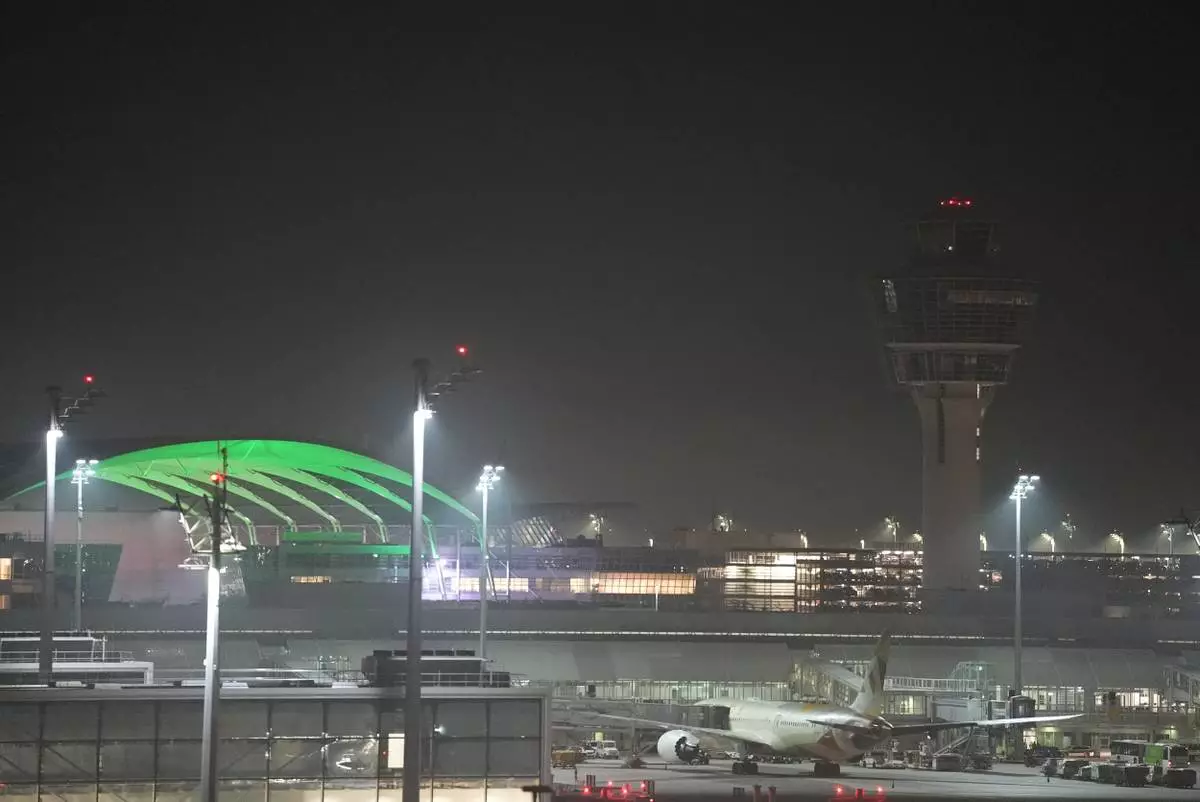
This photo shows Munich Airport, Germany Friday, Oct. 3, 2025. (Ehsan Monajati/dpa via AP)

Police officers patrol Munich Airport after the airport shut down operations due to possible new drone sightings Friday, Oct. 3, 2025, in Munich. (Enrique Kaczor/dpa via AP)