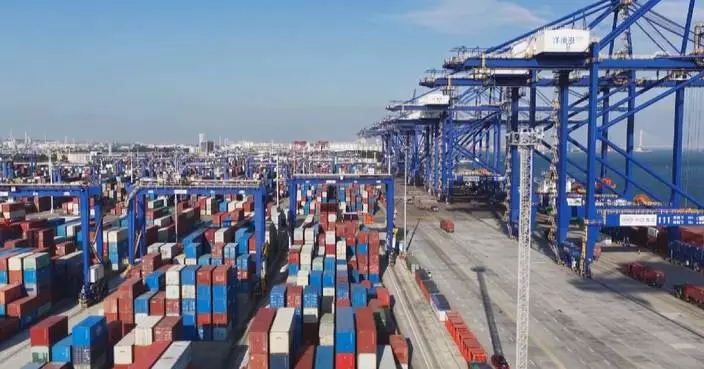
China has seen a robust consumption growth in the first four days of the eight-day National Day and Mid-Autumn Festival holiday that started on Oct 1, according to the Ministry of Commerce.
Sales at major retail and catering outlets rose 3.3 percent year on year in the four days, and the foot traffic and the revenue at 78 major pedestrian streets across China increased by 4.2 percent and 4.0 percent respectively over the same period last year, the ministry data showed.
Green and smart consumption gained popularity among Chinese consumers.
Data from leading e-commerce platforms showed that sales of organic food surged 20.1 percent year on year, while energy-efficient home appliances jumped 19 percent, smart refrigerators climbed 20.7 percent, and smart home products grew 16.8 percent, the ministry said.
Service consumption remained vibrant, with autumn sightseeing, self-driving tours, and travels to revolutionary sites drawing a number of holidaymakers.
The National Day holiday box office exceeded one billion yuan (about 140 million U.S. dollars), and sports events like the China Open tennis tournament sparked a wave of enthusiasm among spectators.
Food and vegetable also have been sufficient in supply and stable in price during the holiday.
Data showed that stocks of grain, oil, meat, eggs, and vegetables at 200 major agricultural wholesale markets across the country remained ample, and prices of grain, cooking oil, pork, mutton, and chicken stayed largely stable compared with the September 30 levels, the ministry said.
Vegetable and beef prices edged up 0.4 percent and 0.3 percent respectively from pre-holiday levels, while egg prices dipped 0.4 percent, according to the ministry.

China sees robust consumption in first four days of National Day holiday

China sees robust consumption in first four days of National Day holiday

China sees robust consumption in first four days of National Day holiday
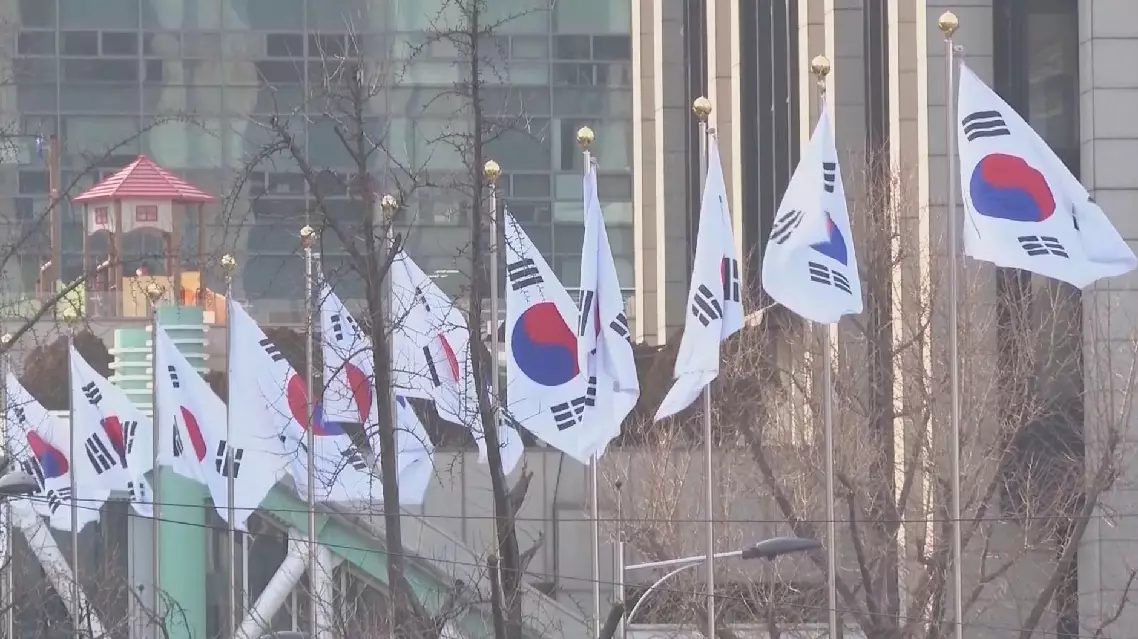
The Republic of Korea (ROK)'s former impeached President Yoon Suk-yeol on Friday was sentenced to five years in prison on arrest obstruction charges.
The criminal division of the Seoul Central District Court in charge of Yoon's obstruction of justice case handed down the prison sentence to Yoon for abusing the presidential security service to hinder the anti-corruption agency from executing its arrest warrant in January 2025.
The Corruption Investigation Office for High-ranking Officials (CIO) was once thwarted in its attempt to arrest Yoon as the presidential security service formed human shields and bus blockades to prevent investigators from entering the presidential residence.
The team of Cho Eun-suk, an independent counsel who led investigations into Yoon's insurrection and other charges, demanded a 10-year prison term for Yoon.
The court said Yoon privatized the presidential security service for personal safety and private interests by blocking the law enforcement agencies' lawful execution of an arrest warrant and attempting to destroy evidence, pointing out that despite the very bad nature of his crime, he consistently offered unconvincing excuses and showed no remorse.
The court stressed that severe punishment was necessary, considering the need to restore the rule of law damaged by Yoon's crime, but it noted that the fact that he was a first-time offender with no criminal record was considered a favorable factor.
The sentencing, which was broadcast live, was Yoon's first verdict coming from his botched martial law bid.
The first-instance sentencing for Yoon's insurrection charges was scheduled for Feb 19. The special counsel sought a death penalty for Yoon on the charges.
Yoon declared emergency martial law on the night of Dec 3 in 2024, but it was revoked hours later by the National Assembly.
The constitutional court upheld a motion to impeach Yoon in April 2025, officially removing him from office.
The ousted leader was indicted while in detention in January 2025 on charges of leading an insurrection, becoming the first sitting ROK president facing such prosecution.
ROK ex-president Yoon sentenced to 5 years in prison on arrest obstruction charges
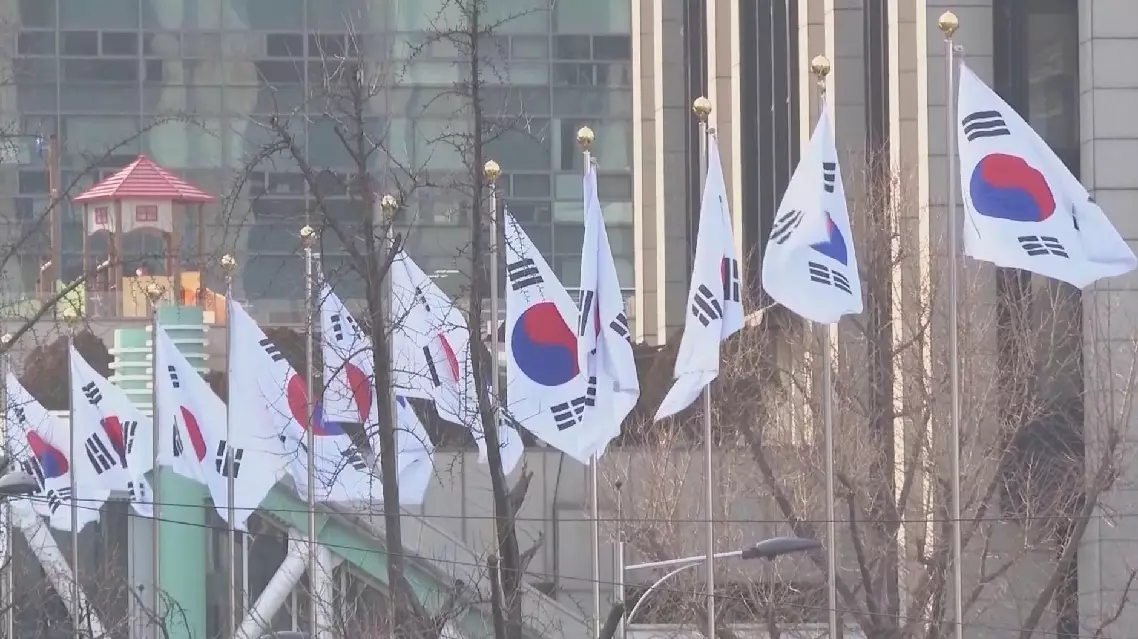
ROK ex-president Yoon sentenced to 5 years in prison on arrest obstruction charges