Lewis Moody, the former England rugby captain and 2003 World Cup winner, has been diagnosed with ALS, also known as motor neurone disease.
The 47-year-old Moody went public with his diagnosis on Monday, saying he has “a bit of muscle wasting in the hand and the shoulder” while describing them as “minor symptoms” at the moment.
“I feel fit and well in myself and I’m focused on staying positive, living life and dealing with the changes I will experience as they come,” he said in a statement.
Moody was given the diagnosis of amyotrophic lateral sclerosis two weeks ago. He said he noticed symptoms for the first time while training in the gym. Physiotherapy didn't make his shoulder feel better, he said, and scans later showed nerves in his brain and spinal cord had been damaged by ALS.
“There’s something about looking the future in the face and not wanting to really process that at the minute,” he said in an emotional interview with the BBC where he sat alongside his wife, Annie.
“It’s not that I don’t understand where it’s going. We understand that. But there is absolutely a reluctance to look the future in the face for now.”
Fellow rugby player Doddie Weir and rugby league star Rob Burrow have died from the illness in recent years, with rugby embracing a high-profile fundraising campaign to tackle it.
According to Britain's National Health Service, the disease “causes muscle weakness that gets worse over a few months or years. It’s usually life-shortening and there’s currently no cure, but treatment can help manage the symptoms.”
“You’re given this diagnosis of MND and we’re rightly quite emotional about it, but it’s so strange because I feel like nothing’s wrong,” Moody told the BBC.
“I don’t feel ill. I don’t feel unwell ... I’m still capable of doing anything and everything. And hopefully that will continue for as long as is possible.”
Moody, a flanker nicknamed “Mad Dog” because of his fearless and hard-hitting style of play, played 71 times for England, including in all seven matches as England won the 2003 Rugby World Cup in Australia. In the final against Australia, he won the lineout that led to Jonny Wilkinson’s match-winning drop goal.
He was England captain for 12 games and retired from international rugby in 2011.
Moody also played five tests for the British and Irish Lions and was a seven-time title winner with English club Leicester Tigers. He finished his club career at Bath Rugby.
Rugby Football Union CEO Bill Sweeney said the governing body was “deeply saddened and distressed” to hear about Moody's diagnosis.
“Lewis represented England, the British and Irish Lions and his clubs Leicester Tigers and Bath Rugby with both brilliance and distinction," Sweeney said, adding that Moody was “one of the toughest and most fearless players ever to don a backrow shirt in the game, earning the respect and admiration of team-mates, opponents, and supporters alike all over the world.”
Former Leicester teammates Geordan Murphy and Leon Lloyd on Monday launched an online fundraiser to help Moody and his family.
“There is not a nasty bone in his body," Will Greenwood, Moody's World Cup-winning teammate in 2003, told the BBC. "He is the most optimistic human you can hope to find ... and then he had an ability on the pitch to just turn a switch and be the most ferocious competitor.
“He will fight this with every ounce of his strength.”
After retiring, Moody launched “The Lewis Moody Foundation” to fund research in, and improve diagnosis of, brain tumors.
AP rugby: https://apnews.com/hub/rugby
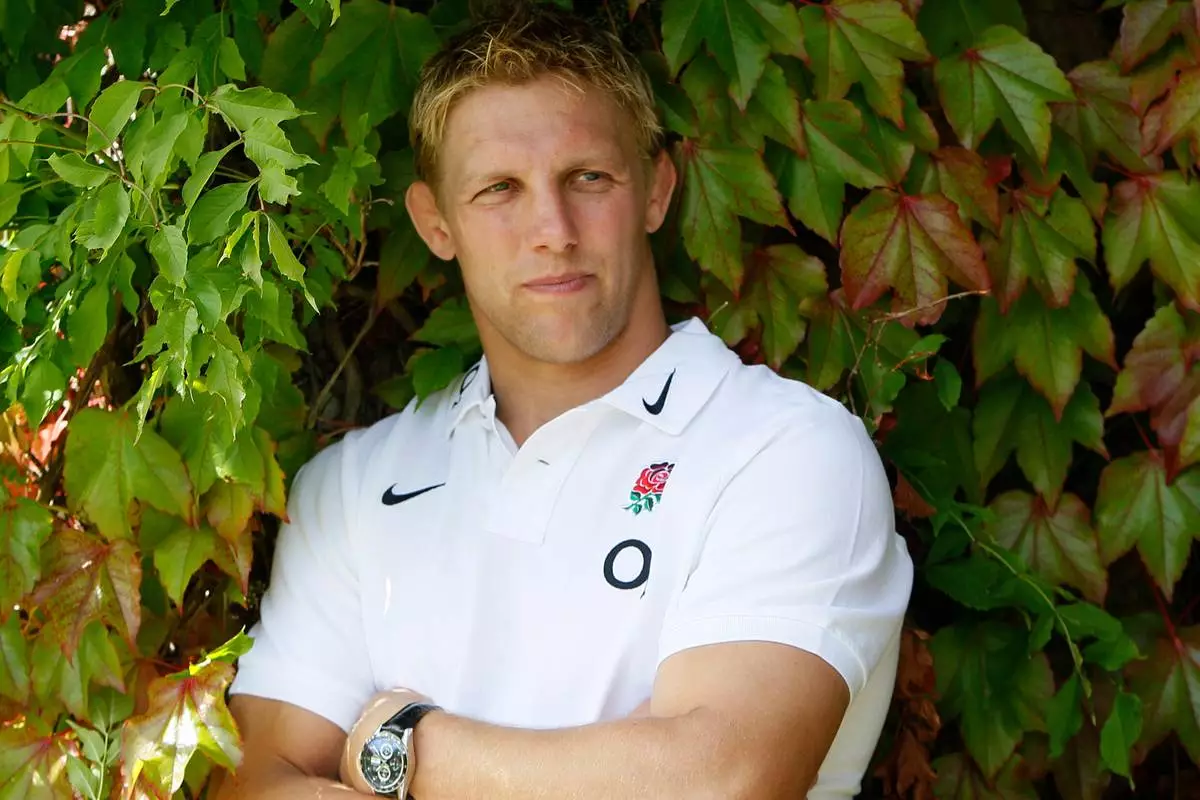
FILE - England rugby union captain Lewis Moody poses for a portrait at their training camp, as the 30 man squad is announced for the upcoming Rugby World Cup, in Bagshot, England, Monday, Aug. 22, 2011.(AP Photo/Alastair Grant, File)
CAPE CANAVERAL, Fla. (AP) — An ailing astronaut returned to Earth with three others on Thursday, ending their space station mission more than a month early in NASA’s first medical evacuation.
SpaceX guided the capsule to a middle-of-the-night splashdown in the Pacific near San Diego, less than 11 hours after the astronauts exited the International Space Station.
“It’s so good to be home,” said NASA astronaut Zena Cardman, the capsule commander.
It was an unexpected finish to a mission that began in August and left the orbiting lab with only one American and two Russians on board. NASA and SpaceX said they would try to move up the launch of a fresh crew of four; liftoff is currently targeted for mid-February.
Cardman and NASA’s Mike Fincke were joined on the return by Japan’s Kimiya Yui and Russia’s Oleg Platonov. Officials have refused to identify the astronaut who had the health problem or explain what happened, citing medical privacy.
While the astronaut was stable in orbit, NASA wanted them back on Earth as soon as possible to receive proper care and diagnostic testing. The entry and splashdown required no special changes or accommodations, officials said, and the recovery ship had its usual allotment of medical experts on board. It was not immediately known when the astronauts would fly from California to their home base in Houston. Platonov’s return to Moscow was also unclear.
NASA stressed repeatedly over the past week that this was not an emergency. The astronaut fell sick or was injured on Jan. 7, prompting NASA to call off the next day’s spacewalk by Cardman and Fincke, and ultimately resulting in the early return. It was the first time NASA cut short a spaceflight for medical reasons. The Russians had done so decades ago.
The space station has gotten by with three astronauts before, sometimes even with just two. NASA said it will be unable to perform a spacewalk, even for an emergency, until the arrival of the next crew, which has two Americans, one French and one Russian astronaut.
The Associated Press Health and Science Department receives support from the Howard Hughes Medical Institute’s Department of Science Education and the Robert Wood Johnson Foundation. The AP is solely responsible for all content.
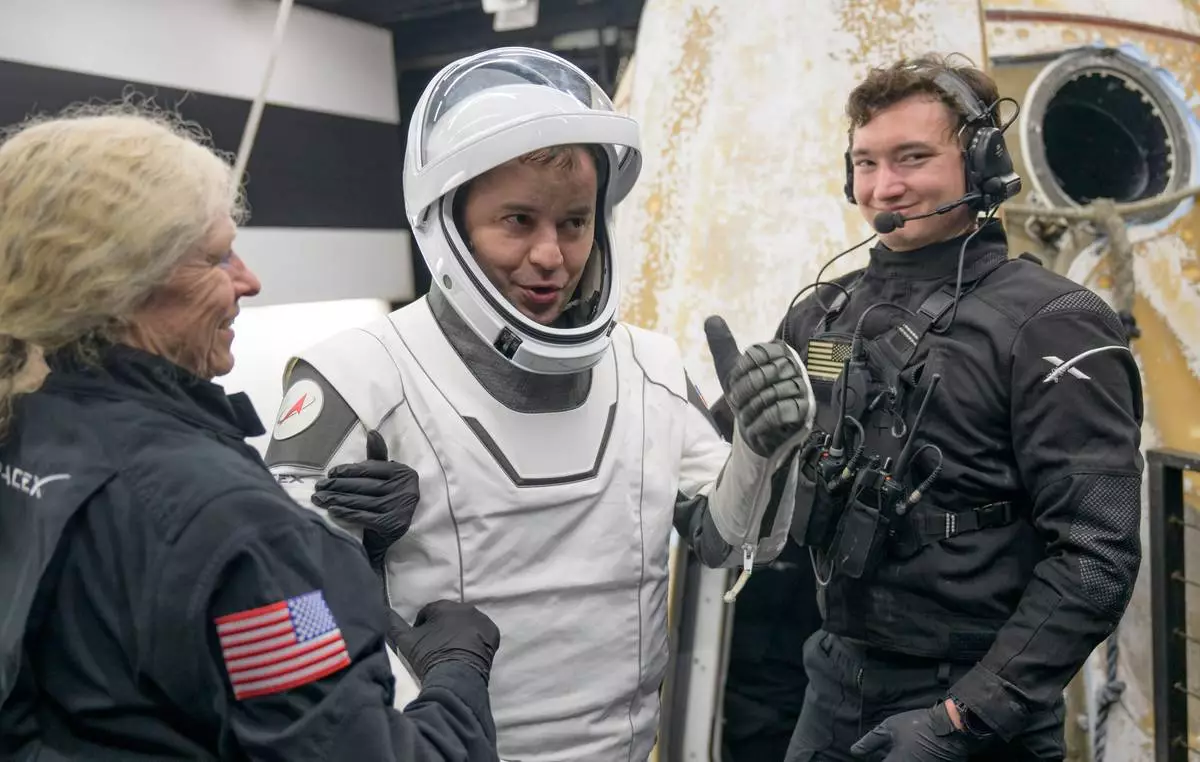
Roscosmos cosmonaut Oleg Platonov is helped out of the SpaceX Dragon Endeavour spacecraft onboard the SpaceX recovery ship SHANNON after they re-entered the earth in a middle-of-the-night splashdown near San Diego, Calif., Thursday, Jan. 15, 2026. (NASA via AP)
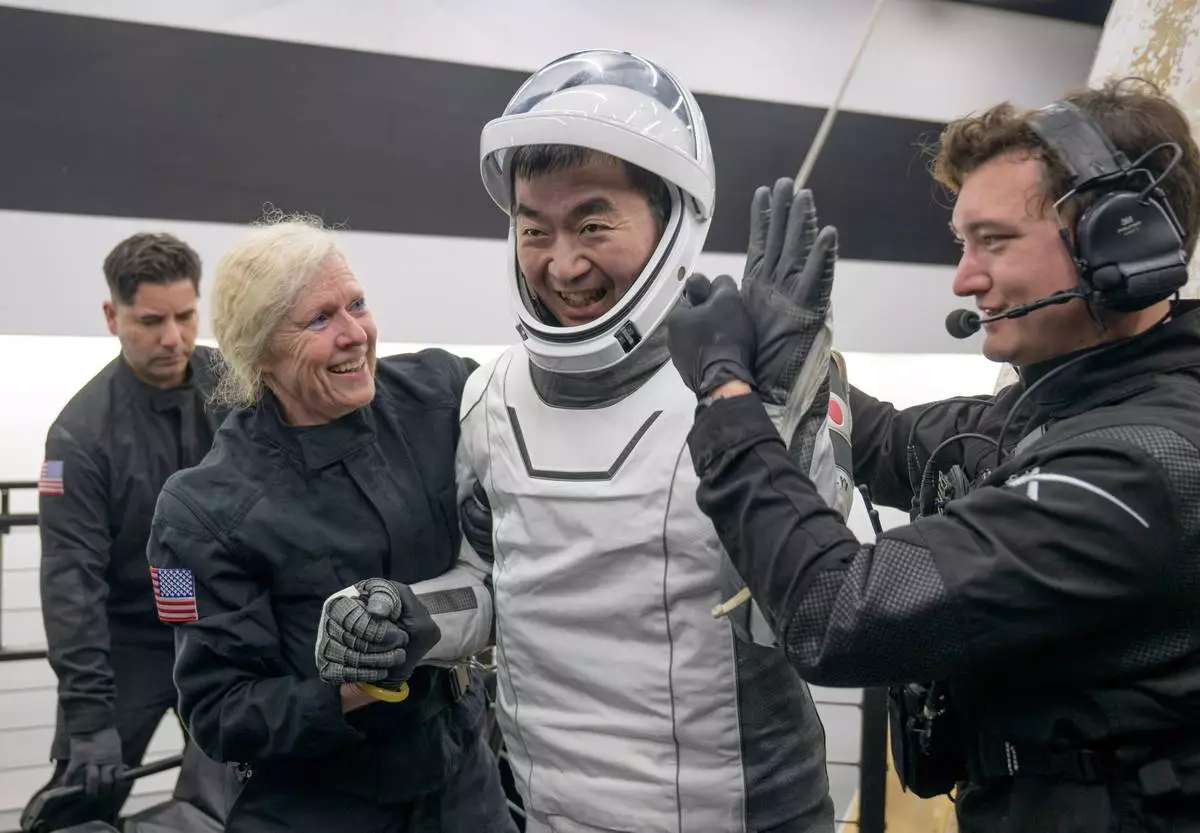
JAXA (Japan Aerospace Exploration Agency) astronaut Kimiya Yui is helped out of the SpaceX Crew-11 capsule after they re-entered the earth in a middle-of-the-night splashdown near San Diego, Calif., Thursday, Jan. 15, 2026. (NASA via AP)
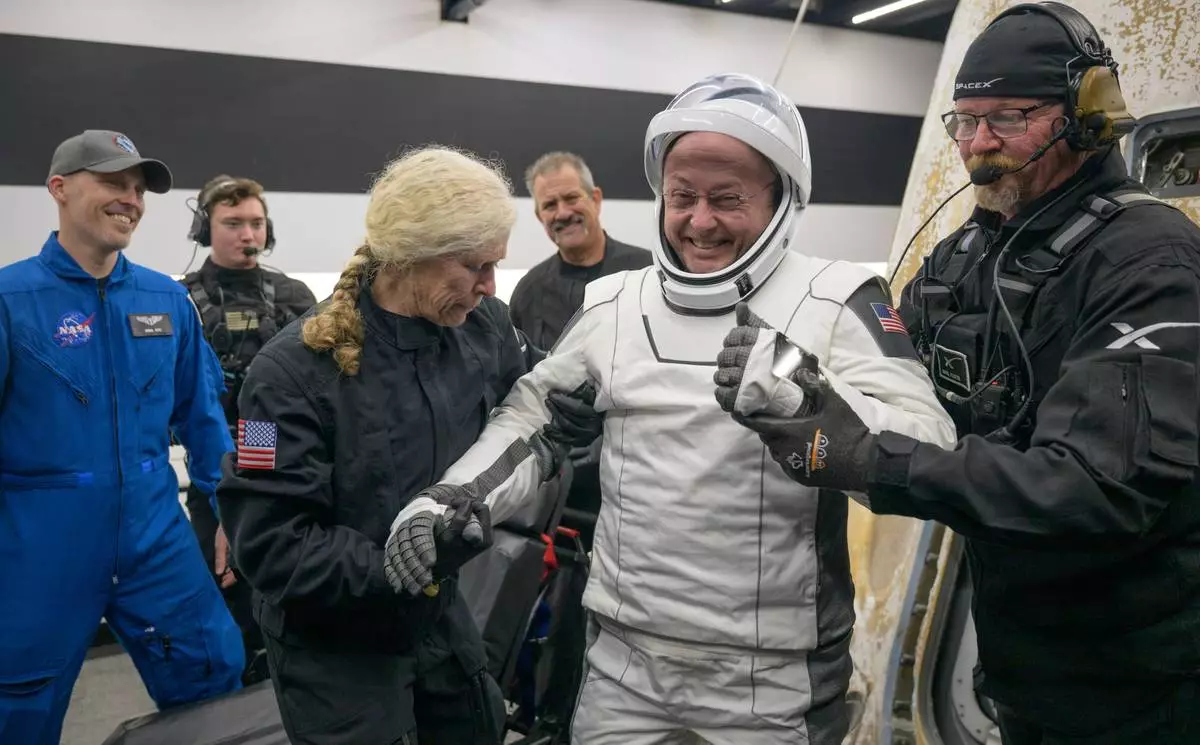
NASA astronaut Mike Fincke is helped out of the SpaceX Crew-11 capsule after they re-entered the earth in a middle-of-the-night splashdown near San Diego, Calif., Thursday, Jan. 15, 2026. (NASA via AP)

NASA astronaut Zena Cardman is helped out of the SpaceX Crew-11 capsule after they re-entered the earth in a middle-of-the-night splashdown near San Diego, Calif., Thursday, Jan. 15, 2026. (NASA via AP)
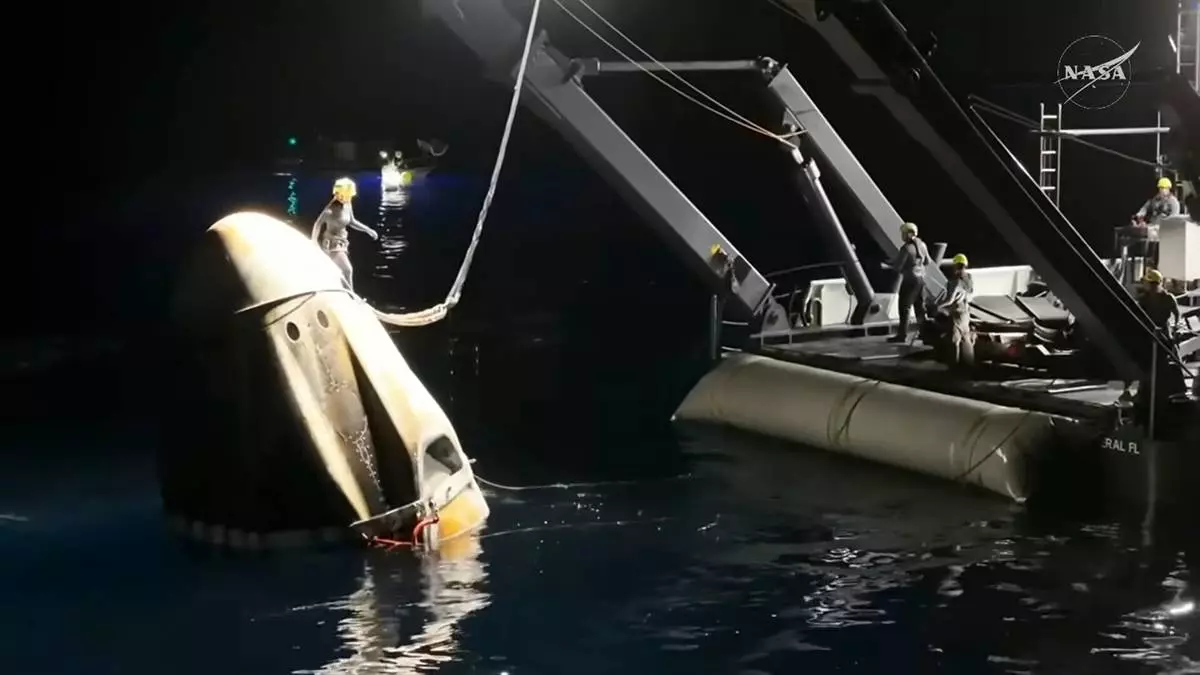
This screengrab from video provided by NASA shows the NASA's SpaceX Crew-11 capsule being taken into the recovery vessel after crew members re entered the earth in a middle-of-the-night splashdown near San Diego, Calif., Thursday, Jan. 15, 2026. (NASA via AP)
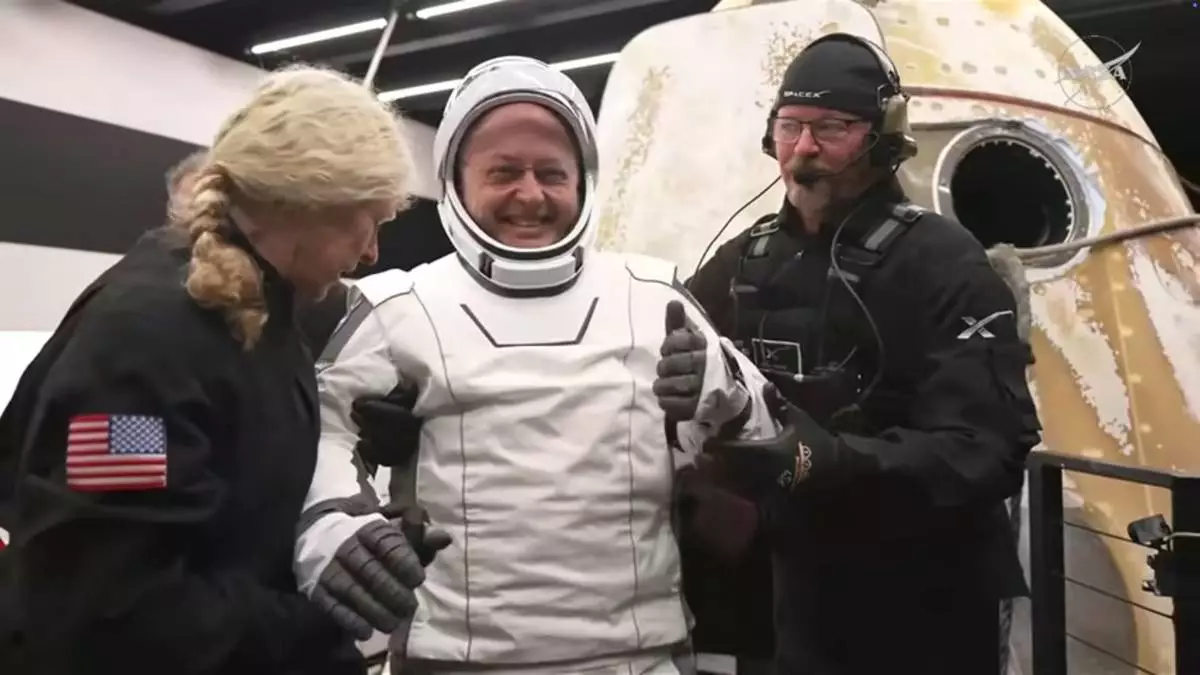
This screengrab from video provided by NASA shows NASA astronaut Mike Fincke getting helped out of the SpaceX Crew-11 capsule after they re-entered the earth in a middle-of-the-night splashdown near San Diego, Calif., Thursday, Jan. 15, 2026. (NASA via AP)

This screengrab from video provided by NASA shows NASA Japanese astronaut Kimiya Yui being helped out of the SpaceX Crew-11 capsule after they re-entered the earth in a middle-of-the-night splashdown near San Diego, Calif., Thursday, Jan. 15, 2026. (NASA via AP)

This screengrab from video provided by NASA shows Russian astronaut Oleg Platonov being helped out of the SpaceX Crew-11 capsule after they re-entered the earth in a middle-of-the-night splashdown near San Diego, Calif., Thursday, Jan. 15, 2026. (NASA via AP)

Roscosmos cosmonaut Oleg Platonov, left, NASA astronauts Mike Fincke, Zena Cardman, and JAXA (Japan Aerospace Exploration Agency) astronaut Kimiya Yui are seen inside the SpaceX Dragon Endeavour spacecraft onboard the SpaceX recovery ship SHANNON shortly after having landed in the Pacific Ocean off the coast of Long Beach, Calif., Thursday, Jan. 15, 2026. (NASA via AP)
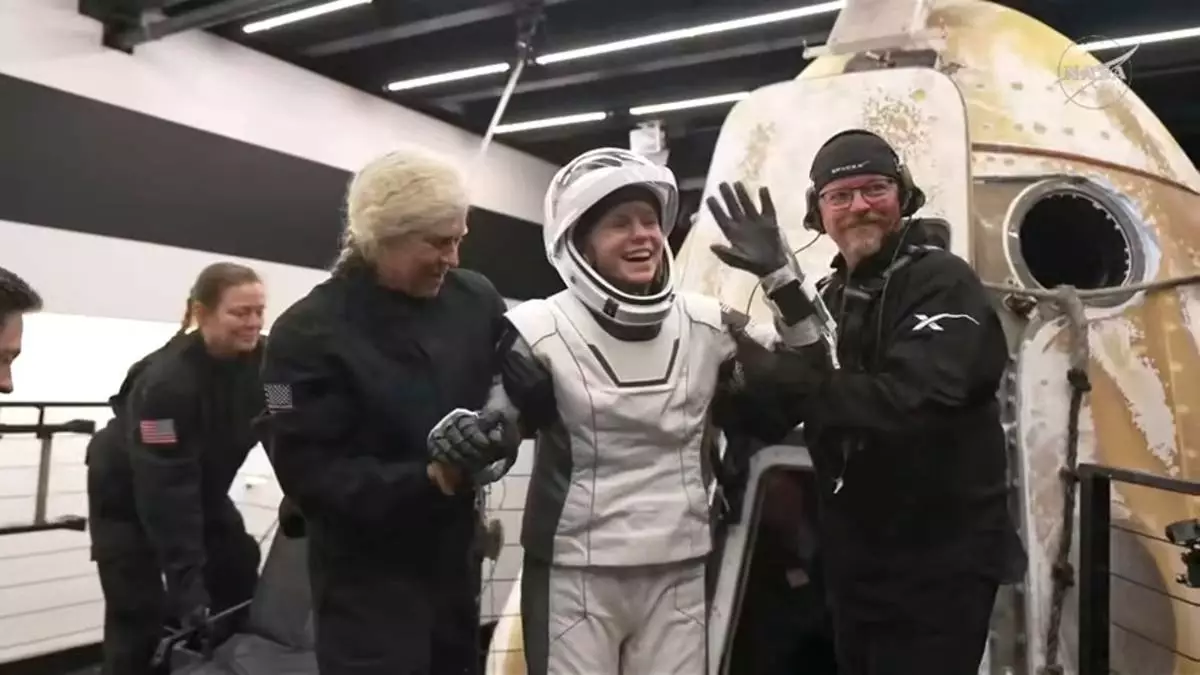
This screengrab from video provided by NASA shows NASA astronaut Zena Cardman being helped out of the SpaceX Crew-11 capsule after they re-entered the earth in a middle-of-the-night splashdown near San Diego, Calif., Thursday, Jan. 15, 2026. (NASA via AP)
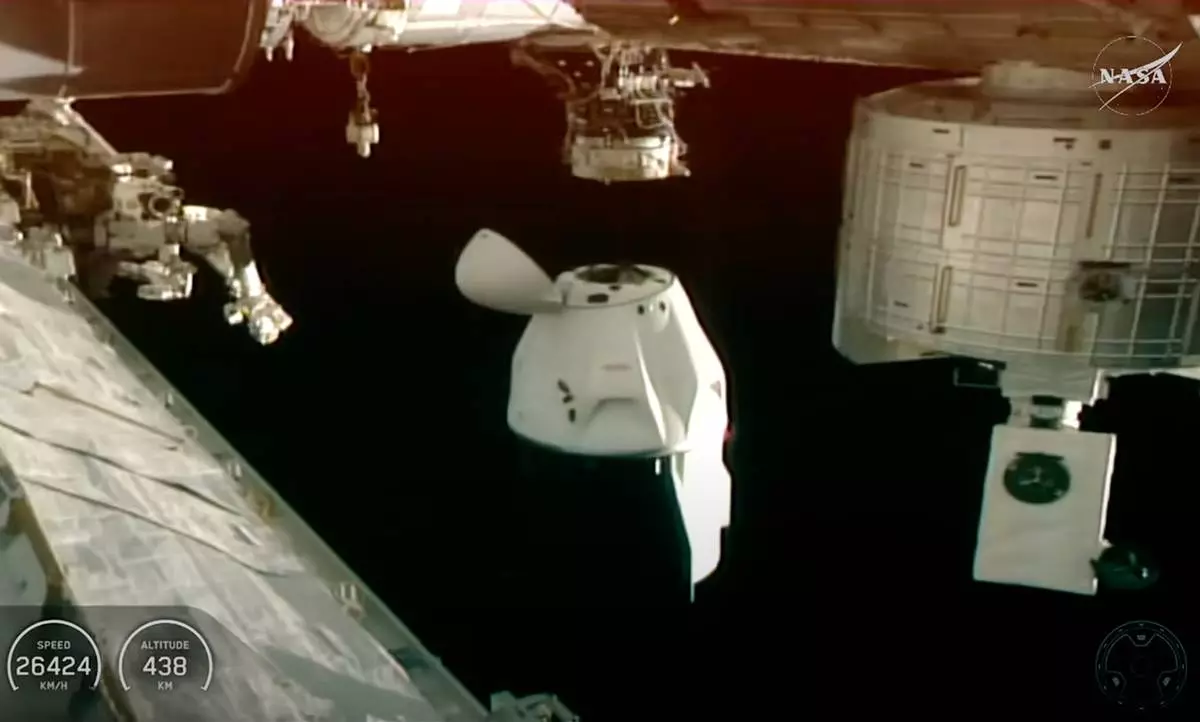
This screengrab from video provided by NASA TV shows the SpaceX Dragon departing from the International Space Station shortly after undocking with four NASA Crew-11 members inside on Wednesday, Jan. 14, 2026. (NASA via AP)
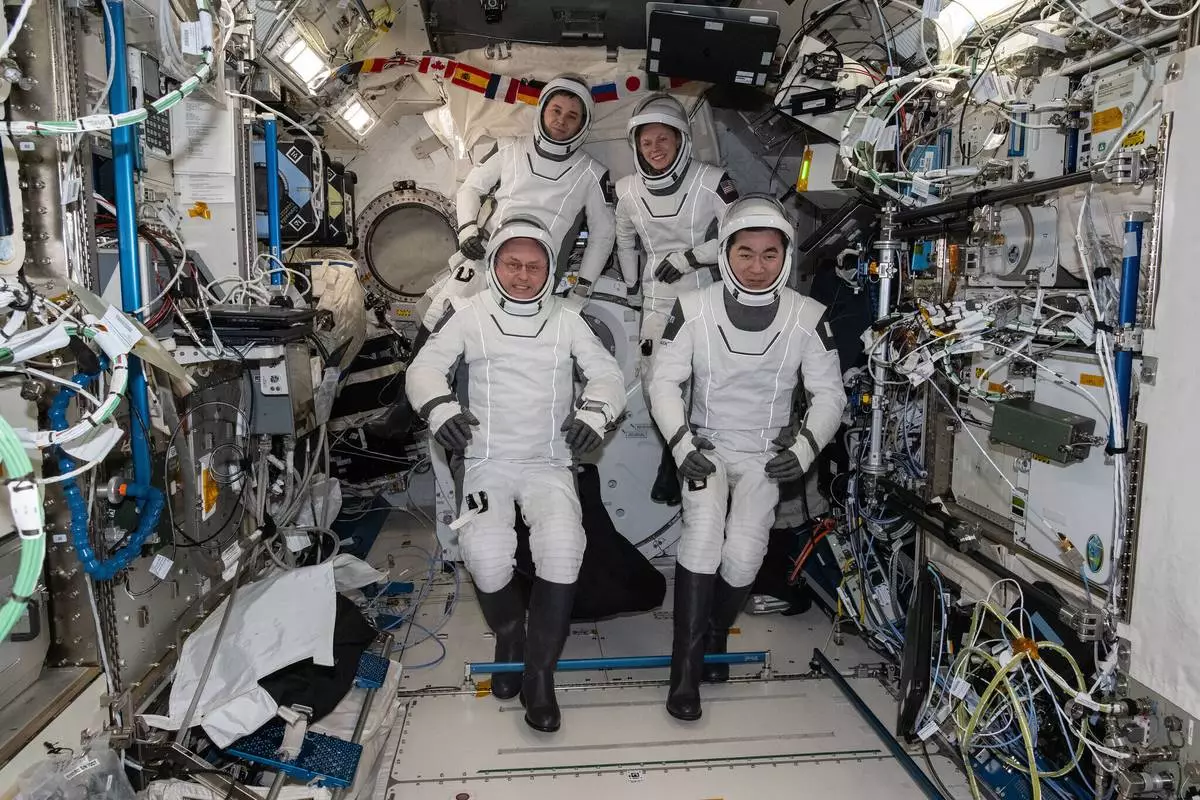
This photo provided by NASA shows clockwise from bottom left are, NASA astronaut Mike Fincke, Roscosmos cosmonaut Oleg Platonov, NASA astronaut Zena Cardman, and JAXA (Japan Aerospace Exploration Agency) astronaut Kimiya Yui gathering for a crew portrait wearing their Dragon pressure suits during a suit verification check inside the International Space Station’s Kibo laboratory module, Wednesday, Jan. 14, 2026. (NASA via AP)
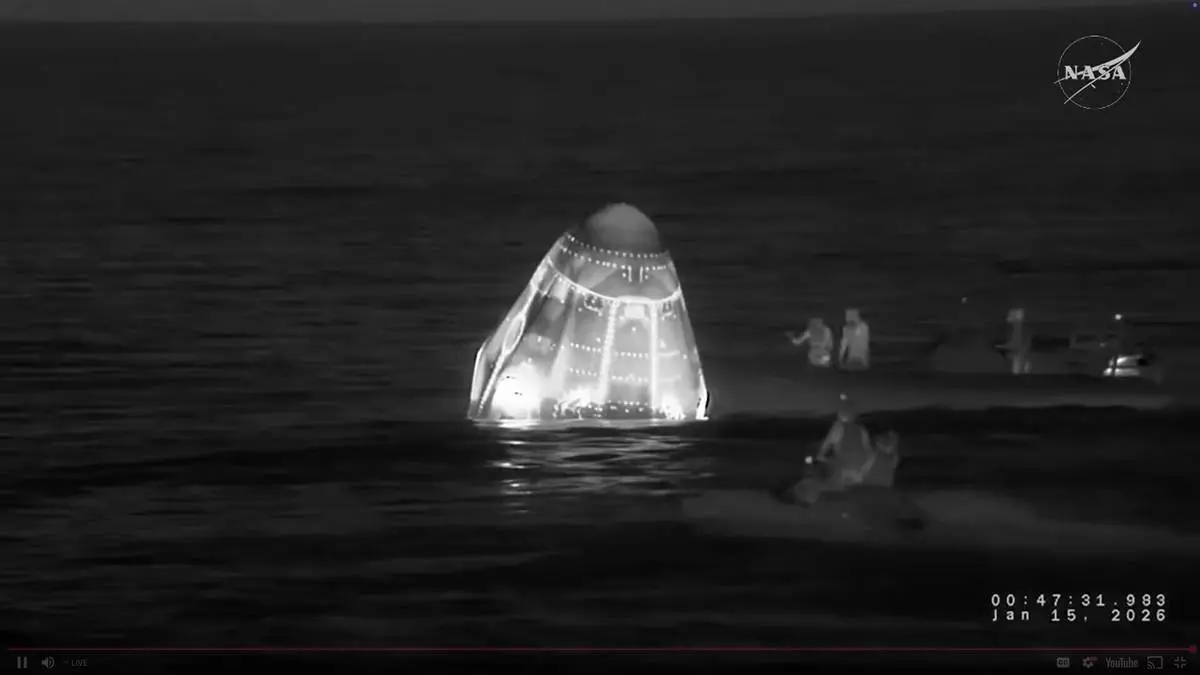
This screengrab from video provided by NASA shows recovery vessels approaching the NASA's SpaceX Crew-11 capsule to evacuate one of the crew members after they re-entered the earth in a middle-of-the-night splashdown near San Diego, Calif., Thursday, Jan. 15, 2026. (NASA via AP)
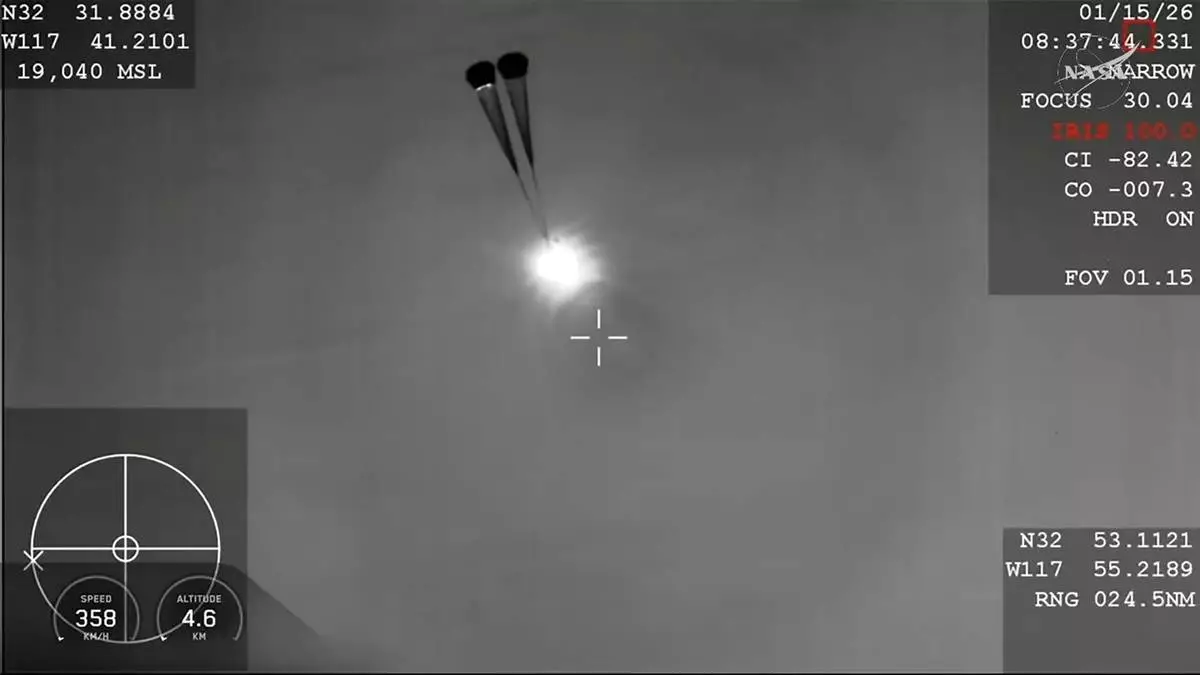
This screengrab from video provided by NASA shows the NASA's SpaceX Crew-11 members re entering the earth in a middle-of-the-night splashdown near San Diego, Calif., Thursday, Jan. 15, 2026. (NASA via AP)
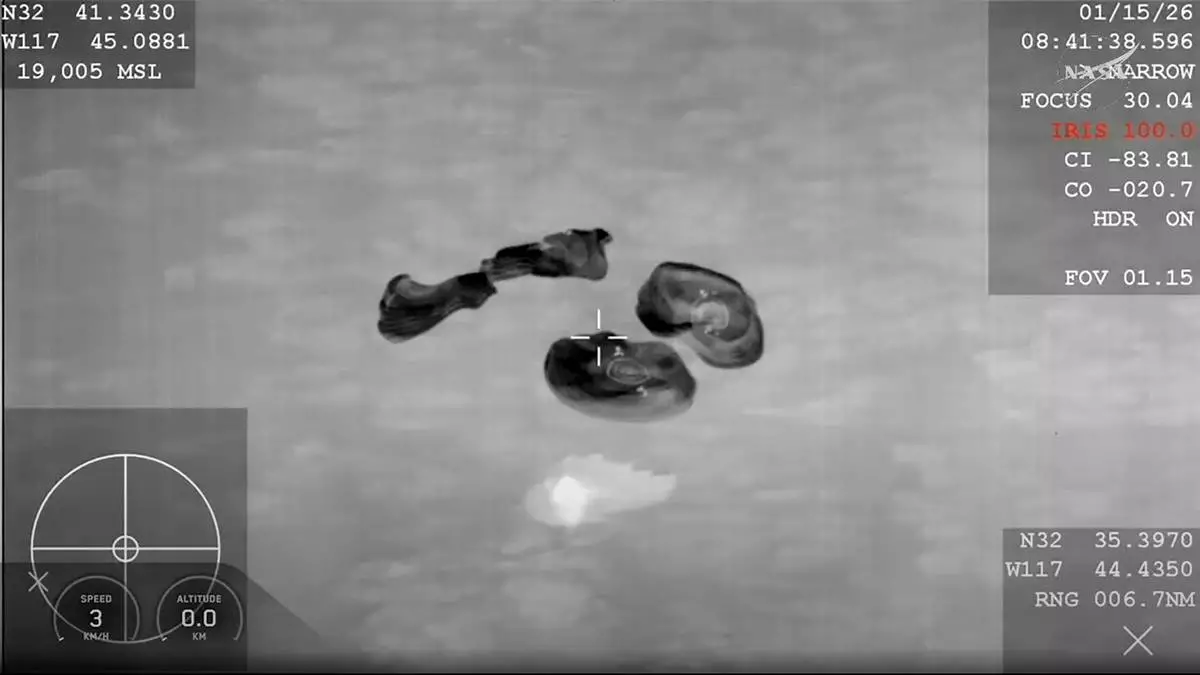
This screengrab from video provided by NASA shows the NASA's SpaceX Crew-11 members re entering the earth in a middle-of-the-night splashdown near San Diego, Calif., Thursday, Jan. 15, 2026. (NASA via AP)