Russia and Ukraine continued their attacks against each other on Monday.
The Russian Defense Ministry said in a statement on Monday that its forces had gained control of a settlement in Kharkiv, destroying a significant amount of Ukrainian military equipment.
The Russian air defense systems intercepted six US-made HIMARS rockets, one Neptune long-range cruise missile, and 356 fixed-wing drones. Furthermore, Russian forces targeted energy infrastructure in 145 locations across Ukraine, along with Ukrainian fuel storage sites and areas prepared for the storage and launch of drones.
On the same day, the General Staff of the Armed Forces of Ukraine reported that there were 231 combat encounters along the front lines in the past day.
The Ukrainian Air Force, along with missile units and artillery, struck three concentration areas of Russian personnel, weapons, and military equipment.
Furthermore, the Ukrainian Air Force said that since 20:00 on Sunday, Russian forces had launched attacks on Ukraine using 116 attack drones. By 09:00 on Monday, Ukrainian air defense had successfully shot down or suppressed 83 of those drones.
Also on Monday, multiple rounds of shelling were heard at the Zaporizhzhia Nuclear Power Plant (ZNPP) amid the longest off-site power loss of the plant, posing "growing risks" to its nuclear safety and security, according to a UN nuclear watchdog statement.
The shelling occurred in the afternoon, totaling about 15 rounds at near and middle distance from the site. The ZNPP informed the International Atomic Energy Agency (IAEA) that two rounds of shelling struck around 1.25 km from the site perimeter, the IAEA statement said.
No casualties have been reported and there was no immediate information of any damages. However, IAEA Director General Rafael Grossi said the shelling further underlined the constant dangers facing the ZNPP.
The nuclear safety and security situation is clearly not improving. On the contrary, the risks are growing, Grossi said. The plant has now been without off-site power for almost two weeks, forcing it to rely on emergency diesel generators for the electricity it needs to cool its shutdown reactors and spent fuel. This is an extraordinarily challenging situation, Grossi said.
In the statement, Grossi called for maximum military restraint near nuclear facilities and said he will continue to engage with Russia and Ukraine to restore the plant's off-site power as soon as possible.
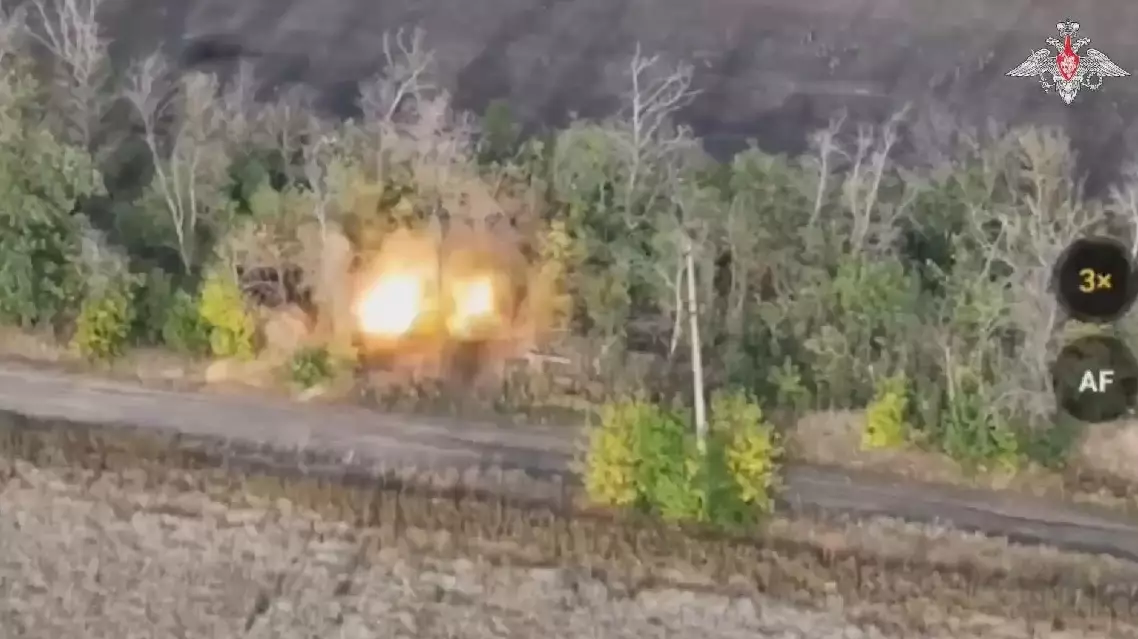
Russia, Ukraine continue their attacks against each other
Human rights action plans must roll out in diverse, context-specific pathways according to the needs of each country, experts stressed at a side event on Tuesday held at the Palais des Nations in Geneva during the 63rd session of the United Nations Human Rights Council (UNHRC).
Titled "Diverse Pathways of National Human Rights Action Plans," the event convened researchers, scholars, and civil society representatives from multiple countries to hold in-depth discussions on the formulation and execution of national human rights strategies.
Participants reached a broad consensus on the need to deepen international dialogue and mutual learning to jointly advance the healthy development of the global human rights endeavor.
At the event, Chinese experts provided a systematic overview of China's National Human Rights Action Plan, which was released in June this year.
Mao Junxiang, executive director of the Human Rights Center at Central South University in central China's Changsha City, highlighted that the action plan is closely aligned with the country's 15th Five-Year Plan (2026-2030) for national economic and social development. He outlined five defining characteristics of the plan, noting that it is grounded in reality, people-centered, keeps pace with the times, maintains a global vision, and focuses on action. Mao noted that this approach has enabled China to forge a distinct path of human rights development centered on strategic planning and concrete implementation.
Li Juan, a Chinese researcher at the same center, focused on the protection of digital rights. She introduced China's tangible achievements in bridging the digital divide through robust network infrastructure, leveraging digital and intelligent technologies to empower public services, healthcare, education, and livelihoods, and establishing sound ethical frameworks for artificial intelligence.
A representative from the China Ethnic Minorities' Association for External Exchanges detailed the country's practices in forging a strong sense of community for the Chinese nation, promoting common prosperity and development and safeguarding the equal rights of all ethnic groups.
International comparison and theoretical reflection were another key focus of the event. Peter Herrmann, a member of the European Academy of Sciences and Arts, pointed out existing shortcomings in some European countries regarding the protection of immigrants' rights and basic social welfare.
Meanwhile, Efe Can Gurcan, a Turkish scholar and researcher at the Human Rights Center of Central South University, drew upon the Vienna Declaration and Program of Action to compare the different pathways of human rights governance between China and the United States, elaborating on how diverse cultural and political contexts shape human rights practices.
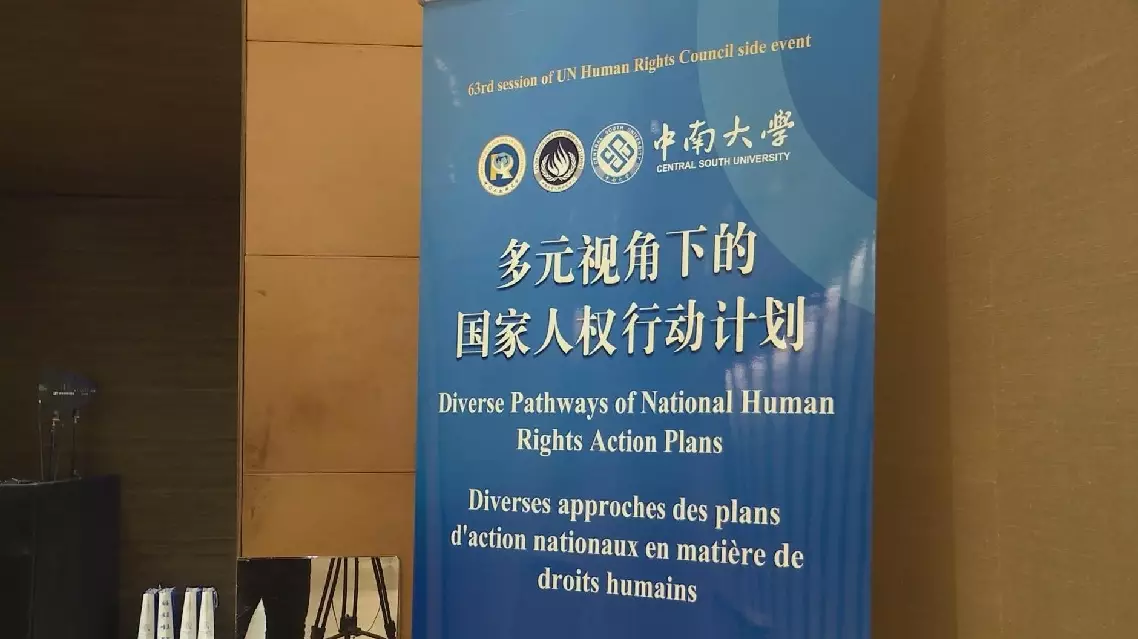
UN side event highlights diverse pathways for national human rights plans