China has launched a film-driven tourism campaign to boost holiday consumption during the National Day and Mid-Autumn Festival break, running from October 1 to 8, with service providers across the country rolling out themed activities, discounts, and cross-industry promotions.
This includes a national campaign titled "Travel Following Movies," which, alongside the Film Consumption Year initiative, encourages tourists to visit cities featured in films, promoting deeper integration between the film and tourism industries.
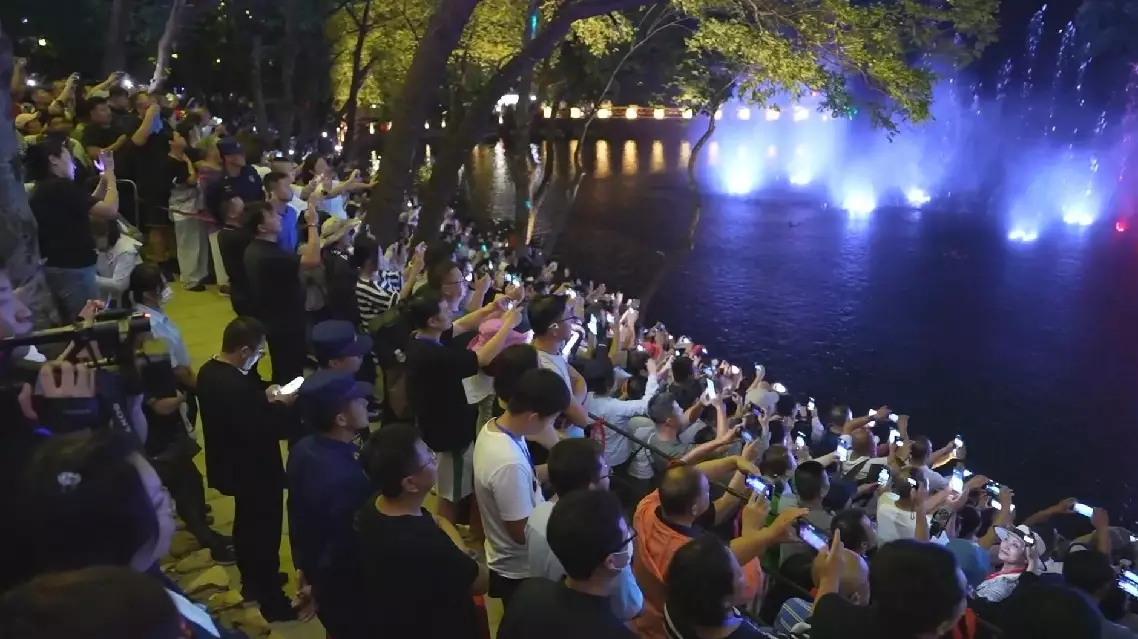
In Anshan City, northeast China's Liaoning Province, Qianshan National Park has set up an open-air film screening project that allows visitors to enjoy movies and performances for free.
As part of the regional campaign "Travel in Anshan Following Movies," the project also includes a specialties fair and snack vendors. So far, the open-air cinema has drawn more than 50,000 moviegoers.
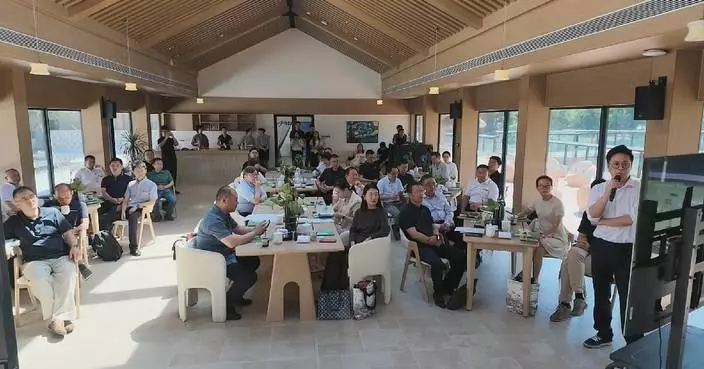
Meanwhile, the China Film Administration, together with other departments, hosted a conference to promote film-themed scenic routes across several provincial-level regions, including Fujian, Jiangxi, and Henan, as well as iconic sites like the Oriental Movie Metropolis in Qingdao and Hengdian World Studios.
These locations serve as filming or storytelling backdrops for new holiday releases such as "The Volunteers: Peace at Last", "A Writer's Odyssey 2", and "Sound of Silence".
Additionally, regions such as Beijing, Zhejiang, and Henan are offering discounts at scenic spots and hotels for travelers who present select film tickets. In north China, the Inner Mongolia Autonomous Region has introduced mutual ticket recognition across cinemas, scenic areas, theaters, and football stadiums, creating a seamless experience for culture and sports lovers alike.
China launches film-driven tourism campaign to boost holiday consumption
The two-day 2025 Brain-Computer Interface (BCI) Conference concluded on Friday in Shanghai, where multiple globally leading "China solutions" took center stage.
Under the theme "Brain connects the world, wisdom gathers in Shanghai," the event gathered research teams from major universities, leading industry developers, and experts across the BCI sector to strengthen the connection between research, application, and policy.
As part of the event, the first BCI competition featured four categories—fatigue detection, emotion recognition, brain-controlled robotic cars, and brain-controlled robotic arms - with 40 out of nearly 100 teams from across China received prizes.
In the BCI Industry Innovation Exhibition Zone, more than a dozen frontier-tech companies presented cutting-edge technologies ranging from key components to comprehensive system-level solutions.
Exhibits spanned the entire technology chain, from underlying hardware to clinical applications, covering fields such as sleep intervention, mental illness treatment, and rehabilitation for degenerative diseases—highlighting the latest trends in BCI development.
"We completed the first domestic clinical trial this March, and next year we will launch large-scale clinical trials," said an exhibitor named Chen Yaoxu.
Shanghai has established China's first future industry cluster dedicated to BCI technologies. During the conference, several new innovation platforms—including a BCI service platform and a joint laboratory for digital neuromedicine - were inaugurated.
"We are guided by clinical needs and clinical scenarios. At the same time, we are opening high-quality EEG datasets for enterprises to support their algorithm research and guide them in developing concrete products that truly address real-world needs," said Wang Zhuoyao, BCI Project manager of Shanghai Municipal Science and Technology Commission.
Shanghai conference highlights China's cutting-edge brain-computer interface innovations