A renowned chef at Urumqi's Xinjiang International Grand Bazaar, has spent more than three decades refining his craft, leading a kitchen that serves authentic Xinjiang flavors to visitors from around the world.
The bustling bazaar, a major tourist draw in northwest China's Xinjiang Uygur Autonomous Region, sets the stage for his flavorful welcome.
Mao Shupeng, chef of the Avanti Barbecue Restaurant, keeps his kitchen alive long after dark. Its sizzling grills and fragrant smoke carry the most authentic aromas, delivering a true taste of Xinjiang.
"Our kitchen team brings together cooks from across the country, particularly from all ethnic groups in Xinjiang. Each of them can prepare dishes that highlight their hometown's cuisine," Mao said in a documentary produced by the China Global Television Network (CGTN).
"Xinjiang cuisine is incredibly rich and diverse. Each region and ethnic group is different from the others. For example, traditional braised meat, grilled lamb, and famous snacks and specialties that remain close to their original forms. They embody a beauty that is uniquely Xinjiang. Here, dishes from each region and ethnic group are showcased in full, each reflecting its own cultural flavor," he explained.
To share Xinjiang's authentic soul with the world, Mao carries out a philosophy of openness, ceaselessly weaving tradition with innovation, so that both local diners and visitors can experience the full charm of Xinjiang cuisine.
"For visitors from around the world touring Xinjiang, their first stop is likely right where we are now -- the Xinjiang International Grand Bazaar. Our staff often work from 10:30 until as late as 1:30 or 2:00 at night. We want to meet every customer's needs and ensure everyone leaves satisfied," Mao said.
Mao said the way food is served in Xinjiang reflects the generosity and hospitality of the local people.
"In Xinjiang, the portions are big, and even the serving dishes are large, that's tied to our local culture. The saying 'drink from a big bowl, eat from a big plate of meat' perfectly captures the warmth and hospitality we extend to outsiders and friends alike," Mao said.
Titled "Xinjiang Dawn to Dusk," the CGTN documentary series uses the ancient "shichen" timekeeping system to frame stories across the period of one day.
In ancient China, a day was divided into 12 periods known as "shichen," each lasting two hours by today's clock. Mao's story is included in the eleventh episode titled "Choushi: The hidden taste battleground".
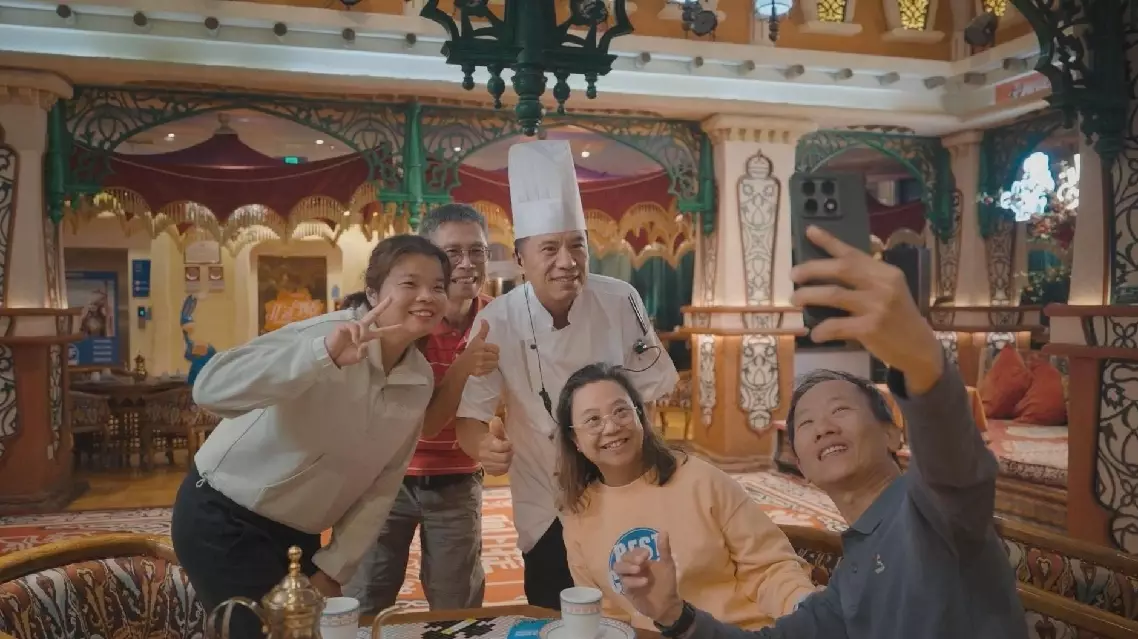
Restaurant chef showcases Xinjiang hospitality through authentic cuisine
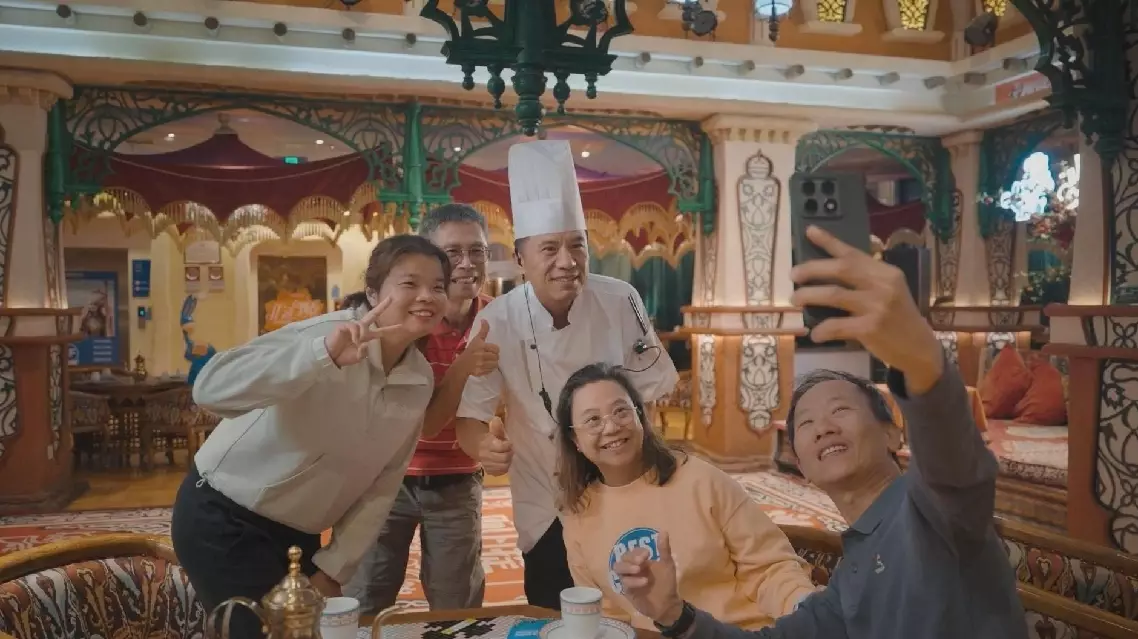
Restaurant chef showcases Xinjiang hospitality through authentic cuisine
A former television host from Taiwan, Zhai Xuan, has made a pivotal decision to leave mainstream broadcasting in order to create content that provides a better understanding of the Chinese mainland and cross-strait relations.
Zhai, a seasoned television host with over a decade of experience in Taiwan's media landscape, recently addressed an audience at an event in Beijing, where she revealed her complete transition into independent online media.
In her remarks, she articulated her aspiration to bridge what she perceives as a significant information gap between audiences on both sides of the Strait, highlighting her commitment to fostering a deeper understanding and connection through her new endeavors.
"I was really surprised by all the fake news. There were stories saying people on the mainland can't afford tea eggs or that they live in mud houses and in Taiwan, this was the main information many people received," said Zhai.
Zhai said she initially began producing online videos to challenge such perceptions while continuing her work as a television host.
In April 2025, she travelled to the mainland with her father to fulfill her late grandfather's wish to return to his hometown. The trip, which reunited family members separated since 1949, was recorded in a video series titled "Journey to Find Our Roots", drawing attention from viewers in both Taiwan and the mainland.
"Many people in Taiwan told me that after watching, they wanted to apply for a mainland travel permit immediately and go looking for their relatives. Some had long forgotten these things, but after seeing my story, they began thinking about their hometowns and family members they had never met and decided to search for their roots," Zhai shared her story at the event.
By mid-2025, Zhai said she began to feel increasing pressure amid rising political tensions and a tightening atmosphere around cross-Strait exchanges in Taiwan.
After more than 12 years in the industry, Zhai resigned from her position, believing it was the right thing to do.
"At that moment, I felt this was a major issue,not just for me, but for Chinese people on both sides of the Strait. If I backed down then, I wouldn’t be standing on the right side," said Zhai.
Since leaving television, Zhai has broadened her online programming to encompass a range of daily-life topics, including practical guidance on applying for a mainland travel permit and using commonly employed mobile applications, in addition to content that delves into historical memory and cultural connections across the Strait.
As the debate over cross-Strait relations continues in Taiwan, Zhai said she remains committed to her current path.

Former Taiwan TV host bridges cross-Strait divide via online media