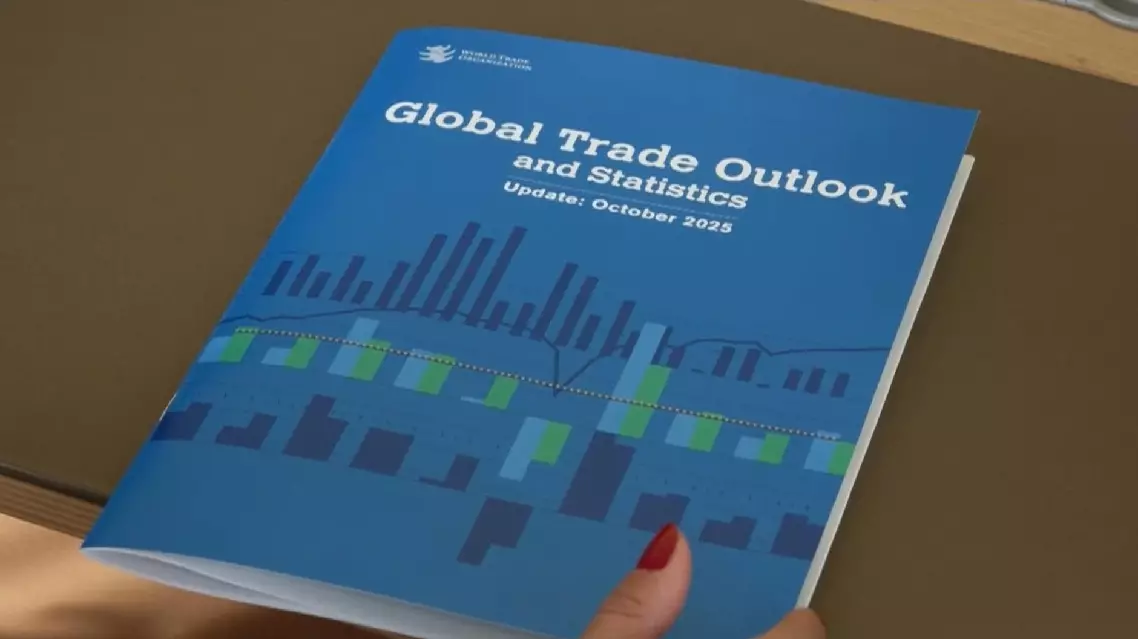
The World Trade Organization (WTO) on Tuesday raised its forecast for global merchandise trade growth in 2025 to 2.4 percent, up from its previous projection of 0.9 percent made in August, meanwhile revising the forecast for 2026 downward to 0.5 percent from 1.8 percent.
According to the WTO's latest Global Trade Outlook and Statistics report, global GDP is projected to grow by 2.7 percent in 2025 and 2.6 percent in 2026.
The report said the volume of world merchandise trade, as measured by the average of exports and imports, expanded by 4.9 percent year-on-year in the first half of this year.
The WTO attributed the strong performance to several factors, including frontloading of imports in North America ahead of expected higher U.S. tariffs, disinflation and supportive fiscal policies, solid growth in emerging markets, and a surge in trade of AI-related goods.
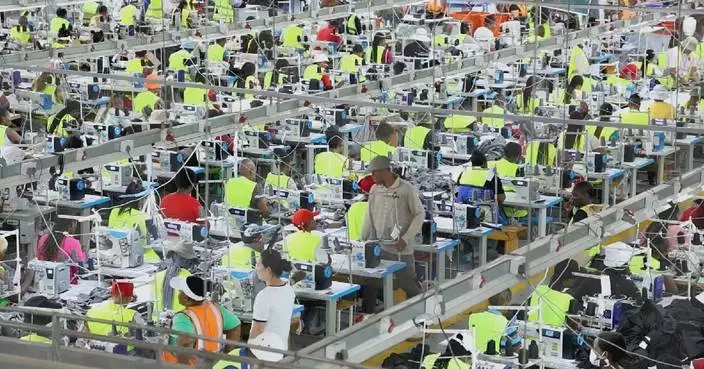
Trade among developing economies also saw a notable rise. The value of South-South trade climbed 8 percent year-on-year in the first half of 2025, outpacing the 6 percent growth in overall global trade value. AI-related goods, including semiconductors, servers, and telecommunications equipment, played a particularly significant role, accounting for nearly half of total trade growth during the same six-month period. The trade value of such products surged 20 percent year-on-year.
Europe is projected to lead services export growth in 2025, followed by Asia, the Middle East, and the Commonwealth of Independent States (CIS), it added.
At a press conference Tuesday in Geneva, WTO Director-General Ngozi Okonjo-Iweala said that despite U.S. tariff policies and an unprecedented rise in trade policy uncertainty, trade has shown resilience, demonstrating that the core of the multilateral trading system continues to work well.
"As you know, since the start of the year, we have seen unilateral actions by one of our most important members and an unprecedented rise in trade policy uncertainty. Despite the stiff headwinds, trade has shown resilience, thanks in no small part to the stability provided by the rules-based multilateral trading system and members' measured response to tariff changes," she said.
The report said the main downside risk to the outlook is the spread of trade-restrictive measures and policy uncertainty to more economies and sectors.
It warned that rising import prices and slower trade shipments could signal higher inflation later this year, as inventories decline in sectors heavily affected by tariffs.
According to the report, trade performance varies widely across regions. Asia and Africa are expected to record the fastest export growth in 2025, while Europe will likely see slower growth and North America will face declining exports.
The report also noted that the growth of services exports, though indirectly affected by tariffs, is set to slow from 6.8 percent in 2024 to 4.6 percent in 2025, and further to 4.4 percent in 2026.
"The outlook for next year is bleaker, yes. How concerned I am? Very! I am concerned. But the system, you saw what I said in my statement, that this is no time for complacency. Just because we see resilience in the system doesn't mean that we are home free because there's so much uncertainty," Okonjo-Iweala said.
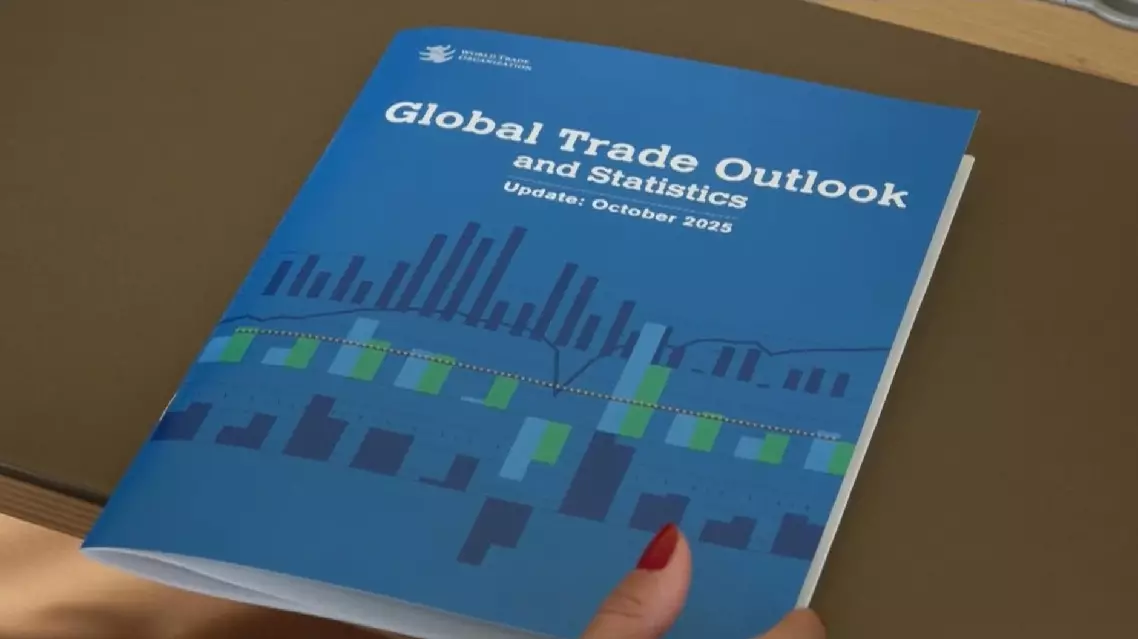
WTO raises 2025 global trade growth forecast to 2.4 pct
WTO raises 2025 global trade growth forecast to 2.4 pct