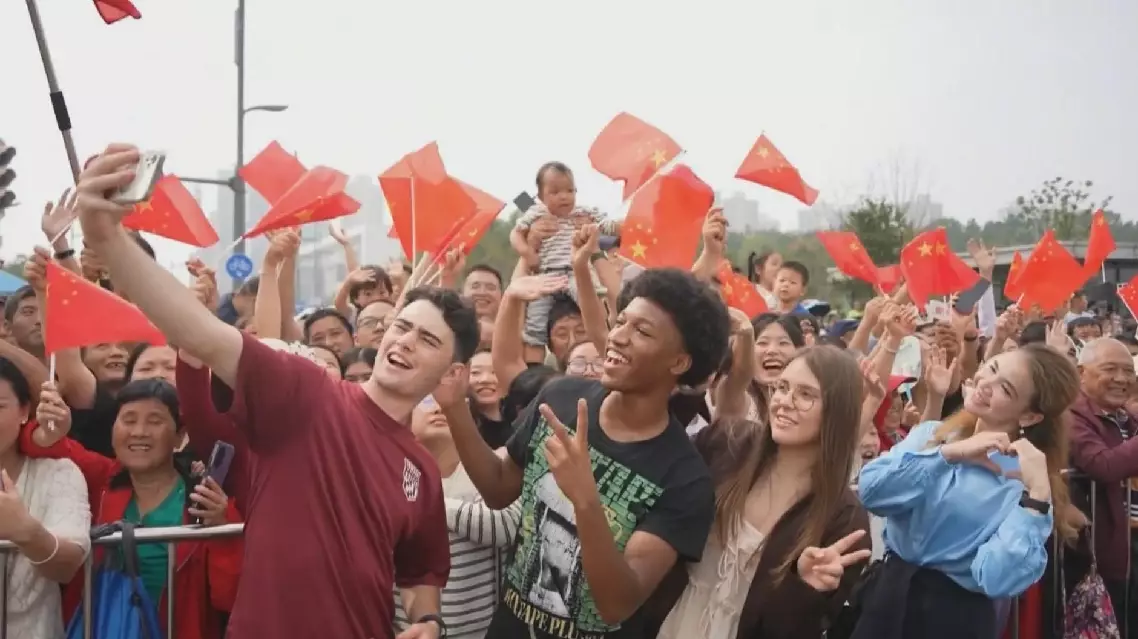
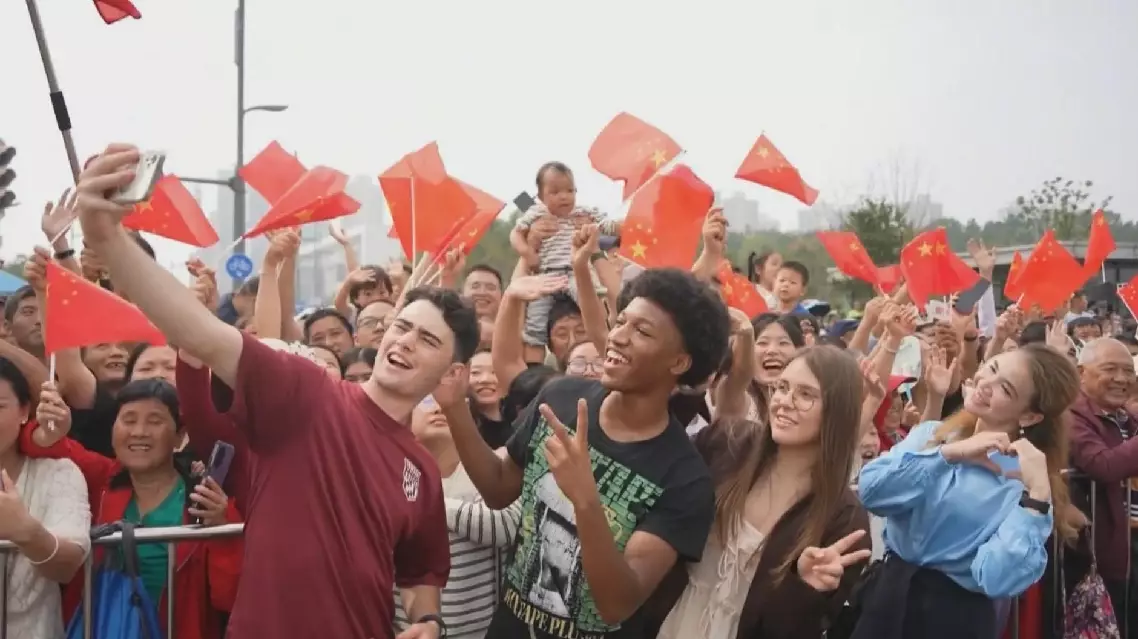
China's visa-free policies and robust transportation network have been enabling international tourists traveling further into different Chinese cities for a longer time.
At Shanghai's Yuyuan Garden, many overseas tourists described their travel plan as touring China "extensively".
"We started in Beijing and we drove through several different provinces to get here via bus. We went to someone's house and learned how to make dumplings," said an American tourist.
Similar cases can be found everywhere. Wuhan, a major transportation hub in central China's Hubei Province, has also seen numerous international travelers making multiple transfers.
"We're staying for nine days, starting in Wuhan and then ending in Chongqing. So I think there's a few stops along the way. This [city] is just the start," said a British tourist.
In the ancient city of Kashgar in northwest China's Xinjiang Uygur Autonomous Region, the vastness of the region left overseas tourists lamenting that their journeys were too short.
"I was previously in Urumqi. I took a slow train, 20 hours. Next time I go to China, I will probably come back because there is so much to see," said a Danish tourist.
Since one-way flight time often exceeds eight hours, tourists from countries like the United States, Russia, Canada, and Australia prefer taking high-speed trains multiple times to travel between different cities, connecting major metropolises like Beijing, Shanghai, and Guangzhou with characteristic small cities.
This year's National Day and Mid-Autumn Festival holiday, together with favorable policies, have fueled robust demand for inbound tourism, with the National Immigration Administration estimates showing average daily inbound and outbound passengers to hit two million during the extended holiday from Oct 1 to 8.
Visa-free policy, advanced transportation system boost inbound tourism in China
Visa-free policy, advanced transportation system boost inbound tourism in China
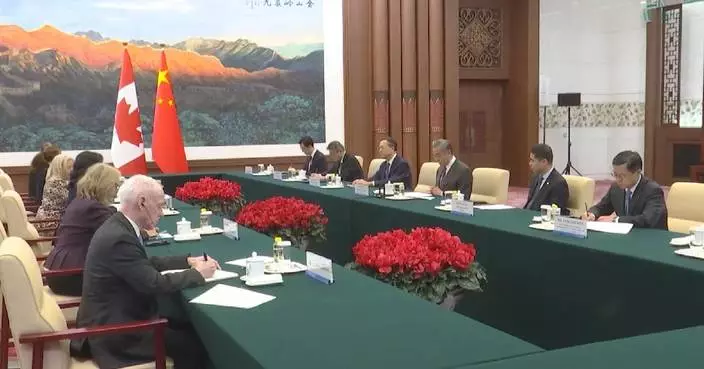
China is willing to strengthen communication, enhance trust, eliminate interference, and deepen cooperation with Canada to bring bilateral relations forward on a steady and sound track in solid strides under the new circumstances, said Chinese Foreign Minister Wang Yi on Thursday.
Wang, also a member of the Political Bureau of the Communist Party of China Central Committee, met with Canadian Foreign Minister Anita Anand in Beijing on the day.
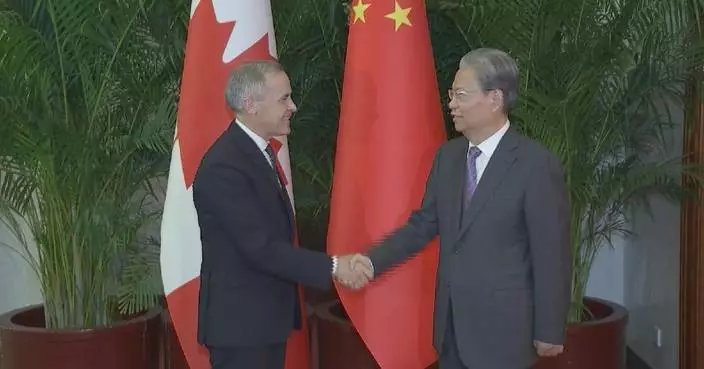
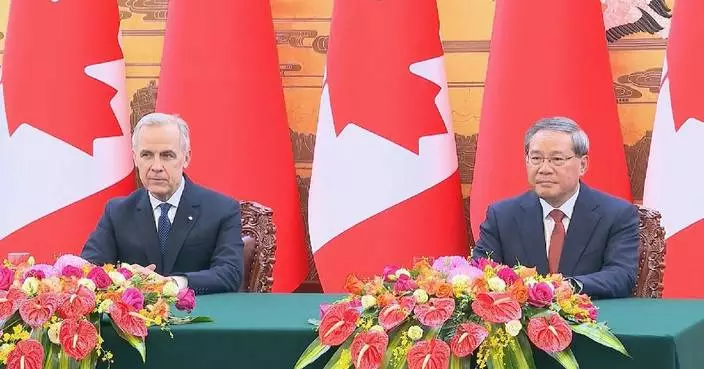
Referring to Canadian Prime Minister Mark Carney's visit to China, the first by a Canadian prime minister in eight years, Wang said the trip marks a milestone in bilateral ties and signals a turning point in the relationship.
The leaders of the two countries will hold meetings and talks, which are expected to open up new prospects for bilateral relations, said Wang.
The world today is undergoing profound and complex changes, and the impact of China-Canada relations transcends the bilateral scope, Wang noted.
Wang said that China and Canada have different social systems, stemming from different historical and cultural heritage, and based on the choices of their respective people.
He urged both sides to view each other in a rational and amicable manner with an inclusive mindset, handle issues on the basis of mutual respect, focus on the agenda of cooperation, and send positive messages so as to foster optimism, inject greater confidence into the development of bilateral relations, and jointly build a new type of strategic partnership between China and Canada.
Anand said the new Canadian government attaches great importance to relations with China. She also added that Prime Minister Carney looks forward to engaging in in-depth exchanges with Chinese leaders during the visit to set the course for the development of bilateral relations, resume dialogue in various fields, pursue more mutually beneficial outcomes, enhance coordination and cooperation in multilateral affairs, and further advance the strategic partnership between the two countries.
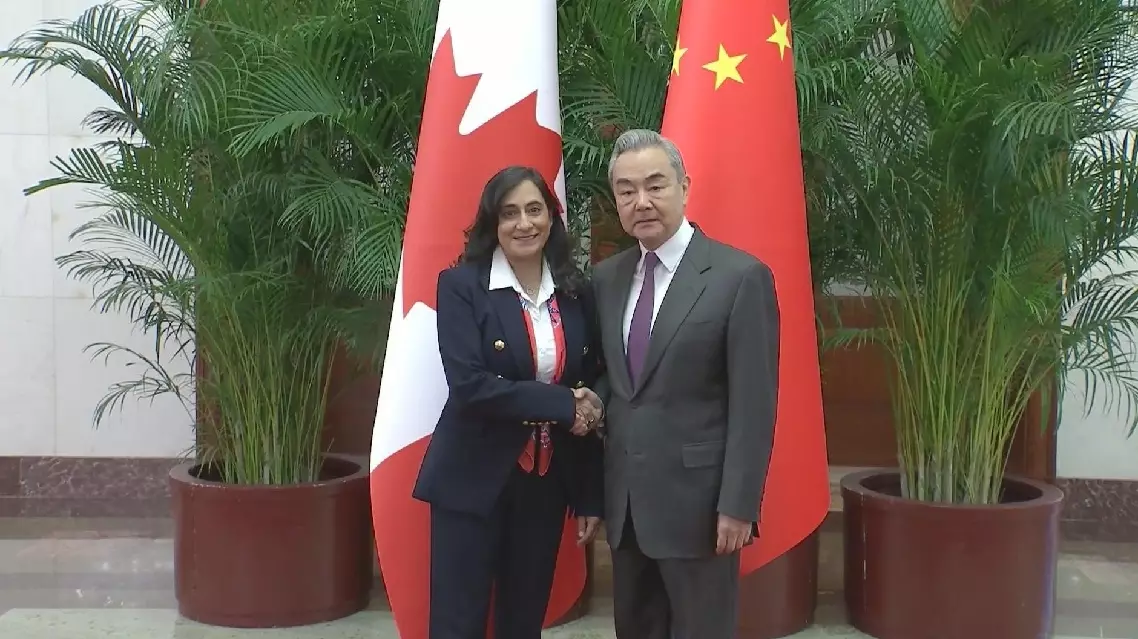
China ready to work for steady, sound ties with Canada: FM