China's Xinjiang Uygur Autonomous Region and Xizang Autonomous Region have seen record tourist arrivals so far this year, leveraging unique cultural resources and enhanced infrastructure to attract visitors amid a nationwide push for high-quality tourism development.
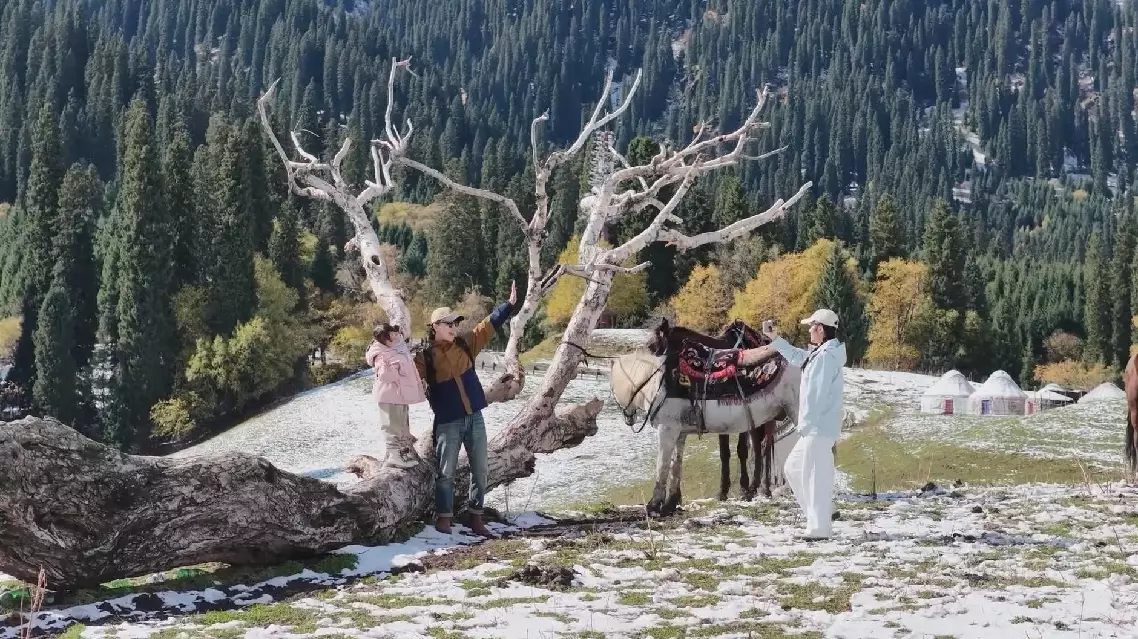
In Xinjiang, autumn has transformed the Tianshan Mountains into a picturesque destination. At the Nalati Scenic Area in Yili Prefecture, early snowfall accents golden forests, while along the Tarim River, populus euphratica forests have reached their peak viewing season.
New facilities including parking lots, lakeside bike trails, and camping bases have been added, with the daily number of visitors exceeding 15,000 during the National Day and Mid-Autumn Festival holiday period from Oct 1-8.
"The scenery is exceptionally beautiful. One visit is not enough. I will definitely look for opportunities to come back again," said tourist Xu Yiren.
Cultural tourism options have expanded significantly, with "heritage tours," "archaeological tours," and "museum tours" gaining popularity.
In the first nine months of 2025, Xinjiang has welcomed over 260 million tourists, an increase of 8.36 percent year on year, through initiatives including low-altitude tourism, vacation-style self-driving camps, and improved facilities for elderly visitors.
"We strengthen the integration of culture and tourism to boost the development of the cultural tourism industry. By establishing cultural tourism clusters, we upgrade both infrastructure and services, striving to transform the sector into an economic pillar that improves livelihoods and public well-being," said Gul Ablime, director of Xinjiang's Department of Culture and Tourism.
In Xizang, Yamdrok Lake in Shannan City has drawn crowds with improved infrastructure, while Basum Lake in Nyingchi receives approximately 6,000 daily visitors for hiking and sightseeing during the holiday, up 29 percent from last year.
"The lake water here is quite clear, and the scenery is beautiful. It brings a joyful feeling, perfect for photography," said Mr Chen, a tourist.
Xizang has launched multiple policies and promotional campaigns, including "Taste of Xizang Week," "Stargazing in Xizang," and "Winter Tours of Xizang", to support high-quality tourism development.
From January to August, the region received over 57 million domestic and international visitors, an 11.3 percent year-on-year increase, with cultural industry output exceeding 10 billion yuan.
"Leveraging Xizang's cultural and scenic strengths, we are developing a modern tourism model that highlights our distinctive local culture, stunning plateau landscapes, and special experiences. This will boost high-quality tourism growth and stimulate the market," said Li Chuanzhou, director of the Industrial Development Division under Xizang's Department of Culture and Tourism.
Xinjiang, Xizang see record tourist arrivals through cultural integration, infrastructure upgrades