Skip to Content Facebook Feature Image

Ombudsman Reveals 25 Recommendations to Improve Respite Services for Carers of Elderly and Disabled in Hong Kong.

HK

Ombudsman Reveals 25 Recommendations to Improve Respite Services for Carers of Elderly and Disabled in Hong Kong.
HK

HK

Ombudsman Reveals 25 Recommendations to Improve Respite Services for Carers of Elderly and Disabled in Hong Kong.

2025-10-09 12:47 Last Updated At:12:58

Ombudsman announces results of direct investigation operation into respite services for supporting carers of elderly persons and persons with disabilities

The following is issued on behalf of the Office of The Ombudsman:

More Images

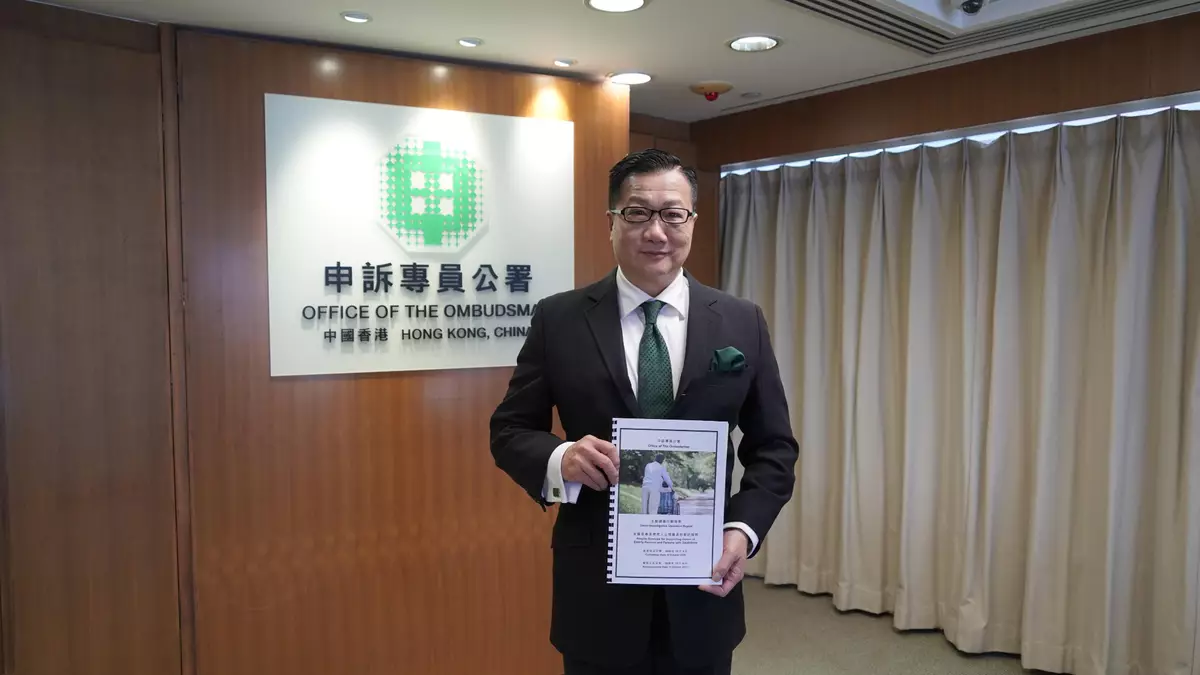
Ombudsman announces results of direct investigation operation into respite services for supporting carers of elderly persons and persons with disabilities  Source: HKSAR Government Press Releases

Ombudsman announces results of direct investigation operation into respite services for supporting carers of elderly persons and persons with disabilities Source: HKSAR Government Press Releases

Ombudsman announces results of direct investigation operation into respite services for supporting carers of elderly persons and persons with disabilities  Source: HKSAR Government Press Releases

Ombudsman announces results of direct investigation operation into respite services for supporting carers of elderly persons and persons with disabilities Source: HKSAR Government Press Releases

Ombudsman announces results of direct investigation operation into respite services for supporting carers of elderly persons and persons with disabilities  Source: HKSAR Government Press Releases

Ombudsman announces results of direct investigation operation into respite services for supporting carers of elderly persons and persons with disabilities Source: HKSAR Government Press Releases

Ombudsman announces results of direct investigation operation into respite services for supporting carers of elderly persons and persons with disabilities  Source: HKSAR Government Press Releases

Ombudsman announces results of direct investigation operation into respite services for supporting carers of elderly persons and persons with disabilities Source: HKSAR Government Press Releases

The Ombudsman, Mr Jack Chan, today (October 9) announced the completion of a direct investigation operation into the respite services for supporting carers of elderly persons and persons with disabilities, with 25 major recommendations for improvement made to the Social Welfare Department (SWD).

In recent years, tragic incidents have happened from time to time when carers succumb to unbearable pressures. At least 15 injury or fatal incidents relating to carers have occurred in the past three years in Hong Kong. Cases involving "the elderly caring for the elderly", "the elderly caring for the disabled", and "the disabled caring for the disabled" are increasingly prevalent.

Mr Chan said, "Carers are the most important, or even the sole pillar, for many elderly persons and persons with disabilities. They have made invaluable contributions to their families and society, and should be recognised and supported by society. Each and every one of these tragedies is extremely shocking and heartbreaking. Respite services form an indispensable part of the support measures for these great carers, allowing them to take a break.

"The Office of the Ombudsman (Office) acknowledges and commends the current-term Government's efforts in strengthening the support for carers and the results, including innovative and effective measures such as introducing the 24-hour Designated Hotline for Carer Support (Hotline), setting up a one-stop Information Gateway for Carers, engaging the District Services and Community Care Teams to implement the Scheme on Supporting Elderly and Carers, and launching the Carer Support Data Platform for identification of and proactive follow up on high-risk carers. Regarding respite services, the current-term Government's efforts and achievements in expanding the service network are also praiseworthy.

"Respite services offered by service providers are directly or indirectly supported by public funds through different forms of government funding. Therefore, it is entirely legitimate for members of the public to expect these publicly funded providers to offer reasonable services to carers.

"Our direct investigation reveals two major problems. First, the service utilisation rates vary significantly across districts, and service distribution is uneven. Second, some service providers have a poor record of providing services, are suspected of being unduly selective in admitting applicants, and even create unnecessary obstacles for service applicants. They have certainly failed to live up to society’s expectations of fulfilling their mission of helping the needy."

Investigation Officers of the Office scrutinised information and conducted multiple covert telephone operations, calling the Hotline and 46 day care units and residential care homes disguised as carers to enquire about respite service vacancies, application procedures, ancillary facilities and fee structures. Eight site inspections were also conducted to understand the actual enquiry and application handling by different types of service providers and the Hotline.

The Office found that the overall utilisation rates of respite services remained persistently low. In the past few years, the average utilisation rates ranged from only 50 per cent to 60 per cent for the elderly, and were even lower for persons with disabilities at only 10 per cent to 20 per cent. The utilisation rates of certain providers and districts are below 10 per cent, or are even at 0 per cent. Meanwhile, on the whole, utilisation rates varied significantly across the 18 districts. This reflects that the existing resources have not been fully or evenly utilised. Take day respite services as an example: in the past few years the average utilisation rates across the 18 districts ranged from 20 per cent to 138 per cent for the elderly, and from 4 per cent to 63 per cent for persons with disabilities. For districts with particularly strong service demands, carers will face huge difficulties in applying for the service, showing that the support for carers is still inadequate.

The consolidated findings from covert telephone operations and site inspections revealed that many service providers will assess the physical and mental condition of applicants (i.e. care recipients) before deciding on whether to admit them, by requiring them to attend an in-person interview at the premises before submitting a formal application. For carers who need the services urgently, the requirement of a prior interview could frustrate and cause increased stress to them. Moreover, some service providers require applicants to undergo additional medical examinations at their own expense beyond the basic scope specified by the SWD. Such examinations could include a chest X-ray, blood and urine tests, physiotherapy and even mental health assessments, etc, which would create unnecessary obstacles and financial burdens for carers. The SWD currently permits service providers to impose extra requirements for medical examinations without clear regulations, and it is difficult to assess whether these extra items are necessary.

The Office also encountered astonishing responses of some service providers during the covert telephone operations. Some refused to disclose vacancy availabilities to carers or even unreasonably rejected their applications for different reasons. Some declined applicants who wished to use respite services for only a few days, or only accepted application for use of respite services for months. Some declined applications on an urgent basis, claiming insufficient staffing to offer respite services, and requiring applicants to visit the premises in person and confirm its suitability before disclosing vacancies. The Office also encountered extremely unhelpful staff who failed to respond to enquiries and hastily ended the call after instructing the caller to consult social workers instead. Meanwhile, many service providers immediately replied that there were no vacancies when responding to telephone enquiries, contrary to the information displayed in the SWD's Vacancy Enquiry System for Respite Services and Emergency Placement (Enquiry System). During the Office's investigation, Hotline social workers shared that they encountered similar difficulties when using the Enquiry System for respite service matching.

Furthermore, elderly persons and persons with disabilities are mostly frail and inconvenient to travel. They might even be wheelchair bound. When elderly carers accompany their family to respite service units, they might encounter immense difficulties in walking up or down the staircases or travelling by public transportation. They might give up respite service if they cannot afford taxi fare. The investigation revealed that very few service providers operate transfer services for users. It is noteworthy that the Hotline provides reimbursement of taxi fares on an accountable basis for callers in need, and even outreach services for escorting users to the respite premises. If promoted and expanded, such measures are beneficial to more carers, the elderly and persons with disabilities.

Mr Chan said, "Consolidating our findings, we cannot rule out that the low utilisation rates are partly attributable to the lukewarm attitude of some service providers, their improper handling of service enquiries and applications, suspected undue selection of applicants and even creation of unnecessary obstacles for service applicants, as well as not attaching importance to updating vacancy information in the Enquiry System.

"The mission of social welfare services is to alleviate poverty, support the disadvantaged and provide care for needy persons. The practitioners shoulder heavy responsibilities and society places high expectations on them. However, our investigation revealed that certain service providers did not fulfil their mission, as they disregarded the welfare of needy carers, elderly and persons with disabilities. The performance of these service providers is most disappointing. Such black sheep certainly failed to live up to society’s expectations and jeopardised the professionalism of the social welfare sector and the trust of our citizens.

"We must emphasise that all these service providers are subsidised by the SWD and are using public funds to provide services; this is not pro bono volunteer work. They have a duty to offer quality services to people in need, not to mention vulnerable groups in serious need of help. The SWD, as the regulatory authority, also bears an undeniable responsibility. Despite a strong demand for respite services, the utilisation rates of certain providers and districts are below 10 per cent, or are even at 0 per cent. The SWD and the service providers concerned should deeply reflect on the actual reason for the very low utilisation rates. In fact, some service providers with utilisation rates at 0 per cent had improved this immediately and even significantly raised their utilisation rates following supervision by the SWD, demonstrating that proactive efforts could yield tangible results. The Office considers it incumbent on the SWD to explore feasible measures to increase service providers’ proactiveness, and to strengthen service monitoring vigorously.

"Although the performance of some service providers was unsatisfactory, there are also service providers which are committed to serving people in need. The Office acknowledges and appreciates their contribution. I appeal to all in the social welfare sector to put forth their best efforts for the well-being of carers, improve respite services to share their burdens and relieve their pressure in a timely manner, prevent tragedies and benefit society."

Overall, the Office has made 25 major recommendations for improvement to the SWD regarding the operational arrangements for respite services, including application procedures, ancillary facilities and information provided for carers, service planning, utilisation and monitoring, and publicity and promotion. The Office is pleased to note that the SWD has accepted all the recommendations.

The Office's major recommendations for improvement to the SWD include:

  • request service providers to review the necessity for prior interviews with applicants, and encourage streamlining of application procedures as far as possible, such as conducting telephone or video assessments;
  • thoroughly review the current medical examination requirements imposed by all service providers; any providers requiring additional examination items beyond the basic scope must justify the necessity and obtain prior approval from the SWD;
  • explore jointly with service providers the establishment of a pre-registration mechanism under which carers can complete registration procedures in advance, and service providers can gain an early understanding of users’ conditions and level of care. Carers in need of services anytime can simply sign a declaration confirming that the situation has not changed, allowing them to obtain services at the shortest possible notice for emergency relief;
  • step up reminding service providers of their responsibility of the timely updating of vacancy information and other details in the Enquiry System, and enhance monitoring to ensure compliance;
  • encourage service providers currently operating a transfer service with their own vehicles to extend it beyond long-term care residents to also support respite service users as far as possible. For providers without their own transfer service, encourage them to proactively seek assistance from the Hotline for its social workers to offer transport assistance and an accompaniment service for users in need;
  • continue making regular spot checks by means of telephone investigations disguised as carers, and expand the scope to cover all types of service providers; make recommendations to any service providers with inadequacies found and implement monitoring measures;
  • based on the demand and utilisation patterns of different types of respite services, explore feasible measures to increase service providers’ proactiveness to offer respite services, thereby raising utilisation rates;
  • comprehensively review the distribution of respite service places to address the supply imbalance across districts; and
  • step up encouraging service providers to organise more experiential activities to help carers better understand respite services, boost their confidence, and allow elderly persons and persons with disabilities to adapt to the respite environment in advance.
  • The full investigation report is available on the website of the Office of The Ombudsman at www.ombudsman.hk for public information.
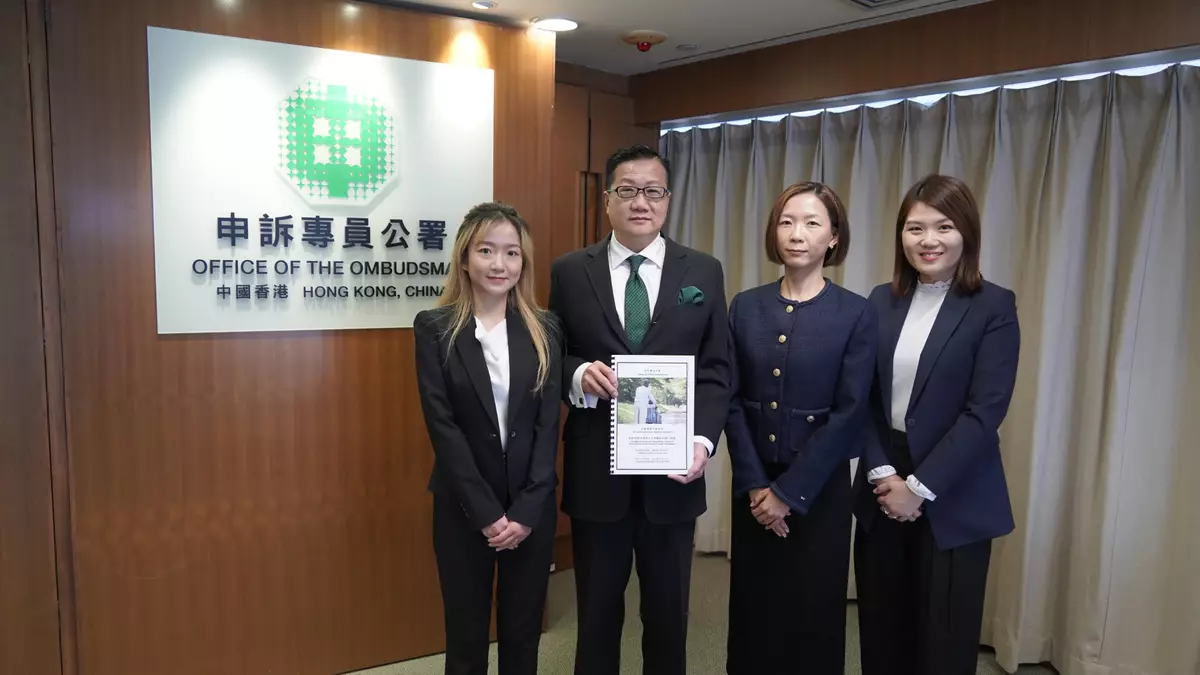
    Ombudsman announces results of direct investigation operation into respite services for supporting carers of elderly persons and persons with disabilities  Source: HKSAR Government Press Releases

    Ombudsman announces results of direct investigation operation into respite services for supporting carers of elderly persons and persons with disabilities Source: HKSAR Government Press Releases

    Ombudsman announces results of direct investigation operation into respite services for supporting carers of elderly persons and persons with disabilities  Source: HKSAR Government Press Releases

    Ombudsman announces results of direct investigation operation into respite services for supporting carers of elderly persons and persons with disabilities Source: HKSAR Government Press Releases

    Ombudsman announces results of direct investigation operation into respite services for supporting carers of elderly persons and persons with disabilities  Source: HKSAR Government Press Releases

    Ombudsman announces results of direct investigation operation into respite services for supporting carers of elderly persons and persons with disabilities Source: HKSAR Government Press Releases
    Ombudsman announces results of direct investigation operation into respite services for supporting carers of elderly persons and persons with disabilities  Source: HKSAR Government Press Releases
    Ombudsman announces results of direct investigation operation into respite services for supporting carers of elderly persons and persons with disabilities Source: HKSAR Government Press Releases
    FEHD releases fourth batch of gravidtrap indexes for Aedes albopictus in May

    The Food and Environmental Hygiene Department (FEHD) today (May 21) released the fourth batch of gravidtrap indexes and density indexes for Aedes albopictus in May, covering 12 survey areas, as follows:

    District

    Survey Area

    May 2026

    First Phase Gravidtrap Index

    First Phase Density Index

    Eastern

    Shau Kei Wan and Sai Wan Ho

    9.1%

    1.4

    Islands

    Tung Chung

    2.0%

    1.0

    Kowloon City

    Hung Hom and To Kwa Wan

    6.7%

    1.5

    Tai Po

    Tai Po East

    2.2%

    2.0

    Tai Po West

    15.5%

    1.0

    Tuen Mun

    Tuen Mun South

    9.1%

    1.4

    District

    Survey Area

    May 2026

    Area Gravidtrap Index

    Area Density Index

    Central and Western

    Kennedy Town and Shek Tong Tsui

    16.8%

    1.3

    Eastern

    Chai Wan

    15.4%

    1.0

    North Point and Quarry Bay

    18.9%

    1.4

    Southern

    Aberdeen and Ap Lei Chau

    20.8%

    1.7

    Sha Tin

    Sha Tin Town Centre and Fo Tan

    18.3%

    1.4

    Tsuen Wan

    Tsuen Wan Town

    6.9%

    2.3

    The fourth batch of gravidtrap indexes for Aedes albopictus in May includes First Phase Gravidtrap Indexes covering six survey areas and Area Gravidtrap Indexes covering six survey areas. Among which, six survey areas recorded gravidtrap indexes above 10 per cent, while Aberdeen and Ap Lei Chau in Southern District recorded a gravidtrap index above 20 per cent. Meanwhile, the gravidtrap indexes of six survey areas, namely Kennedy Town and Shek Tong Tsui in Central and Western District; North Point and Quarry Bay in Eastern District; Shau Kei Wan and Sai Wan Ho in Eastern District; Aberdeen and Ap Lei Chau in Southern District; Tai Po East in Tai Po District; and Tuen Mun South in Tuen Mun District, have recorded a decrease as compared to the indexes recorded in the last survey period, reflecting the progress of relevant mosquito control work.

    With reference to the data from the past few years, the gravidtrap indexes start to rise from April or May every year. The actual timing and extent of the rise are affected by factors like weather conditions and rainfall. The average temperature and rainfall recorded in April this year were higher than those in the same period last year, creating favourable conditions for mosquito growth and breeding. As a result, the rise in gravidtrap indexes occurred earlier this year. With the increase in rainfall in May, the gravidtrap indexes are expected to rise further.

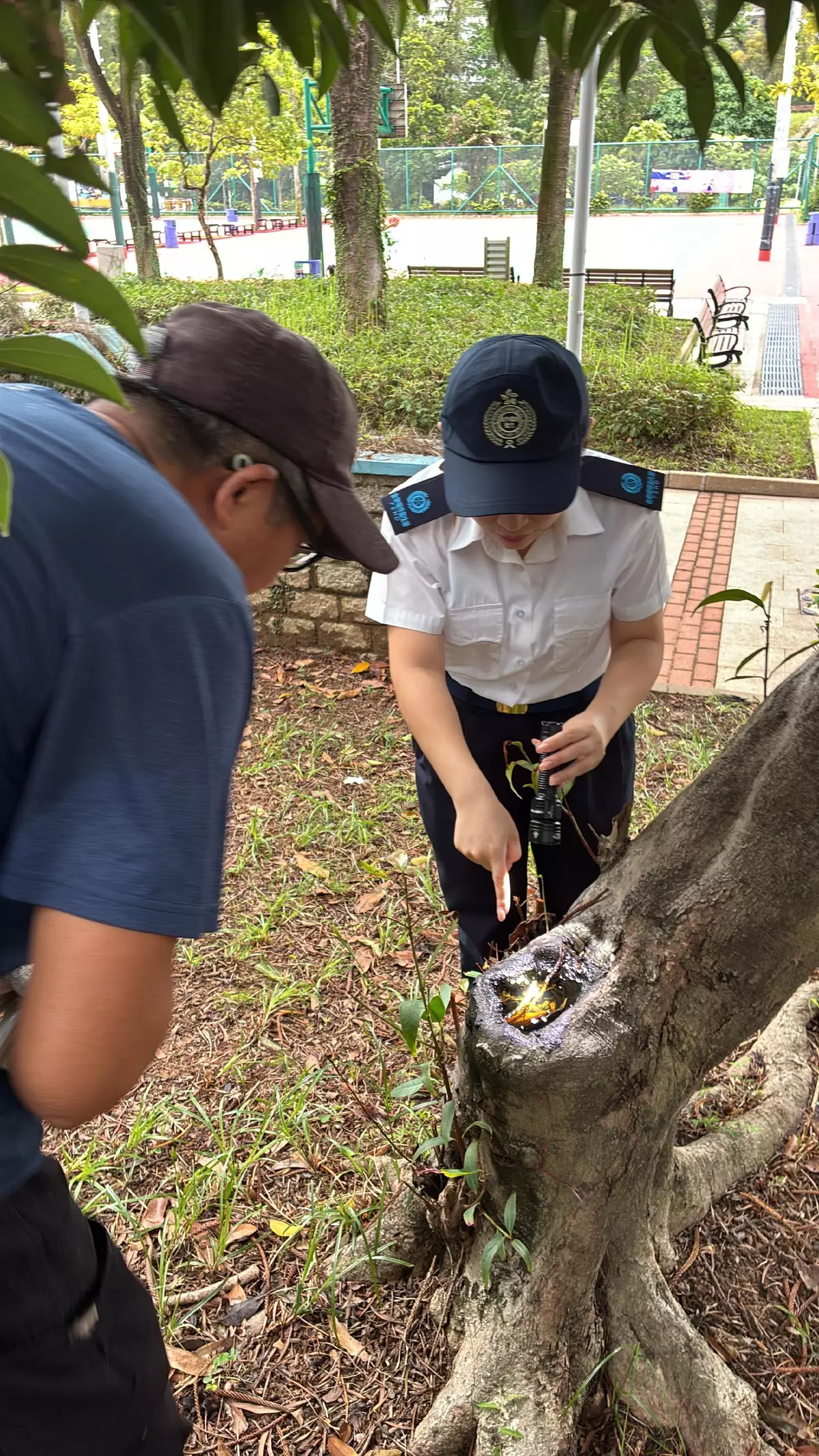
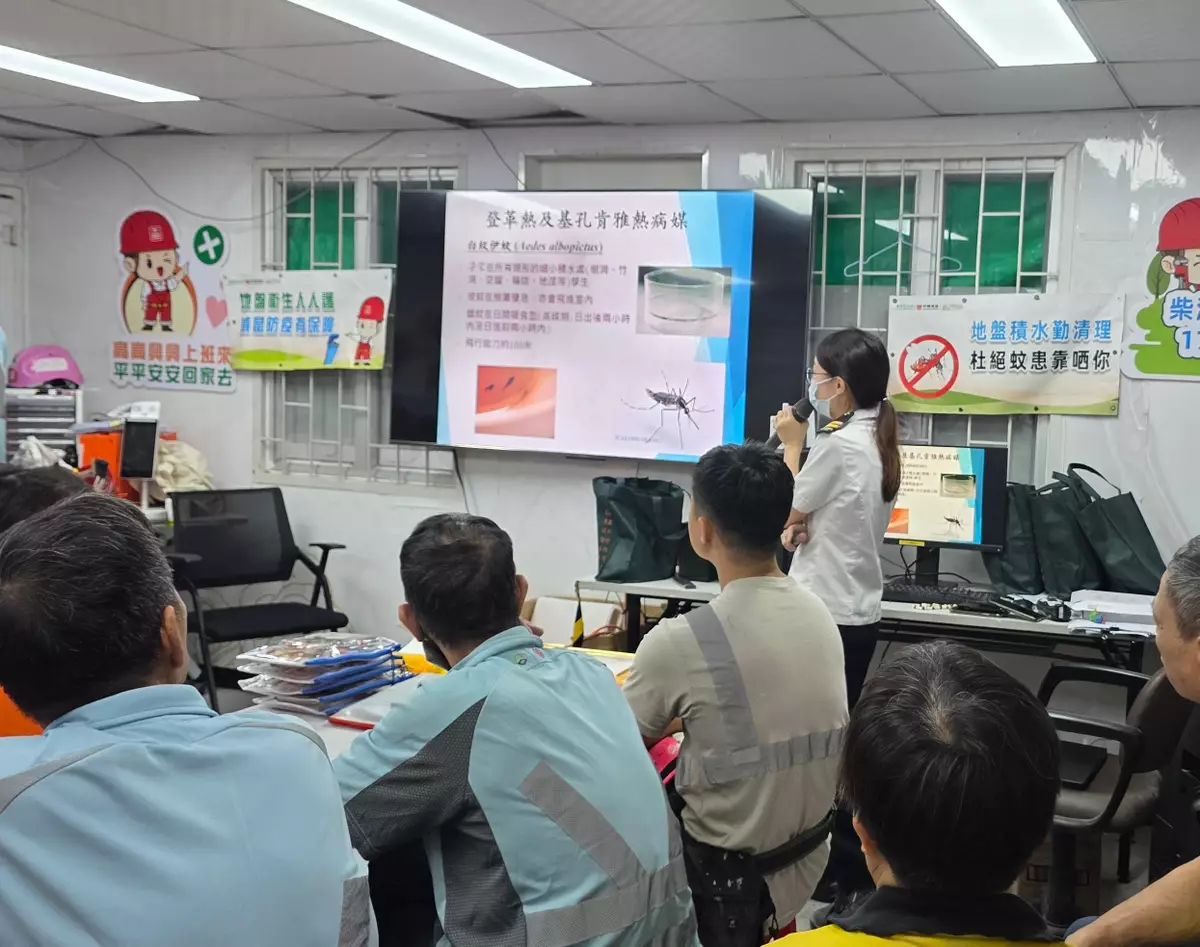
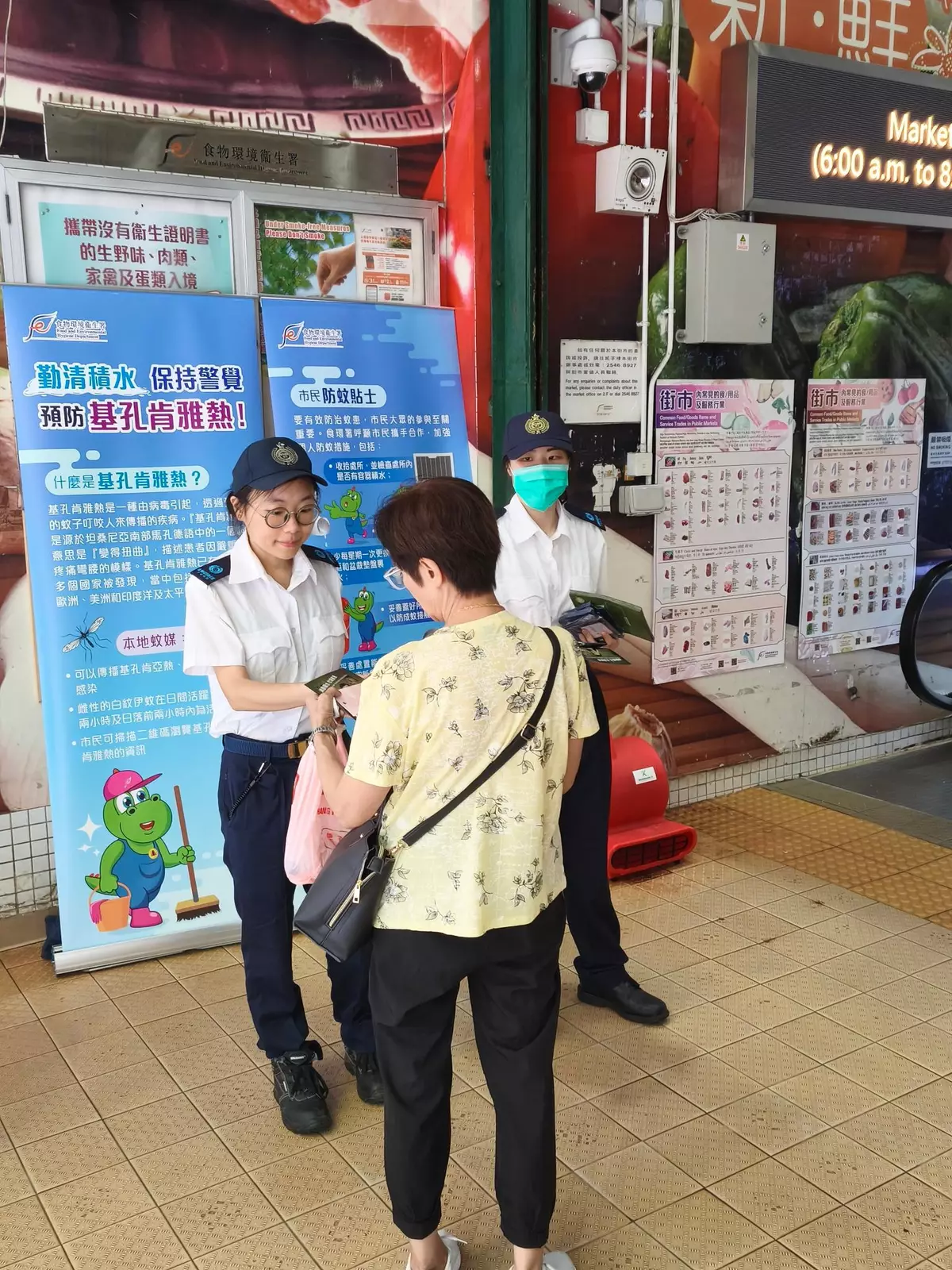
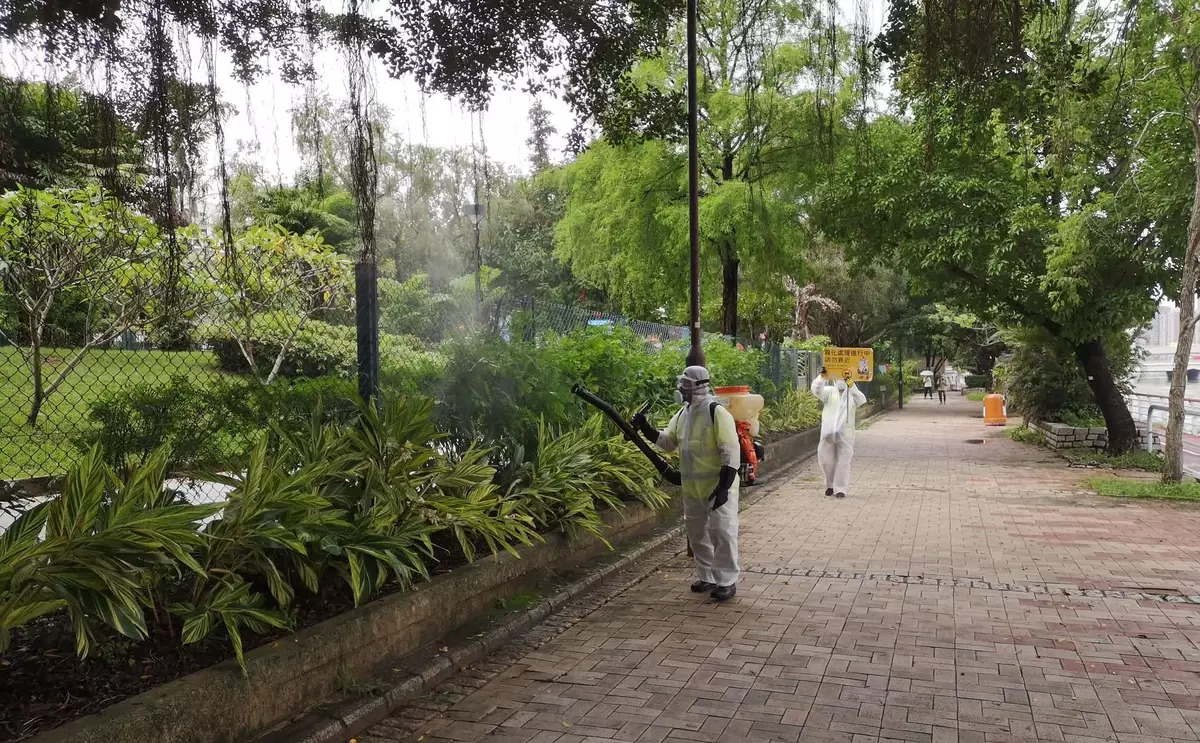
    For survey areas which recorded indexes exceeding 10 per cent, in accordance with the mechanism implemented by the FEHD in response to the chikungunya fever (CF) situation (i.e. strengthening mosquito control work in areas with a gravidtrap index between 10 per cent and 20 per cent, instead of 20 per cent or above under the original mechanism), the FEHD is collaborating with relevant departments and stakeholders to identify locations with high mosquito infestations and carry out intensive and targeted mosquito control measures. The FEHD has initiated two prosecutions against the relevant construction site contractors following the discovery of mosquito breeding at construction sites in Tai Po District and Southern District. Moreover, following the discovery of stagnant water or stagnant water containers in a park, a construction site, a private housing estate, a clinic and a private premises in Tai Po District, Central and Western District, as well as Southern District, the FEHD has issued five statutory notices to the responsible persons-in-charge, requiring the clearance of such items within a specified timeframe. The FEHD, the relevant departments and stakeholders are following up on the mosquito control work, and will also organise exhibitions, distribute leaflets and posters, and notify residential estates that have subscribed to the gravidtrap Rapid Alert System, advising property management agents and residents to stay vigilant and work together in taking mosquito prevention and elimination measures. In addition, the FEHD will strengthen the monitoring of the gravidtrap index in the areas to review the effectiveness of the mosquito control work.

    Public participation is crucial to the effective control of mosquito problems. The FEHD appeals to members of the public to continue to work together in strengthening personal mosquito control measures, including:

  • tidy up their premises and check for any accumulation of water inside the premises;
  • remove all unnecessary water collections and eliminate the sources;
  • check household items (those placed in outdoor and open areas in particular), such as refuse containers, vases, air conditioner drip trays, and laundry racks to prevent stagnant water;
  • change water in flower vases and scrub their inner surfaces thoroughly, and remove water in saucers under potted plants at least once a week;
  • properly cover all containers that hold water to prevent mosquitoes from accessing the water;
  • properly dispose of articles that can contain water, such as disposable meal boxes and empty cans; and
  • scrub drains and surface sewers with alkaline detergent at least once a week to remove any mosquito eggs.
  • Starting in August 2025, following the completion of the surveillance of individual survey areas, and once the latest gravidtrap index and the density index are available, the FEHD has been disseminating relevant information through press releases, its website and social media. It aims to allow members of the public to quickly grasp the mosquito infestation situation and strengthen mosquito control efforts, thereby reducing the risk of CF transmission.

    Following recommendations from the World Health Organization and taking into account the local situation in Hong Kong, the FEHD sets up gravidtraps in districts where mosquito-borne diseases have been recorded in the past, as well as in densely populated places such as housing estates, hospitals and schools to monitor the breeding and distribution of Aedes albopictus mosquitoes, which can transmit CF and dengue fever. At present, the FEHD has set up gravidtraps in 62 survey areas of the community, with a surveillance period of two weeks. During the surveillance period, the FEHD will collect the gravidtraps once a week. After the first week of surveillance, the FEHD will immediately examine the glue boards inside the retrieved gravidtraps for the presence of adult Aedine mosquitoes to compile the Gravidtrap Index (First Phase) and Density Index (First Phase). At the end of the second week of surveillance, the FEHD will instantly check the glue boards for the presence of adult Aedine mosquitoes. Data from the two weeks of surveillance will be combined to obtain the Area Gravidtrap Index and the Area Density Index. The gravidtrap and density indexes for Aedes albopictus in different survey areas, as well as information on mosquito prevention and control measures, are available on the department's webpage (www.fehd.gov.hk/english/pestcontrol/dengue_fever/Dengue_Fever_Gravidtrap_Index_Update.html#).

    FEHD releases fourth batch of gravidtrap indexes for Aedes albopictus in May  Source: HKSAR Government Press Releases
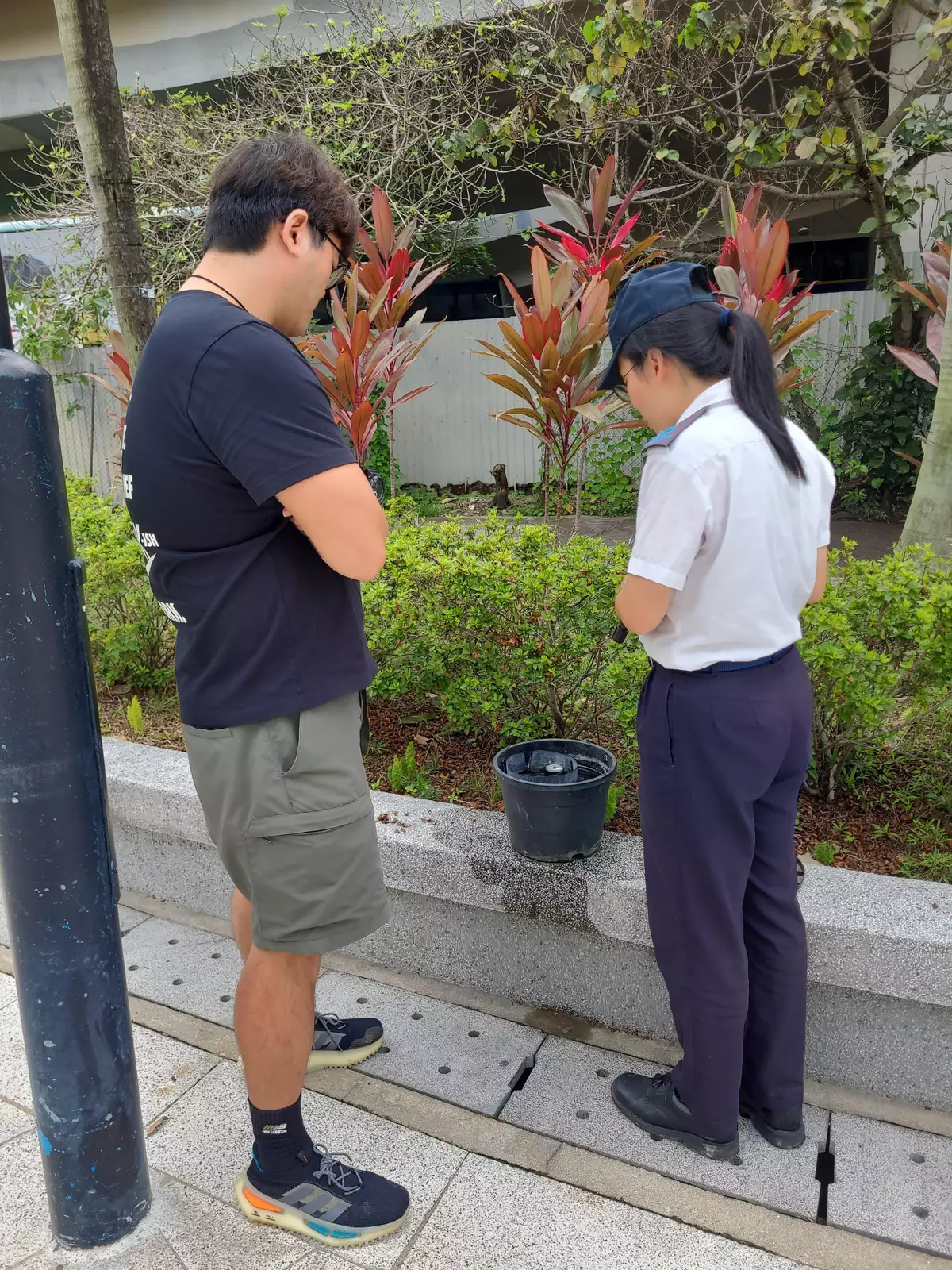
    FEHD releases fourth batch of gravidtrap indexes for Aedes albopictus in May Source: HKSAR Government Press Releases
    FEHD releases fourth batch of gravidtrap indexes for Aedes albopictus in May  Source: HKSAR Government Press Releases

    FEHD releases fourth batch of gravidtrap indexes for Aedes albopictus in May Source: HKSAR Government Press Releases

    FEHD releases fourth batch of gravidtrap indexes for Aedes albopictus in May  Source: HKSAR Government Press Releases

    FEHD releases fourth batch of gravidtrap indexes for Aedes albopictus in May Source: HKSAR Government Press Releases

    FEHD releases fourth batch of gravidtrap indexes for Aedes albopictus in May  Source: HKSAR Government Press Releases
    FEHD releases fourth batch of gravidtrap indexes for Aedes albopictus in May Source: HKSAR Government Press Releases
    FEHD releases fourth batch of gravidtrap indexes for Aedes albopictus in May  Source: HKSAR Government Press Releases

    FEHD releases fourth batch of gravidtrap indexes for Aedes albopictus in May Source: HKSAR Government Press Releases

    Recommended Articles