CAIRO (AP) — A breakthrough deal pausing the war in Gaza has been reached. But will it lead, as U.S. President Donald Trump proclaimed, to “a Strong, Durable, and Everlasting Peace”?
It took pressure on both Israel and Hamas from the United States, Arab countries and Turkey, each saying it was time to end a 2-year-old war that has devastated the Gaza Strip, killed tens of thousands of Palestinians, sparked other conflicts around the region and increasingly isolated Israel.
Click to Gallery
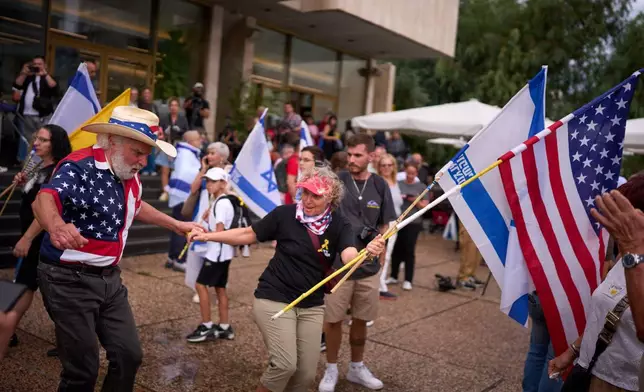
People dance as they celebrate following the announcement that Israel and Hamas have agreed to the first phase of a peace plan to pause the fighting, at a plaza known as hostages square in Tel Aviv, Israel, Thursday, Oct. 9, 2025. (AP Photo/Emilio Morenatti)
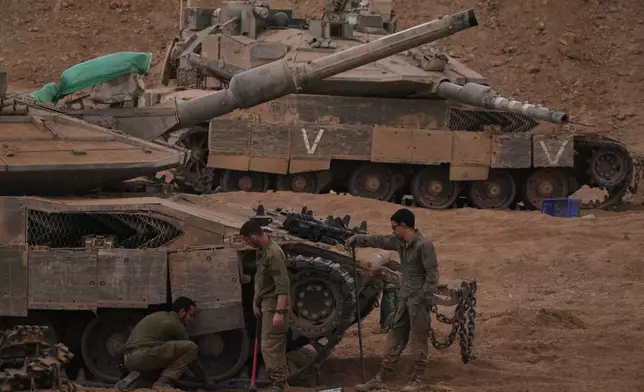
Israeli soldiers work on a tank near the Israeli-Gaza border, as seen from southern Israel, Thursday, Oct. 9, 2025, following the announcement that Israel and Hamas have agreed to the first phase of a peace plan to pause the fighting. (AP Photo/Ariel Schalit)
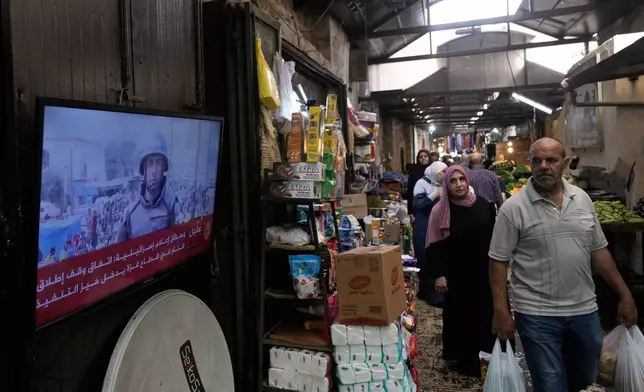
A Palestinian man looks at a television broadcasting the news following the announcement that Israel and Hamas have agreed to the first phase of a peace plan to pause the fighting, as he walks at a local market in the Old City of Nablus, in the West Bank, Thursday, Oct. 9, 2025. (AP Photo/Majdi Mohammed)
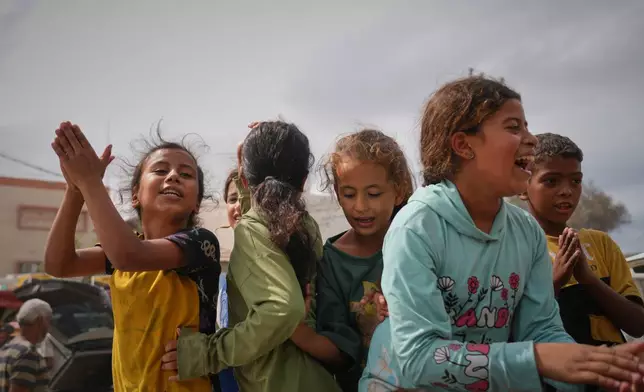
Palestinians celebrate following the announcement that Israel and Hamas have agreed to the first phase of a peace plan to pause the fighting, in Khan Younis, southern Gaza Strip, Thursday, Oct. 9, 2025. (AP Photo/Jehad Alshrafi)
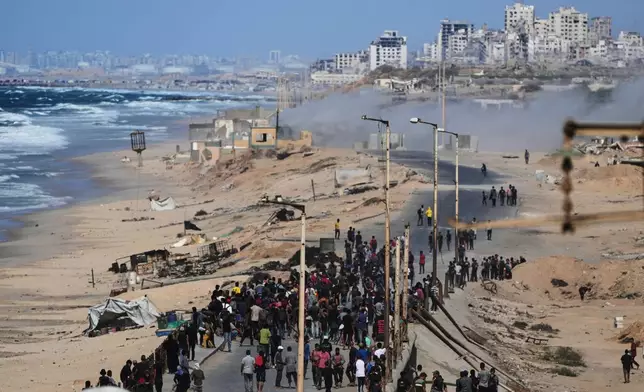
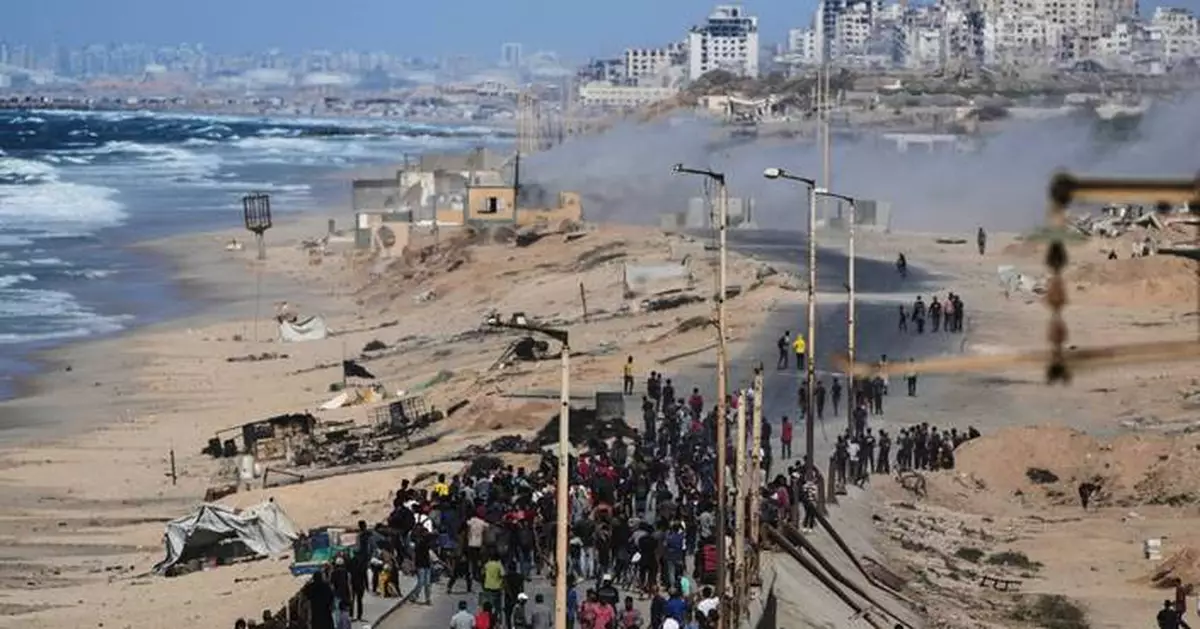
Displaced Palestinians gather on the coastal road near Wadi Gaza after the announcement that Israel and Hamas had agreed to the first phase of a peace plan to pause the fighting, as Israeli tanks block the road leading to Gaza City, in the central Gaza Strip, Thursday, Oct. 9, 2025. (AP Photo/Abdel Kareem Hana)
That push sealed an agreement on a first phase that would free the remaining living Israeli hostages within days in exchange for the release of hundreds of Palestinians imprisoned by Israel.
But it left unanswered a long list of questions over what happens next.
Israel wants to ensure that Hamas disarms. Hamas wants to ensure Israel pulls its troops completely out of Gaza and is not allowed to restart the war. At the same time, a postwar government for Gaza must be worked out to replace Hamas’ rule. Without that in place, reconstruction is unlikely to take place, leaving Gaza’s more than 2 million people in continued misery.
With no trust between the sides, much relies on continued pressure from the deal’s guarantors — the U.S., Egypt, Qatar and Turkey. Any hitch in working out those intertwined issues can unravel everything and potentially lead to Israel resuming its campaign to destroy Hamas.
Here is what we know about the deal.
Israeli Prime Minister Benjamin Netanyahu plans to convene his smaller Security Cabinet and then the full Cabinet — expected late Thursday — to approve the deal.
A partial pullback of Israeli forces in Gaza will then start, according to Arab officials and a Hamas official, speaking on condition of anonymity because the text of the accord has not been released.
The extent of the withdrawal has not yet been made public, but Hamas officials have said troops will move out of populated areas.
Hamas has agreed to release the 20 living hostages within a few days, likely Monday, and Israel will free hundreds of Palestinian prisoners. Hamas also will hand over the remains of around 28 hostages believed to have died, though for logistical reasons that may take longer.
At the same time, hundreds of aid trucks will start moving into Gaza, with the numbers growing over time.
Negotiations for the next phases would then begin.
Hamas had long insisted it would not release its last hostages unless Israeli troops leave Gaza completely. Now, after agreeing to free them first, Hamas says it is relying on solid guarantees from Trump that the full withdrawal will happen.
But how long it will take – weeks, months, years -- is unknown.
Israel has spoken of keeping troops in a buffer zone within Gaza and in the Philadelphi Corridor, a strip of land on Gaza’s border with Egypt.
Israel is unlikely to relinquish those areas unless Hamas disarms and the void left in running Gaza is filled by a body that Israel deems palatable.
An initial 20-point plan issued by Trump last week called for an Arab-led international security force to move into Gaza, along with Palestinian police trained by Egypt and Jordan. It said Israeli forces would leave areas as those forces deploy.
It is not known whether that system will be followed or an alternative will be negotiated.
Hamas long refused to give up its weapons, saying it had a right to armed resistance until Israel’s occupation of Palestinian territories ends.
For Israel, it’s a key demand. Netanyahu has repeatedly said its campaign will not end until Hamas’ military capabilities are dismantled, including the network of tunnels built around the territory.
There are signs, however, that Hamas could agree to a “decommissioning” of its offensive weapons, handing them over to a joint Palestinian-Egyptian committee, according to the Arab officials with direct knowledge of the negotiations who spoke on condition of anonymity.
Israel has said it wants a Gaza purged of Hamas influence. But it has also rejected giving any role to the West Bank-based Palestinian Authority or any arrangement that could lead to the creation of a Palestinian state.
Hamas, which has ruled Gaza since 2007, has agreed to step down from governing the territory and hand over governance to a body of Palestinian technocrats.
What takes its place is still uncertain.
Under Trump’s plan, agreed to by Netanyahu, an international body – the Council of Peace or Board of Peace, as both names have been floated — will govern.
It would hold most power while overseeing the administration of Palestinian technocrats running day-to-day affairs. It would also hold the commanding role of directing reconstruction in Gaza. Trump's initial 20-point plan called for former British Prime Minister Tony Blair to lead the body.
Hamas has so far not agreed, saying Gaza's government should be worked out among Palestinians in light of their rights to sovereignty.
Israelis celebrated the agreement announced overnight after three days of talks in the Egyptian resort city of Sharm el-Sheikh. For much of the Israeli public, freeing the last of the hostages held for two years has been their top priority.
But Palestinians in Gaza were more uncertain. There was relief that the relentless bombardment and ground offensives may stop for a time and aid may flow in. But there was also skepticism and worry over how long any pause in fighting would last, whether hundreds of thousands will be able to return to their homes, and whether Gaza — its cities largely in ruins — will ever be rebuilt.
Many Palestinians fear Israel will take any breakdown in the talks as a chance to resume its assault. For months, Netanyahu and his hard-line allies have insisted they will keep long-term direct security control over Gaza and have spoken of pushing out its Palestinian population, ostensibly on a “voluntary” basis. In Gaza, many believe that remains Israel's objective.
Pressure from the U.S. and its allies — if it continues after hostages are out — could prevent Israel from relaunching a full-fledged war.
But there is another, murkier scenario.
If Hamas and Israel cannot reach a final deal or negotiations drag on inconclusively, Gaza could slide into an unstable limbo, with Israeli troops still holding parts of it and Hamas still active. In that case, Israel would be unlikely to allow significant reconstruction, leaving Gaza's population languishing in tent camps or shelters.
An earlier version of this story been corrected to show that Israel’s full Cabinet, not its parliament, will vote on the deal.
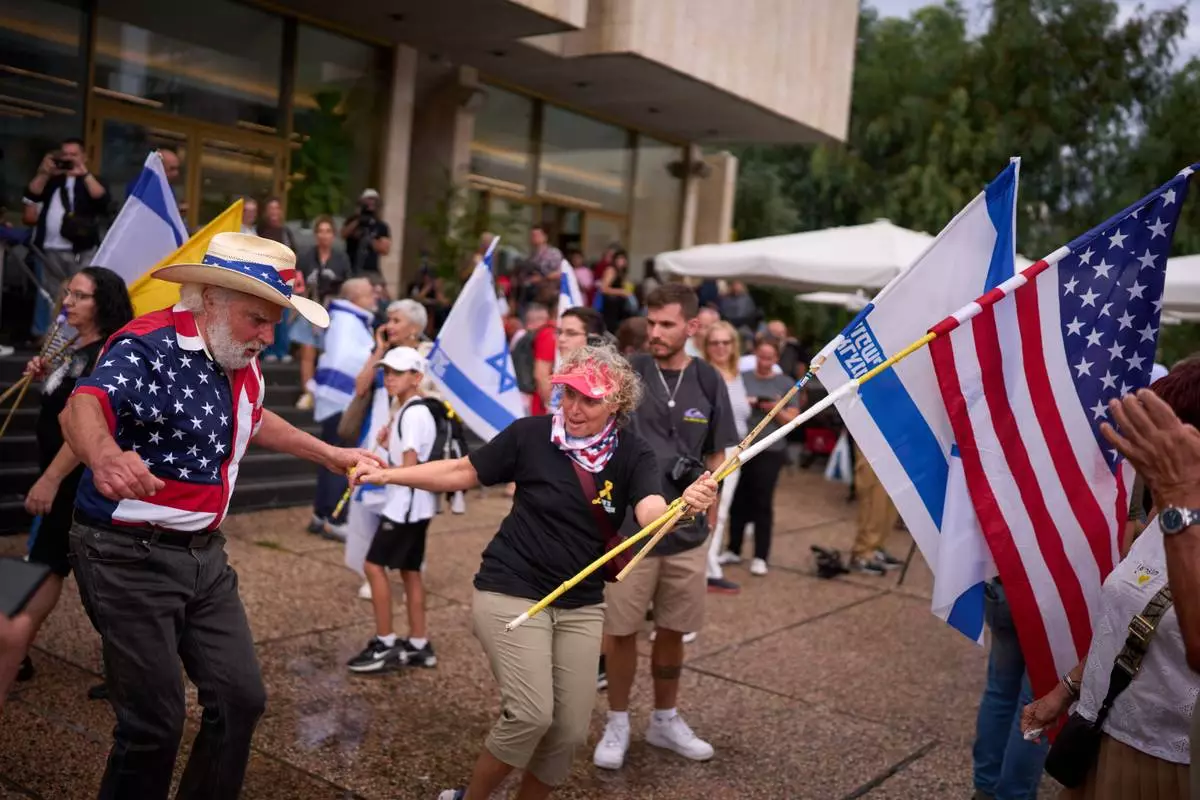
People dance as they celebrate following the announcement that Israel and Hamas have agreed to the first phase of a peace plan to pause the fighting, at a plaza known as hostages square in Tel Aviv, Israel, Thursday, Oct. 9, 2025. (AP Photo/Emilio Morenatti)
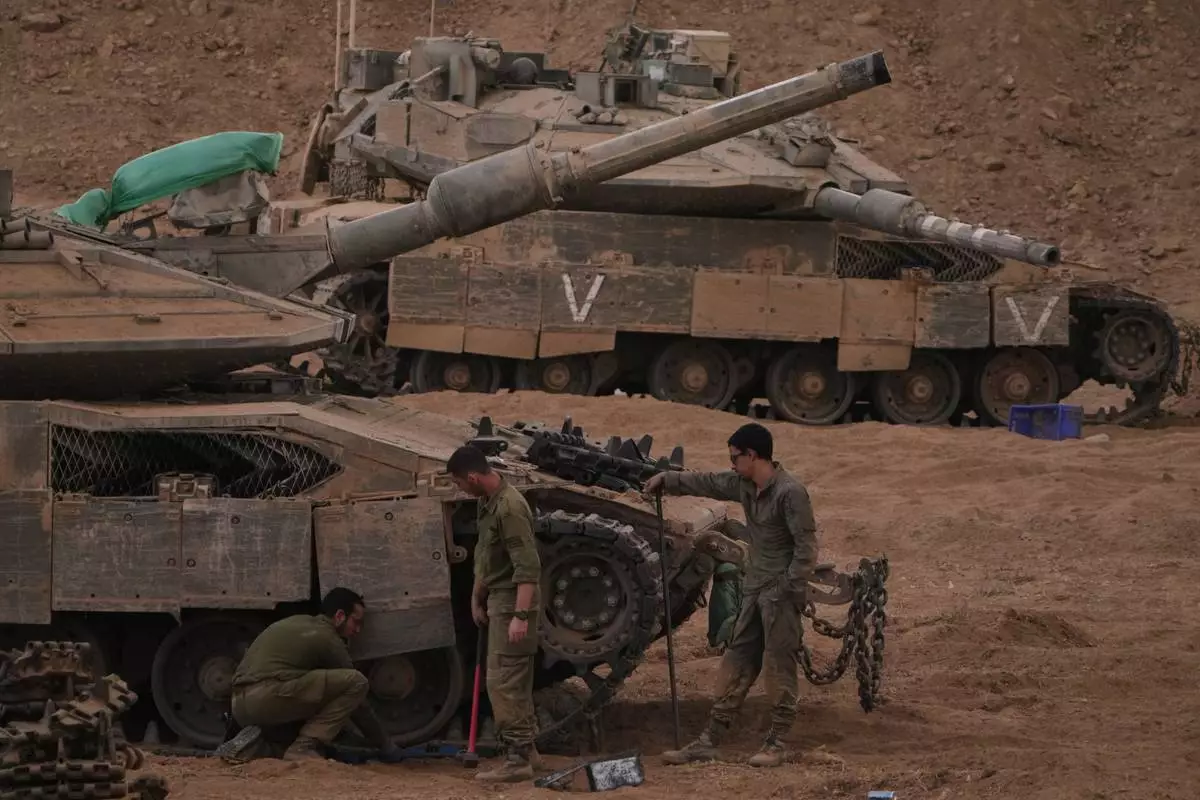
Israeli soldiers work on a tank near the Israeli-Gaza border, as seen from southern Israel, Thursday, Oct. 9, 2025, following the announcement that Israel and Hamas have agreed to the first phase of a peace plan to pause the fighting. (AP Photo/Ariel Schalit)
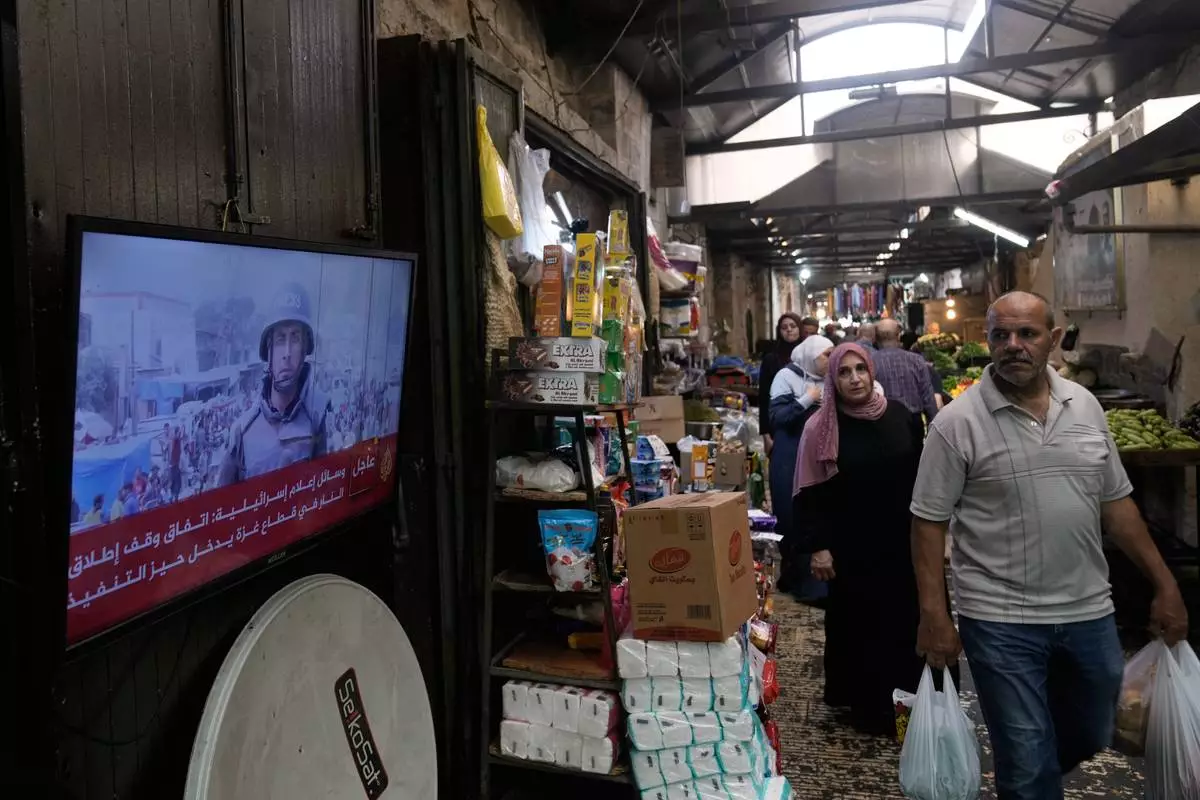
A Palestinian man looks at a television broadcasting the news following the announcement that Israel and Hamas have agreed to the first phase of a peace plan to pause the fighting, as he walks at a local market in the Old City of Nablus, in the West Bank, Thursday, Oct. 9, 2025. (AP Photo/Majdi Mohammed)
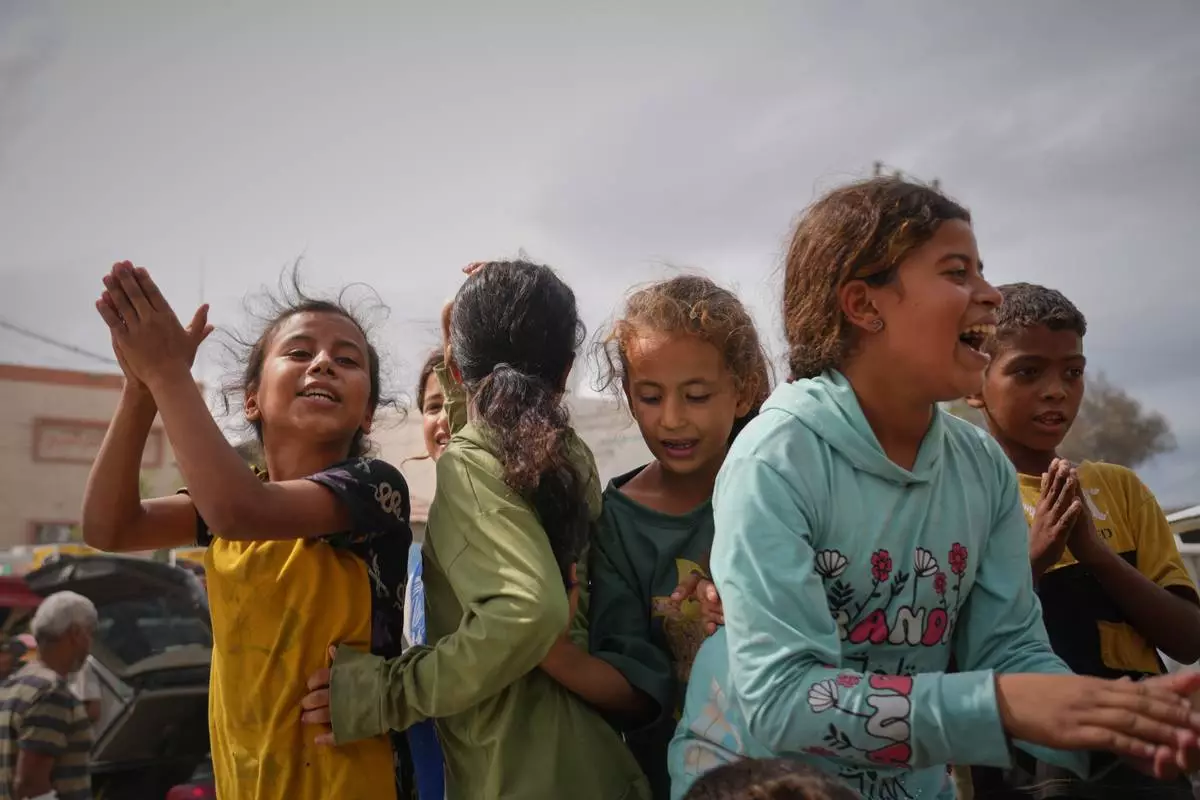
Palestinians celebrate following the announcement that Israel and Hamas have agreed to the first phase of a peace plan to pause the fighting, in Khan Younis, southern Gaza Strip, Thursday, Oct. 9, 2025. (AP Photo/Jehad Alshrafi)
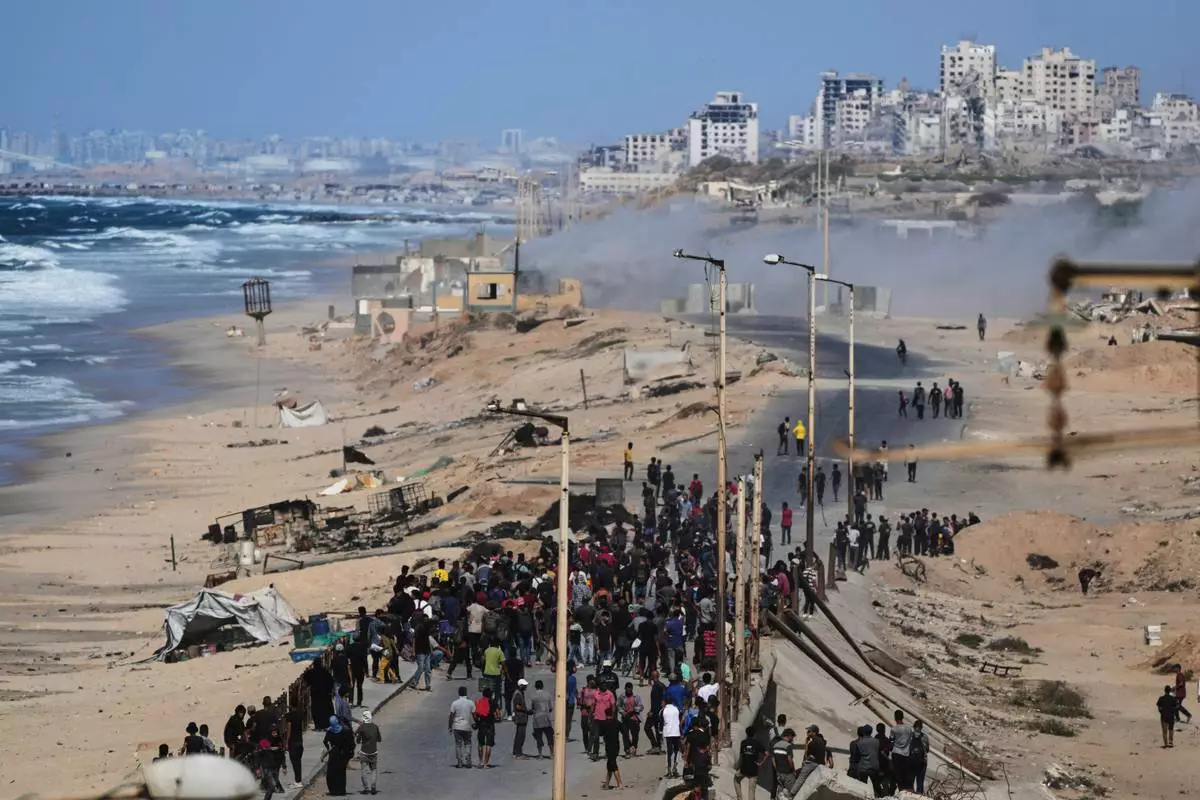
Displaced Palestinians gather on the coastal road near Wadi Gaza after the announcement that Israel and Hamas had agreed to the first phase of a peace plan to pause the fighting, as Israeli tanks block the road leading to Gaza City, in the central Gaza Strip, Thursday, Oct. 9, 2025. (AP Photo/Abdel Kareem Hana)