Hamas said Thursday that the coming days will be a true test of Israel's credibility following a ceasefire agreement reached between the two sides after days of negotiations in Sharm el-Sheikh, Egypt.
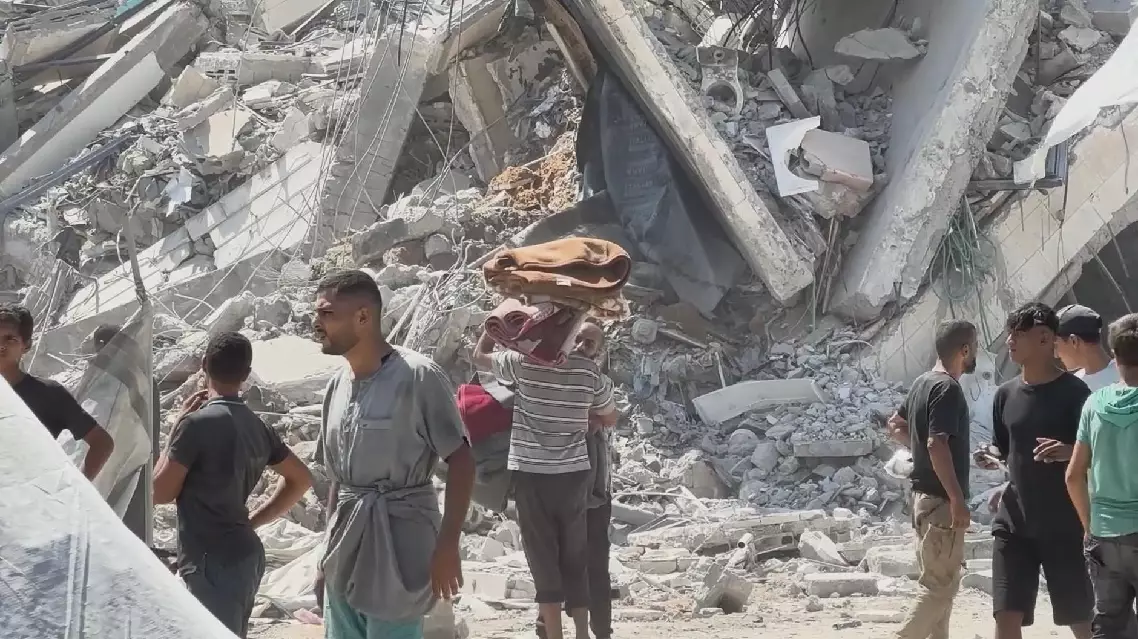
The agreement on the first phase of a U.S.-backed peace plan, coming after intense negotiations by Egypt, Qatar, Türkiye, and the United States, outlines a phased Israeli withdrawal, hostages exchange, prisoner release, and humanitarian aid delivery. It is a major step towards ending the two-year conflict that has killed over 67,000 Palestinians, injured almost 170,000 others, and left the enclave in ruins.
Khalil al-Hayya, chief of the Hamas negotiating delegation, said on Thursday that Hamas reached the ceasefire agreement aimed at a permanent ceasefire and ending Israel's war and aggression against the Palestinian people.
Key contents of the agreement include the withdrawal of Israeli forces from the Gaza Strip, the entry of humanitarian aid, the reopening of the Rafah crossing in both directions, and a prisoner swap.
Under the deal, 250 prisoners serving life sentences and 1,700 detainees from Gaza arrested after Oct. 7, 2023, will be released, according to al-Hayya. He also said that Hamas has received guarantees from mediators and the U.S. administration confirming the complete end of the war in the Gaza Strip.
Senior Hamas official Osama Hamdan explained in televised statements Thursday evening that Israeli forces will withdraw from the densely-populated areas, including Gaza City, the north, Rafah, and Khan Younis, after the first phase of the agreement takes effect. He also said that the coming days will be a real test of Israel's credibility.
However, an Israeli government spokesperson said Thursday that Israeli forces will continue to control about 53 percent of the Gaza Strip after all Israeli hostages are released. The spokesperson also said Israel has no intention of releasing Marwan Barghouti, a leader of the Palestinian National Liberation Movement (Fatah).
Israeli Foreign Minister Gideon Sa'ar said Israel remains committed to the U.S.-backed plan to end the war in Gaza and has no intention of restarting the conflict.
According to Israeli media, Sa'ar did not describe the ceasefire agreement as "the end of the war", but emphasized that Israel wants to see the full implementation of the agreement and has no intention of resuming hostilities.
In a rare interview with Channel 12 on Thursday, Palestinian President Mahmoud Abbas said that the Palestinian National Authority is coordinating with the United States on reforms it is implementing against the backdrop of a ceasefire deal in Gaza which calls on the body to implement significant changes.
He added that the international push to recognize a Palestinian state is not meant to hurt Israel.
The reform includes education, health and the economy, said Abbas, adding that some have already been implemented and others will be implemented until they reach a point where the Palestinian Authority can continue to lead the Palestinian people.
Abbas also said that the Palestinian Authority has long hoped and will continue to hope to prevent bloodshed in Gaza, the West Bank, and Jerusalem. The Palestinian Authority aspires to see peace, security, and stability ultimately prevail, he said.
Coming days to be real test of Israel's credibility: Hamas

Coming days to be real test of Israel's credibility: Hamas
Coming days to be real test of Israel's credibility: Hamas