WILLEMSTAD, Curacao (AP) — Goals from Livano Comenencia and Kenji Gorre led Curacao to a 2-0 win over Jamaica on Friday to take the home side another step closer to its first World Cup appearance.
Comenencia opened the scoring in the 11th minute, and Gorre added a goal in the 68th for the “Blue Stars” that moved them into first place in Group B after three matches of the final round of CONCACAF World Cup qualifiers.
Click to Gallery
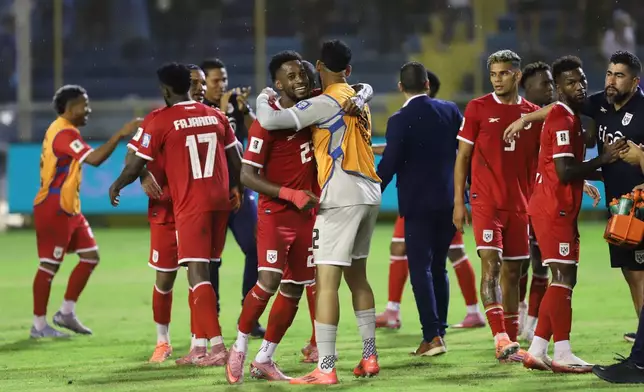
Panama's players celebrate after beating El Salvador during a World Cup 2026 qualifying soccer match at Cuscatlan stadium in San Salvador, El Salvador, Friday, Oct. 10, 2025. (AP Photo/Salvador Melendez)
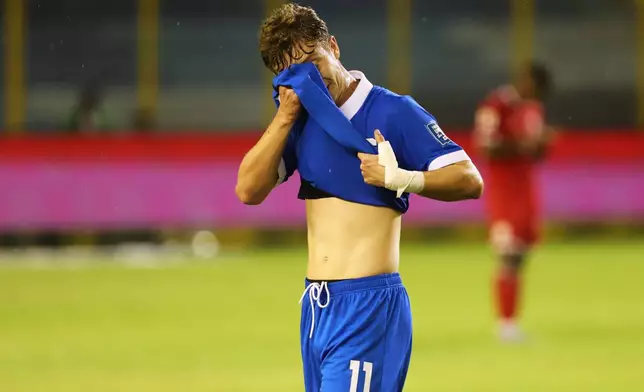
El Salvador's Nathan Ordaz reacts after losing against Panama during a World Cup 2026 qualifying soccer match at Cuscatlan stadium in San Salvador, El Salvador, Friday, Oct. 10, 2025. (AP Photo/Salvador Melendez)
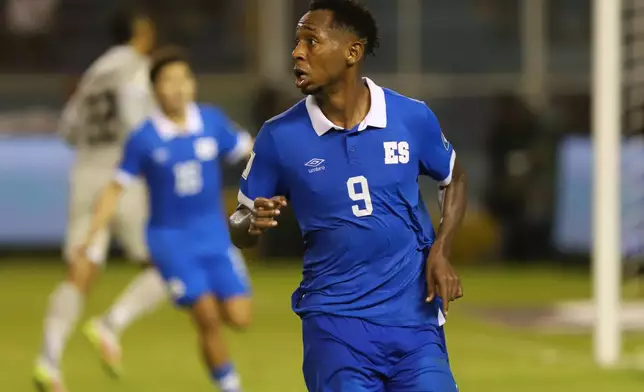
El Salvador's Bryan Gil reacts after scoring a goal that was disallowed on review during a World Cup 2026 qualifying soccer match against Panama at Cuscatlan stadium in San Salvador, El Salvador, Friday, Oct. 10, 2025. (AP Photo/Salvador Melendez)
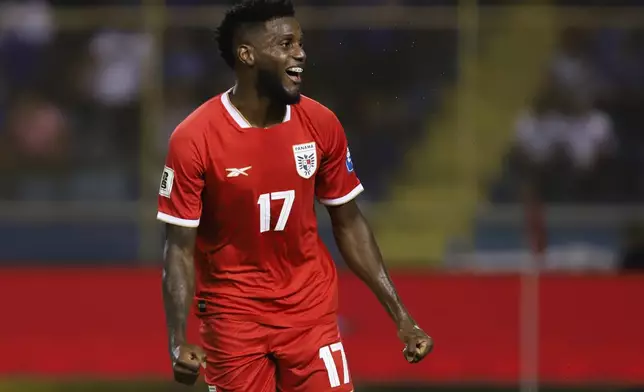
Panama's Jose Fajardo celebrates scoring his side's opening goal against El Salvador during a World Cup 2026 qualifying soccer match at Cuscatlan stadium in San Salvador, El Salvador, Friday, Oct. 10, 2025. (AP Photo/Salvador Melendez)
Curacao, which until 2010 was part of the Netherlands Antilles, a group of islands with internal autonomy, is coached by Dick Advocaat, who was at the helm of the Netherlands national team for three stints and has managed South Korea, Belgium and Russia.
With the win, Advocaat’s squad remains undefeated and has seven points, one more than the Jamaicans, who are in second place and are led by former England’s national team coach Steve McLaren.
Trinidad and Tobago, which had a comfortable 3-0 win over Bermuda on Friday, is second with four points.
Dante Sealy in the 10th minute, Tyrese Spicer in the 30th and Koby Henry in the 49th scored goals for the “Soca Warriors.”
Bermuda suffered its third loss in a row and is nearly eliminated with no competition points.
Twelve teams, divided into three groups, are vying for three direct spots from regional qualifying for next year’s World Cup. The United States, Canada and Mexico have qualified automatically as World Cup co-hosts.
Also on Friday, Virgil Misidjan scored a goal in stoppage time and Suriname salvaged a 1-1 draw against Guatemala to take first place in Group A.
Darwin Lom put the Guatemalans ahead in the 75th minute, but Misidjan’s goal in the 94th minute tied the match.
Suriname has five points, and they own the tiebreak over Panama, which got its first win of the final round beating El Salvador 1-0 at home and also has five points.
Jose Fajardo scored in the 55th minute for the Panamanians, who played in their first and only World Cup in Russia in 2018.
AP soccer: https://apnews.com/hub/soccer
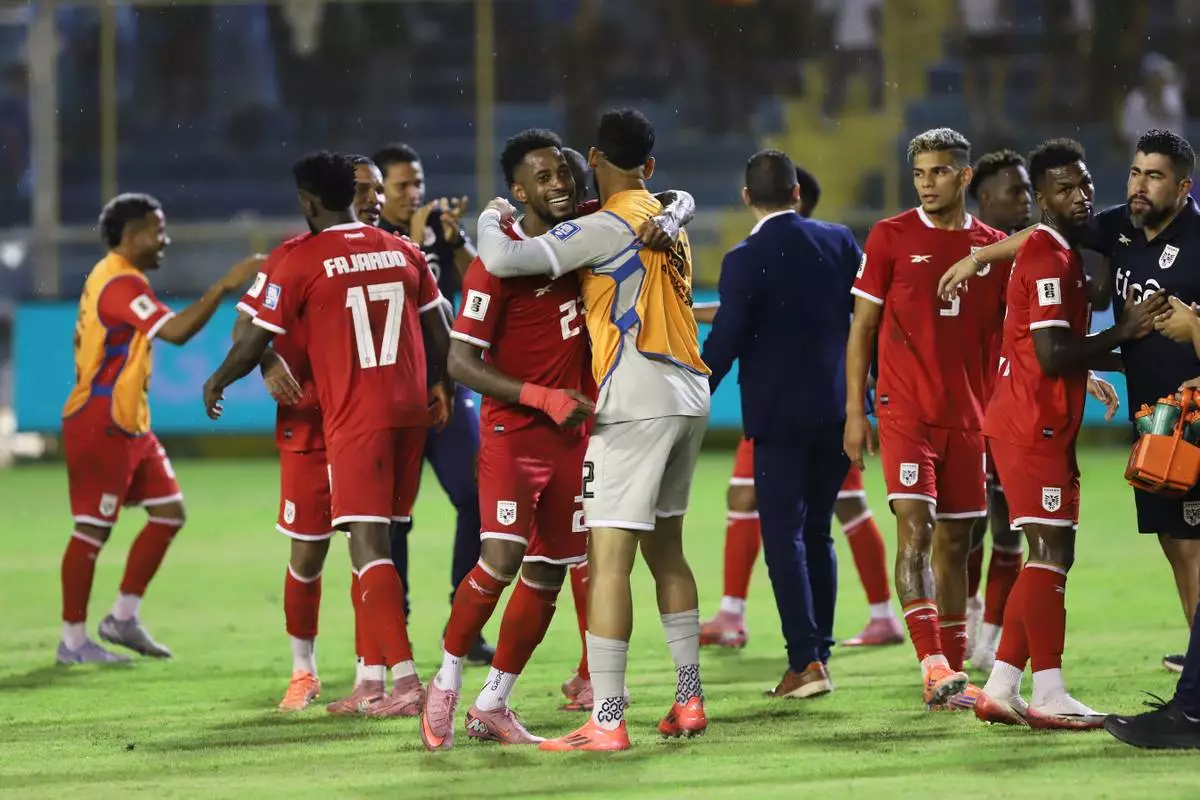
Panama's players celebrate after beating El Salvador during a World Cup 2026 qualifying soccer match at Cuscatlan stadium in San Salvador, El Salvador, Friday, Oct. 10, 2025. (AP Photo/Salvador Melendez)
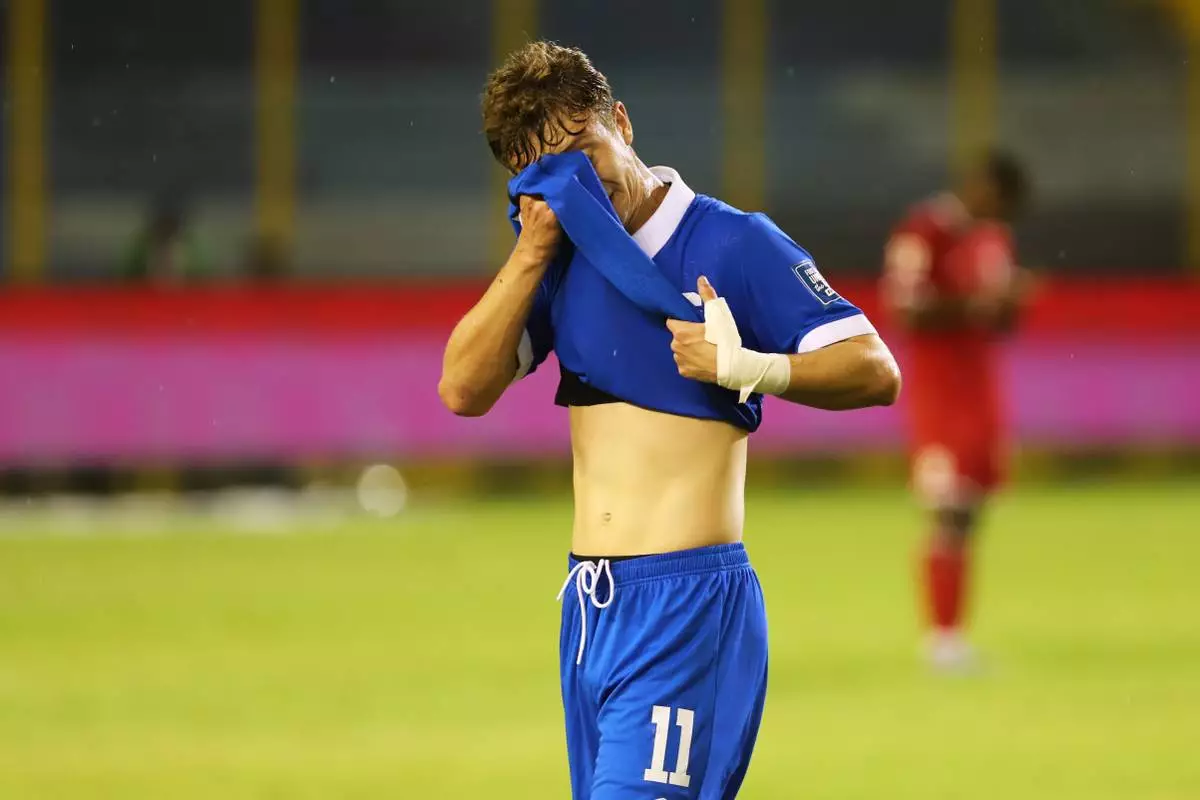
El Salvador's Nathan Ordaz reacts after losing against Panama during a World Cup 2026 qualifying soccer match at Cuscatlan stadium in San Salvador, El Salvador, Friday, Oct. 10, 2025. (AP Photo/Salvador Melendez)
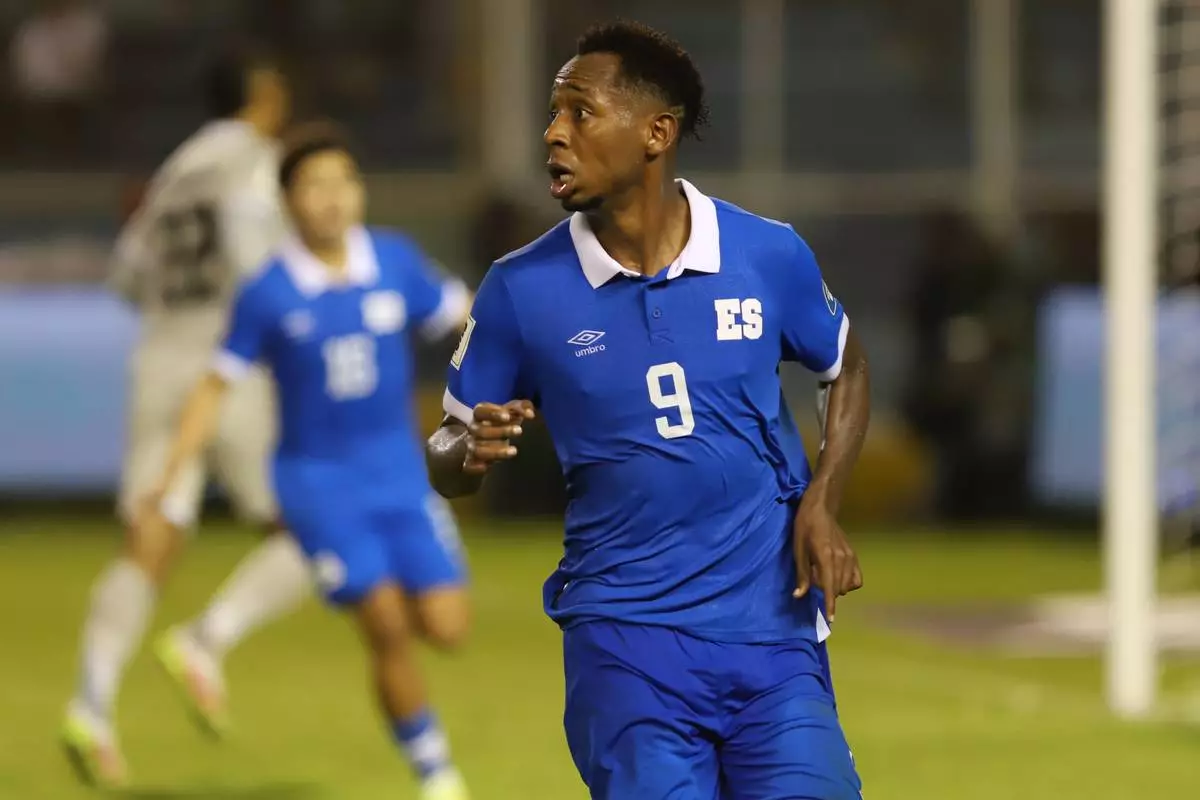
El Salvador's Bryan Gil reacts after scoring a goal that was disallowed on review during a World Cup 2026 qualifying soccer match against Panama at Cuscatlan stadium in San Salvador, El Salvador, Friday, Oct. 10, 2025. (AP Photo/Salvador Melendez)
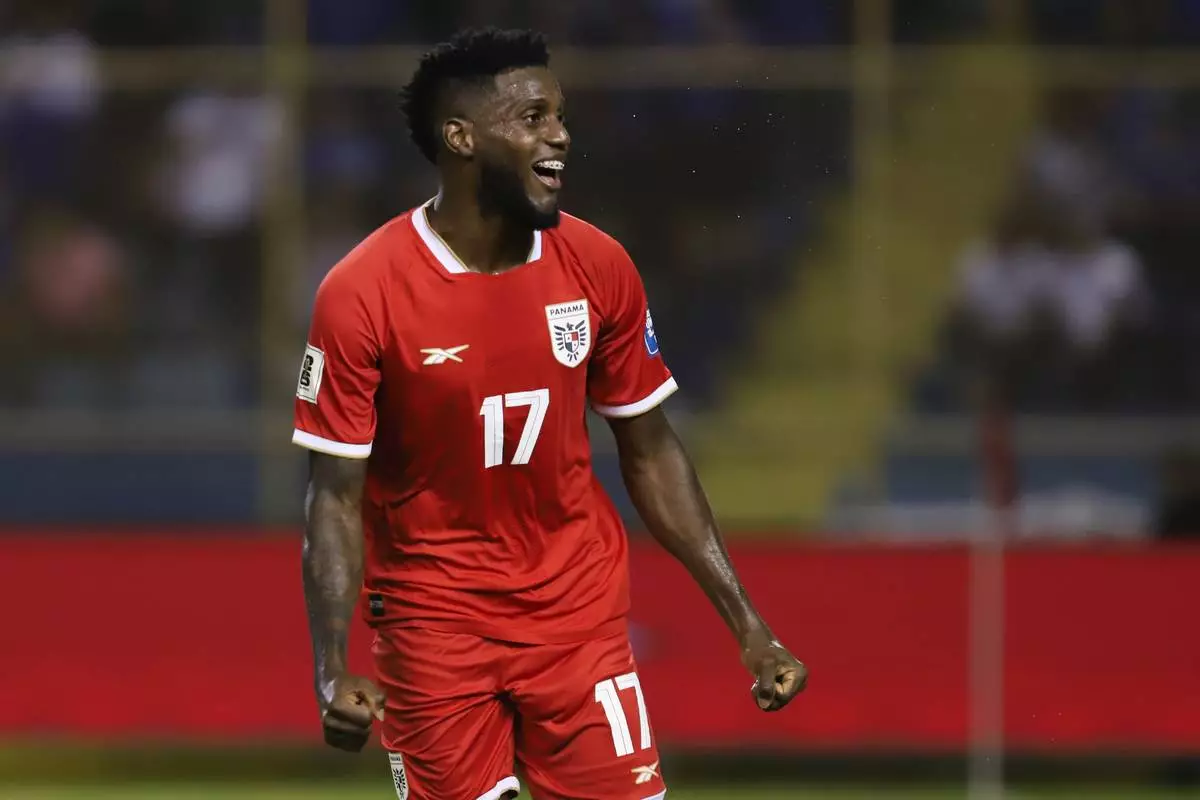
Panama's Jose Fajardo celebrates scoring his side's opening goal against El Salvador during a World Cup 2026 qualifying soccer match at Cuscatlan stadium in San Salvador, El Salvador, Friday, Oct. 10, 2025. (AP Photo/Salvador Melendez)
HAVANA (AP) — Cuban soldiers wearing white gloves marched out of a plane on Thursday carrying urns with the remains of the 32 Cuban officers killed during a stunning U.S. attack on Venezuela as trumpets and drums played solemnly at Havana's airport.
Nearby, thousands of Cubans lined one of the Havana’s most iconic streets to await the bodies of colonels, lieutenants, majors and captains as the island remained under threat by the administration of U.S. President Donald Trump.
The shoes of Cuban soldiers clacked as they marched stiff-legged into the headquarters of the Ministry of the Armed Forces, next to Revolution Square, with the urns and placed them on a long table next to the pictures of those slain so people could pay their respects.
Thursday’s mass funeral was only one of a handful that the Cuban government has organized in almost half a century.
Hours earlier, state television showed images of more than a dozen wounded people accompanied by Cuban Foreign Minister Bruno Rodríguez arriving Wednesday night from Venezuela. Some were in wheelchairs.
The official announcer indicated that they were “combatants” who had been “wounded” in Venezuela. They were greeted by the Minister of the Interior, Lázaro Alberto Álvarez, and the Minister of the Revolutionary Armed Forces, Álvaro López Miera.
Those injured and the bodies of those killed arrived as tensions grow between Cuba and U.S., with President Donald Trump recently demanding that the Caribbean country make a deal with him before it is “too late.” He did not explain what kind of deal.
Trump also has said that Cuba will no longer live off Venezuela's money and oil. Experts warn that the abrupt end of oil shipments could be catastrophic for Cuba, which is already struggling with serious blackouts and a crumbling power grid.
Officials unfurled a massive flag at Havana's airport as President Miguel Díaz-Canel, clad in military garb as commander of Cuba's Armed Forces, stood silent next to former President Raúl Castro, with what appeared to be the relatives of those slain looking on nearby.
Cuban Interior Minister Lázaro Alberto Álvarez Casa said Venezuela was not a distant land for those killed, but a “natural extension of their homeland.”
“The enemy speaks to an audience of high-precision operations, of troops, of elites, of supremacy,” Álvarez said in apparent reference to the U.S. “We, on the other hand, speak of faces, of families who have lost a father, a son, a husband, a brother.”
Álvarez called those slain “heroes,” saying that they were example of honor and “a lesson for those who waver.”
“We reaffirm that if this painful chapter of history has demonstrated anything, it is that imperialism may possess more sophisticated weapons; it may have immense material wealth; it may buy the minds of the wavering; but there is one thing it will never be able to buy: the dignity of the Cuban people,” he said.
Thousands of Cubans lined a street where motorcycles and military vehicles thundered by with the remains of those killed.
“They are people willing to defend their principles and values, and we must pay tribute to them,” said Carmen Gómez, a 58-year-old industrial designer, adding that she hopes no one invades given the ongoing threats.
When asked why she showed up despite the difficulties Cubans face, Gómez replied, "It’s because of the sense of patriotism that Cubans have, and that will always unite us.”
Cuba recently released the names and ranks of 32 military personnel — ranging in age from 26 to 60 — who were part of the security detail of Venezuelan President Nicolás Maduro during the raid on his residence on January 3. They included members of the Revolutionary Armed Forces and the Ministry of the Interior, the island’s two security agencies.
Cuban and Venezuelan authorities have said that the uniformed personnel were part of protection agreements between the two countries.
Meanwhile, a demonstration was planned for Friday across from the U.S. Embassy in an open-air forum known as the Anti-Imperialist Tribune. Officials have said they expect the demonstration to be massive.
“People are upset and hurt. There’s a lot of talk on social media; but many do believe that the dead are martyrs” of a historic struggle against the United States, analyst and former diplomat Carlos Alzugaray told The Associated Press.
In October 1976, then-President Fidel Castro led a massive demonstration to bid farewell to the 73 people killed in the bombing of a Cubana de Aviación civilian flight financed by anti-revolutionary leaders living in the U.S. Most of the victims were Cuban athletes returning to their island.
In December 1989, officials organized “Operation Tribute” to honor the remains of more than 2,000 Cuban combatants who died in Angola during Cuba’s participation in the war that defeated the South African army and ended the apartheid system. In October 1997, memorial services were held following the arrival of the remains of guerrilla commander Ernesto “Che” Guevara and six of his comrades, who died in 1967.
A day before the remains of those slain arrived in Cuba, U.S. Secretary of State Marco Rubio announced $3 million in relief aid to help the island recover from the catastrophic Hurricane Melissa, which struck in late October.
The first flight took off from Florida on Wednesday, and a second flight was scheduled for Friday. A commercial vessel also will deliver food and other supplies.
“We have taken extraordinary measures to ensure that this assistance reaches the Cuban people directly, without interference or diversion by the illegitimate regime,” Rubio said, adding that the U.S. government was working with Cuba's Catholic Church.
The announcement riled Cuban Foreign Minister Bruno Rodríguez.
“The U.S. government is exploiting what appears to be a humanitarian gesture for opportunistic and politically manipulative purposes,” he said in a statement. “As a matter of principle, Cuba does not oppose assistance from governments or organizations, provided it benefits the people and the needs of those affected are not used for political gain under the guise of humanitarian aid.”
Coto contributed from San Juan, Puerto Rico.
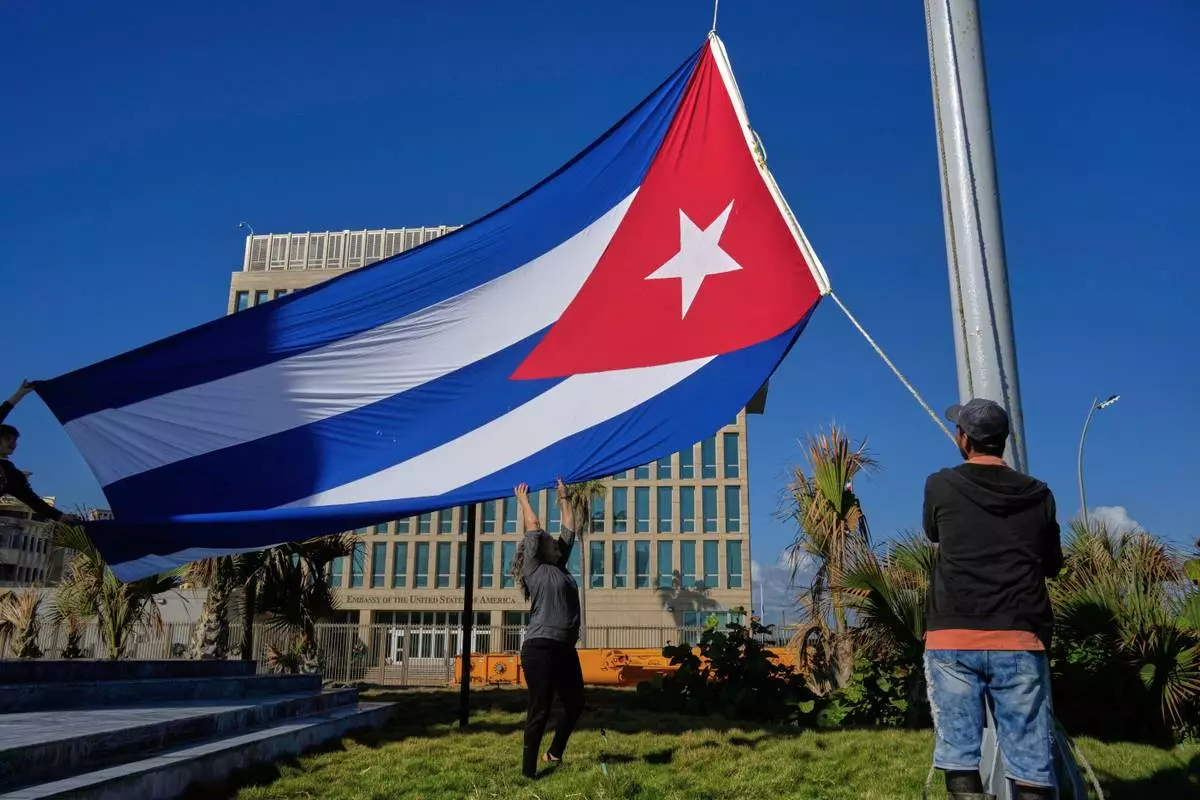
Workers fly the Cuban flag at half-staff at the Anti-Imperialist Tribune near the U.S. Embassy in Havana, Cuba, Monday, Jan. 5, 2026, in memory of Cubans who died two days before in Caracas, Venezuela during the capture of Venezuelan President Nicolas Maduro by U.S. forces. (AP Photo/Ramon Espinosa)