COLLEGE STATION, Texas (AP) — SEC Commissioner Greg Sankey said Saturday that combining the TV rights of all conferences to sell together wouldn't serve as a quick fix for college sports and might not be a fix at all.
Sankey, speaking before the Florida-Texas A&M football game, outlined why he doesn’t think the pooling of TV rights — an idea that has drawn attention lately — is a good idea. His comments are a direct rebuke of an idea proposed by Texas Tech's billionaire head of regents, Cody Campbell, who said earlier in the week the idea of combining the rights is being held back because “the conferences are all represented by commissioners who are very, very self-interested.”
“Just as we did for expansion, just as we did for our last media rights negotiation, we’ll prepare for our future as the Southeastern Conference,” Sankey said. “I also think it’s important to understand there’s not some tweak to the Sports Broadcasting Act. The interest of networks, the interest of professional leagues, go well beyond just college sports. And that has to be acknowledged as opposed to simply observe (that) here’s a quick fix.”
A bill in Congress co-sponsored by Sen. Maria Cantwell, D-Wash., calls for a rewrite of the 1961 Sports Broadcasting Act, which forbids the conferences from combining their TV rights. Campbell supports that element of Cantwell's recently introduced SAFE Act.
In his presentation Thursday to the oversight group, the Knight Commission, Campbell said the move could be worth $7 billion, and said commissioners had told him “privately” that they know a modification of that law would generate more revenue, “but I don’t want to give up control of my own media-rights negotiation.” Campbell is also running commercials during college football, touting a $4 billion to $7 billion revenue increase that could come from pooling and would help save women's and Olympic sports in college.
Sankey has denied telling Campbell, publicly or privately, that he agrees with his theory.
On Saturday, the commissioner said the SEC makes well-informed and well-supported decisions and wants the opportunity to negotiate its own deals, not to “turn those over to some unknown, undescribed entity.”
“I also work pretty closely with a variety of folks who are experts in this, who talk directly about value and models for negotiating," Sankey said. "These other ideas, they have numbers, they’re actually not supported by data. They’re just presented. And anybody can find an expert or two to justify their position. We like to dig into things.”
The SEC recently signed a 10-year TV deal with ESPN worth a reported $3 billion. That figure doesn’t include the approximately $21 million a year it receives for the College Football Playoff, plus extra depending on how many of the league’s teams make the playoff.
The bill Sankey, the NCAA and virtually all of its conferences support is The SCORE Act. The act, which, unlike the SAFE Act, does not call for changes to the TV-rights model, proposes limited antitrust protection for the NCAA, mainly from lawsuits involving eligibility issues, and a prohibition on athletes becoming employees of their schools — a development that NCAA executive Tim Buckley said would be “the budget buster of the century” for college sports.
Though momentum for the SCORE Act slowed after an initial burst when it was introduced, Sankey said he believes it has a chance of passing.
“There’s still work happening,” he said. “And I think there’s an opportunity, when you look at the work, to both inform and educate Congress, work with Congress, for us since 2019-2020. This is as close as we’ve been to having either chamber consider legislation on the floor. So, there’s a lot that could be helpful there, and there’s still plenty of work to do.”
AP National Writer Eddie Pells contributed to this report.
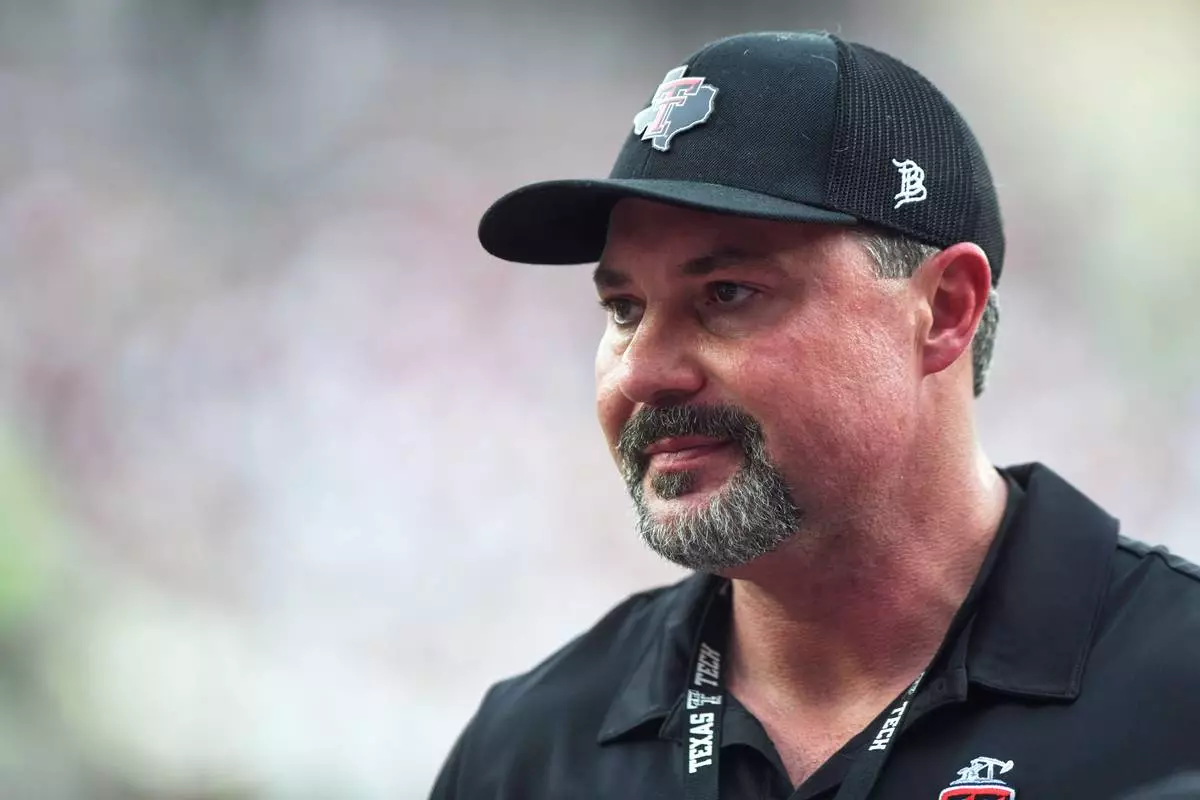
FILE - Cody Campbell walks on the field before a NCAA college football game between Texas Tech and Oregon State, Sept. 13, 2025, in Lubbock, Texas. (AP Photo/Annie Rice, File)
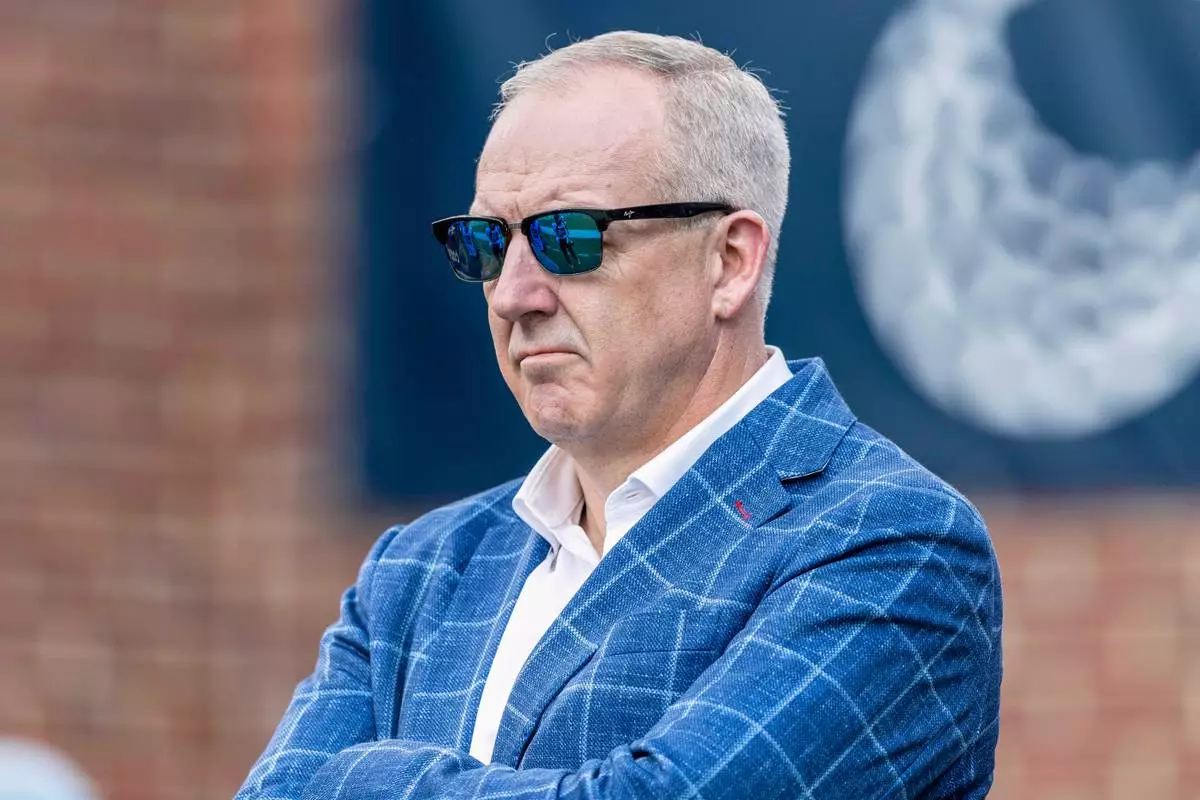
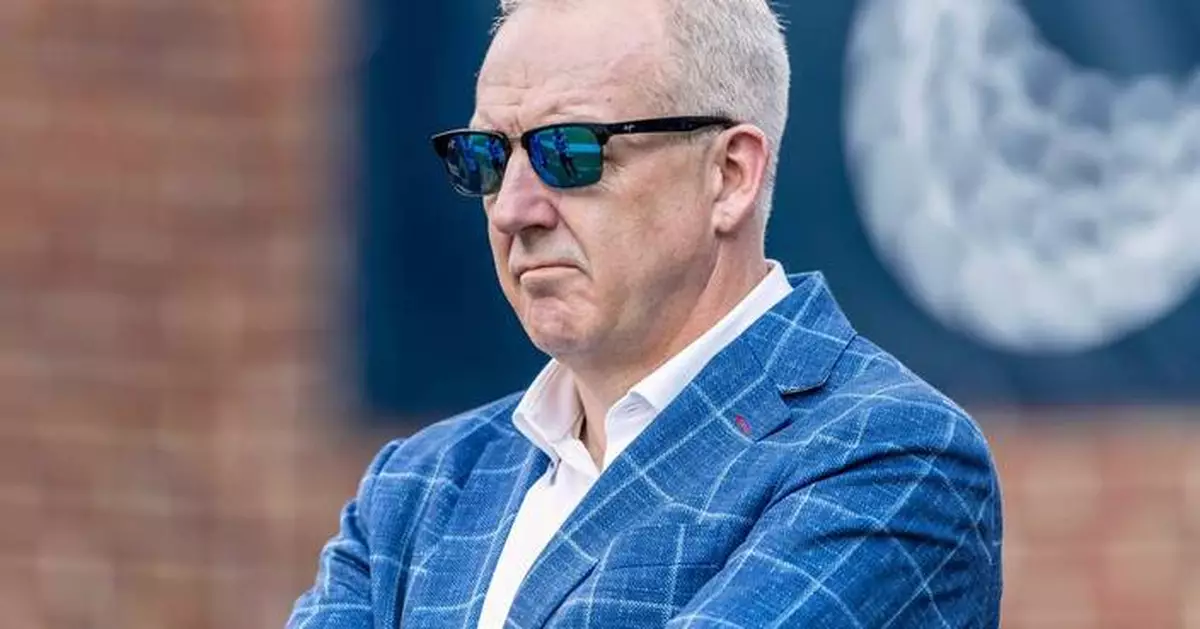
FILE - Southeastern Conference commissioner Greg Sankey looks on on at a Tulane at Mississippi NCAA football game on Sept. 20, 2025, in Oxford, Miss. (AP Photo/Vasha Hunt, File)
GUANARE, Venezuela (AP) — Freedom came too late for Edilson Torres.
The police officer was buried Tuesday in his humble, rural hometown following his death in a Venezuelan prison, where he was held incommunicado since his December detention on what his family said were politically motivated accusations. Before the service, a funeral procession stopped at a local jail, where his wife remains detained on disputed accusations.
Torres, 51, died of a heart attack on Saturday, just as his family awaited the government's promised release of prisoners following the U.S. capture of then-President Nicolás Maduro. His death comes as scores of families like his — who once hesitated to approach advocacy groups — are now coming forward to register their loved ones as “political prisoners.”
Alfredo Romero, director of the organization Foro Penal, a nongovernmental organization that tracks and advocates for Venezuelan prisoners, said the group has received a “flood of messages” since last week from families.
“They didn’t report it out of fear, and now they’re doing it because, in a way, they feel that there is this possibility that their families will be freed,” Romero said. “They see it as hope, but more importantly, as an opportunity.”
The head of Venezuela’s national assembly, Jorge Rodríguez, said last week that a “significant number” of Venezuelan and foreigners imprisoned in the country would be released as a gesture to “seek peace” following the explosions that rocked the South American nation in the early hours of Jan. 3.
The U.S. and Venezuela's opposition have long demanded the widespread release of detained opposition figures, activists and journalists, whom they claim are used as a political tool by the ruling party.
Venezuela’s government denies that there are prisoners unjustly detained, accusing them of plotting to destabilize Maduro’s government.
Following Torres' death, Venezuela's Attorney General Tarek William Saab said in a statement that the case had been assigned to a terrorism unit and “was linked to criminal activities detected by state security agencies.” He did not offer any details, but the vague language tracks with past accusations leveled against real or perceived government critics.
Romero explained that of the roughly 300 families who reached out, about 100 cases so far have been confirmed as politically motivated. Most of those reported over the past few days, he said, once worked for Venezuela's military. That is on top of more than 800 people that the organization says continue to be detained for political reasons in Venezuela.
As of Tuesday evening, Foro Penal had confirmed 56 prisoners it said were detained for political reasons had been freed. The group criticized the lack of government transparency over the releases. Venezuela’s government negated the organization's count, and reported a far higher figure of 400 Tuesday afternoon.
But the government did not provide evidence of the releases, a time range in which they were carried out nor identify those freed, making it impossible to determine whether those freed were behind bars for political or other reasons.
“My little brother, my little brother,” Emelyn Torres said between sobs after his casket, cloaked in Venezuela's flag, arrived at her home for the wake. A few feet away, their grandmother nearly fainted as dozens of people crammed into the living room to pay their respects.
Hours earlier, as a minivan transported the body of her brother 267 miles (430 kilometers) from the capital, Caracas, to Guanare, Torres learned that other men linked to the WhatsApp group that led to her brother's arrest had just been released from prison. She wailed.
Among those who have been released are: human rights attorney Rocío San Miguel, who immediately relocated to Spain; Biagio Pilieri, an opposition leader who was part of Nobel Peace Prize winner María Corina Machado’s 2024 presidential campaign; and Enrique Márquez, a former electoral authority and presidential candidate.
Italian businessman Marco Burlò, who was released from prison Monday, told reporters outside an international airport in Rome Tuesday that he was kept isolated throughout his detention, which he characterized as a “pure and real kidnapping.”
“I can’t say that I was physically abused, but without being able to talk to our children, without the right to defense, without being able to speak to the lawyer, completely isolated, here they thought that I might have died,” he said.
The small set of releases over the past few days continues to fuel criticisms by families, human rights watchdogs at the United Nations and U.S. politicians, who have accused the government of not following through on their word of a wider release.
But the rapid political shifts in the Latin American nation and the distant possibility of release simultaneously marked a rare moment of hope for many families who have spent years wondering if their loved ones would ever be freed.
Part of the reason that Romero said he believed so many people had not come forward is the government's ongoing crackdown on dissent since Venezuela's tumultuous 2024 election, which Maduro claimed to have won despite ample credible evidence to the contrary.
As mass street protests broke out, authorities said they detained more than 2,000 people. In the month after July elections, Venezuela's government passed a law — dubbed the “anti-NGO law” by critics — making it easier for the government to criminalize human rights groups.
That had a chilling effect, Romero said, making families hesitant to come forward — until now.
Janetsky reported from Mexico City.
Follow AP’s coverage of Latin America and the Caribbean at https://apnews.com/hub/latin-america
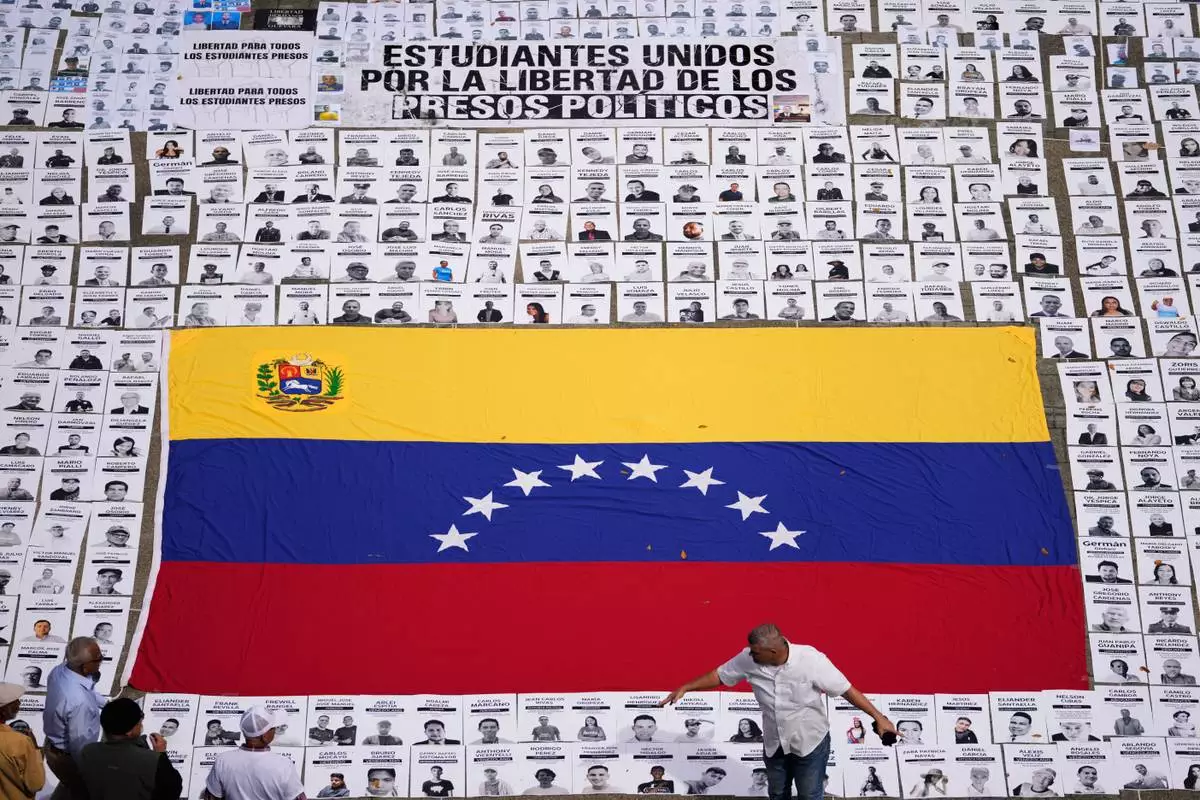
Students lay out photos of people they consider political prisoners at the Central University of Venezuela in Caracas, Venezuela, Tuesday, Jan. 13, 2026. (AP Photo/Matias Delacroix)
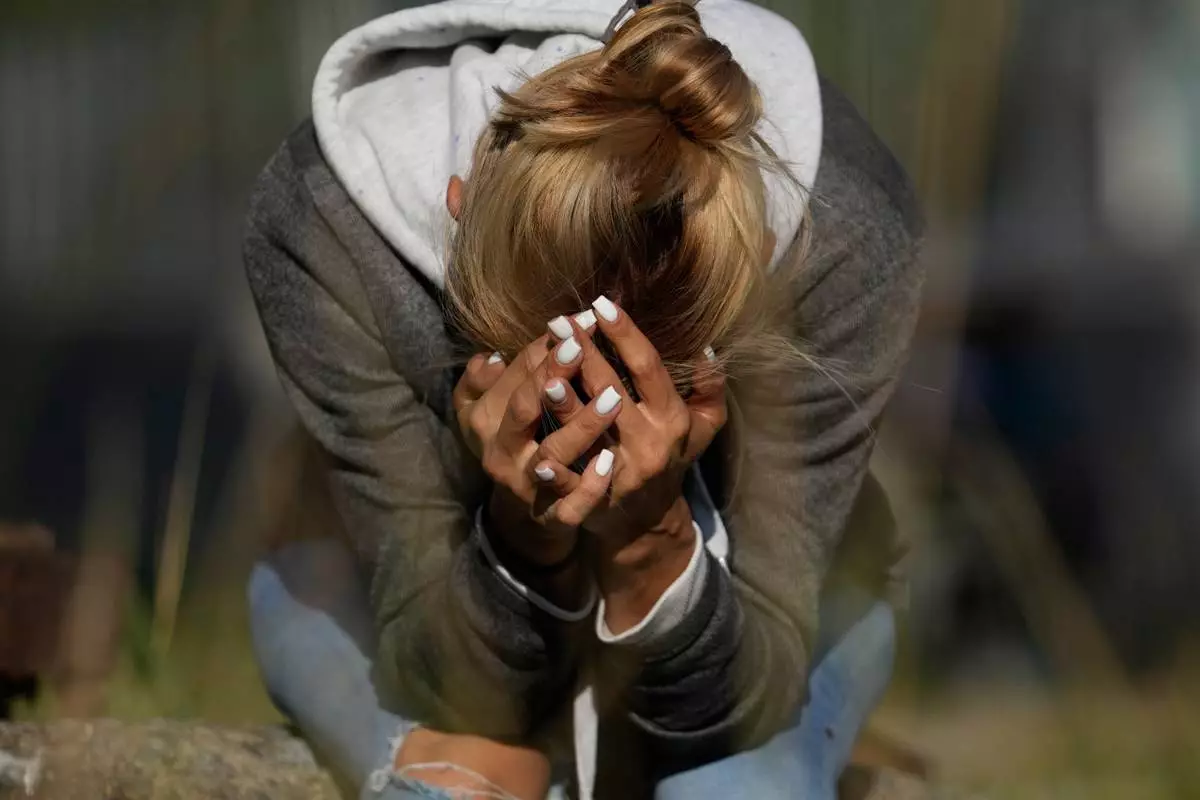
Jacklin Ibarreto, whose father Miguel Ibarreto is detained, waits outside the Rodeo I prison in Guatire, Venezuela, Friday, Jan. 9, 2026, after National Assembly President Jorge Rodriguez said the government would release Venezuelan and foreign prisoners. (AP Photo/Matias Delacroix)
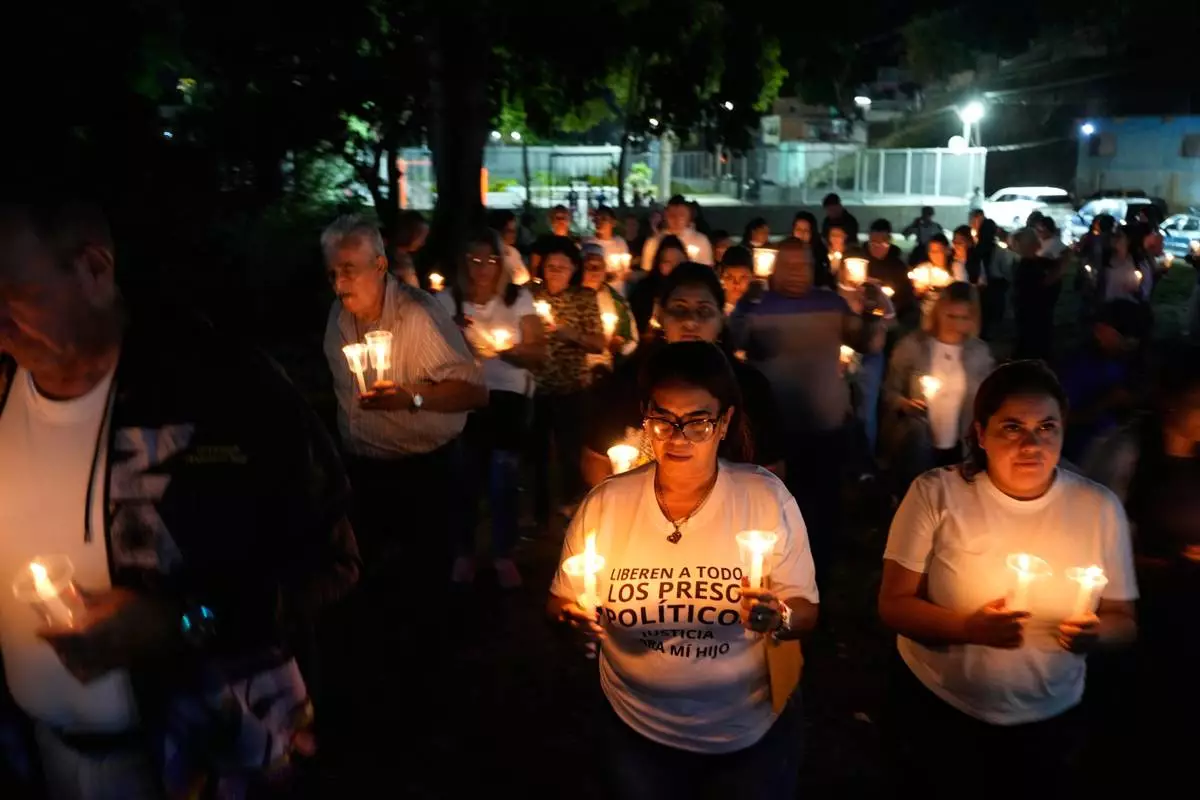
Relatives and friends of political prisoners hold candles calling for their loved ones to be set free outside the Rodeo I prison in Guatire, Venezuela, Friday, Jan. 9, 2026 after the government announced prisoners would be released. (AP Photo/Matias Delacroix)
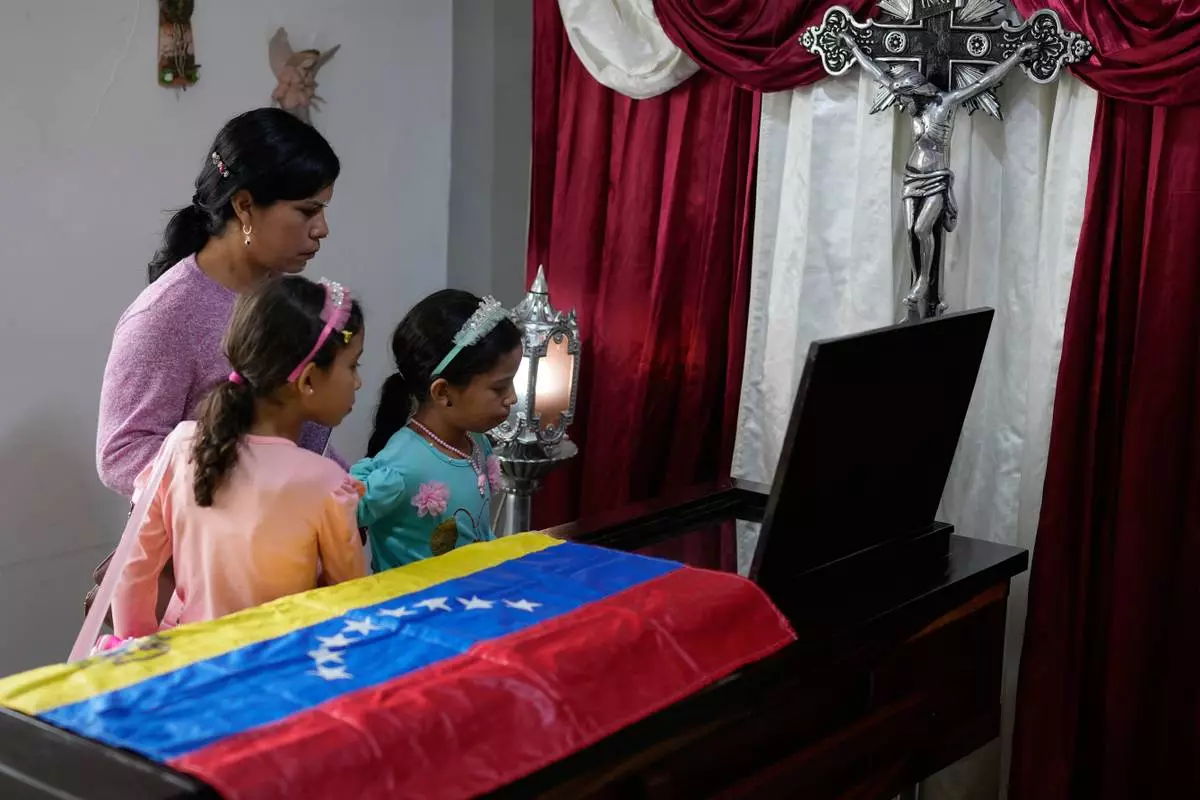
Relatives stand beside the coffin during the wake of Edilson Torres, a Venezuelan police officer who died in prison a month after being arrested on accusations of treason, in Guanare, Venezuela, Tuesday, Jan. 13, 2026. (AP Photo/Ariana Cubillos)
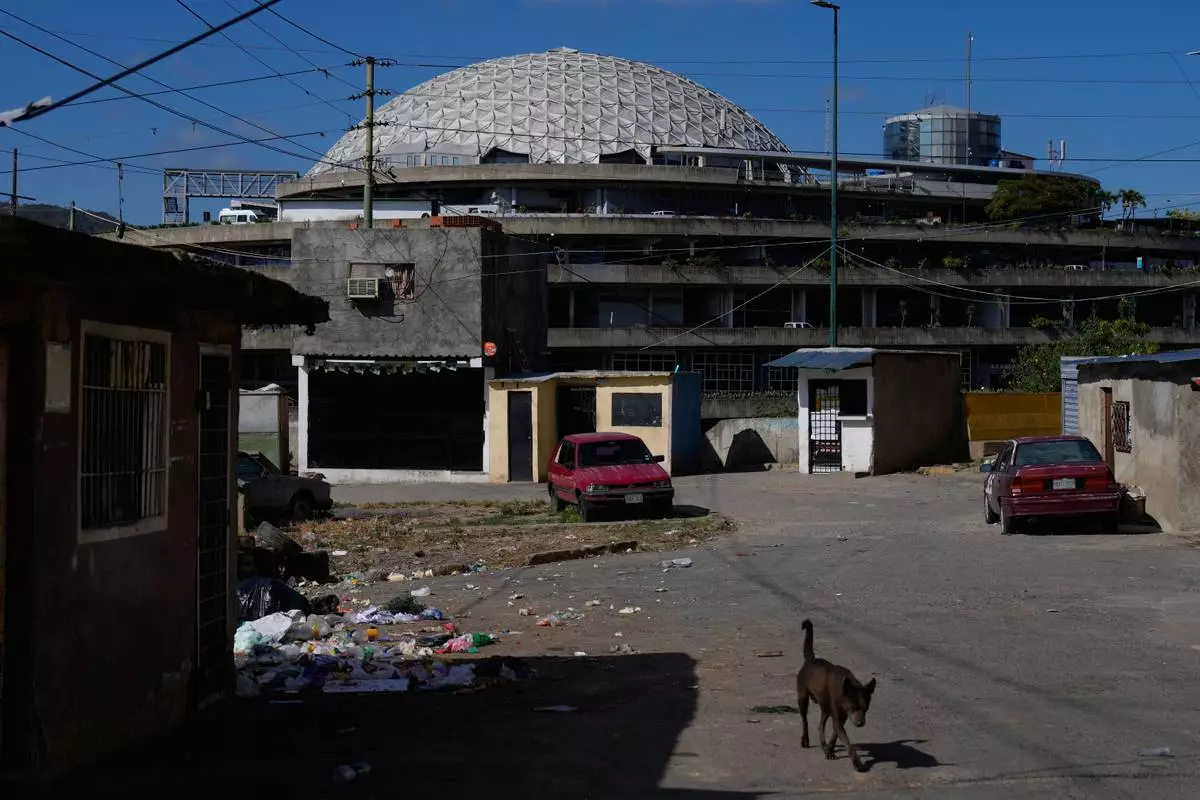
El Helicoide, the headquarters of Venezuela's intelligence service and detention center, stands in Caracas, Venezuela, Friday, Jan. 9, 2026, after National Assembly President Jorge Rodriguez said the government would release Venezuelan and foreign prisoners. (AP Photo/Ariana Cubillos)
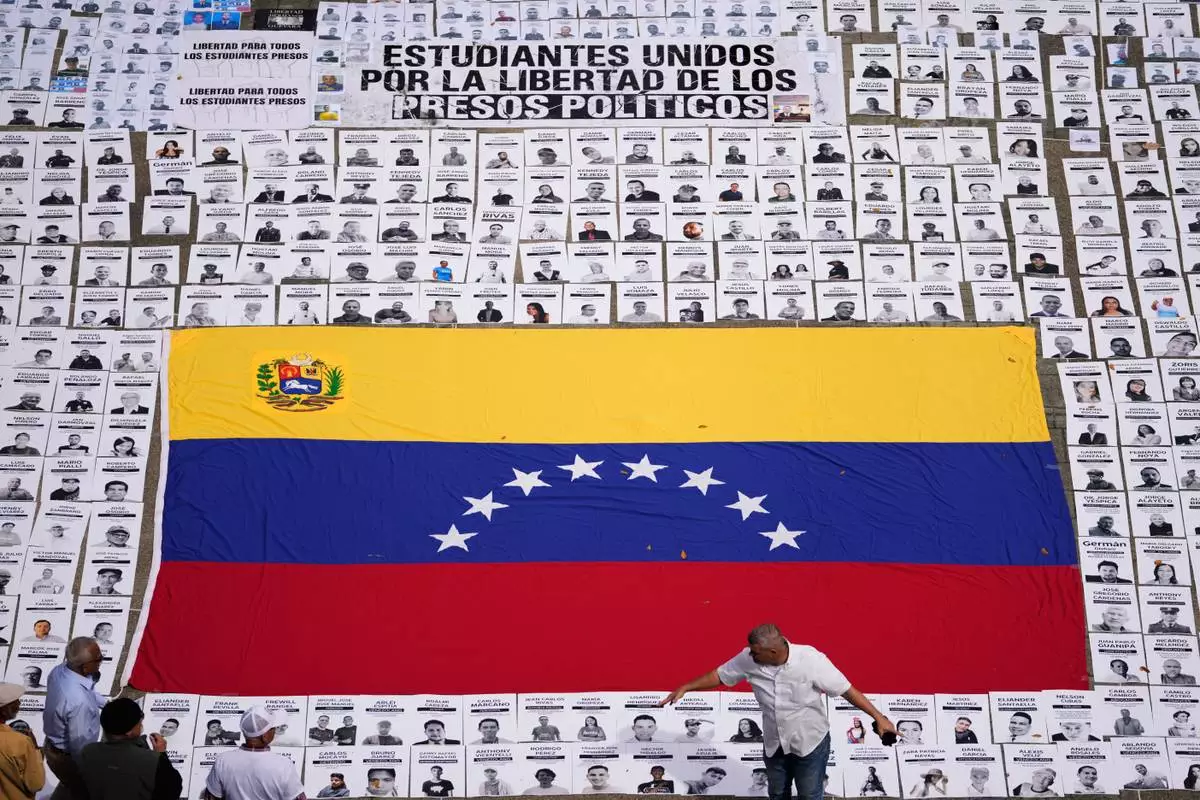
Students lay out photos of people they consider political prisoners at the Central University of Venezuela in Caracas, Venezuela, Tuesday, Jan. 13, 2026. (AP Photo/Matias Delacroix)
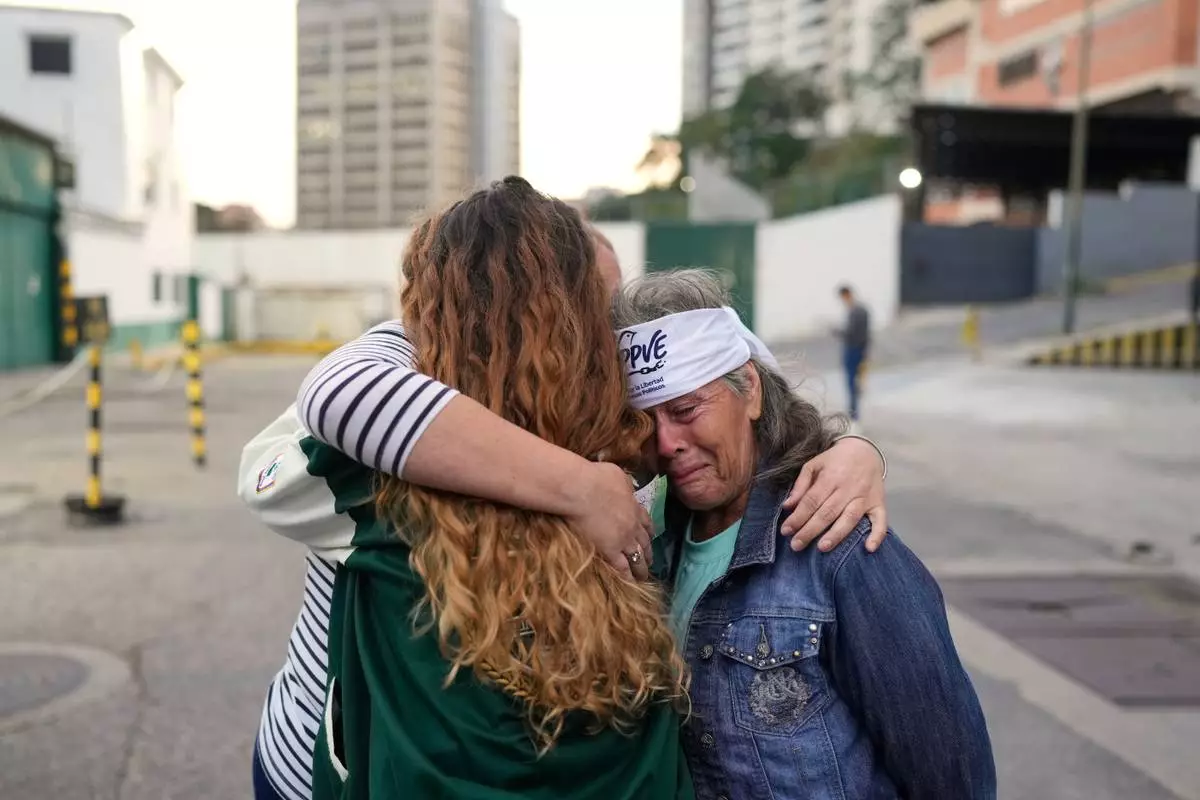
Flor Zambrano, whose son, Rene Chourio, she says is detained at Zone 7 of the Bolivarian National Police for political reasons, embraces relatives of other detainees outside the facility in Caracas, Venezuela, Monday, Jan. 12, 2026. (AP Photo/Matias Delacroix)
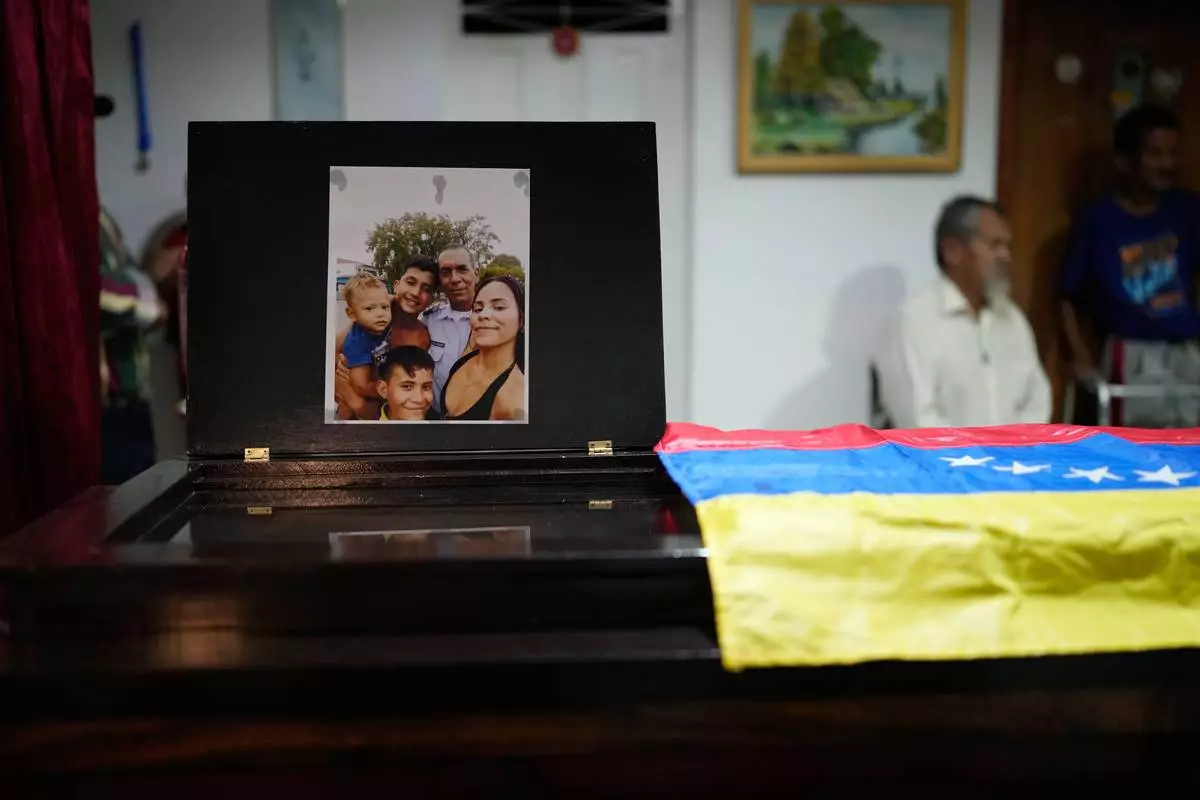
A photo of Edilson Torres, a Venezuelan police officer who died in prison a month after being arrested on accusations of treason, and his family adorns his coffin during his wake at his home in Guanare, Venezuela, Monday, Jan. 12, 2026. (AP Photo/Ariana Cubillos)
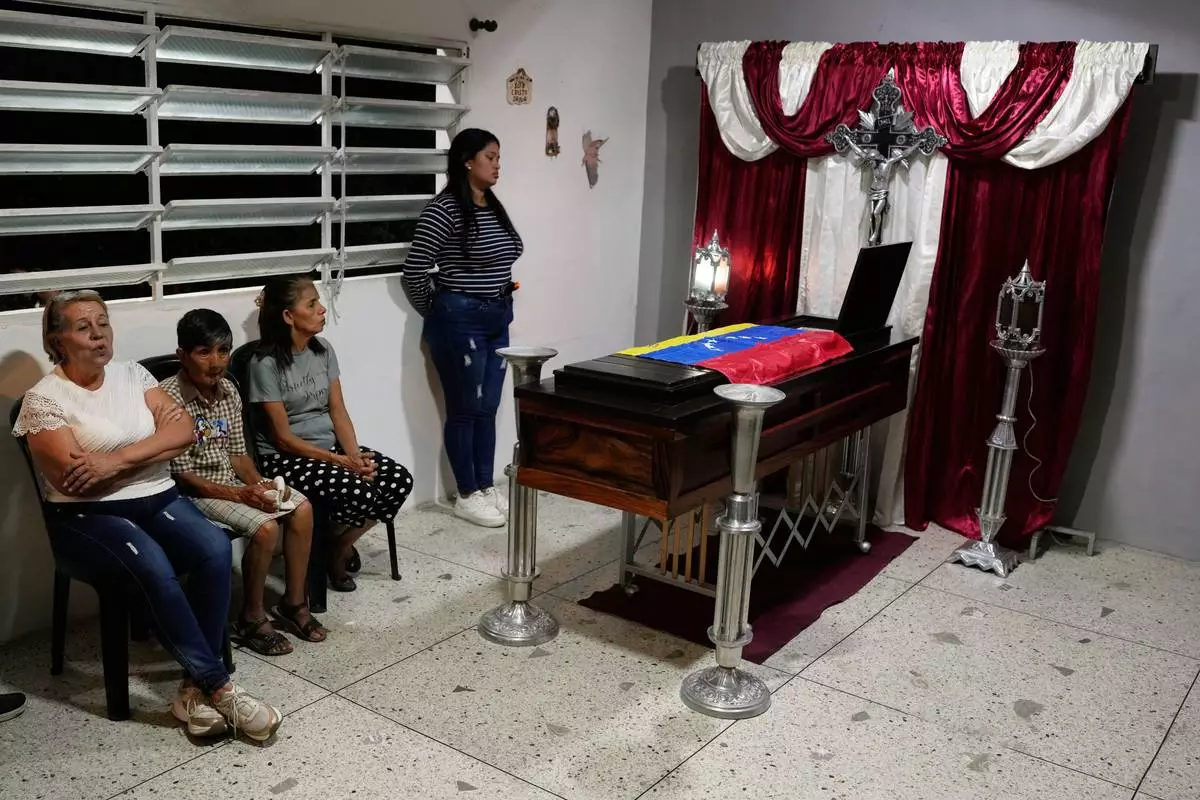
Relatives of Edilson Torres, a Venezuelan police officer who died in prison a month after being arrested on accusations of treason, sit by his coffin during his wake in Guanare, Venezuela, Monday, Jan. 12, 2026. (AP Photo/Ariana Cubillos)
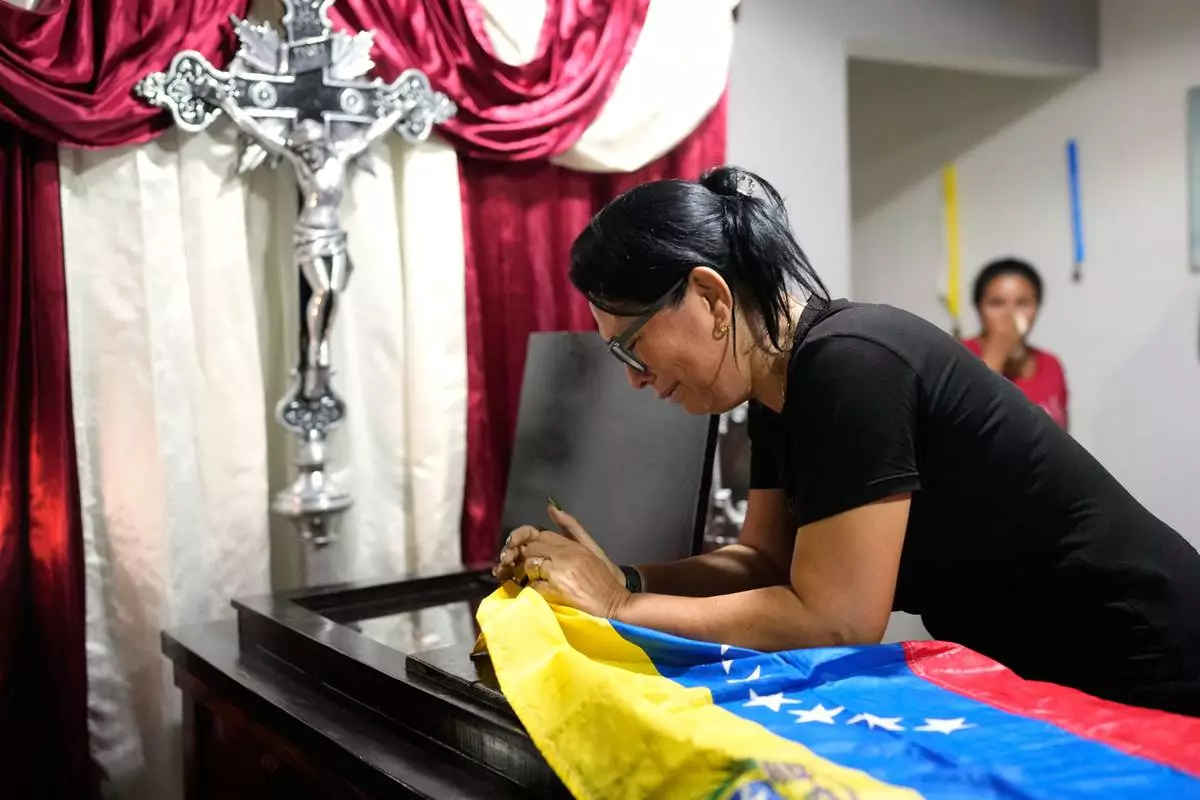
Emelyn Torres leans over the casket of her brother, Edilson Torres, a Venezuelan police officer who died in prison a month after being detained on accusations of treason, during his wake at his home in Guanare, Venezuela, Monday, Jan. 12, 2026. (AP Photo/Ariana Cubillos)
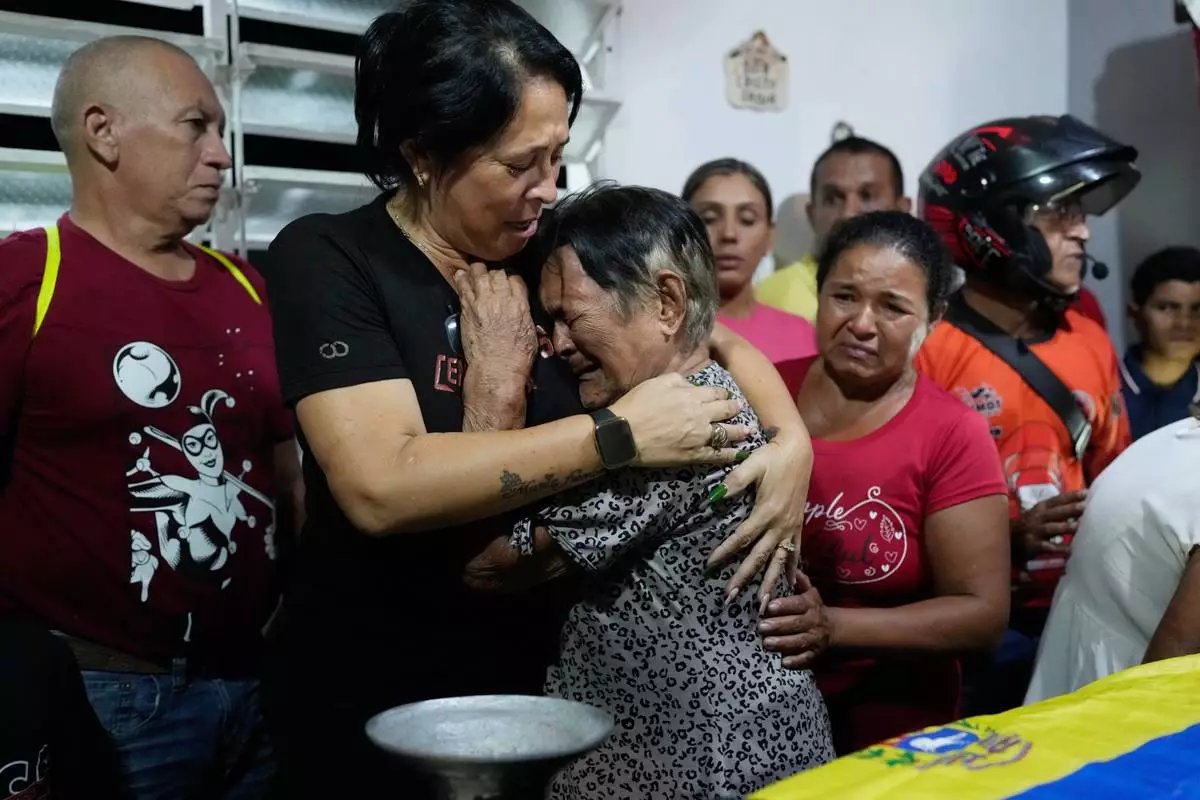
Emelyn Torres and Maria Cristina Fernandez, the sister and grandmother of Edilson Torres, a Venezuelan police officer who died in prison after being detained on accusations of treason, embrace during his wake at his home in Guanare, Venezuela, Monday, Jan. 12, 2026. (AP Photo/Ariana Cubillos)