Skip to Content Facebook Feature Image

China's second-longest river experiences first flood of 2025 after torrential rain

China

China

China

China's second-longest river experiences first flood of 2025 after torrential rain

2025-10-13 23:35 Last Updated At:10-14 02:17

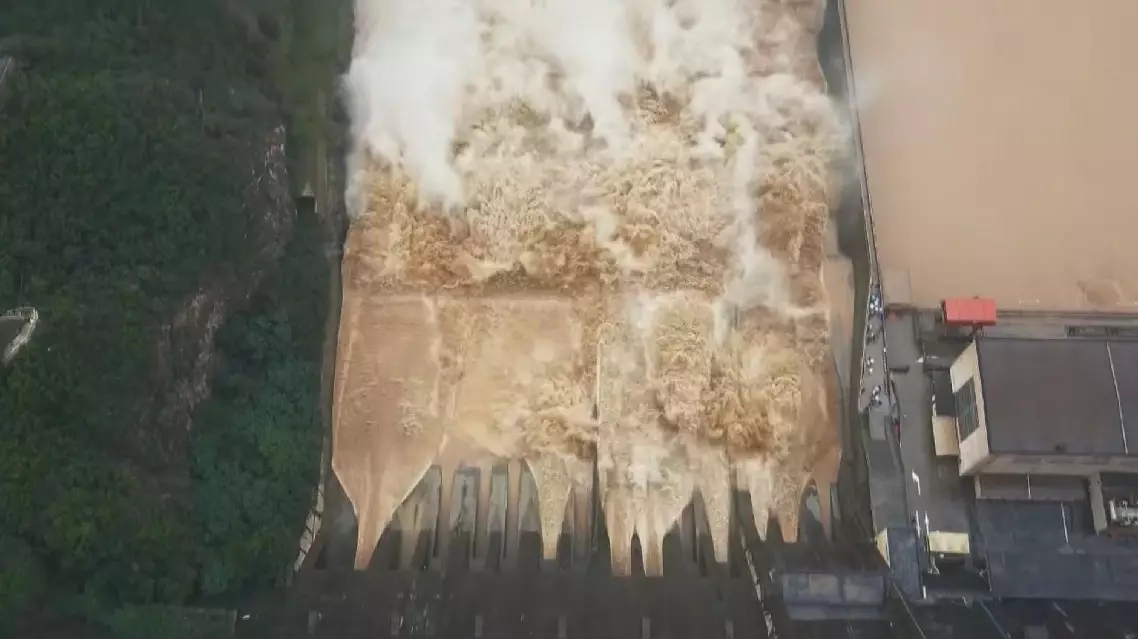
The Yellow River, China's second-longest river, has seen its first flood of the year following torrential rainfall, the Yellow River Conservancy Commission of the Ministry of Water Resources announced on Monday.

Due to heavy rainfall in the lower and middle reaches of the Yellow River from Friday to Sunday, the water flow at the Tongguan hydrological station on the river's main stream had surged to 5,010 cubic meters per second by Sunday evening, surpassing the threshold for meeting flood criteria.

Affected by the combined flow from the Weihe River, the largest tributary of the Yellow River and the northern main stream of the Yellow River, the flood was formed at 23:00 on Sunday, according to the commission.

It is expected that the water level will continue to rise, and the flood control situation in the middle and lower reaches of the Yellow River remains severe, the commission said.

Due to rainfall, the Weihe River and the Fenhe River, the second largest tributary of the Yellow River, have experienced floods exceeding warning levels. In terms of flood origins, the current Yellow River flood is primarily sourced from the Weihe River, marking the largest flood recorded in mid-October for the Weihe River historically.

"The flood occurred relatively late. The Tongguan hydrological station experienced a flood of over 5,000 cubic meters per second, the latest since 1964. There has been abnormal increase in precipitation. Since the beginning of October, the middle reaches of the Yellow River have seen four significant rainfalls, with cumulative precipitation being 6.5 times higher than the same period in previous years, marking the highest levels recorded historically," said Zhang Bingduo, director of the Planning Division of the Flood and Drought Disaster Prevention Bureau of the Yellow River Conservancy Commission.

The Tongguan section of the Yellow River, where the river meets the Weihe River, saw a significant rise in water level on Monday. In response to the passage of the peak flows, local authorities have promptly activated a Level IV flood control response. They have organized personnel to clear the riverbanks and implemented temporary control measures in low-lying areas, such as scenic spots along the banks, prohibiting access to ensure safety. Local authorities have also informed that the peak flow of this section is currently stable.

The Yellow River remains in its flood season, with water levels anticipated to continue rising. Peak flood flows are expected to reach approximately 6,000 cubic meters per second around Wednesday. The commission said it will enhance monitoring, forecasting and early warning systems.

Additionally, it will urge local authorities to implement comprehensive flood prevention measures to ensure the safety of people's lives and property.

China has been numbering floods since 1998. This practice can remind the public of which rivers are flooding and enhance public awareness of flood risk prevention. It also alerts flood control departments about the potential risk of embarkment failures and the need to strengthen flood prevention work.
China's second-longest river experiences first flood of 2025 after torrential rain

China's second-longest river experiences first flood of 2025 after torrential rain
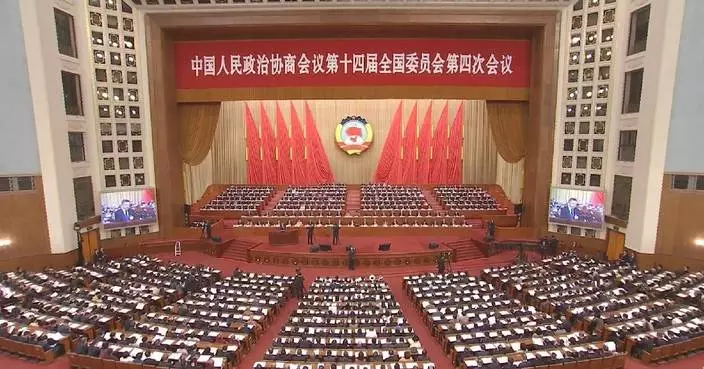
China's commitment to its path of opening up will continue as a long-term national strategy and should increasingly be defined by inclusiveness, a national political advisor said Friday.

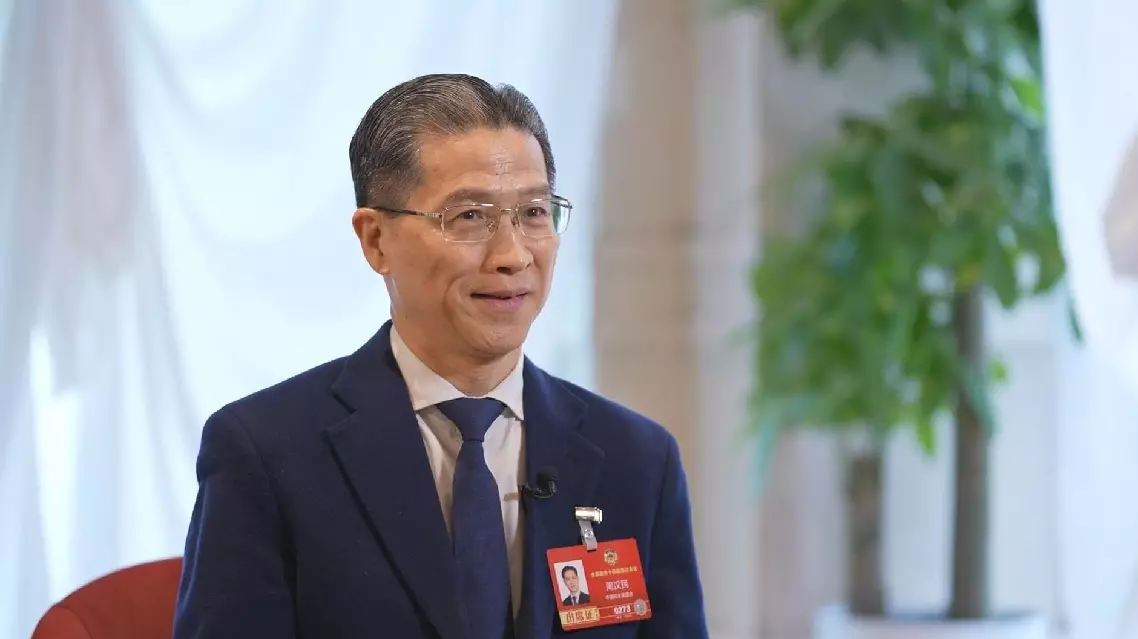
Zhou Hanmin, a member of the Standing Committee of the National Committee of the 14th Chinese People's Political Consultative Conference (CPPCC) and president of the Shanghai Public Diplomacy Association, made the remarks in an interview with China Media Group (CMG) during the annual political "two sessions" underway in Beijing.

"Opening-up is and has been a long-term national policy and a strategy ever since China opened itself up (to the world) some 48 years ago. Ever since China joined WTO (World Trade Organization), you could see it has fundamentally changed the formats of economic movements. So opening-up is a reference and also a driving force," he said.

Zhou stressed China must also invite less privileged nations to share in the prosperity of a more open world.

"Inclusiveness is one word that should be used to modify China's opening-up. I (previously) submitted a bill in CPPCC for the zero tariff for those least developed nations' exportation to China. Because for each and every China International Import Expo, you can see quite a large number of exhibitors coming from the least developed countries. We need to give them very genuine help. We are just in the situation of that. We just try to do not only with developed nations, but the Global South and rest of the countries, all together," he said.

Zhou's comments come amid the ongoing "two sessions", the annual meetings of China's top legislature, the National People's Congress (NPC), and the top political advisory body, the National Committee of the CPPCC. Both bodies serve a five-year term and hold a plenary session each year, generally in March.

The fourth session of the 14th NPC and the fourth session of the 14th National Committee of the CPPCC kicked off in Beijing on Thursday and Wednesday, respectively. A main focus is the adoption of the country's 15th Five-Year Plan (2026-2030), a key blueprint guiding China's drive toward modernization.   When asked about key signals from the plan that the international community should closely watch, Zhou outlined several key issues.

"We are now carrying on this Five-Year Plan in the most crucial period of time. We are going to generally modernize the country (in) another 10 years. In this five-year period of time, we need to focus more on creation. Creation not necessarily in the field of technology. Creation means the modernization of the governance, create lots of new things in the system and methods of governance. This is also important," Zhou said.

"The modernization of industrial systems, the further expansion of the ability of consumption, and we try to know very well the longevity, whatever solves people's daily needs. The last but not least, we try to understand fully international collaboration. Opening-up is still a driving force," he said.

China's opening-up should continue path of inclusiveness: political advisor

China's opening-up should continue path of inclusiveness: political advisor

China's opening-up should continue path of inclusiveness: political advisor

China's opening-up should continue path of inclusiveness: political advisor

Recommended Articles