|
- Siemens launches new SIRIUS 3RQ4 coupling relay with three versatile variants for a wide range of industrial requirements
- Ideal for use in combination with Siemens controllers
- Bio-based, halogen-free, flame-retardant Akulon® K225-KS B-MB plastic from Envalior offers high heat and excellent chemical resistance
DÜSSELDORF, Germany, Oct. 14, 2025 /PRNewswire/ -- Siemens Smart Infrastructure has launched a new series of coupling relays, with housing made from plastic that consists of 70 percent bio-based material - derived from biomass waste. The Akulon® K225-KS B-MB plastic was developed by Envalior, a world leader in a wide range of industries by designing and developing high-quality sustainable solutions, in collaboration with Siemens to ensure all the desired properties are met. The plastic's raw material comes from used cooking oil (UCO), left over after frying in the food industry, restaurants, snack bars and households. As UCO is no longer suitable for human or animal consumption, it does not compete with food or animal feed production. While UCO is mainly used for biodiesel, Envalior uses it for the production of engineering plastics based on a mass balance concept, avoiding incineration. Envalior is a global supplier of high-performance engineering materials.
"Collaborating with Envalior to create this bio-based plastic is an important step towards advancing the use of more sustainable materials in our electrical products. We are pleased to work with Envalior as another strong partner on our journey towards a more environmentally friendly portfolio," says Andreas Matthé, CEO of Electrical Products at Siemens Smart Infrastructure.
The new SIRIUS 3RQ4 coupling relay comes in three versatile variants for a wide range of industrial requirements.
The first variant with integral relay output is specially designed for harsh environmental conditions, as well as for areas with specific safety requirements. These relays have safety-ready characteristic values (B10d values) and are also approved for use in potentially explosive atmospheres (ATEX-certified). This variant is optionally available with gold-plated contact elements for switching very low currents, or with printed circuit boards with a protective coating, which are suited for railway applications.
As a second variant, plug-in coupling relays are available for applications that require quick relay replacement during operation. They are also available as an option with gold-plated contacts.
For applications requiring very fast, soundless and frequent switching, Siemens offers a third variant with semiconductor output. As it has a virtually infinite service life, it is used where replacing conventional relays can be expensive and time-consuming. Siemens has been able to increase the switching capacity of these semiconductor variants to up to 6A, enabling them to match the performance of conventional elementary relays.
The SIRIUS 3RQ4 coupling relays are designed for more sustainability throughout their entire lifecycle, from development to the end of service life and meet the strict criteria of the Siemens EcoTech label. This includes 33 percent lower energy losses in the semiconductor variant compared to previous versions as well as eliminating problematic materials such as halogens or PFAS.
In addition, the product can be easily dismantled and recycled at the end of its life. Envalior's Akulon® K225-KS B-MB, a bio-based, halogen-free, flame-retardant polyamide 6 grade plastic for injection molding, is the ideal choice for these coupling relays. This more sustainable material is characterized by a significantly improved environmental profile, high heat resistance, and excellent chemical resistance and is used in many electrical engineering and power distribution applications.
"At Envalior, we are proud to have partnered with Siemens in the development of the SIRIUS 3RQ4 coupling relay series. A key success factor in this project was achieving excellent flow behavior in thin-wall designs and a UL94 V-0 rating at just 0.4 mm thickness, while simultaneously achieving an outstanding green share from bio-waste sources but at prime quality," says Dr. Marc Rudolf, Global Key Account Manager, Envalior.
The new SIRIUS 3RQ4 coupling relays have a space-saving slim-line design for optimized use in control cabinets. They have been designed and intensively tested for use in combination with Siemens controllers. Their fully automated production at the Siemens plant in Amberg shortens the supply chain in the German and European markets. The coupling relays are shipped in more sustainable cardboard boxes in standard multi-piece packaging. The operating instructions and all relevant information can be accessed electronically from an ID link on the device.
In addition to the manufacture of bio-based products, Envalior also focuses on renewable energies. In 2024, Envalior covered over 50 percent of its global electricity needs with renewable energies. By 2030, Envalior aims to reduce emissions by another 35 percent. This will be achieved through a variety of measures, including expanding renewable energies to 100 percent by 2030, implementing local emission reduction initiatives, and switching to climate-friendly heat sources. Envalior invests in renewable energies close to its production sites around the world.
Visit Envalior for more information at K 2025 (Hall 6, Stand B11, October 8-15, 2025, Messe Düsseldorf, Germany) or at https://www.envalior.com/en-us/products.
For more information on Siemens Smart Infrastructure, please see Siemens Smart Infrastructure.
About Envalior
Envalior is a global leader in Engineering Materials with over 4,000 employees worldwide. It was established in 2023 through the merger of Lanxess Performance Materials and DSM Engineering Materials. With a long track record of customer-driven innovation, Envalior specializes in developing Sustainable and High-Performance Engineering Materials, including PA6, PA66, PBT, PA46, PPS, TPC, PET, PA4T, PA410, and Thermoplastic Composites. Focus markets include Mobility, Electronics & Electrical, and Consumer Goods. For more information, visit www.envalior.com.
About Siemens
Siemens Smart Infrastructure (SI) is shaping the market for intelligent, adaptive infrastructure for today and the future. It addresses the pressing challenges of urbanization and climate change by connecting energy systems, buildings, and industries. SI provides customers with a comprehensive end-to-end portfolio from a single source – with products, systems, solutions, and services from the point of power generation all the way to consumption. With an increasingly digitalized ecosystem, it helps customers thrive and communities progress while contributing toward protecting the planet. To protect this journey, we foster holistic cybersecurity to ensure secure and reliable operations. Siemens Smart Infrastructure has its global headquarters in Zug, Switzerland. As of September 30, 2024, the business had around 78,500 employees worldwide.
Siemens AG (Berlin and Munich) is a leading technology company focused on industry, infrastructure, mobility, and healthcare. The company's purpose is to create technology to transform the everyday, for everyone. By combining the real and the digital worlds, Siemens empowers customers to accelerate their digital and sustainability transformations, making factories more efficient, cities more livable, and transportation more sustainable. A leader in industrial AI, Siemens leverages its deep domain know-how to apply AI – including generative AI – to real-world applications, making AI accessible and impactful for customers across diverse industries. Siemens also owns a majority stake in the publicly listed company Siemens Healthineers, a leading global medical technology provider pioneering breakthroughs in healthcare. For everyone. Everywhere. Sustainably. In fiscal 2024, which ended on September 30, 2024, the Siemens Group generated revenue of €75.9 billion and net income of €9.0 billion. As of September 30, 2024, the company employed around 312,000 people worldwide on the basis of continuing operations. Further information is available on the Internet at www.siemens.com.
- Siemens launches new SIRIUS 3RQ4 coupling relay with three versatile variants for a wide range of industrial requirements
- Ideal for use in combination with Siemens controllers
- Bio-based, halogen-free, flame-retardant Akulon® K225-KS B-MB plastic from Envalior offers high heat and excellent chemical resistance
DÜSSELDORF, Germany, Oct. 14, 2025 /PRNewswire/ -- Siemens Smart Infrastructure has launched a new series of coupling relays, with housing made from plastic that consists of 70 percent bio-based material - derived from biomass waste. The Akulon® K225-KS B-MB plastic was developed by Envalior, a world leader in a wide range of industries by designing and developing high-quality sustainable solutions, in collaboration with Siemens to ensure all the desired properties are met. The plastic's raw material comes from used cooking oil (UCO), left over after frying in the food industry, restaurants, snack bars and households. As UCO is no longer suitable for human or animal consumption, it does not compete with food or animal feed production. While UCO is mainly used for biodiesel, Envalior uses it for the production of engineering plastics based on a mass balance concept, avoiding incineration. Envalior is a global supplier of high-performance engineering materials.
"Collaborating with Envalior to create this bio-based plastic is an important step towards advancing the use of more sustainable materials in our electrical products. We are pleased to work with Envalior as another strong partner on our journey towards a more environmentally friendly portfolio," says Andreas Matthé, CEO of Electrical Products at Siemens Smart Infrastructure.
The new SIRIUS 3RQ4 coupling relay comes in three versatile variants for a wide range of industrial requirements.
The first variant with integral relay output is specially designed for harsh environmental conditions, as well as for areas with specific safety requirements. These relays have safety-ready characteristic values (B10d values) and are also approved for use in potentially explosive atmospheres (ATEX-certified). This variant is optionally available with gold-plated contact elements for switching very low currents, or with printed circuit boards with a protective coating, which are suited for railway applications.
As a second variant, plug-in coupling relays are available for applications that require quick relay replacement during operation. They are also available as an option with gold-plated contacts.
For applications requiring very fast, soundless and frequent switching, Siemens offers a third variant with semiconductor output. As it has a virtually infinite service life, it is used where replacing conventional relays can be expensive and time-consuming. Siemens has been able to increase the switching capacity of these semiconductor variants to up to 6A, enabling them to match the performance of conventional elementary relays.
The SIRIUS 3RQ4 coupling relays are designed for more sustainability throughout their entire lifecycle, from development to the end of service life and meet the strict criteria of the Siemens EcoTech label. This includes 33 percent lower energy losses in the semiconductor variant compared to previous versions as well as eliminating problematic materials such as halogens or PFAS.
In addition, the product can be easily dismantled and recycled at the end of its life. Envalior's Akulon® K225-KS B-MB, a bio-based, halogen-free, flame-retardant polyamide 6 grade plastic for injection molding, is the ideal choice for these coupling relays. This more sustainable material is characterized by a significantly improved environmental profile, high heat resistance, and excellent chemical resistance and is used in many electrical engineering and power distribution applications.
"At Envalior, we are proud to have partnered with Siemens in the development of the SIRIUS 3RQ4 coupling relay series. A key success factor in this project was achieving excellent flow behavior in thin-wall designs and a UL94 V-0 rating at just 0.4 mm thickness, while simultaneously achieving an outstanding green share from bio-waste sources but at prime quality," says Dr. Marc Rudolf, Global Key Account Manager, Envalior.
The new SIRIUS 3RQ4 coupling relays have a space-saving slim-line design for optimized use in control cabinets. They have been designed and intensively tested for use in combination with Siemens controllers. Their fully automated production at the Siemens plant in Amberg shortens the supply chain in the German and European markets. The coupling relays are shipped in more sustainable cardboard boxes in standard multi-piece packaging. The operating instructions and all relevant information can be accessed electronically from an ID link on the device.
In addition to the manufacture of bio-based products, Envalior also focuses on renewable energies. In 2024, Envalior covered over 50 percent of its global electricity needs with renewable energies. By 2030, Envalior aims to reduce emissions by another 35 percent. This will be achieved through a variety of measures, including expanding renewable energies to 100 percent by 2030, implementing local emission reduction initiatives, and switching to climate-friendly heat sources. Envalior invests in renewable energies close to its production sites around the world.
Visit Envalior for more information at K 2025 (Hall 6, Stand B11, October 8-15, 2025, Messe Düsseldorf, Germany) or at https://www.envalior.com/en-us/products.
For more information on Siemens Smart Infrastructure, please see Siemens Smart Infrastructure.
About Envalior
Envalior is a global leader in Engineering Materials with over 4,000 employees worldwide. It was established in 2023 through the merger of Lanxess Performance Materials and DSM Engineering Materials. With a long track record of customer-driven innovation, Envalior specializes in developing Sustainable and High-Performance Engineering Materials, including PA6, PA66, PBT, PA46, PPS, TPC, PET, PA4T, PA410, and Thermoplastic Composites. Focus markets include Mobility, Electronics & Electrical, and Consumer Goods. For more information, visit www.envalior.com.
About Siemens
Siemens Smart Infrastructure (SI) is shaping the market for intelligent, adaptive infrastructure for today and the future. It addresses the pressing challenges of urbanization and climate change by connecting energy systems, buildings, and industries. SI provides customers with a comprehensive end-to-end portfolio from a single source – with products, systems, solutions, and services from the point of power generation all the way to consumption. With an increasingly digitalized ecosystem, it helps customers thrive and communities progress while contributing toward protecting the planet. To protect this journey, we foster holistic cybersecurity to ensure secure and reliable operations. Siemens Smart Infrastructure has its global headquarters in Zug, Switzerland. As of September 30, 2024, the business had around 78,500 employees worldwide.
Siemens AG (Berlin and Munich) is a leading technology company focused on industry, infrastructure, mobility, and healthcare. The company's purpose is to create technology to transform the everyday, for everyone. By combining the real and the digital worlds, Siemens empowers customers to accelerate their digital and sustainability transformations, making factories more efficient, cities more livable, and transportation more sustainable. A leader in industrial AI, Siemens leverages its deep domain know-how to apply AI – including generative AI – to real-world applications, making AI accessible and impactful for customers across diverse industries. Siemens also owns a majority stake in the publicly listed company Siemens Healthineers, a leading global medical technology provider pioneering breakthroughs in healthcare. For everyone. Everywhere. Sustainably. In fiscal 2024, which ended on September 30, 2024, the Siemens Group generated revenue of €75.9 billion and net income of €9.0 billion. As of September 30, 2024, the company employed around 312,000 people worldwide on the basis of continuing operations. Further information is available on the Internet at www.siemens.com.
** The press release content is from PR Newswire. Bastille Post is not involved in its creation. **

FROM FRYING OIL TO COUPLING RELAYS: SIEMENS AND ENVALIOR COLLABORATE ON MORE SUSTAINABLE ELECTRICAL PRODUCTS
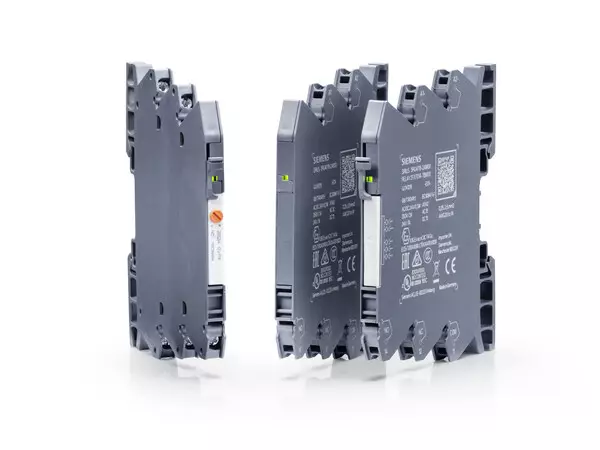
FROM FRYING OIL TO COUPLING RELAYS: SIEMENS AND ENVALIOR COLLABORATE ON MORE SUSTAINABLE ELECTRICAL PRODUCTS
- New framework brings together Aon's Risk Capital and Human Capital data with public sentiment analysis from Gallup to create a portfolio view of risk
- Creates further clarity into how risks compound across four megatrends, how resilience is built and activated and where targeted actions can most effectively influence performance
DUBLIN, Jan. 16, 2026 /PRNewswire/ -- Aon plc (NYSE: AON), a leading global professional services firm, announced today that it is releasing insights from a new, data-driven tool to help organizations build sustainable resilience and unlock growth: Aon's Resilience Quotient.
Developed in collaboration with Gallup, Aon's Resilience Quotient responds to a critical insight: in a time of increasing populism and fragmented sources of information, quantitative data alone is not enough to make long-term decisions. Combining public sentiment on global issues with risk and people data and analytics enables greater clarity and confidence to invest and grow amidst uncertainty and volatility.
By integrating Aon's proprietary Risk Capital and Human Capital analytics with the results of Gallup's World Poll covering 140 countries for more than 20 years, the firm's Resilience Quotient captures both objective conditions and subjective sentiment, revealing where sentiment signals hidden risks and potential opportunities to achieve greater resilience. This system-level view enables leaders to spot emerging risks sooner, prioritize resilience investments and move from reactive risk management to proactive decision-making.
"When making decisions around investment, workforce or managing geopolitical risk, a portfolio view is far superior to a siloed perspective," said Greg Case, president and CEO of Aon. "Understanding sentiment can be an opportunity signal or an early warning. Leaders who are limited to only some of the relevant metrics risk missing the signals that matter most. Aon's Resilience Quotient delivers an integrated view to help organizations act decisively, strengthen resilience and unlock sustainable growth."
Four interconnected megatrends – Trade, Technology, Weather and Workforce – are reshaping the global operating environment in ways that traditional models struggle to anticipate. Aon's Resilience Quotient provides a clearer view of the tradeoffs within these interactions: how trade volatility can amplify technology risk, how climate pressures influence workforce mobility and how sentiment can either reinforce resilience or heighten operational risk, even when the fundamentals appear strong.
To illustrate the insights from its Resilience Quotient, the firm published three case studies addressing some of the most relevant and urgent issues facing the 2026 global economy:
- Realizing the Opportunity of AI: Securing Data Center Growth
Data centers are the backbone of the digital economy and with nearly $1.3 trillion projected to be invested globally in data centers by 2030, their rapid expansion brings unprecedented risks. Aon's Resilience Quotient shows that resilience varies sharply at the sub-national level, often more than underlying risk. Within the U.S., Iowa emerges as the most resilient destination for data center development, combining very low overall risk with exceptionally strong trade and weather resilience. "Aon's Resilience Quotient shows that Iowa's resilience–risk balance is roughly twice the national median, demonstrating how governance quality, institutional confidence and preparedness materially shape long-term infrastructure outcomes," said Joe Peiser, CEO of Commercial Risk Solutions at Aon. "This underscores the opportunity for leaders who understand the combined effect of low risk, resilient trade and weather systems and a strong foundation of public trust — factors that ultimately determine where AI infrastructure can grow at scale."
DUBLIN, Jan. 16, 2026 /PRNewswire/ -- Aon plc (NYSE: AON), a leading global professional services firm, announced today that it is releasing insights from a new, data-driven tool to help organizations build sustainable resilience and unlock growth: Aon's Resilience Quotient.
Developed in collaboration with Gallup, Aon's Resilience Quotient responds to a critical insight: in a time of increasing populism and fragmented sources of information, quantitative data alone is not enough to make long-term decisions. Combining public sentiment on global issues with risk and people data and analytics enables greater clarity and confidence to invest and grow amidst uncertainty and volatility.
By integrating Aon's proprietary Risk Capital and Human Capital analytics with the results of Gallup's World Poll covering 140 countries for more than 20 years, the firm's Resilience Quotient captures both objective conditions and subjective sentiment, revealing where sentiment signals hidden risks and potential opportunities to achieve greater resilience. This system-level view enables leaders to spot emerging risks sooner, prioritize resilience investments and move from reactive risk management to proactive decision-making.
"When making decisions around investment, workforce or managing geopolitical risk, a portfolio view is far superior to a siloed perspective," said Greg Case, president and CEO of Aon. "Understanding sentiment can be an opportunity signal or an early warning. Leaders who are limited to only some of the relevant metrics risk missing the signals that matter most. Aon's Resilience Quotient delivers an integrated view to help organizations act decisively, strengthen resilience and unlock sustainable growth."
Four interconnected megatrends – Trade, Technology, Weather and Workforce – are reshaping the global operating environment in ways that traditional models struggle to anticipate. Aon's Resilience Quotient provides a clearer view of the tradeoffs within these interactions: how trade volatility can amplify technology risk, how climate pressures influence workforce mobility and how sentiment can either reinforce resilience or heighten operational risk, even when the fundamentals appear strong.
To illustrate the insights from its Resilience Quotient, the firm published three case studies addressing some of the most relevant and urgent issues facing the 2026 global economy:
"Aon's Resilience Quotient shows that Iowa's resilience–risk balance is roughly twice the national median, demonstrating how governance quality, institutional confidence and preparedness materially shape long-term infrastructure outcomes," said Joe Peiser, CEO of Commercial Risk Solutions at Aon. "This underscores the opportunity for leaders who understand the combined effect of low risk, resilient trade and weather systems and a strong foundation of public trust — factors that ultimately determine where AI infrastructure can grow at scale."
- Workforce Transformation: AI Adoption and the Next Generation Workforce
The acceleration of AI adoption is transforming the workforce, but most organizations face a critical gap between the demand for AI skills and their readiness to adapt. The Resilience Quotient highlights how workforce engagement, trust and institutional preparedness are essential to harnessing AI's potential, making resilience the key differentiator between organizations that thrive through change and those that risk falling behind. "Aon's Resilience Quotient equips leaders to navigate rapid AI change with confidence," said Lisa Stevens, chief administrative officer at Aon. "These insights help create the conditions for early‑career employees to build the skills and confidence they need — so instead of losing a generation of talent, we cultivate one that is more capable and resilient than ever."
"Aon's Resilience Quotient equips leaders to navigate rapid AI change with confidence," said Lisa Stevens, chief administrative officer at Aon. "These insights help create the conditions for early‑career employees to build the skills and confidence they need — so instead of losing a generation of talent, we cultivate one that is more capable and resilient than ever."
- Rethinking Humanitarian Finance: A New Approach to Forced Migration
Over 120 million people are currently displaced by conflict, climate and systemic crises, reshaping societies and economies worldwide. Aon's Resilience Quotient highlights Venezuela and Colombia to illustrate the tradeoffs between investing resources at the source of migration — supporting those facing institutional erosion, food insecurity and economic collapse — or directing investment to more stable countries like Colombia that are absorbing people fleeing unlivable conditions. "Forced displacement results from extreme weather and man-made disasters like conflict and economic failure," said Bridget Gainer, chief public affairs officer at Aon. "If we could leverage the forecasting and financial capability of insurance to better predict and more quickly mitigate the impact of this volatility, we could help create conditions that allow populations to remain and rebuild in their home countries."
"Forced displacement results from extreme weather and man-made disasters like conflict and economic failure," said Bridget Gainer, chief public affairs officer at Aon. "If we could leverage the forecasting and financial capability of insurance to better predict and more quickly mitigate the impact of this volatility, we could help create conditions that allow populations to remain and rebuild in their home countries."
"Resilience is not a single blueprint, it's the way systems mitigate, adapt and transform under pressure. Aon's Resilience Quotient functions as a pressure gauge, surfacing the trade‑offs and early signals that help leaders strengthen resilience where it matters most," said Joe Daly, managing partner at Gallup. "We're proud to collaborate with Aon to combine Gallup's global sentiment analytics with Aon's Risk Capital and Human Capital data, turning confidence into actionable insight."
New insights from Aon's Resilience Quotient suggest that going forward, resilience priorities will shift from static risk management to dynamic, localized strategies. As disruptions become more complex and frequent, organizations will need to tailor resilience investments to specific geographies, sectors and even sub-regional contexts. Aon's Resilience Quotient is supported with a real-time analytics and AI-enabled insights platform, built by Quantum Rise, providing deeper visibility into evolving risk and resilience signals as conditions change.
Aon and Gallup will join global decision-makers at the World Economic Forum Annual Meeting to advance these critical discussions on restoring confidence and unlocking sustainable growth.
Learn more about Aon's Resilience Quotient and explore the case studies here.
About Aon
Aon plc (NYSE: AON) exists to shape decisions for the better — to protect and enrich the lives of people around the world. Through actionable analytic insight, globally integrated Risk Capital and Human Capital expertise, and locally relevant solutions, our colleagues provide clients in over 120 countries with the clarity and confidence to make better risk and people decisions that help protect and grow their businesses.
Follow Aon on LinkedIn, X, Facebook and Instagram. Stay up-to-date by visiting Aon's newsroom and sign up for news alerts here.
Media Contact
mediainquiries@aon.com
Toll-free (U.S., Canada and Puerto Rico): +1 833 751 8114
International: +1 312 381 3024
** The press release content is from PR Newswire. Bastille Post is not involved in its creation. **

Aon's Resilience Quotient Cuts Through Uncertainty and Volatility to Help Businesses Move from Risk to Resilience and Growth