The recently reached Gaza ceasefire deal between Israel and Hamas was officially signed at a summit in the Egyptian seaside resort of Sharm el-Sheik on Monday.
The document was signed by Egyptian President Abdel Fattah al-Sisi, U.S. President Donald Trump, Turkish President Recep Tayyip Erdogan, and the Emir of Qatar, Sheikh Tamim bin Hamad Al Thani, -- leaders of the four nations who had mediated the negotiations between Israel and Hamas.
Monday's summit gathered political leaders from more than 20 countries as well as regional and international organizations. Neither Israel or Hamas was represented at the event.
Sisi said the signing stands as a glimmer of hope that this agreement will close a painful chapter in human history and open the door to a new era of peace and stability in the Middle East, granting the region's peoples, who have been exhausted by conflicts, a better tomorrow.
The Egyptian president reiterated support for the implementation of the Gaza ceasefire plan, stressing that the agreement must be "solidified and all its phases implemented, leading to the realization of the two-state solution."
Dutch Prime Minister Dick Schoof told reporters that the world leaders expect Israel and the Palestinians to take all necessary steps to preserve the ceasefire.
"Look at the different leaders here from Indonesia to Arab countries, but also a lot of European countries, Canada. I think they all are convinced that this is the moment in time that we could write history. So, I think that together, and [by] showing ourselves behind the signing, we give a clear signal to Netanyahu, also to the Palestinian Authority, to make real use and reform the Palestinian Authority itself, and also a clear signal to Hamas that they cannot play a role in the future of Gaza anymore," he said.
The Gaza ceasefire deal took effect on Oct 10, following three days of intensive negotiations in Sharm el-Sheikh between Israel and Hamas mediated by Egypt, Qatar, Türkiye and the United States.
The first phase of the plan includes Israeli troop withdrawals from Gaza City, Rafah, Khan Younis, and the north, the exchange of hostages and prisoners, and the opening of five crossings for aid.
On Monday, Hamas released 20 living Israeli hostages in two batches and returned the remains of four Israeli hostages. Meanwhile, the Israeli authorities said they had released 1,986 Palestinian prisoners.
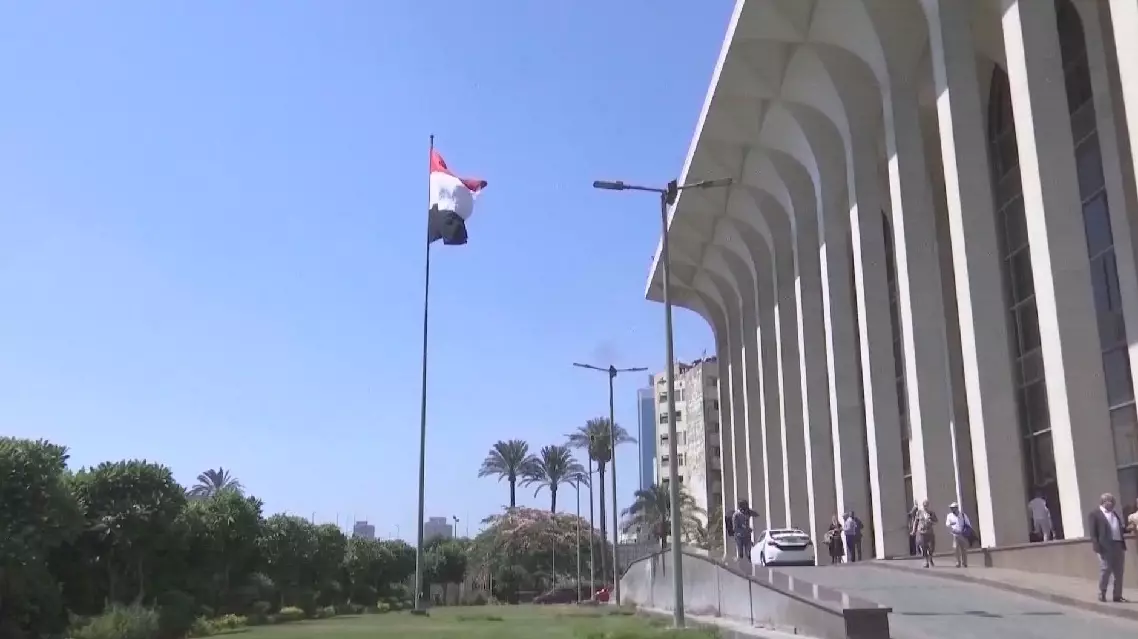
Gaza ceasefire deal signed at summit in Egypt's Sharm el-Sheikh
A former television host from Taiwan, Zhai Xuan, has made a pivotal decision to leave mainstream broadcasting in order to create content that provides a better understanding of the Chinese mainland and cross-strait relations.
Zhai, a seasoned television host with over a decade of experience in Taiwan's media landscape, recently addressed an audience at an event in Beijing, where she revealed her complete transition into independent online media.
In her remarks, she articulated her aspiration to bridge what she perceives as a significant information gap between audiences on both sides of the Strait, highlighting her commitment to fostering a deeper understanding and connection through her new endeavors.
"I was really surprised by all the fake news. There were stories saying people on the mainland can't afford tea eggs or that they live in mud houses and in Taiwan, this was the main information many people received," said Zhai.
Zhai said she initially began producing online videos to challenge such perceptions while continuing her work as a television host.
In April 2025, she travelled to the mainland with her father to fulfill her late grandfather's wish to return to his hometown. The trip, which reunited family members separated since 1949, was recorded in a video series titled "Journey to Find Our Roots", drawing attention from viewers in both Taiwan and the mainland.
"Many people in Taiwan told me that after watching, they wanted to apply for a mainland travel permit immediately and go looking for their relatives. Some had long forgotten these things, but after seeing my story, they began thinking about their hometowns and family members they had never met and decided to search for their roots," Zhai shared her story at the event.
By mid-2025, Zhai said she began to feel increasing pressure amid rising political tensions and a tightening atmosphere around cross-Strait exchanges in Taiwan.
After more than 12 years in the industry, Zhai resigned from her position, believing it was the right thing to do.
"At that moment, I felt this was a major issue,not just for me, but for Chinese people on both sides of the Strait. If I backed down then, I wouldn’t be standing on the right side," said Zhai.
Since leaving television, Zhai has broadened her online programming to encompass a range of daily-life topics, including practical guidance on applying for a mainland travel permit and using commonly employed mobile applications, in addition to content that delves into historical memory and cultural connections across the Strait.
As the debate over cross-Strait relations continues in Taiwan, Zhai said she remains committed to her current path.

Former Taiwan TV host bridges cross-Strait divide via online media