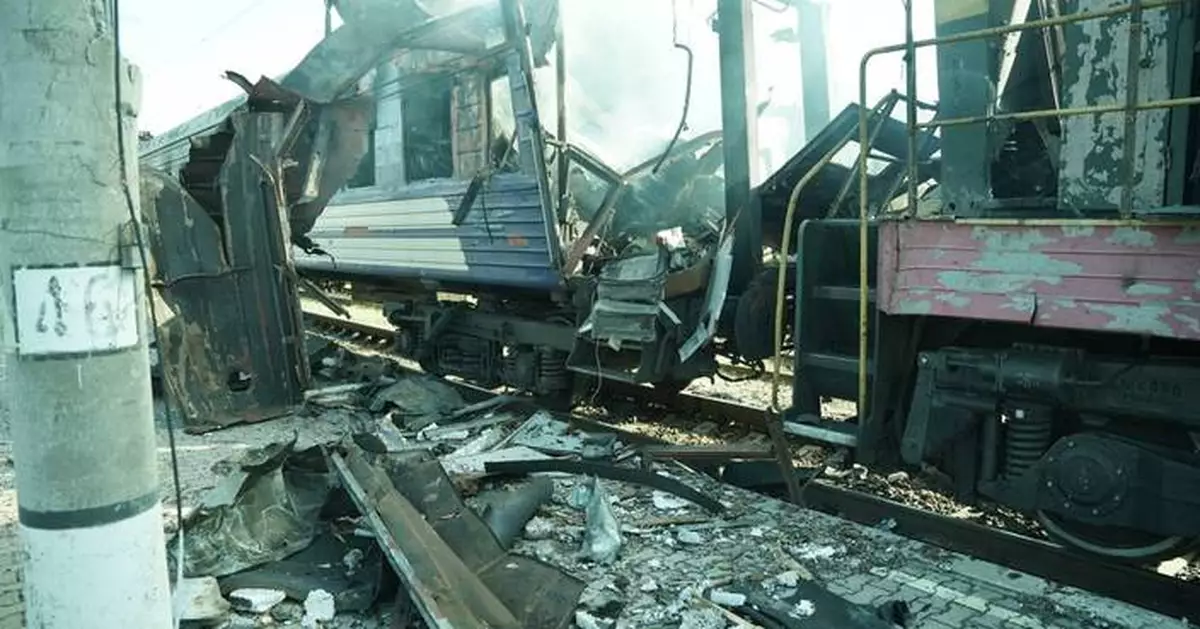
KYIV, Ukraine (AP) — When Russian drones smashed into the Shostka train station in northeastern Ukraine earlier this month, they killed a 71-year-old man, injured at least eight people and left train cars buckled by fire and riddled with shrapnel holes.
It was one of the latest examples of what Ukrainian officials say has been a surge since mid-summer in attacks on railways, a critical artery for commercial and military logistics.
Click to Gallery
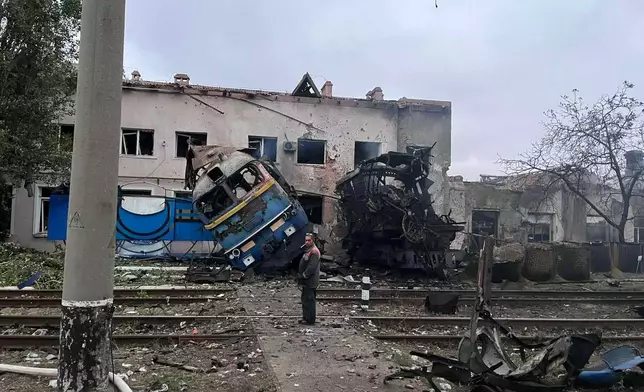
In this photo provided by Office of the Deputy Prime Minister for Restoration and Development on Thursday, Oct. 2, 2025, a railway worker stands in front of a train locomotive destroyed by a Russian strike in Odesa, Ukraine. (Office of the Deputy Prime Minister for Restoration and Development via AP)
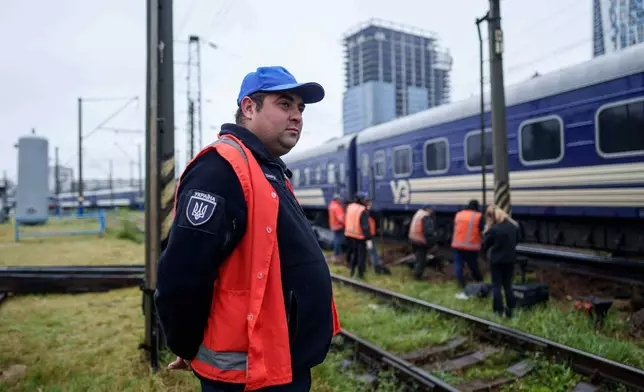
Shevcuk Maksym, 30, a railway repair team leader, looks at railway track repair work in Kyiv, Ukraine, Thursday, Oct. 2, 2025. (AP Photo/Evgeniy Maloletka)
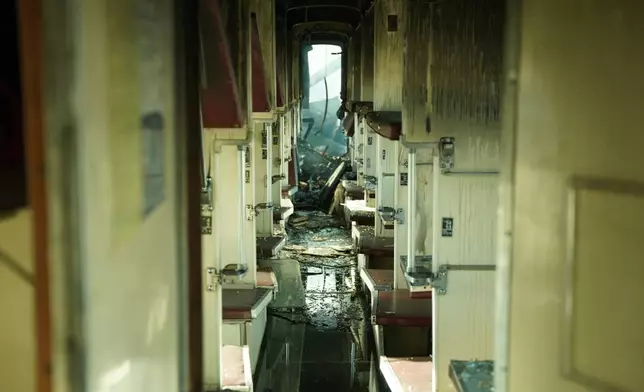
A passenger train is seen damaged following Russia's drone attack on a railway station in Shostka, Sumy region, Ukraine, Saturday, Oct. 4, 2025. (AP Photo/Kordon Media)
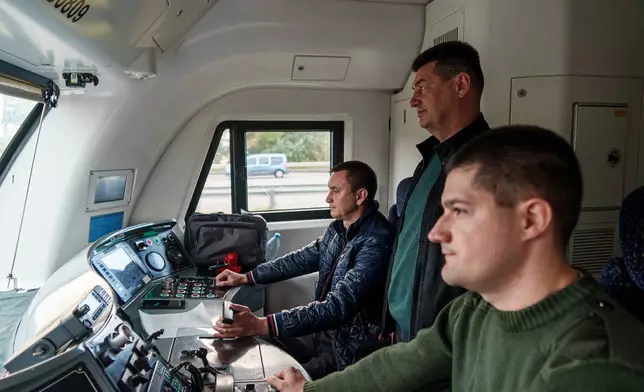
Oleh Pryshchepa, 54, second right, a train driver, rides at the train driver's cabin in Kyiv, Ukraine, Friday, Oct. 3, 2025. (AP Photo/Vasilisa Stepanenko)
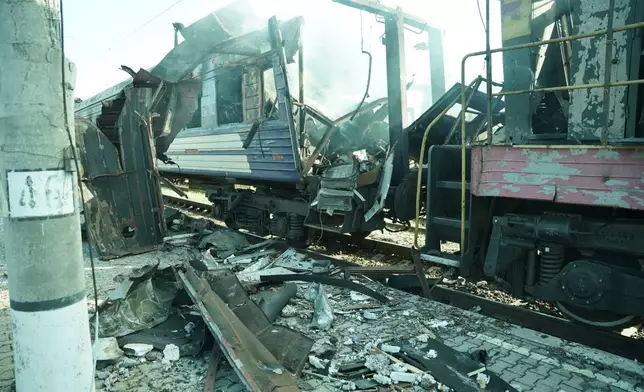
A passenger train is seen damaged following Russia's drone attack on a railway station in Shostka, Sumy region, Ukraine, Saturday, Oct. 4, 2025. (AP Photo/Kordon Media)
They are part of Russia's broader targeting of infrastructure that now is being carried out with greater precision thanks to advances in long-range drone technology that include onboard video feed.
In the attack in Shostka, less than 70 kilometers (43 miles) from the Russian border, two explosives-laden drones struck two commuter trains in quick succession.
Russia has stepped up railway attacks over the past three months, seeking to sow unrest in Ukrainian regions it borders by depriving people there of rail connections, Oleksandr Pertsovskyi, the CEO of the Ukrainian state railway, told The Associated Press.
“What happens is not just about the quantity, it’s also the approach of enemy forces. Now, as they have very precise Shahed drones, they are targeting individual locomotives,” Pertsovskyi said.
Ukrainian railway managers have prided themselves on speedy repairs and their ability — so far — to keep the trains running despite repeated strikes, but officials and analysts warn that advances in Russian drone capabilities and the growing tempo of attacks pose a serious threat.
Since the start of Russia's full-scale invasion in early 2022, railway officials have publicly reported about roughly one attack on railways per week. Since mid-summer of this year, that rate has more than doubled to about two or three per week, according to an AP review of public reports.
However, what is publicly reported is only a small fraction of the overall number of attacks on all rail-related infrastructure, which could include damage to power lines, electrical substation, rail tracks, train stations and other structures.
Oleksii Kuleba, a deputy prime minister in charge of restoration and development, said there have been 300 attacks on railway infrastructure since August alone — which would represent about 10 attacks per week.
Ukraine’s rail network carries more than 63% of the country’s freight and 37% of passenger traffic, according to the State Statistics Service. It is also essential for moving grain and metal industry exports to seaports and borders, and for transporting military aid from allied nations.
Russian forces have added a key upgrade to their drone fleet since the summer, according to Serhii Beskrestnov, a Ukrainian military and drone expert whose team studies intercepted Russian drones.
Cameras and radio modems, which send and receive data wirelessly, have been fitted to various types of long-range strike drones. That allows operators to adjust a drone’s flight path in real time, sharply increasing precision compared to preprogrammed models.
Beskrestnov said locomotives are particularly vulnerable to the new technology, because they are relatively slow and follow predictable routes.
“If the Russians keep hitting diesel and electric locomotives, the time will come very soon when the track will still be intact — but we’ll have nothing left to run on it,” he said.
The modified drones can fly up to 200 kilometers (124 miles) into Ukrainian territory while streaming video back to operators in Russian-held areas, Beskrestnov said.
An official at Ukraine’s Defense Ministry, speaking on condition of anonymity because they were not authorized to speak to reporters, said Ukrainian forces also have recovered and examined a Geran-type drone fitted with a civilian camera and radio modem. The Geran is a Russian variant of the Iranian-designed Shahed.
The official said the findings suggest that Moscow is actively testing and refining new technical solutions.
He said the cameras also allow Russian operators to identify Ukrainian air defense systems and assess damage on the ground.
Throughout the war, Russian drones and missiles have repeatedly targeted railway infrastructure, mostly in regions near the front line. In March, the rail operator also endured a major cyberattack that disrupted online ticketing and other services for a week.
Ukraine’s repair crews are racing to match the pace of Russian strikes. Piles of debris from missile attacks are cleared within hours, and utility teams typically restore power and water within a day after most strikes on Kyiv and other cities.
Rail crews operate on a similar timeline. In Kyiv, railway repair team leader Maksym Shevchuk, 30, recalled the day a missile destroyed 12 meters (39 feet) of track. “Traffic on the track was fully restored in half a day,” he said.
Freight volumes carried by rail from January through August 2025 dropped 11.7% year over year, while passenger traffic declined by 4.2%, according to the State Statistics Service, which has not stated a reason for the decline.
Nataliia Kolesnichenko, senior economist at the Kyiv-based Center for Economic Strategy, described the impact so far as “negative but marginal,” crediting rapid repair work and train rerouting that keeps delays to a minimum.
Follow AP’s coverage of the war in Ukraine at https://apnews.com/hub/russia-ukraine
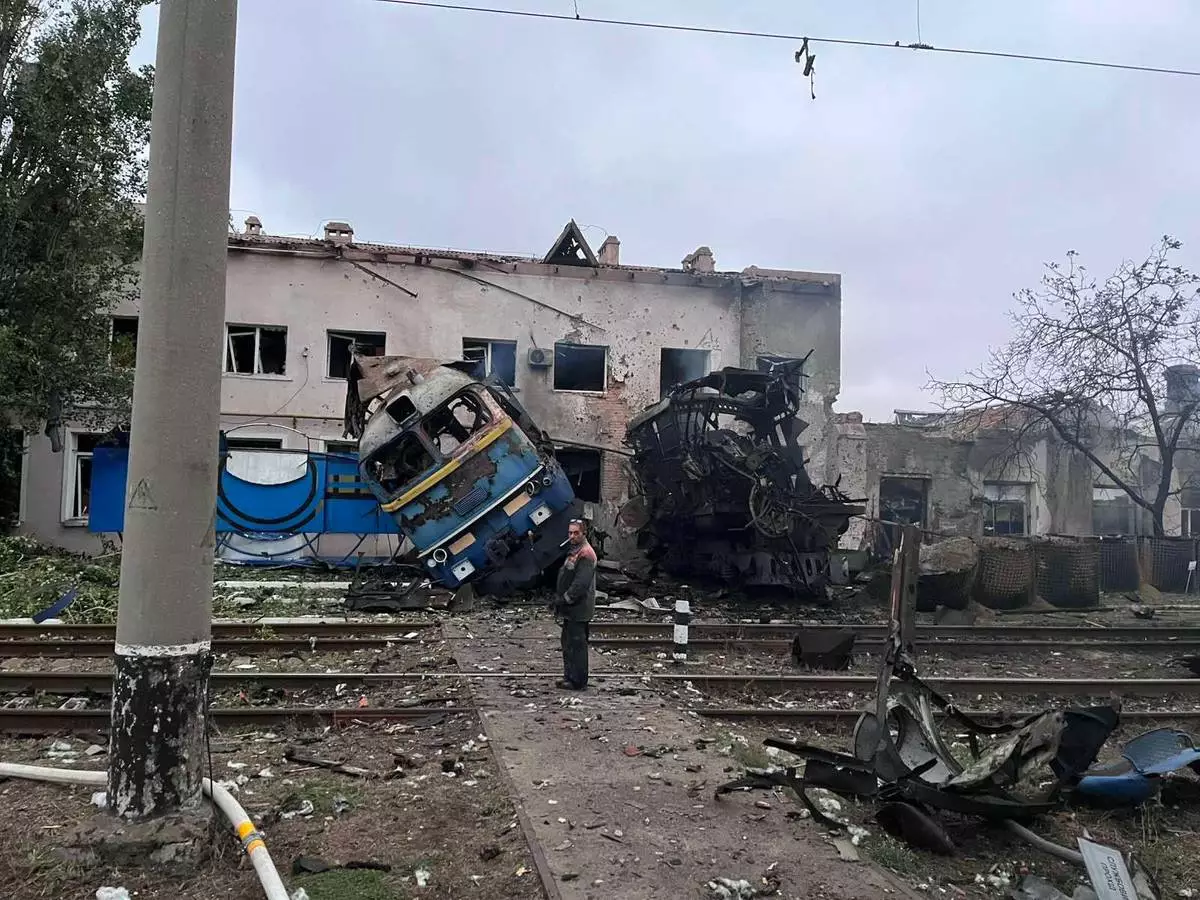
In this photo provided by Office of the Deputy Prime Minister for Restoration and Development on Thursday, Oct. 2, 2025, a railway worker stands in front of a train locomotive destroyed by a Russian strike in Odesa, Ukraine. (Office of the Deputy Prime Minister for Restoration and Development via AP)
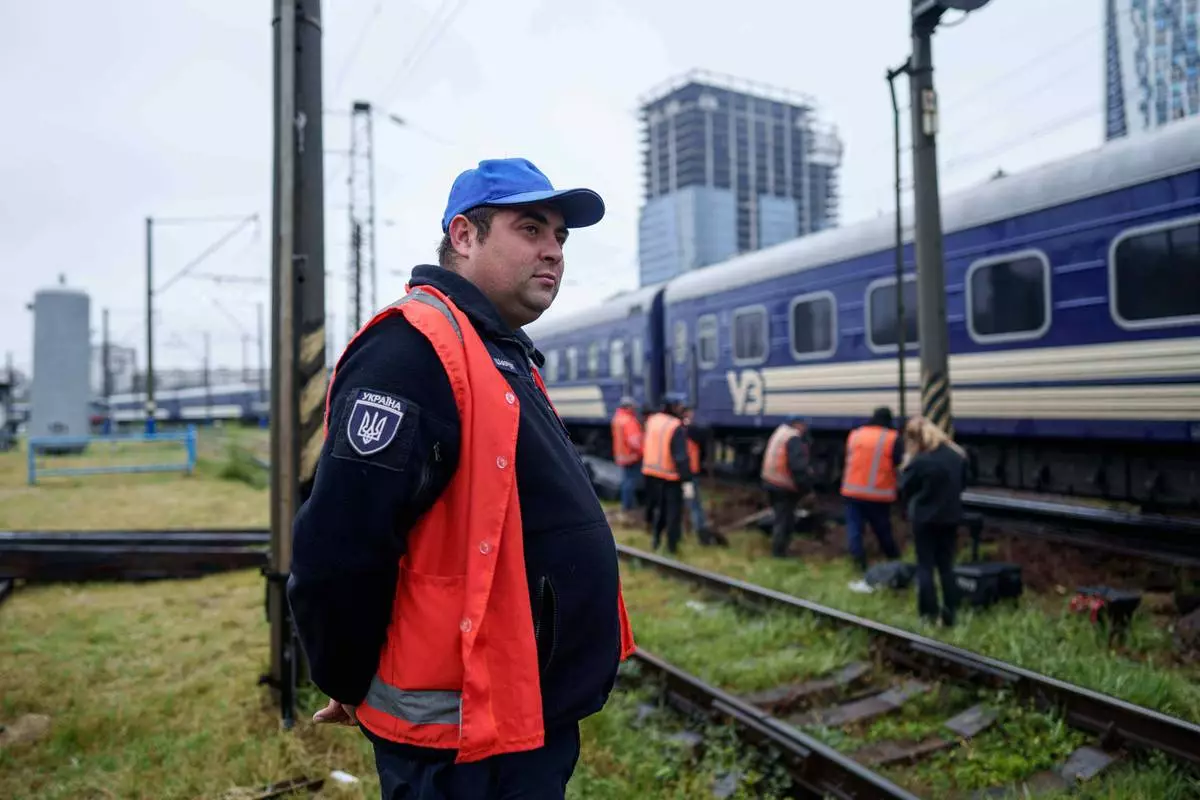
Shevcuk Maksym, 30, a railway repair team leader, looks at railway track repair work in Kyiv, Ukraine, Thursday, Oct. 2, 2025. (AP Photo/Evgeniy Maloletka)
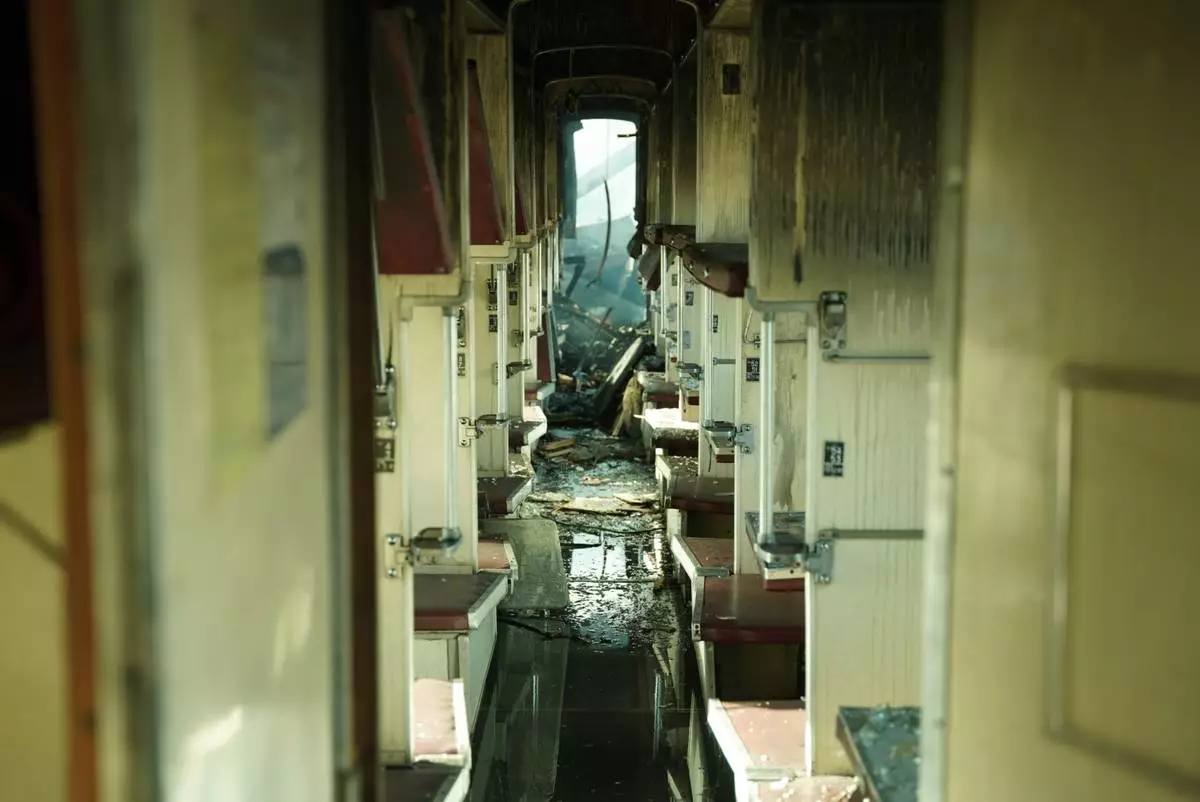
A passenger train is seen damaged following Russia's drone attack on a railway station in Shostka, Sumy region, Ukraine, Saturday, Oct. 4, 2025. (AP Photo/Kordon Media)
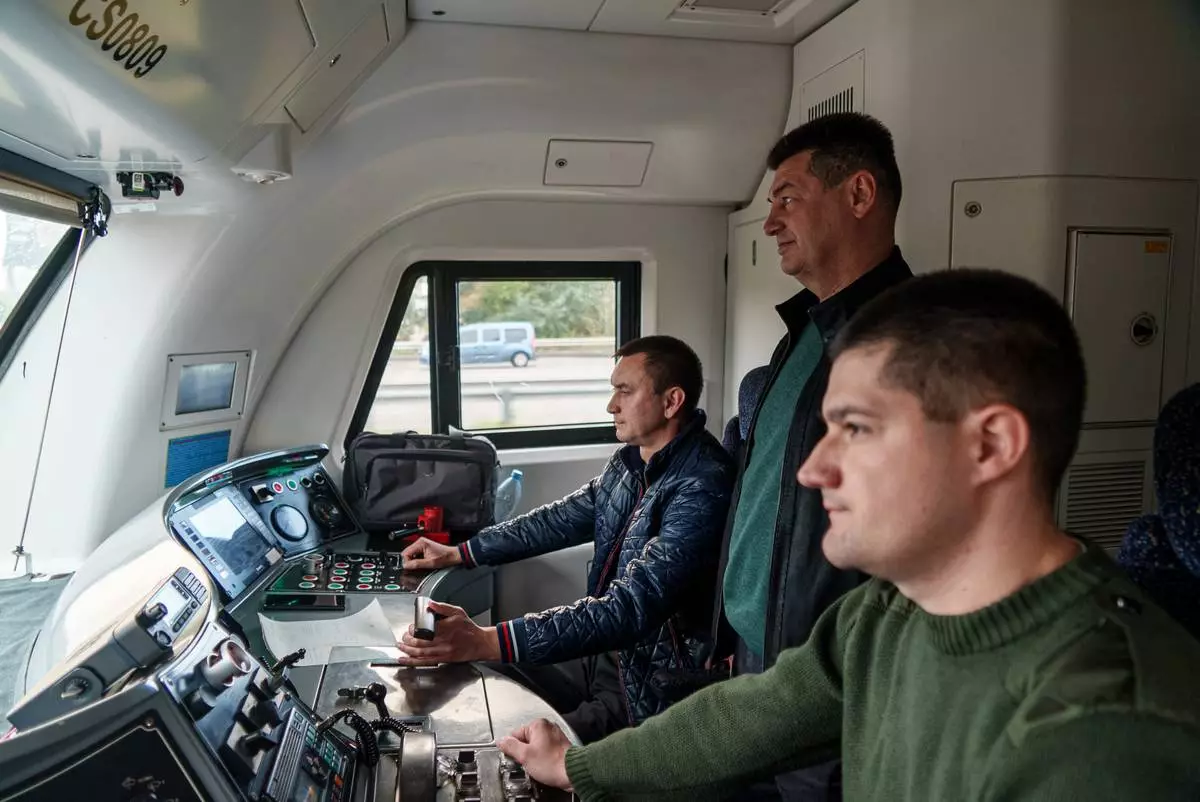
Oleh Pryshchepa, 54, second right, a train driver, rides at the train driver's cabin in Kyiv, Ukraine, Friday, Oct. 3, 2025. (AP Photo/Vasilisa Stepanenko)
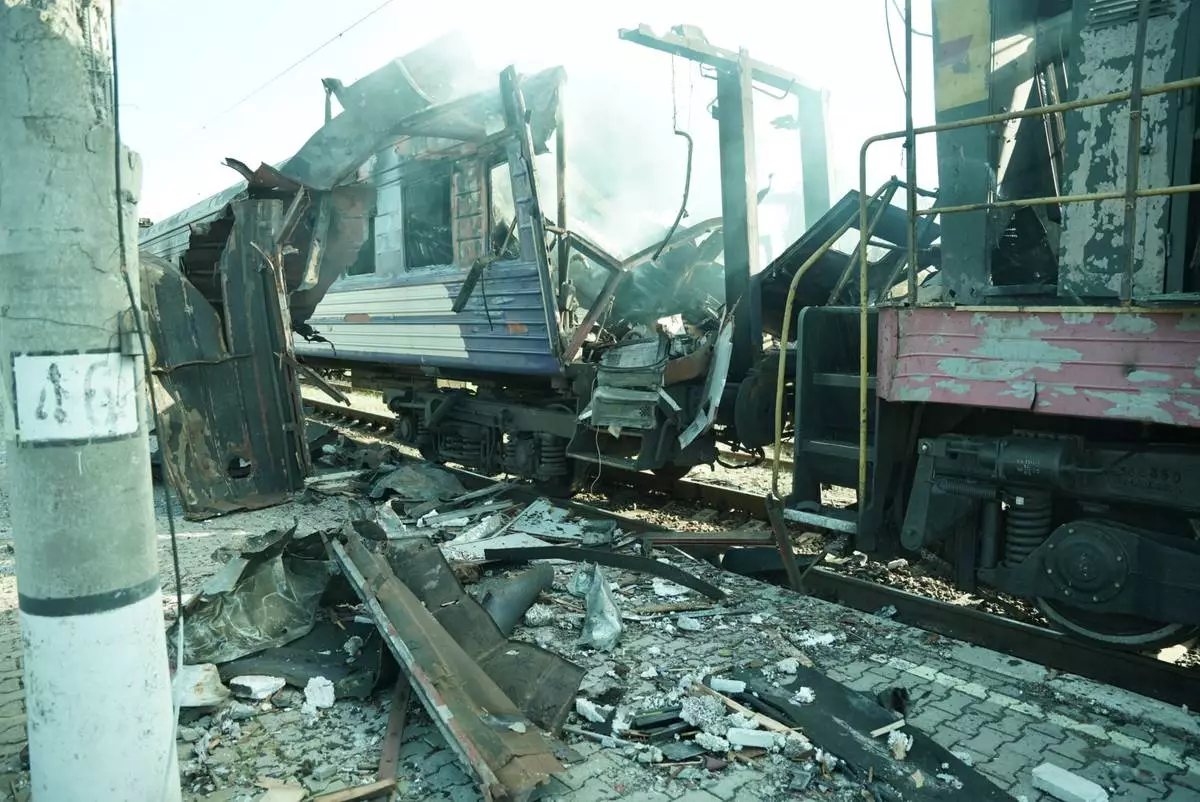
A passenger train is seen damaged following Russia's drone attack on a railway station in Shostka, Sumy region, Ukraine, Saturday, Oct. 4, 2025. (AP Photo/Kordon Media)