Skip to Content Facebook Feature Image

Alaska airlifting hundreds from storm-devastated coastal villages

News

Alaska airlifting hundreds from storm-devastated coastal villages
News

News

Alaska airlifting hundreds from storm-devastated coastal villages

2025-10-16 11:52 Last Updated At:12:00

JUNEAU, Alaska (AP) — One of the most significant airlifts in Alaska history was underway Wednesday to move hundreds of people from coastal villages ravaged by high surf and strong winds from the remnants of Typhoon Halong last weekend, officials said.

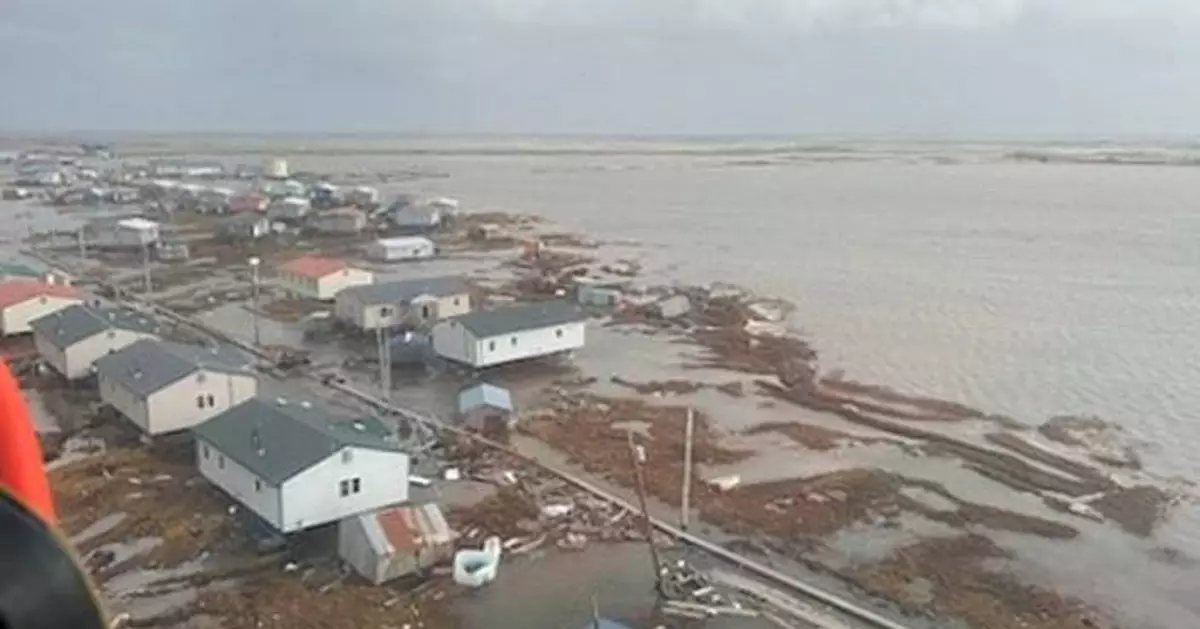
The storm brought record water levels to two low-lying communities and washed away homes — some with people inside. At least one person was killed and two are missing. Makeshift shelters were quickly established and swelled to about 1,500 people, an extraordinary number in a sparsely populated region where communities are reachable by air or water.

More Images
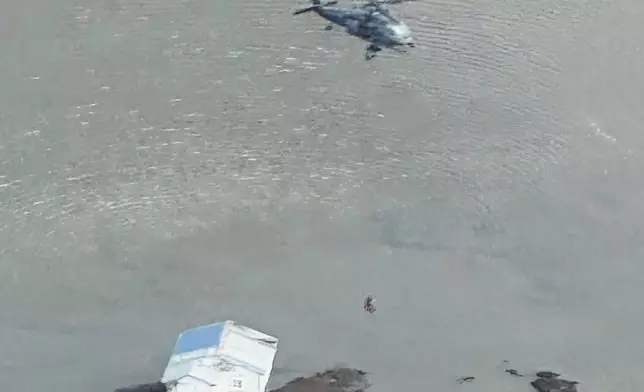
In this photo provided by the Defense Visual Information Distribution Service, Alaska Air National Guard rescue personnel conduct a search and rescue mission in Kipnuk, Alaska, on Monday, Oct. 13, 2025. (Defense Visual Information Distribution Service via AP)
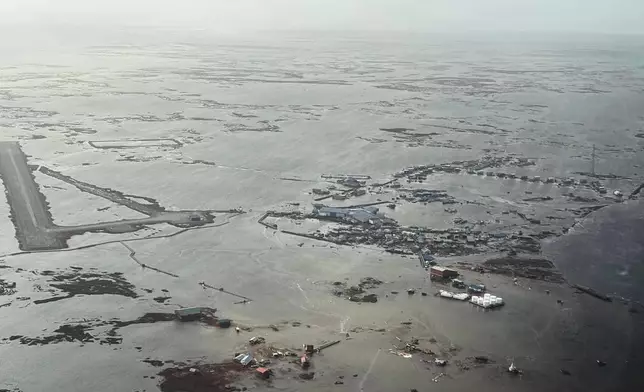
In this photo provided by the Defense Visual Information Distribution Service, Alaska Air National Guard rescue personnel conduct a search and rescue mission in Kipnuk, Alaska, on Monday, Oct. 13, 2025. (Defense Visual Information Distribution Service via AP)

In this photo provided by the Defense Visual Information Distribution Service, Alaska Air National Guard rescue personnel conduct a search and rescue mission in Kipnuk, Alaska, on Monday, Oct. 13, 2025. (Defense Visual Information Distribution Service via AP)

In this photo provided by the Defense Visual Information Distribution Service, Alaska Air National Guard rescue personnel conduct a search and rescue mission in Kipnuk, Alaska, on Monday, Oct. 13, 2025. (Defense Visual Information Distribution Service via AP)

In this photo provided by Alaska National Guard, members of the Alaska National Guard arrive in Kotzebue, Alaska, Monday, Oct. 13, 2025, to support operations responding to the damage caused by Typhoon Halong. (Alaska National Guard via AP)

In this photo provided by Alaska National Guard, members of the Alaska National Guard arrive in Kotzebue, Alaska, Monday, Oct. 13, 2025, to support operations responding to the damage caused by Typhoon Halong. (Alaska National Guard via AP)

In this photo provided by Alaska National Guard, members of the Alaska National Guard prepare for departure from Joint Base Elmendorf-Richardson in Anchorage, Alaska, Monday, Oct. 13, 2025, during storm response operations after Typhoon Halong's landfall. (Capt. Balinda O'Neal/Alaska National Guard via AP)
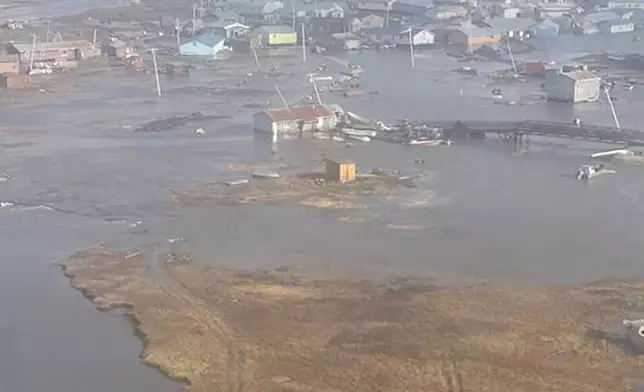
In this photo provided by Alaska National Guard, members of the Alaska National Guard prepare for departure from Joint Base Elmendorf-Richardson in Anchorage, Alaska, Monday, Oct. 13, 2025, during storm response operations after Typhoon Halong's landfall. (Capt. Balinda O'Neal/Alaska National Guard via AP)

In this photo provided by the U.S. Coast Guard, Kipnuk, Alaska, experiences coastal flooding, Sunday, Oct. 12, 2025. (U.S. Coast Guard via AP)
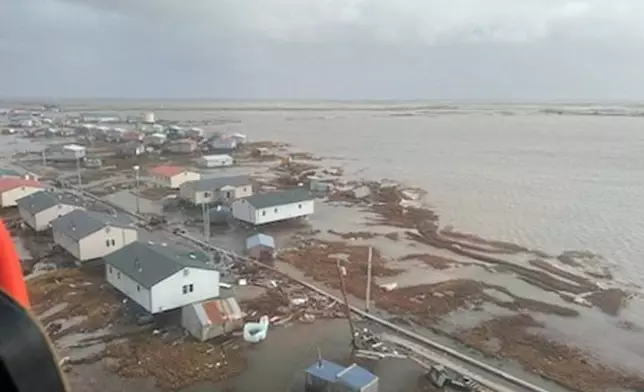
In this photo provided by the U.S. Coast Guard, Kipnuk, Alaska, experiences coastal flooding, Sunday, Oct. 12, 2025. (U.S. Coast Guard via AP)

In this photo provided by the U.S. Coast Guard, Kipnuk, Alaska, experiences coastal flooding, Sunday, Oct. 12, 2025. (U.S. Coast Guard via AP)

In this photo provided by the U.S. Coast Guard, Kipnuk, Alaska, experiences coastal flooding, Sunday, Oct. 12, 2025. (U.S. Coast Guard via AP)

The remoteness and the scale of the destruction created challenges for getting resources in place. Damage assessments have been trickling in as responders have shifted from initial search-and-rescue operations to trying to stabilize or restore basic services.

The communities of Kipnuk and Kwigillingok near the Bering Sea saw water levels more than 6 feet (1.8 meters) above the highest normal tide line. Leaders asked the state to evacuate the more than 1,000 residents in those villages, said Jeremy Zidek, a spokesperson with the state emergency management office.

Some homes cannot be reoccupied, even with emergency repairs, and others may not be livable by winter, said emergency management officials. Forecasters say rain and snow is possible in the region this weekend, with average temperatures soon below freezing.

Mark Roberts, the incident commander with the state emergency management agency, said the immediate focus was on “making sure people are safe, warm and cared for while we work with our partners to restore essential services.”

Meantime, restrooms were again working at the school in Kwigillingok, where about 350 people had sheltered overnight Tuesday, according to a state emergency management statement. “Damage to many homes is severe, and the community leadership is instructing residents not to reenter homes due to safety concerns,” it said.

About 300 evacuees were being brought to Anchorage on Wednesday, about 500 miles (805 kilometers) east of the battered coastline villages, according to the state Department of Military and Veterans Affairs. They were going to the Alaska Airlines Center, a sports and events complex with capacity for about 400, Zidek said.

Shelter space closer to home — in the southwest Alaska regional hub of Bethel — had been reaching capacity, officials said.

Zidek did not know how long the evacuation process would take and said authorities were looking for additional sheltering locations. The aim is to get people from congregate shelters into hotel rooms or dormitories, he said.

The crisis unfolding in southwest Alaska has drawn attention to Trump administration cuts to grants aimed at helping small, mostly Indigenous villages prepare for storms or mitigate disaster risks.

For example, a $20 million U.S. Environmental Protection Agency grant to Kipnuk, which was inundated by floodwaters, was terminated by the Trump administration, a move challenged by environmental groups. The grant was intended to protect to protect the boardwalk residents use to get around the community as well as 1,400 feet (430 meters) of river from erosion, according to a federal website that tracks government spending.

There was limited work on the project before the grant was ended. The village had purchased a bulldozer for shipment and briefly hired a bookkeeper, according to Public Rights Project, which represents Kipnuk.

The group said no single project was likely to prevent the recent flood. But work to remove abandoned fuel tanks and other material to prevent it from falling into the river might have been feasible during the 2025 construction season.

“What’s happening in Kipnuk shows the real cost of pulling back support that was already promised to front line communities,” said Jill Habig, CEO of Public Rights Project. “These grants were designed to help local governments prepare for and adapt to the growing effects of climate change. When that commitment is broken, it puts people’s safety, homes and futures at risk.”

This story has been corrected to remove a sentence that was not included in an emergency department statement.

__

Bedayn reported from Denver. Associated Press writer Michael Phillis in Washington contributed.
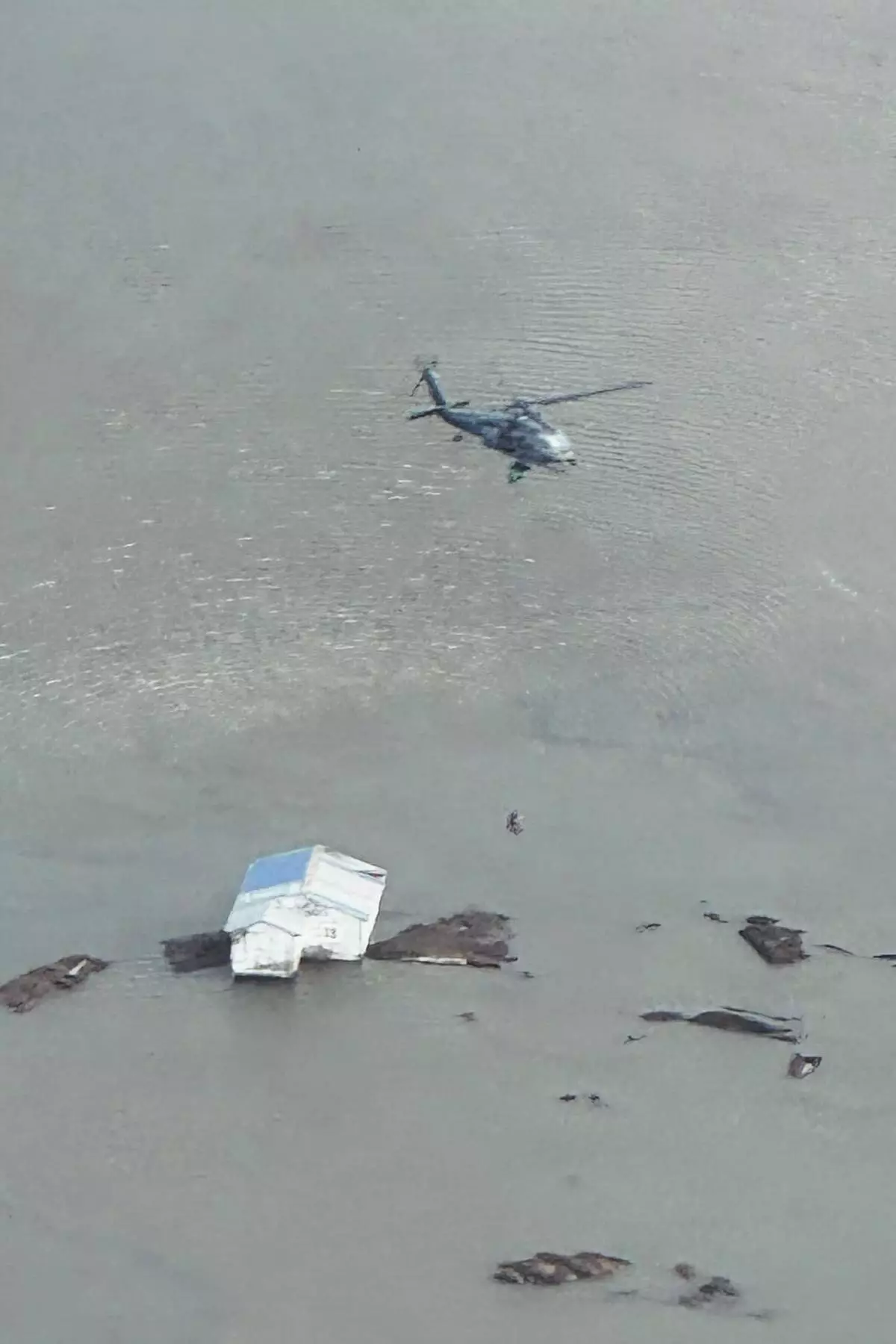
In this photo provided by the Defense Visual Information Distribution Service, Alaska Air National Guard rescue personnel conduct a search and rescue mission in Kipnuk, Alaska, on Monday, Oct. 13, 2025. (Defense Visual Information Distribution Service via AP)
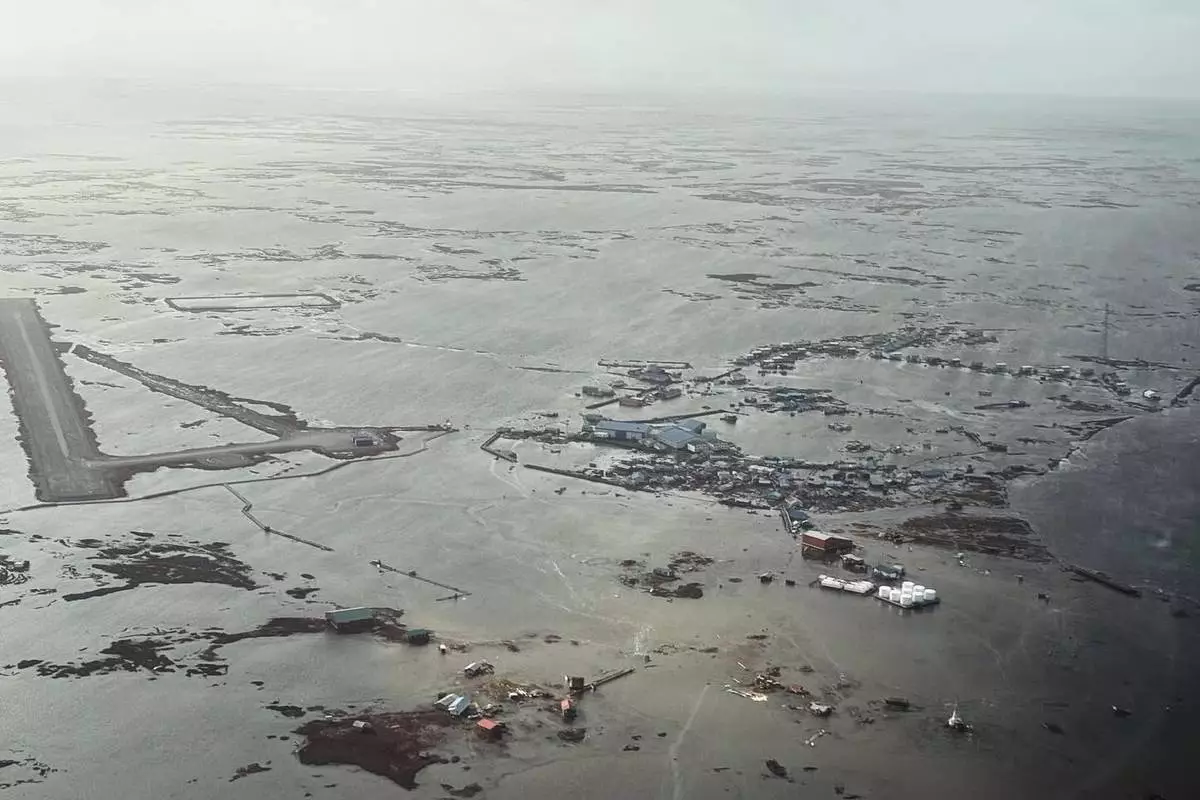
In this photo provided by the Defense Visual Information Distribution Service, Alaska Air National Guard rescue personnel conduct a search and rescue mission in Kipnuk, Alaska, on Monday, Oct. 13, 2025. (Defense Visual Information Distribution Service via AP)

In this photo provided by the Defense Visual Information Distribution Service, Alaska Air National Guard rescue personnel conduct a search and rescue mission in Kipnuk, Alaska, on Monday, Oct. 13, 2025. (Defense Visual Information Distribution Service via AP)

In this photo provided by the Defense Visual Information Distribution Service, Alaska Air National Guard rescue personnel conduct a search and rescue mission in Kipnuk, Alaska, on Monday, Oct. 13, 2025. (Defense Visual Information Distribution Service via AP)

In this photo provided by Alaska National Guard, members of the Alaska National Guard arrive in Kotzebue, Alaska, Monday, Oct. 13, 2025, to support operations responding to the damage caused by Typhoon Halong. (Alaska National Guard via AP)

In this photo provided by Alaska National Guard, members of the Alaska National Guard arrive in Kotzebue, Alaska, Monday, Oct. 13, 2025, to support operations responding to the damage caused by Typhoon Halong. (Alaska National Guard via AP)

In this photo provided by Alaska National Guard, members of the Alaska National Guard prepare for departure from Joint Base Elmendorf-Richardson in Anchorage, Alaska, Monday, Oct. 13, 2025, during storm response operations after Typhoon Halong's landfall. (Capt. Balinda O'Neal/Alaska National Guard via AP)
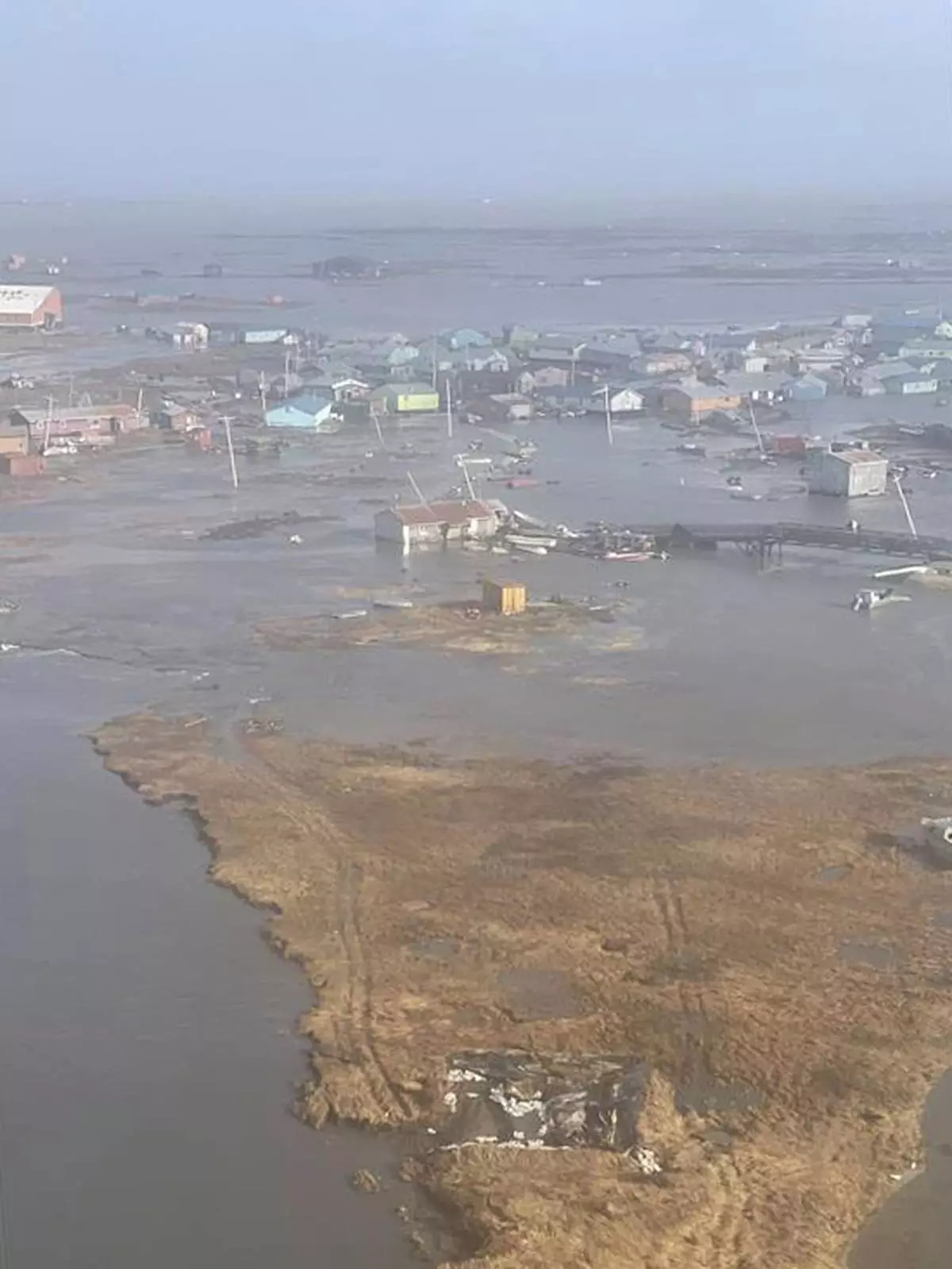
In this photo provided by Alaska National Guard, members of the Alaska National Guard prepare for departure from Joint Base Elmendorf-Richardson in Anchorage, Alaska, Monday, Oct. 13, 2025, during storm response operations after Typhoon Halong's landfall. (Capt. Balinda O'Neal/Alaska National Guard via AP)

In this photo provided by the U.S. Coast Guard, Kipnuk, Alaska, experiences coastal flooding, Sunday, Oct. 12, 2025. (U.S. Coast Guard via AP)
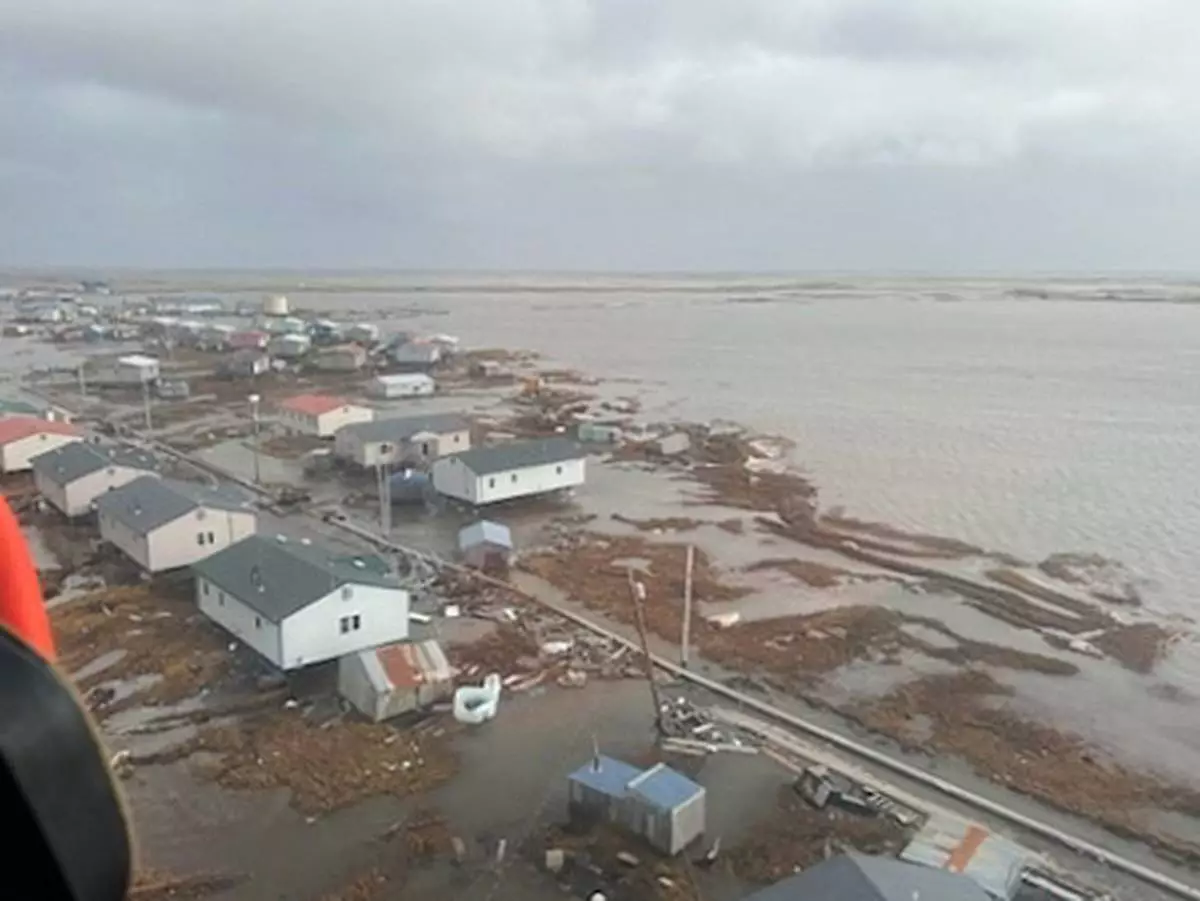
In this photo provided by the U.S. Coast Guard, Kipnuk, Alaska, experiences coastal flooding, Sunday, Oct. 12, 2025. (U.S. Coast Guard via AP)


In this photo provided by the U.S. Coast Guard, Kipnuk, Alaska, experiences coastal flooding, Sunday, Oct. 12, 2025. (U.S. Coast Guard via AP)

In this photo provided by the U.S. Coast Guard, Kipnuk, Alaska, experiences coastal flooding, Sunday, Oct. 12, 2025. (U.S. Coast Guard via AP)

DUBAI, United Arab Emirates (AP) — Israel said it launched airstrikes against Iranian missile launchers and a nuclear research site Tuesday, and Iran struck back against Israel and across the Gulf region, targeting U.S. embassies and disrupting energy supplies and travel.

Four days into a war that President Donald Trump suggested would last several weeks but perhaps longer, nearly 800 people have been killed in Iran, including some Trump said he had considered as possible future leaders of the country.

Explosions rang out Tuesday in Tehran and in Lebanon — where Israel said it retaliated against Hezbollah militants — and the American embassy in Saudi Arabia came under drone attack. Iran has fired dozens of ballistic missiles at Israel, though most of the incoming fire has been intercepted. Eleven people in Israel have been killed since the conflict began.

The spiraling nature of the war raised questions about when and how it would end. Trump seemed to leave open the possibility for more extensive U.S. military involvement, telling the New York Post on Monday that he was not ruling out the possibility of boots on the ground.

The administration has given various objectives. While the initial U.S.-Israeli strikes killed Iranian Supreme Leader Ayatollah Ali Khamenei and Trump urged Iranians to overthrow their government, senior administration officials have since said regime change was not the goal.

Trump said Monday the military campaign’s four objectives were to destroy Iran’s missile capabilities, wipe out its navy, prevent it from obtaining a nuclear weapon and ensure that it cannot continue to support allied armed groups.

Trump said Tuesday that “someone from within” the Iranian regime might be the best choice to take power once the U.S.-Israel campaign is finished.

Speaking from the Oval Office Tuesday, Trump said Reza Pahlavi, the exiled son of Iran’s toppled Shah, is not someone that his administration has considered in depth to take over.

As far as possible leaders inside Iran, “the people we had in mind are dead,” Trump said.

“I guess the worst case would be do this, and then somebody takes over who’s as bad as the previous person, right? That could happen," Trump said. "We don’t want that to happen.”

Iran’s leaders are scrambling to replace Khamenei, who ruled the country for 37 years. It’s only the second time since the 1979 Islamic Revolution that a new supreme leader is being chosen. Potential candidates range from hard-liners committed to confrontation with the West to reformists who seek diplomatic engagement.

Information coming out of Iran has been limited because of poor communications, round-the-clock airstrikes and tight restrictions on journalists. But across Iran’s capital, aircraft were heard overhead and explosions rang out.

The Israeli military said it conducted a wave of airstrikes on sites that produce and store ballistic missiles, in Tehran and Isfahan. It also said it destroyed what it called Iran’s secret, underground nuclear headquarters. Without providing evidence, it said the site was used for scientific research “to develop a key component for nuclear weapons.”

“The regime attempted to rebuild its efforts and conceal them, thinking we wouldn’t notice. They were mistaken,” said Israeli military spokesman Brig. Gen. Effie Defrin.

Iran has said it has not enriched uranium since June, though it has maintained its right to and says its nuclear program is peaceful.

The United Nations’ nuclear watchdog said Iran’s Natanz nuclear enrichment site had sustained “some recent damage,” though there was “no radiological consequence expected.” The U.S. hit Natanz during the 12-day war in June, when Israeli and American strikes greatly weakened Iran's nuclear program.

New rounds of U.S. and Israeli airstrikes rattled Tehran and several other Iranian cities.

“Since midnight, I and my wife are hearing sound of explosions,” said Ali Amoli, an engineer living in north Tehran. “Sometimes from the west side of the city and sometimes from other directions.” Streets and gas stations appeared quieter than in recent days.

Local media published images of a damaged commercial plane at Bushehr airport that broke apart following an airstrike on Tuesday.

A north Tehran resident who spoke on condition of anonymity for fear of retaliation described growing fears in the capital as it comes under heavy bombardment. The resident said most stores in the normally bustling area of Tajrish were closed, though bakeries and supermarkets remained open.

An attack from two drones on the U.S. Embassy in Riyadh caused a “limited fire,” according to Saudi Arabia’s Defense Ministry, and the embassy urged Americans to avoid the compound. It followed an attack on the U.S. Embassy in Kuwait. U.S. Embassies in Saudi Arabia, Kuwait and Lebanon said they were closed to the public.

The U.S. State Department ordered the evacuation of non-emergency personnel and family in Kuwait, Bahrain, Iraq, Qatar, Jordan and the United Arab Emirates. The U.S. also urged citizens to leave more than a dozen Middle Eastern countries, though with much of the airspace closed many were stranded.

The State Department said Tuesday it’s preparing military and charter flights for Americans who want to leave the Middle East. Several other countries also arranged evacuation flights for their citizens.

The U.S.-Israeli strikes have killed at least 787 people in Iran, according to the Red Crescent Society. In Lebanon, where Israel launched retaliatory strikes on the Iranian-supported militant group Hezbollah, 40 people were killed, including seven children, in Lebanon, the health ministry said. The ministry had previously said 52 people were killed.

The U.S. military has confirmed six deaths of American service members. In addition, three people were killed in the United Arab Emirates, and one each in Kuwait and Bahrain.

Turkish Foreign Minister Hakan Fidan on Tuesday criticized Iran's attacks against Gulf neighbors that had worked to prevent war as an “incredibly flawed strategy” that threatened to widen the war if these states decide to retaliate.

This story has been updated to correct that communications in Iran are poor, but that the internet isn't shut down. It also clarifies that more than one drone hit the U.S. Embassy in Saudi Arabia. Some instances referred to just one drone.

Becatoros reported from Athens, Greece, and Magdy from Cairo. Seung Min Kim, Michelle Price and Konstantin Toropin in Washington, David Rising in Bangkok, Melanie Lidman in Tel Aviv, Israel, Hallie Golden in Seattle, Giovanna Dell'Orto in Miami, and Suzan Fraser in Ankara, Turkey, contributed to this report.

A firefighter extinguishes fire at a building that was hit by an Israeli airstrike in Dahiyeh, a southern suburb of Beirut, Lebanon, Tuesday, March 3, 2026. (AP Photo/Hussein Malla)

A firefighter extinguishes fire at a building that was hit by an Israeli airstrike in Dahiyeh, a southern suburb of Beirut, Lebanon, Tuesday, March 3, 2026. (AP Photo/Hussein Malla)

A woman crosses almost deserted square with a billboard at rear showing a portrait of the late Iranian Supreme Leader Ayatollah Ali Khamenei, who was killed in the U.S.–Israeli military campaign, in Tehran, Iran, Tuesday, March 3, 2026. (AP Photo/Vahid Salemi)

A woman crosses almost deserted square with a billboard at rear showing a portrait of the late Iranian Supreme Leader Ayatollah Ali Khamenei, who was killed in the U.S.–Israeli military campaign, in Tehran, Iran, Tuesday, March 3, 2026. (AP Photo/Vahid Salemi)

Smoke rises from a destroyed building that was hit by an Israeli airstrike in Dahiyeh, a southern suburb of Beirut, Lebanon, Tuesday, March 3, 2026. (AP Photo/Hussein Malla)

Smoke rises from a destroyed building that was hit by an Israeli airstrike in Dahiyeh, a southern suburb of Beirut, Lebanon, Tuesday, March 3, 2026. (AP Photo/Hussein Malla)

An Iranian flag is placed among the ruins of a police station struck Monday during the U.S.–Israeli military campaign in Tehran, Iran, Tuesday, March 3, 2026. (AP Photo/Vahid Salemi)

An Iranian flag is placed among the ruins of a police station struck Monday during the U.S.–Israeli military campaign in Tehran, Iran, Tuesday, March 3, 2026. (AP Photo/Vahid Salemi)

Smoke rises from Israeli airstrikes in Dahiyeh, a southern suburb of Beirut, Lebanon, Tuesday, March 3, 2026. (AP Photo/Hussein Malla)

Smoke rises from Israeli airstrikes in Dahiyeh, a southern suburb of Beirut, Lebanon, Tuesday, March 3, 2026. (AP Photo/Hussein Malla)

Jewish men covered in prayer shawls pray in an underground parking garage as a precaution against possible Iranian missile attacks, in Tel Aviv, Israel, Tuesday, March 3, 2026. (AP Photo/Oded Balilty)

Jewish men covered in prayer shawls pray in an underground parking garage as a precaution against possible Iranian missile attacks, in Tel Aviv, Israel, Tuesday, March 3, 2026. (AP Photo/Oded Balilty)

A group of men inspects the ruins of a police station struck Monday amid the U.S.–Israeli military campaign in Tehran, Iran, Tuesday, March 3, 2026. (AP Photo/Vahid Salemi)

A group of men inspects the ruins of a police station struck Monday amid the U.S.–Israeli military campaign in Tehran, Iran, Tuesday, March 3, 2026. (AP Photo/Vahid Salemi)

Smoke rises from Israeli airstrikes in Dahiyeh, a southern suburb of Beirut, Lebanon, Tuesday, March 3, 2026. (AP Photo/Hussein Malla)

Smoke rises from Israeli airstrikes in Dahiyeh, a southern suburb of Beirut, Lebanon, Tuesday, March 3, 2026. (AP Photo/Hussein Malla)

Smoke rises from Israeli airstrikes in Dahiyeh, a southern suburb of Beirut, Lebanon, early Tuesday, March 3, 2026. (AP Photo/Bilal Hussein)

Smoke rises from Israeli airstrikes in Dahiyeh, a southern suburb of Beirut, Lebanon, early Tuesday, March 3, 2026. (AP Photo/Bilal Hussein)

This image provided by U.S. Central Command shows a F-35C Lightning II preparing for launch on the flight deck of the USS Abraham Lincoln (CVN 72) in support of Operation Epic Fury on Monday, March 2, 2026. (U.S. Navy via AP)

This image provided by U.S. Central Command shows a F-35C Lightning II preparing for launch on the flight deck of the USS Abraham Lincoln (CVN 72) in support of Operation Epic Fury on Monday, March 2, 2026. (U.S. Navy via AP)

Mourners take cover while air-raid sirens warn of incoming missiles launched by Iran toward Israel during the funeral of Sarah Elimelech and her daughter Ronit who were killed in an Iranian missile attack, in Beit Shemesh, Israel, Monday, March 2, 2026. (AP Photo/Ohad Zwigenberg)

Mourners take cover while air-raid sirens warn of incoming missiles launched by Iran toward Israel during the funeral of Sarah Elimelech and her daughter Ronit who were killed in an Iranian missile attack, in Beit Shemesh, Israel, Monday, March 2, 2026. (AP Photo/Ohad Zwigenberg)

A worker instals a billboard on an overpass containing a portrait of the late Iranian Supreme Leader Ayatollah Ali Khamenei, who was killed during the ongoing joint U.S.-Israeli military campaign, in Tehran, Iran, Monday, March 2, 2026. (AP Photo/Vahid Salemi)

A worker instals a billboard on an overpass containing a portrait of the late Iranian Supreme Leader Ayatollah Ali Khamenei, who was killed during the ongoing joint U.S.-Israeli military campaign, in Tehran, Iran, Monday, March 2, 2026. (AP Photo/Vahid Salemi)

Smoke engulfs a street after a strike in Tehran, Iran, Monday, March 2, 2026. (AP Photo/Mohsen Ganji)

Smoke engulfs a street after a strike in Tehran, Iran, Monday, March 2, 2026. (AP Photo/Mohsen Ganji)

Recommended Articles