ATLANTA (AP) — The federal government doesn't have to return the 2020 election ballots from Georgia's Fulton County that were seized by the FBI from a warehouse near Atlanta, a judge ruled Wednesday.
U.S. District Judge J.P. Boulee's decision came after lawyers for the county had argued that the ballots and other election materials, as well as any electronic copies the Justice Department has made, should be returned because the seizure was improper and unconstitutional.
The Jan. 28 seizure by the FBI targeted the elections hub in Georgia’s most populous county, which is heavily Democratic and includes most of the city of Atlanta. Fulton County has been at the center of unfounded claims by President Donald Trump and his allies that widespread election fraud cost him the 2020 election.
The Justice Department has said it is investigating “irregularities that occurred during the 2020 presidential election in the County” and identified two laws that might have been violated. One requires election records to be maintained for 22 months, while the other prohibits procuring, casting or tabulating false, fictitious or fraudulent ballots.
Georgia’s votes in the 2020 presidential race were counted three times, including once by hand, and each count affirmed Democrat Joe Biden’s win.
Fulton County Board of Commissioners Chairman Robb Pitts said he strongly disagrees with the judge's denial of the county's request to return the election records.
“We will continue, as always, to stand by our election workers and the voters of Fulton County,” he said in an emailed statement. “We intend to vigorously pursue all available legal options.”
The Justice Department did not immediately respond to emails seeking comment on the ruling Wednesday evening.
“The seizure in this case was certainly not perfect,” Boulee wrote in his 68-page ruling. But he went on to say that Fulton County did not establish that its rights were callously disregarded “either through the lack of probable cause, omissions in the Affidavit or by the manner of the execution of the seizure.”
The county also failed to show that it needs the documents or will be irreparably harmed if they are not returned, he wrote, noting this is particularly true because the Justice Department has given the county copies of the documents.
Months after the January seizure of ballots and other election materials, the Justice Department in April obtained a grand jury subpoena for the names and personal contact information of Fulton County employees and volunteers involved in the 2020 election. Fulton County filed a motion Monday to quash that subpoena, arguing that it is overly broad and meant to harass the president’s political opponents.
The Trump administration has also taken moves to obtain past election records from other critical swing states. The FBI used a subpoena in March to get records related to an audit of the 2020 presidential election in Maricopa County in Arizona. And in April, the Justice Department demanded that Michigan’s Wayne County turn over its 2024 election ballots.
The Justice Department is also fighting numerous states in court for access to voter data that includes sensitive personal information. Election officials, including some Republicans, have said handing over the information would violate state and federal privacy laws.
Democrats have raised concerns that the Trump administration is weaponizing federal law enforcement to pursue the president’s personal grievances and is planning ways to interfere in this year’s midterm elections. The administration has said it is looking into allegations of past problems and seeking to protect future elections.
During a March 27 hearing on Fulton County’s demand that the FBI return its ballots and other materials, lawyers for the county argued that the seizure was improper and unjustified and demonstrated “callous disregard” for the Fourth Amendment protection against unreasonable search and seizure. They suggested that the Trump administration decided to use a criminal search warrant to obtain the materials because it had grown tired of waiting for the outcome of the civil litigation the Justice Department had filed last year to obtain them.
Justice Department attorneys argued that they took the appropriate steps to get a warrant and then take the documents. They said it is not uncommon for parallel civil and criminal investigations to be going on at the same time.
The judge agreed that the affidavit was “defective in some respects” and that some of the statements included in it were “troubling.” But he noted that the FBI agent who wrote it also included “facts that both hurt and helped him.” He concluded that the document's shortcomings don't amount to callous disregard.
He also agreed that the government can pursue civil and criminal proceedings on the same matter and said the timeline of the investigation weighs against the county's theory that the Justice Department “created an ‘ongoing investigation’ to sidestep procedural hurdles” in civil cases.=

FILE - Crime scene tape is seen as FBI agents search at the Fulton County Election Hub and Operation Center, Jan. 28, 2026, in Union City, Ga., near Atlanta. (AP Photo/Mike Stewart, File)
BUENOS AIRES, Argentina (AP) — Officials and experts in Argentina are scrambling to determine if their country is the source of a deadly hantavirus outbreak that has gripped an Atlantic cruise.
The health emergency aboard the ship that's moored across the ocean comes as Argentina sees a surge of hantavirus cases that many local public health researchers attribute to the recently accelerating effects of climate change. Argentina, where the cruise to Antarctica departed, is consistently ranked by the World Health Organization as having the highest incidence of the rare, rodent-borne disease in Latin America.
Higher temperatures expand the virus’ range because, in part, as it gets warmer and ecosystems change, rodents that carry the hantavirus can thrive in more places, experts say. People typically contract the virus from exposure to rodent droppings, urine or saliva.
“Argentina has become more tropical because of climate change, and that has brought disruptions, like dengue and yellow fever, but also new tropical plants that produce seeds for mice to proliferate,” said Hugo Pizzi, a prominent Argentine infectious disease specialist. “There is no doubt that as time goes by, the hantavirus is spreading more and more.”
The Argentine Health Ministry on Tuesday reported 101 hantavirus infections since June 2025, roughly double the caseload recorded over the same period the previous year.
A hantavirus found in South America, called the Andes virus, can cause a severe and often fatal lung disease called hantavirus pulmonary syndrome. The disease led to death in nearly a third of cases in the last year, Argentina’s Health Ministry said, up from an average mortality rate of 15 in the five years before that.
Authorities said passengers on the MV Hondius ship tested positive for the Andes virus. Argentina on Wednesday said it was sending genetic material from the Andes virus and testing equipment to help Spain, Senegal, South Africa, the Netherlands and the United Kingdom detect it.
Argentine officials say they’re trying to pin down where infected passengers traveled in the country before boarding the Dutch-flagged cruise liner in Ushuaia, a city in southern Argentina known as the end of the world. Once they know the itineraries, they plan to trace contacts, isolate close contacts and actively monitor to prevent further spread.
The U.N. health agency, or WHO, says that the first death on board, a 70-year-old Dutch man, happened on April 11. His 69-year-old wife, also Dutch, died on April 26. The third passenger, a German woman, died on May 2.
The virus can incubate for between one and eight weeks. That makes it hard to know whether the passengers contracted the virus before leaving Argentina for Antarctica on April 1; during a scheduled stop to a remote South Atlantic island; or aboard the ship.
The province of Tierra del Fuego, where the vessel docked for weeks before departing, has never seen a case of hantavirus. Before boarding, the Dutch couple went sightseeing in Ushuaia, and traveled elsewhere in Argentina and Chile, WHO said.
The Argentine government’s leading hypothesis is that the couple contracted the virus during a bird-watching outing in Ushuaia, according to two investigators who spoke on condition of anonymity because they were not authorized to brief the media, with the investigation ongoing. Authorities are also tracing the Dutch tourists' footsteps through the forested hillsides of Patagonia in southern Argentina where some infections are clustered.
Because early symptoms resemble the fever and chills of a flu, “tourists might think they just have a cold and not take it seriously. That makes it particularly dangerous,” Raul González Ittig, genetics professor at the National University of Córdoba and a researcher at state science body CONICET, said.
Argentina in recent years endured a historic drought. But it also had bouts of unexpectedly intense rainfall, part of a broader pattern of wild weather that scientists attribute to climate change.
Some of this variability has created conditions that have allowed hantavirus to flourish, experts say. Dry spells drive animals out of their usual habitats in search of food and water. Huge amounts of rain lead to vegetation growth, scattering seeds that attract leaf-munching rodents.
“When precipitation increases, food availability increases, rodent populations grow, and if there are infected rodents, the chance of transmission between rodents — and eventually to humans — also increases,” Ittig said.
Although hantavirus cases once were limited to the southern reaches of Patagonia, now 83% of cases are found in Argentina’s far north, according to the Health Ministry.
The ministry issued an alert in January about several fatal outbreaks, including in the most populous province of Buenos Aires.
With rural hospitals underequipped, residents had no clue what hit them.
Daisy Morinigo and David Delgado said they initially thought their 14-year-old son had the flu when he came down with a fever and body aches. Doctors who first saw Rodrigo in the town of San Andrés de Giles sent him home with ibuprofen and orders to rest.
But the feisty fourth grader's breathing worsened. On Jan. 1, they rushed Rodrigo to intensive care. He died just two hours after a hantavirus test came back positive.
"I wouldn’t wish this pain on anyone in the world,” Delgado said.
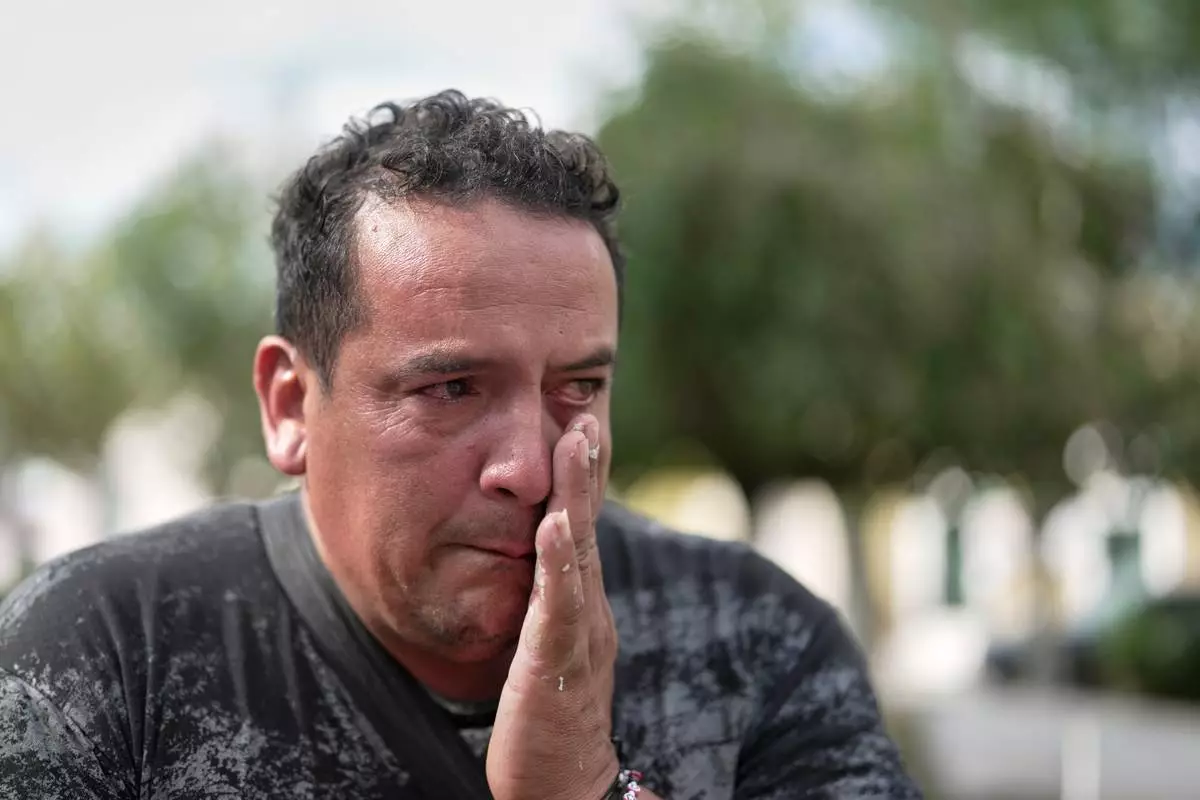
David Delgado cries as he speaks about his son Rodrigo Morinigo, who died in January of hantavirus, in San Andres de Giles, Argentina, Wednesday, May 6, 2026. (AP Photo/Victor R. Caivano)
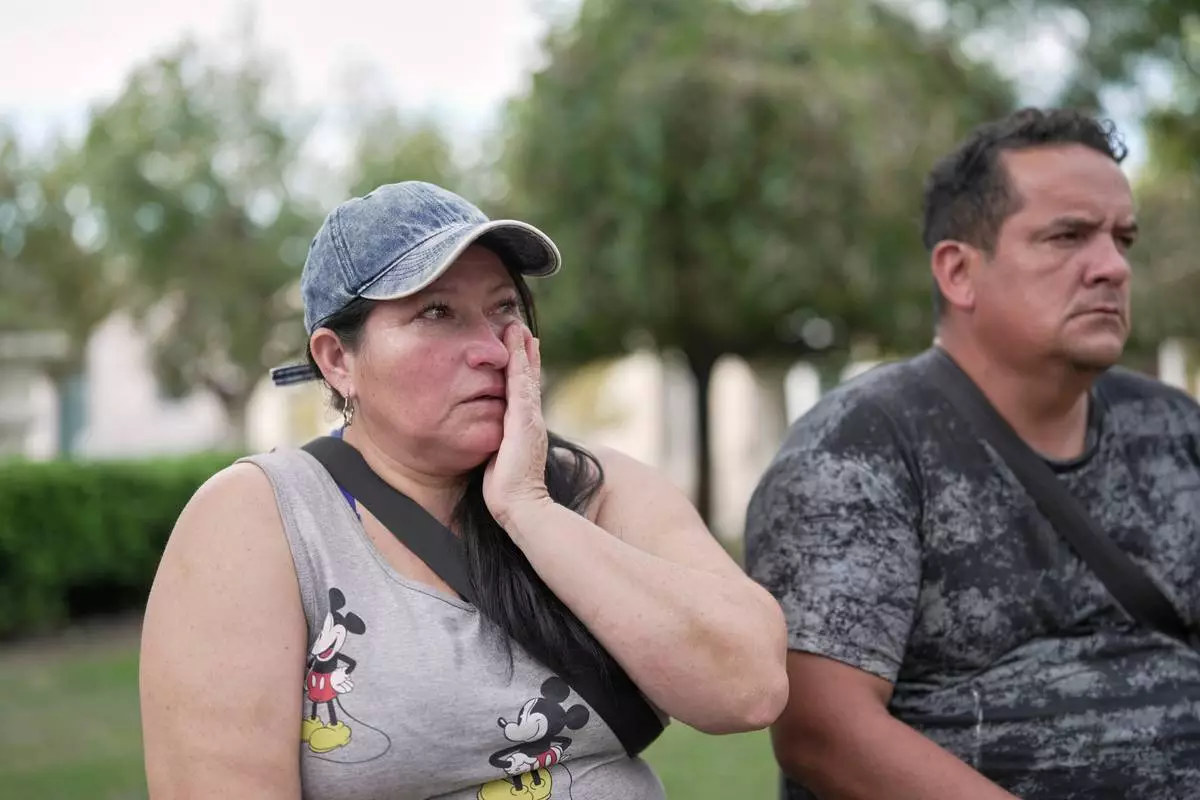
Daisy Morinigo sits with her husband David Delgado as she speaks about their son Rodrigo Morinigo, who died in January of hantavirus, in San Andres de Giles, Argentina, Wednesday, May 6, 2026. (AP Photo/Victor R. Caivano)
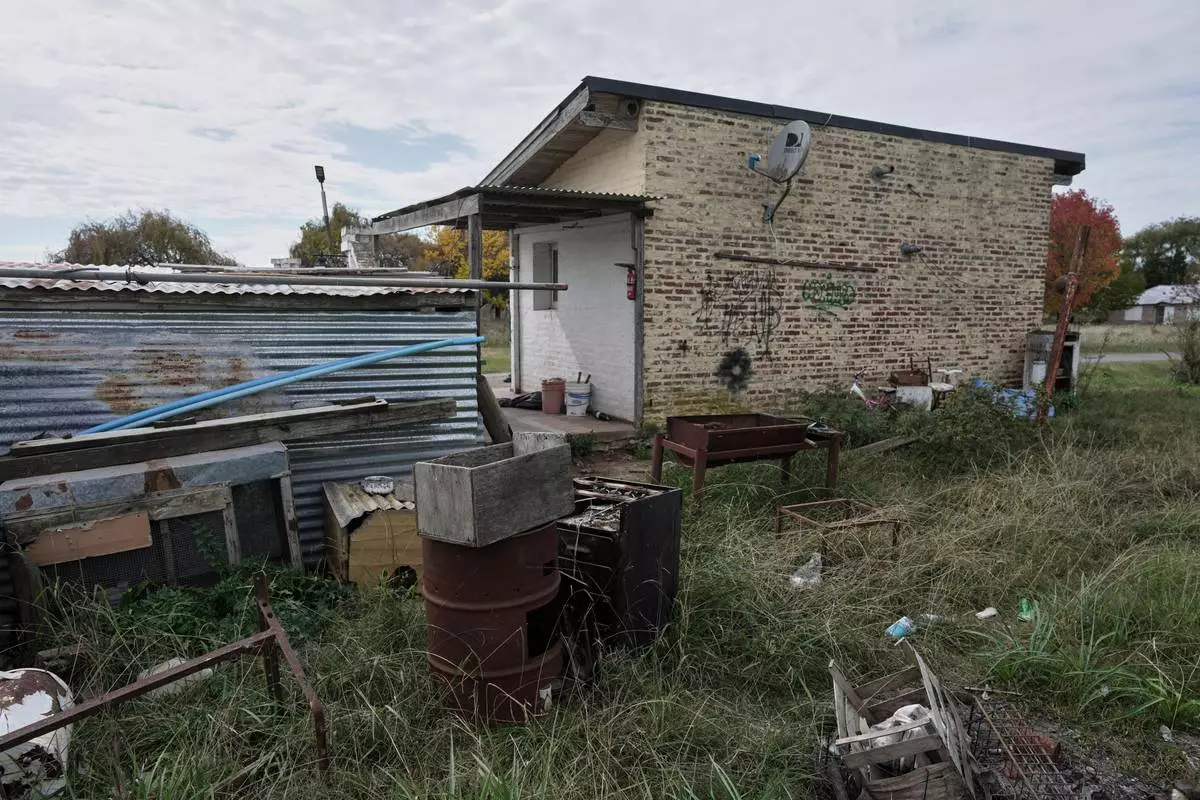
The rural family home where Rodrigo Morinigo, who died from hantavirus in January at the age of 14, lived with his family when he contracted the illness in San Andres de Giles, Argentina, Wednesday, May 6, 2026. (AP Photo/Victor R. Caivano)
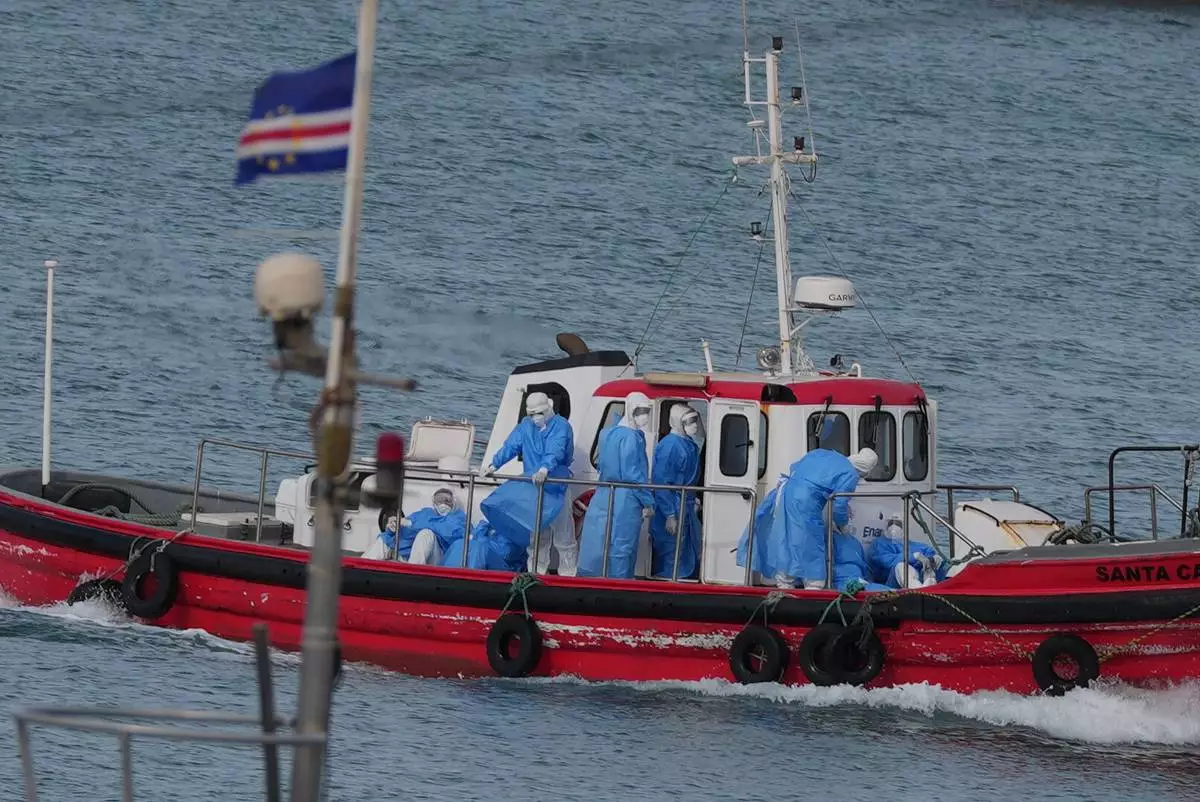
Health workers in protective gear arrive to evacuate patients from the MV Hondius cruise ship at a port in Praia, Cape Verde, Wednesday, May 6, 2026. (AP Photo/Misper Apawu)
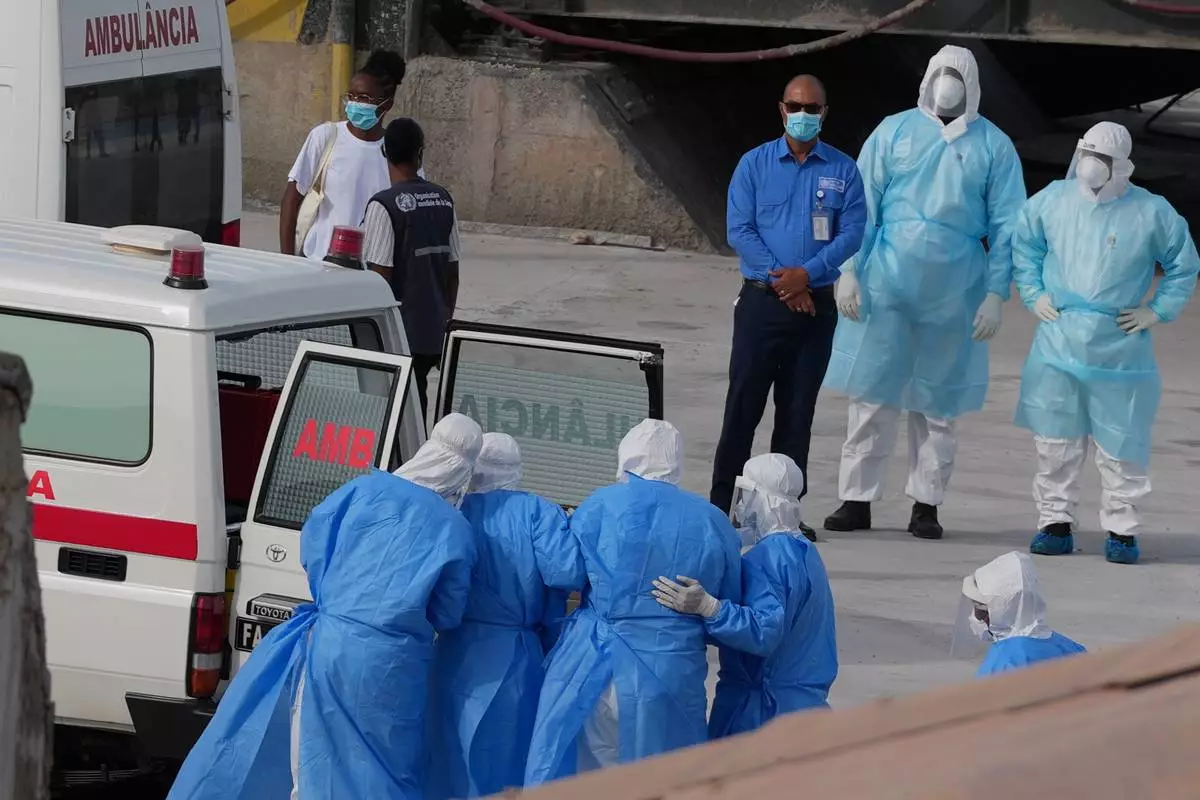
Health workers in protective gear evacuate patients from the MV Hondius cruise ship into an ambulance at a port in Praia, Cape Verde, Wednesday, May 6, 2026. (AP Photo/Misper Apawu)
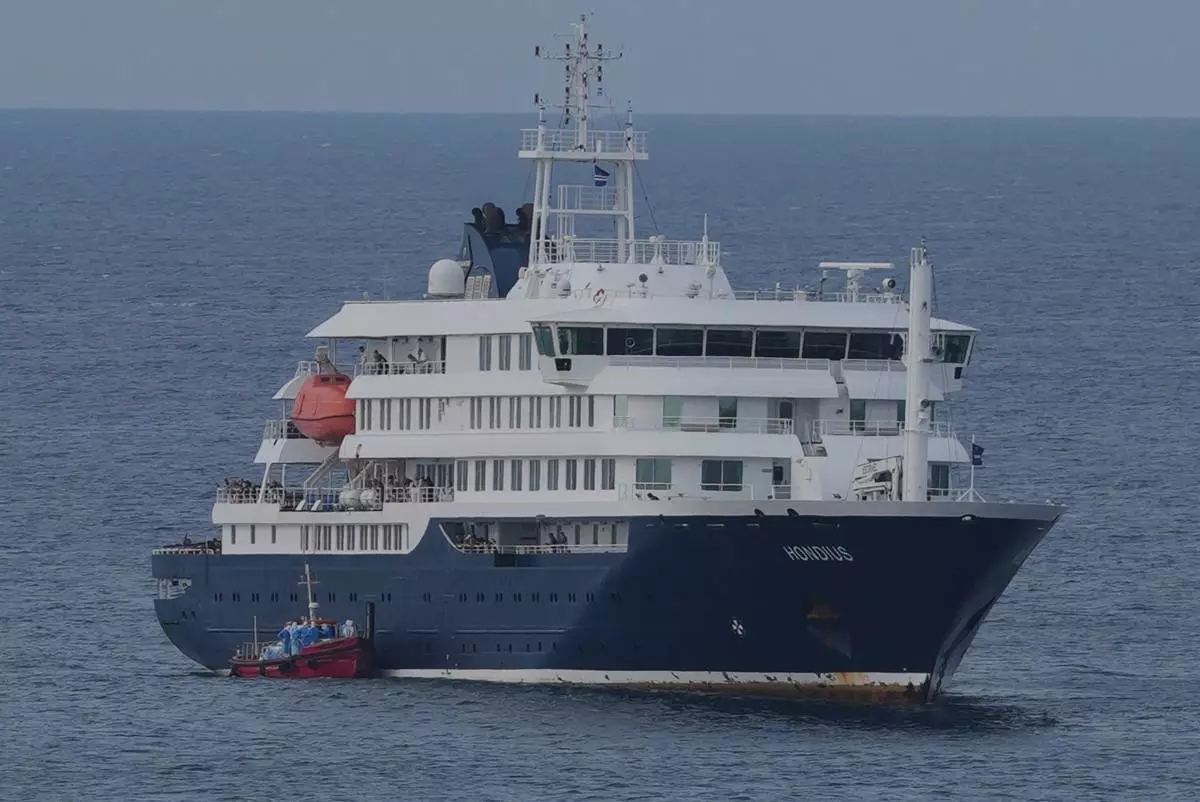
The MV Hondius cruise ship is anchored at a port in Praia, Cape Verde, Wednesday, May 6, 2026. (AP Photo/Misper Apawu)