The 2025 World Intelligent Connected Vehicles (ICV) Conference opened in Beijing on Thursday to explore emerging trends, innovations, and business models in the ICV sector.
Co-hosted by the Ministry of Industry and Information Technology (MIIT), the Ministry of Transport, and the People's Government of Beijing Municipality, the three-day event is expected to draw about 1,000 participants from across the globe, including government officials, industry insiders, scholars and researchers
Under the theme "pooling wisdom, boundless connectivity," the event features three plenary sessions and three specialized forums, delving into key topics such as policy frameworks, technological advancements, safety protocols, artificial intelligence integration, real-world applications, and data governance in the ICV ecosystem.
According to the MIIT, the conference will also host a series of discussions and tours aimed at deepening international cooperation.
"During this year's conference, we will advance practical international collaboration. It is our first time for us to invite foreign minister-level officials to attend, organize foreign diplomats to tour China's automotive industry, and hold bilateral cooperation meetings with the UK and Germany to comprehensively promote international cooperation and exchanges," said Guo Shougang, an MIIT official.
Key outcomes will also be unveiled at the event, including the establishment of a national pilot base for AI applications in the automotive sector, the release of "Top 10 functional scenarios for vehicle-road coordination" and a report on achievements in ICV standardization.
China has made notable progress in ICV development during the 14th Five-Year Plan period (2021–2025). The government has rolled out a suite of supportive policies, issued nearly 100 technical standards, and launched "vehicle-road-cloud integration" pilot programs in 20 cities. A full-fledged industrial ecosystem has taken shape, with over 60 percent of newly sold passenger vehicles now equipped with advanced driver-assistance systems (ADAS).
"Intelligent connected vehicles represent a strategic direction for the global automotive industry's transformation and upgrading. During the 14th Five-Year Plan period, China has rapidly advanced its ICV technological capabilities, building a full-fledge industrial system that spans intelligent cockpits, autonomous driving, and cloud-connected control systems. Automotive high-performance computing chips, multimodal perception systems, and intelligent-by-wire chassis are now being deployed at scale, while human-machine interaction and collaborative perception technologies have reached world-leading levels," said Guo.
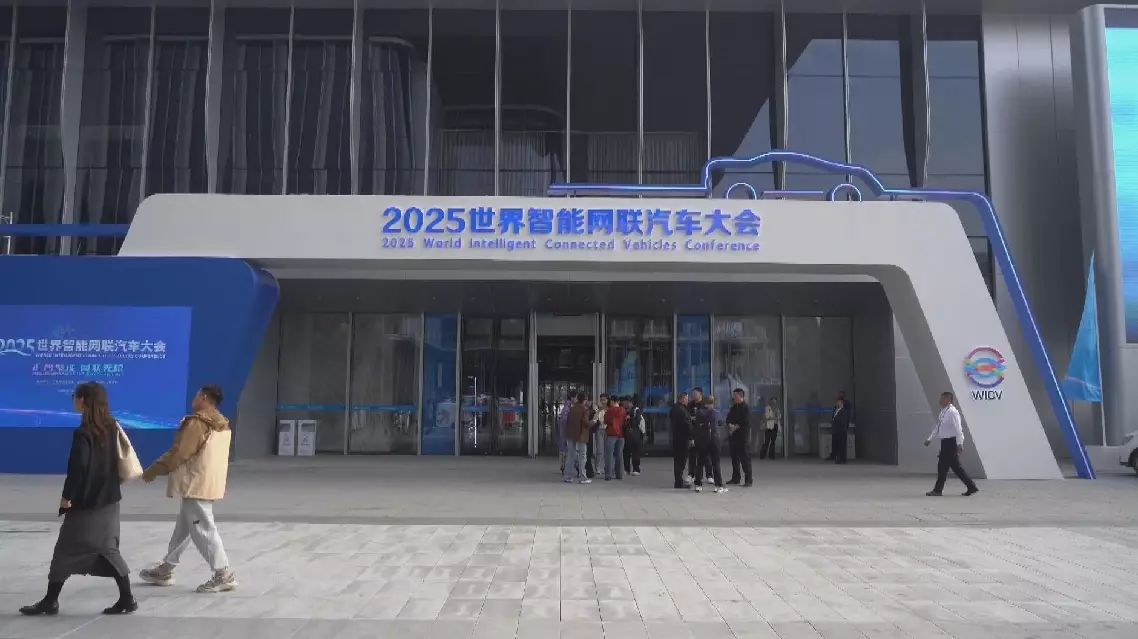
2025 World Intelligent Connected Vehicles Conference opens in Beijing

Senior U.S. national security officials have told President Donald Trump that the U.S. military strike on Iran could happen as soon as Saturday, U.S. news media outlets such as NBC News and CNN reported on Wednesday, citing unnamed sources.
The White House is now weighing the political and military consequences of a potential military strike, according to the reports.
Multiple U.S. officials said the Pentagon will temporarily reposition personnel out of the Middle East over the next three days, a precaution aimed at safeguarding U.S. forces in the event of Iran's retaliation.
According to the U.S. online outlet Axios, Trump convened a meeting with senior advisers on Iran on Wednesday.
The report also quoted U.S. officials as indicating that the Gerald R. Ford Carrier Strike Group is set to arrive in the Middle East within days, a deployment that will be a key factor in any decision to take military actions.
Last week, Trump announced the deployment of the USS Gerald R. Ford, the world's largest aircraft carrier, to the Middle East to reinforce the USS Abraham Lincoln and its accompanying guided-missile destroyers, already in the region. The Gerald R. Ford and its escorts are currently in the mid-Atlantic, having left the Caribbean en route to the Gulf.
At a press briefing on Wednesday, White House Press Secretary Karoline Leavitt said that while the second round of indirect nuclear talks in Geneva between Iran and the United States had made some progress, the two sides remained far apart on key issues.
Leavitt said there were "many reasons and arguments that one could make for a strike against Iran".
Still, she added, a diplomatic resolution remains Trump's preferred path.
However, according to Axios, there has been no sign of a diplomatic breakthrough, and that evidence is instead pointing toward imminent U.S. military actions.
It also said that if Trump greenlights an operation, it could unfold over several weeks.
Meanwhile, Iranian government spokeswoman Fatemeh Mohajerania said on Wednesday that negotiations and defense readiness are two complementary strategies to protect Iran’s interests, and the country is on full alert.
Also on Wednesday, Iranian Foreign Minister Seyed Abbas Araghchi said Iran is developing a framework aimed at advancing future negotiations with the United States.
According to Iran's official news agency IRNA, Araghchi and Rafael Grossi, director general of the International Atomic Energy Agency (IAEA), had discussed the latest round of indirect talks between Iran and the United States. During their phone call, Grossi gave a positive assessment of the Geneva meeting and expressed readiness to support Iran in shaping its negotiating framework.
The second round of indirect nuclear talks between Iran and the United States concluded on Tuesday, with both sides describing the discussions as productive, despite lingering differences, and agreeing to stay in touch.
A senior U.S. official told reporters on Wednesday that Washington expects Tehran to submit a written proposal in the coming days outlining its approach to resolving the current standoff.
US military prepared to strike Iran "as early as this weekend": media reports