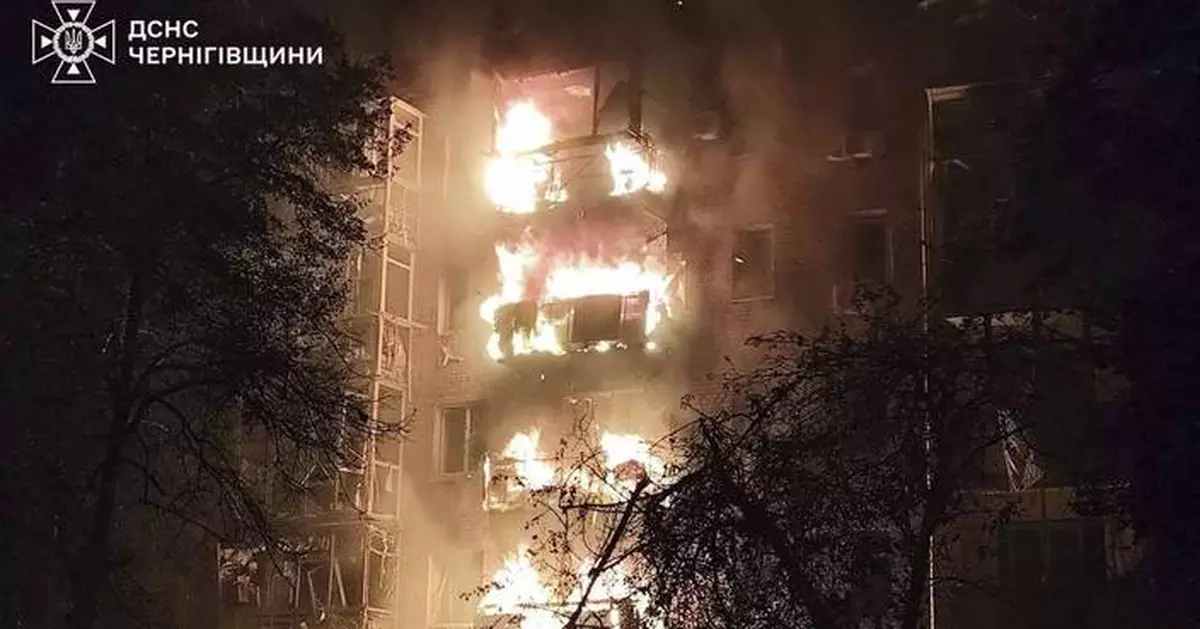
KYIV, Ukraine (AP) — Russia battered Ukraine’s energy facilities with hundreds of drones and dozens of missiles in its latest heavy bombardment of the country’s power grid, authorities said Thursday, as Ukrainian President Volodymyr Zelenskyy prepared to ask President Donald Trump at a White House meeting for more American-made air defenses and long-range missiles.
As he considers Zelenskyy's push for U.S. missiles, Trump said after Thursday's call with Russian President Vladimir Putin that they will meet in Budapest, Hungary to try to bring the war to an end. No date for the meeting has been set.
Trump said in a post on Truth Social that he will discuss his call with Putin “and much more” when he meets Zelenskyy on Friday, adding that “I believe great progress was made with today’s telephone conversation.”
Meanwhile, eight Ukrainian regions experienced blackouts after the barrage, Ukraine’s national energy operator, Ukrenergo, said. DTEK, the country’s largest private energy company, reported outages in the capital, Kyiv, and said it had to stop its natural gas extraction in the central Poltava region due to the strikes. Natural gas infrastructure was damaged for the sixth time this month, Naftogaz, Ukraine’s state-owned oil and gas company, said.
Zelenskyy said Russia fired more than 300 drones and 37 missiles at Ukraine overnight. He accused Russia of using cluster munitions and conducting repeated strikes on the same target to hit emergency crews and engineers working to repair the grid.
“This fall, the Russians are using every single day to strike our energy infrastructure,” Zelenskyy said on Telegram.
The Ukrainian power grid been one of Russia’s main targets since its invasion of its neighbor more than three years ago. Attacks increase as the bitterly cold months approach in a Russian strategy that Ukrainian officials call “weaponizing winter.” Russia says it aims only at targets of military value.
Ukraine has hit back by targeting oil refineries and related infrastructure that are crucial for Russia's economy and war effort. Ukraine’s general staff said Thursday its forces struck Saratov oil refinery, in the Russian region of the same name, for the second time in two months. The facility is located some 500 kilometers (300 miles) from the Ukrainian border. Moscow made no immediate comment on the claim.
Ukrainian forces have resisted Russia’s bigger and better-equipped army, limiting it to a grinding war of attrition along the roughly 1,000-kilometer (600-mile) front line snaking through eastern and southern regions.
But Ukraine, which is almost the size of Texas, is hard to defend from the air in its entirety, and Kyiv officials are seeking more Western help to fend against aerial attacks and strike back at Russia.
Zelenskyy was expected to arrive in the United States on Thursday, ahead of his Oval Office meeting with Trump on Friday.
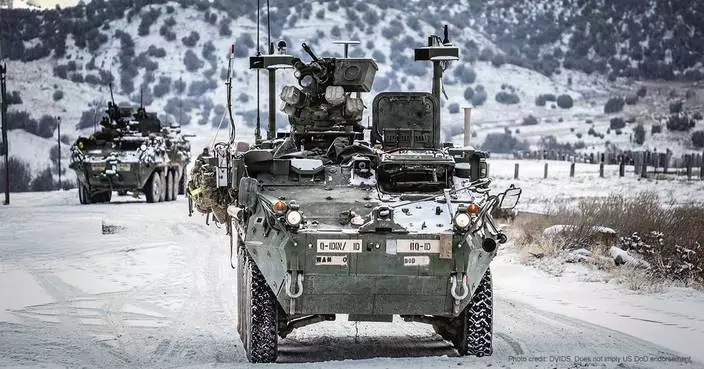
Ukraine is seeking cruise missiles, air defense systems and joint drone production agreements from the United States, Kyiv officials say. Zelenskyy also wants tougher international economic sanctions on Moscow.
The visit comes amid signs that Trump is leaning toward stepping up pressure on Russian President Vladimir Putin to break the deadlock in U.S.-led peace efforts.
U.S. Defense Secretary Pete Hegseth said Wednesday in Brussels that if Russia won’t budge from its objections and refuses to negotiate a peace deal, Washington “will take the steps necessary to impose costs on Russia for its continued aggression.”
Also, Trump said Wednesday that Indian Prime Minister Narendra Modi personally assured him that his country would stop buying Russian oil. That would deny Moscow income it needs to keep fighting in Ukraine.
Washington has hesitated over providing Ukraine with long-range missiles, such as Tomahawks, out of concern that such a step could escalate the war and deepen tensions between the United States and Russia.
But Trump has been frustrated by his inability to force an end to the war in Ukraine and has expressed impatience with Putin, whom he increasingly describes as the primary obstacle to a resolution.
The Institute for the Study of War, a Washington think tank, said in an assessment published late Wednesday that sending Tomahawks to Ukraine would not escalate the war and would only “mirror Russia’s own use of … long-range cruise missiles against Ukraine.”
Meanwhile, Ukraine’s Economy Ministry said Thursday it has signed a memorandum of understanding with U.S. company Bell Textron Inc. to cooperate in aviation technology.
The Fort Worth, Texas-based aerospace and defense company will open an office in Ukraine and establish a center for assembly and testing, while exchanging know-how and training Ukrainians in the United States, according to a ministry statement.
Ukraine, unsure what it can expect from Western allies, is keen to develop its own arms industry.
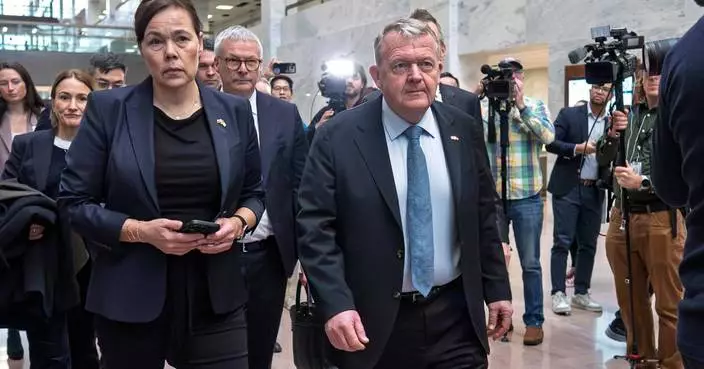
On Wednesday, a Ukrainian government delegation met during a U.S. visit with prominent American weapons manufacturers Lockheed Martin and Raytheon.
Follow AP’s coverage of the war in Ukraine at https://apnews.com/hub/russia-ukraine

FILE - President Donald Trump meets with Ukrainian President Volodymyr Zelenskyy during the United Nations General Assembly, Sept. 23, 2025, in New York. (AP Photo/Evan Vucci, File)

FILE - President Donald Trump, right, shakes the hand of Russia's President Vladimir Putin during a joint press conference at Joint Base Elmendorf-Richardson, Alaska, Aug. 15, 2025. (AP Photo/Jae C. Hong, File)
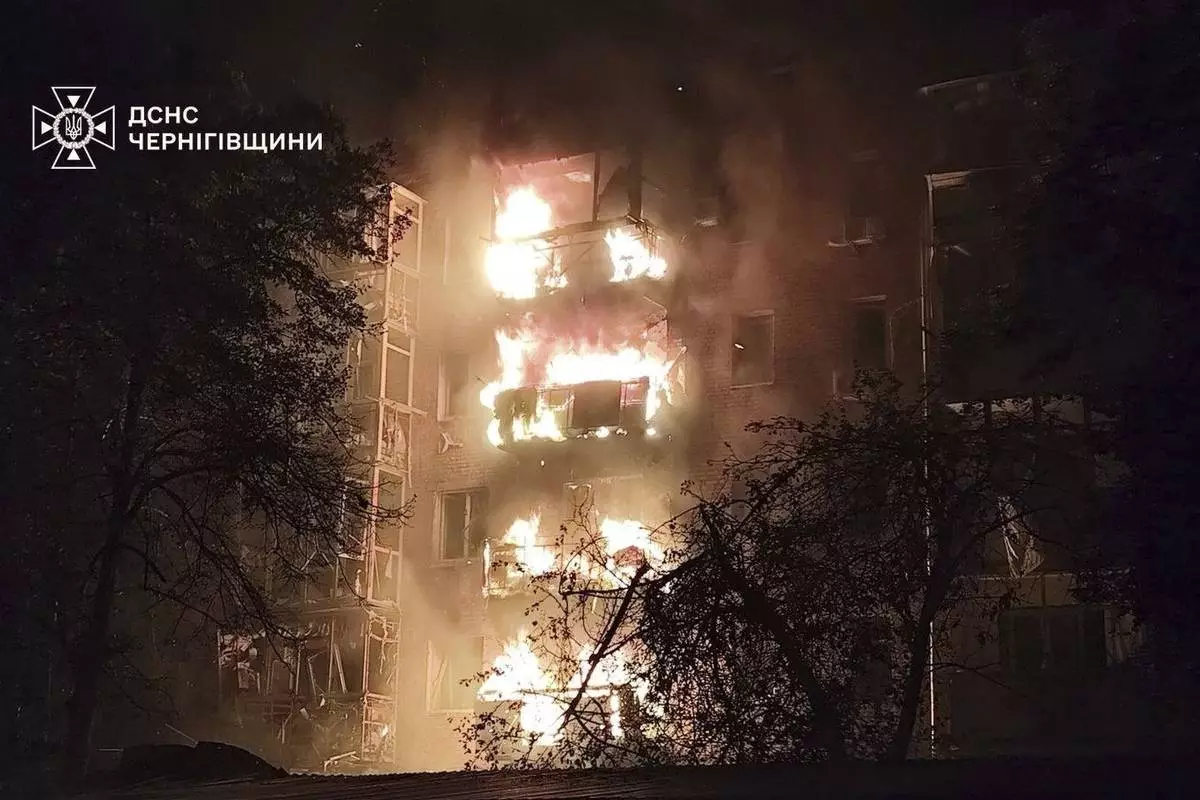
In this photo provided by the Ukrainian Emergency Services on Thursday, Oct. 16, 2025, a residential building is seen on fire after a Russian strike in Nizhyn, Chernihiv region, Ukraine. (Ukrainian Emergency Service via AP)
CAPE CANAVERAL, Fla. (AP) — An ailing astronaut returned to Earth with three others on Thursday, ending their space station mission more than a month early in NASA’s first medical evacuation.
SpaceX guided the capsule to a middle-of-the-night splashdown in the Pacific near San Diego, less than 11 hours after the astronauts exited the International Space Station.
“It’s so good to be home,” said NASA astronaut Zena Cardman, the capsule commander.
It was an unexpected finish to a mission that began in August and left the orbiting lab with only one American and two Russians on board. NASA and SpaceX said they would try to move up the launch of a fresh crew of four; liftoff is currently targeted for mid-February.
Cardman and NASA’s Mike Fincke were joined on the return by Japan’s Kimiya Yui and Russia’s Oleg Platonov. Officials have refused to identify the astronaut who had the health problem or explain what happened, citing medical privacy.
While the astronaut was stable in orbit, NASA wanted them back on Earth as soon as possible to receive proper care and diagnostic testing. The entry and splashdown required no special changes or accommodations, officials said, and the recovery ship had its usual allotment of medical experts on board. It was not immediately known when the astronauts would fly from California to their home base in Houston. Platonov’s return to Moscow was also unclear.
NASA stressed repeatedly over the past week that this was not an emergency. The astronaut fell sick or was injured on Jan. 7, prompting NASA to call off the next day’s spacewalk by Cardman and Fincke, and ultimately resulting in the early return. It was the first time NASA cut short a spaceflight for medical reasons. The Russians had done so decades ago.
The space station has gotten by with three astronauts before, sometimes even with just two. NASA said it will be unable to perform a spacewalk, even for an emergency, until the arrival of the next crew, which has two Americans, one French and one Russian astronaut.
The Associated Press Health and Science Department receives support from the Howard Hughes Medical Institute’s Department of Science Education and the Robert Wood Johnson Foundation. The AP is solely responsible for all content.
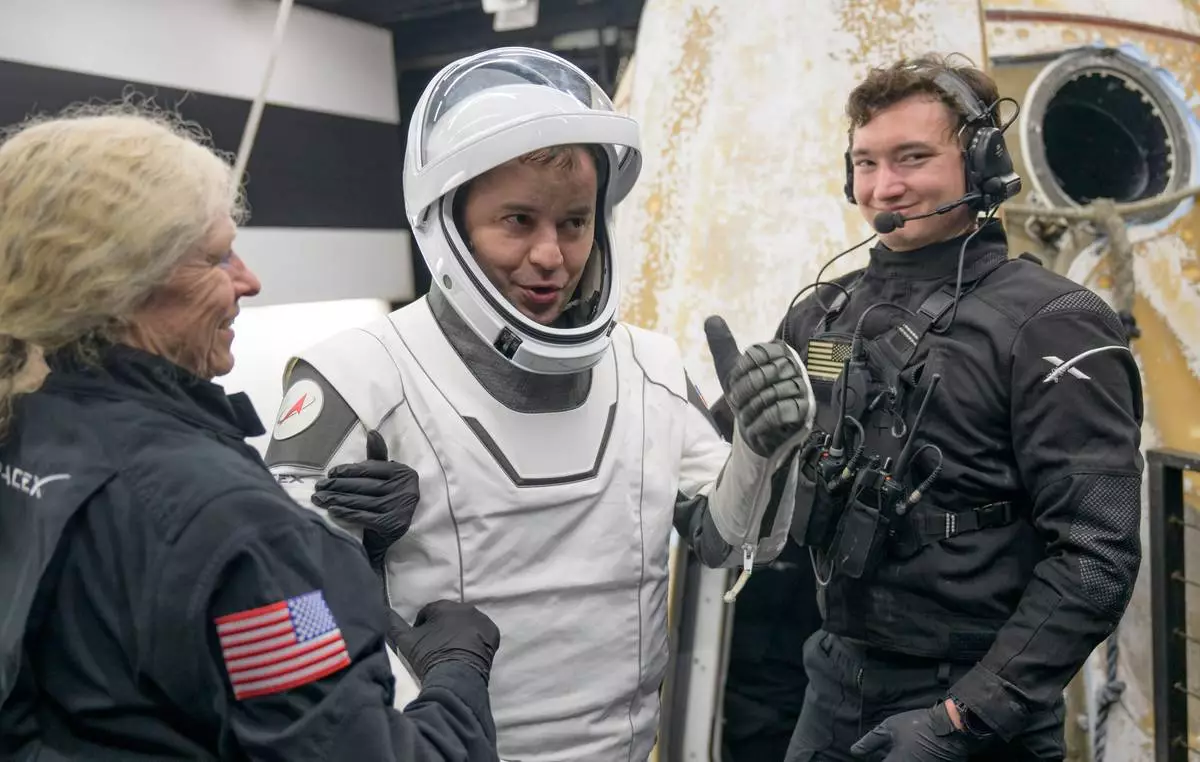
Roscosmos cosmonaut Oleg Platonov is helped out of the SpaceX Dragon Endeavour spacecraft onboard the SpaceX recovery ship SHANNON after they re-entered the earth in a middle-of-the-night splashdown near San Diego, Calif., Thursday, Jan. 15, 2026. (NASA via AP)
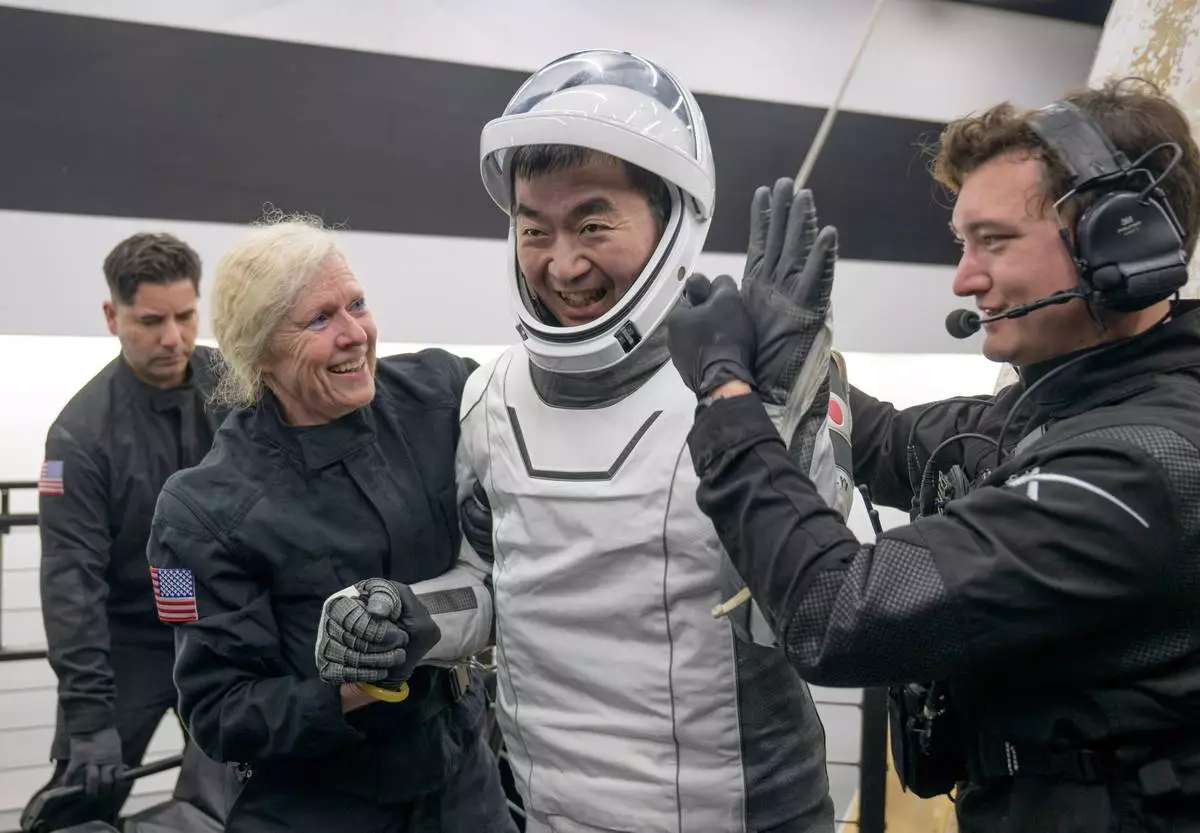
JAXA (Japan Aerospace Exploration Agency) astronaut Kimiya Yui is helped out of the SpaceX Crew-11 capsule after they re-entered the earth in a middle-of-the-night splashdown near San Diego, Calif., Thursday, Jan. 15, 2026. (NASA via AP)
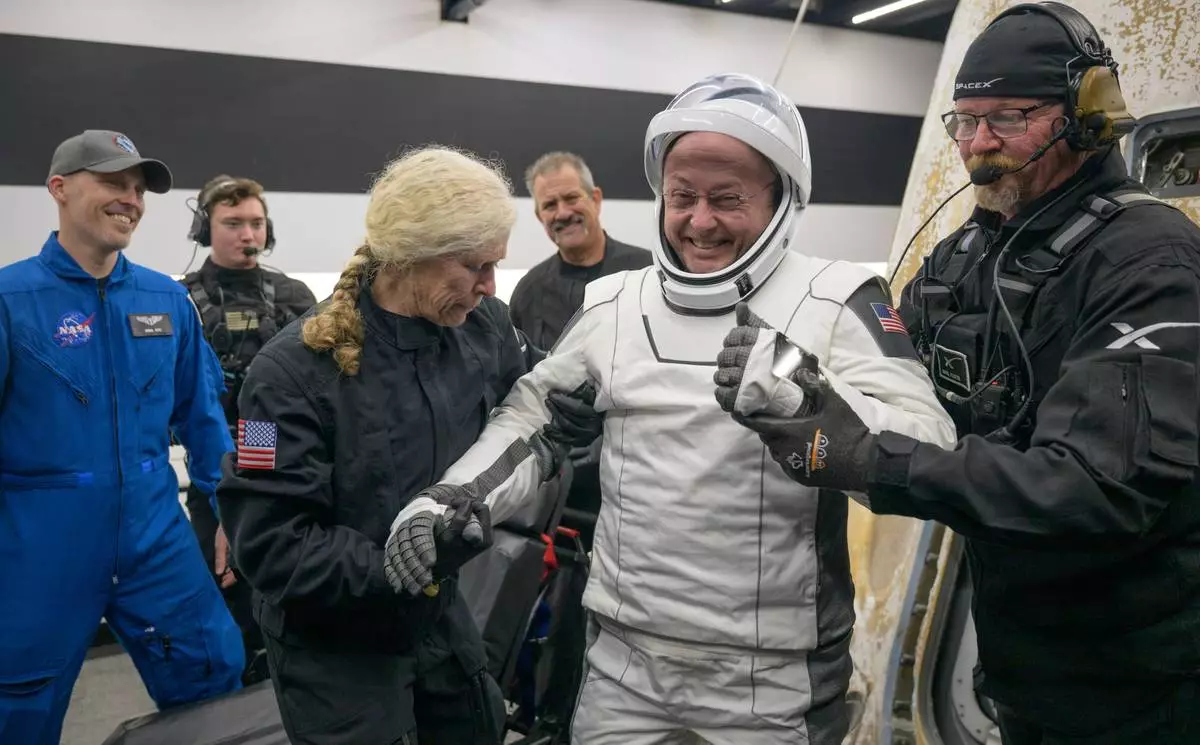
NASA astronaut Mike Fincke is helped out of the SpaceX Crew-11 capsule after they re-entered the earth in a middle-of-the-night splashdown near San Diego, Calif., Thursday, Jan. 15, 2026. (NASA via AP)

NASA astronaut Zena Cardman is helped out of the SpaceX Crew-11 capsule after they re-entered the earth in a middle-of-the-night splashdown near San Diego, Calif., Thursday, Jan. 15, 2026. (NASA via AP)
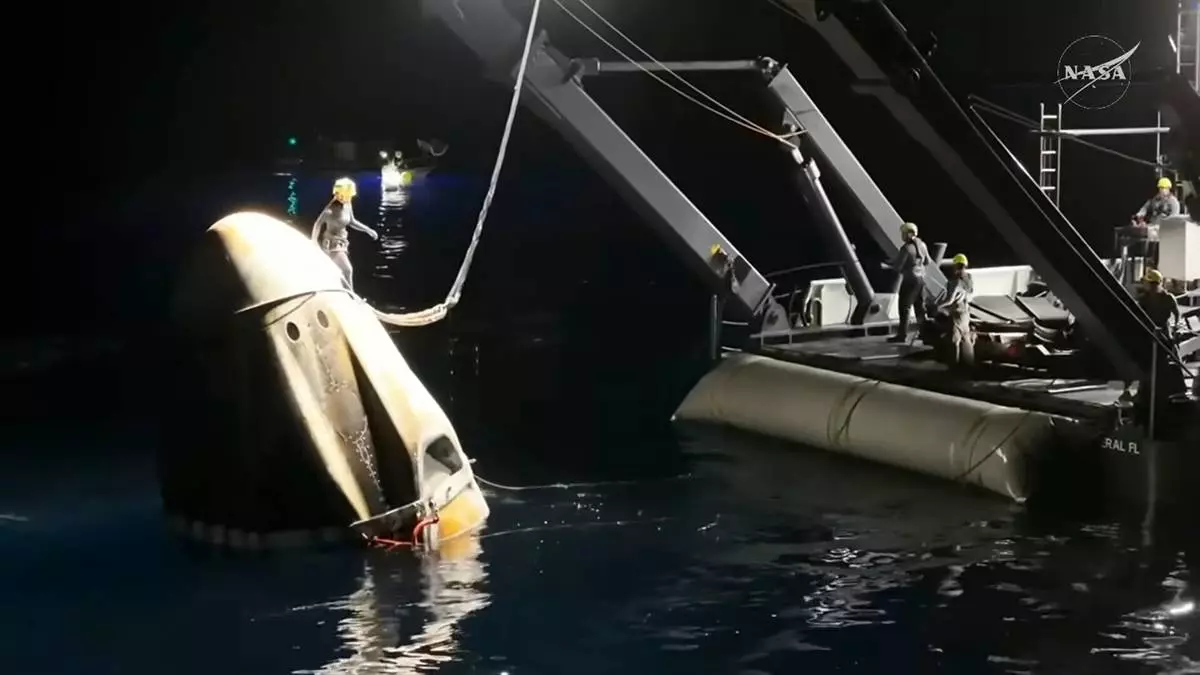
This screengrab from video provided by NASA shows the NASA's SpaceX Crew-11 capsule being taken into the recovery vessel after crew members re entered the earth in a middle-of-the-night splashdown near San Diego, Calif., Thursday, Jan. 15, 2026. (NASA via AP)
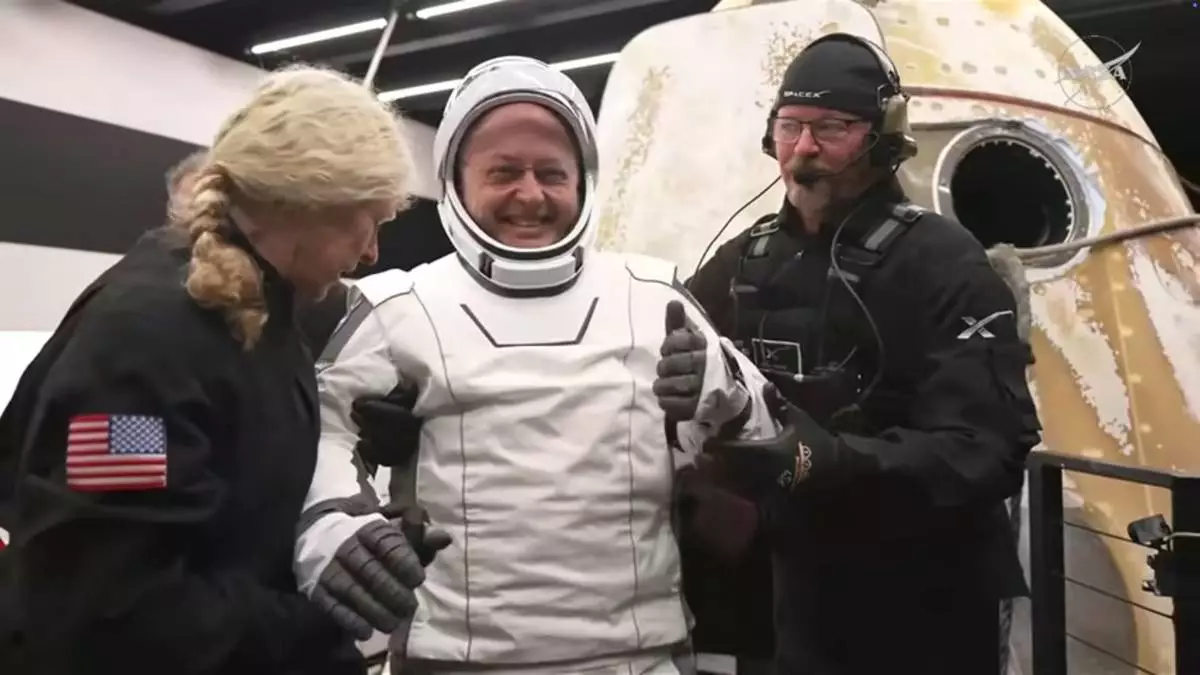
This screengrab from video provided by NASA shows NASA astronaut Mike Fincke getting helped out of the SpaceX Crew-11 capsule after they re-entered the earth in a middle-of-the-night splashdown near San Diego, Calif., Thursday, Jan. 15, 2026. (NASA via AP)

This screengrab from video provided by NASA shows NASA Japanese astronaut Kimiya Yui being helped out of the SpaceX Crew-11 capsule after they re-entered the earth in a middle-of-the-night splashdown near San Diego, Calif., Thursday, Jan. 15, 2026. (NASA via AP)

This screengrab from video provided by NASA shows Russian astronaut Oleg Platonov being helped out of the SpaceX Crew-11 capsule after they re-entered the earth in a middle-of-the-night splashdown near San Diego, Calif., Thursday, Jan. 15, 2026. (NASA via AP)

Roscosmos cosmonaut Oleg Platonov, left, NASA astronauts Mike Fincke, Zena Cardman, and JAXA (Japan Aerospace Exploration Agency) astronaut Kimiya Yui are seen inside the SpaceX Dragon Endeavour spacecraft onboard the SpaceX recovery ship SHANNON shortly after having landed in the Pacific Ocean off the coast of Long Beach, Calif., Thursday, Jan. 15, 2026. (NASA via AP)

This screengrab from video provided by NASA shows NASA astronaut Zena Cardman being helped out of the SpaceX Crew-11 capsule after they re-entered the earth in a middle-of-the-night splashdown near San Diego, Calif., Thursday, Jan. 15, 2026. (NASA via AP)
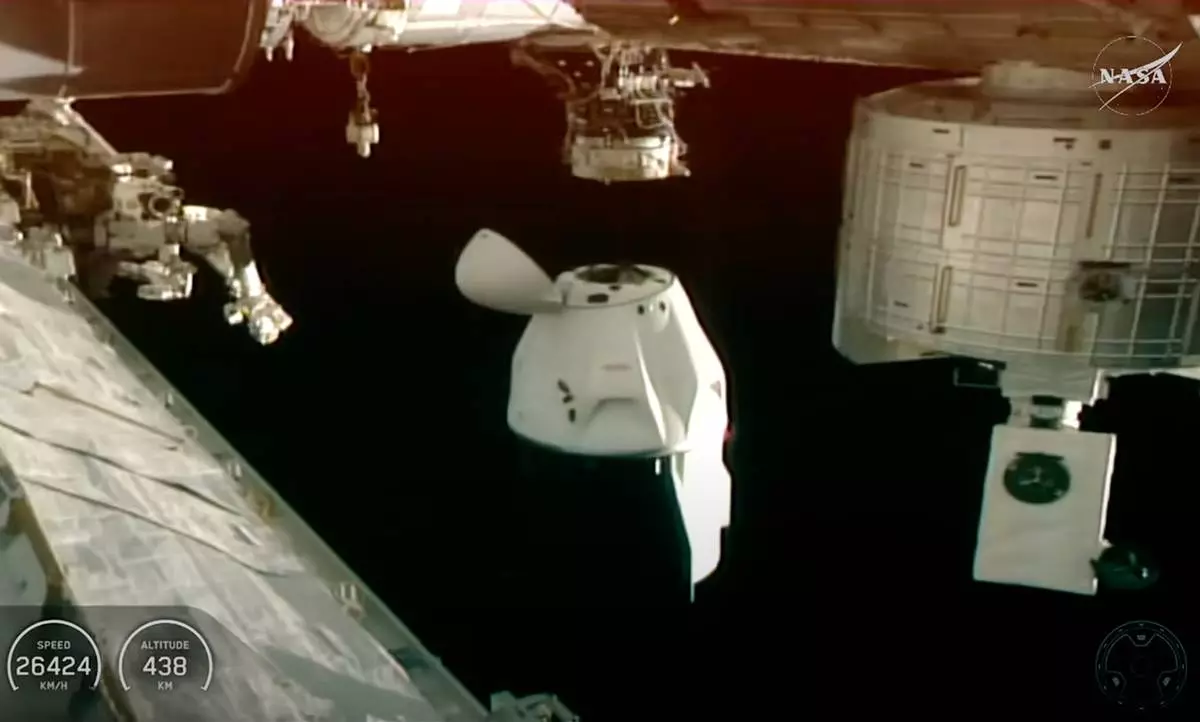
This screengrab from video provided by NASA TV shows the SpaceX Dragon departing from the International Space Station shortly after undocking with four NASA Crew-11 members inside on Wednesday, Jan. 14, 2026. (NASA via AP)
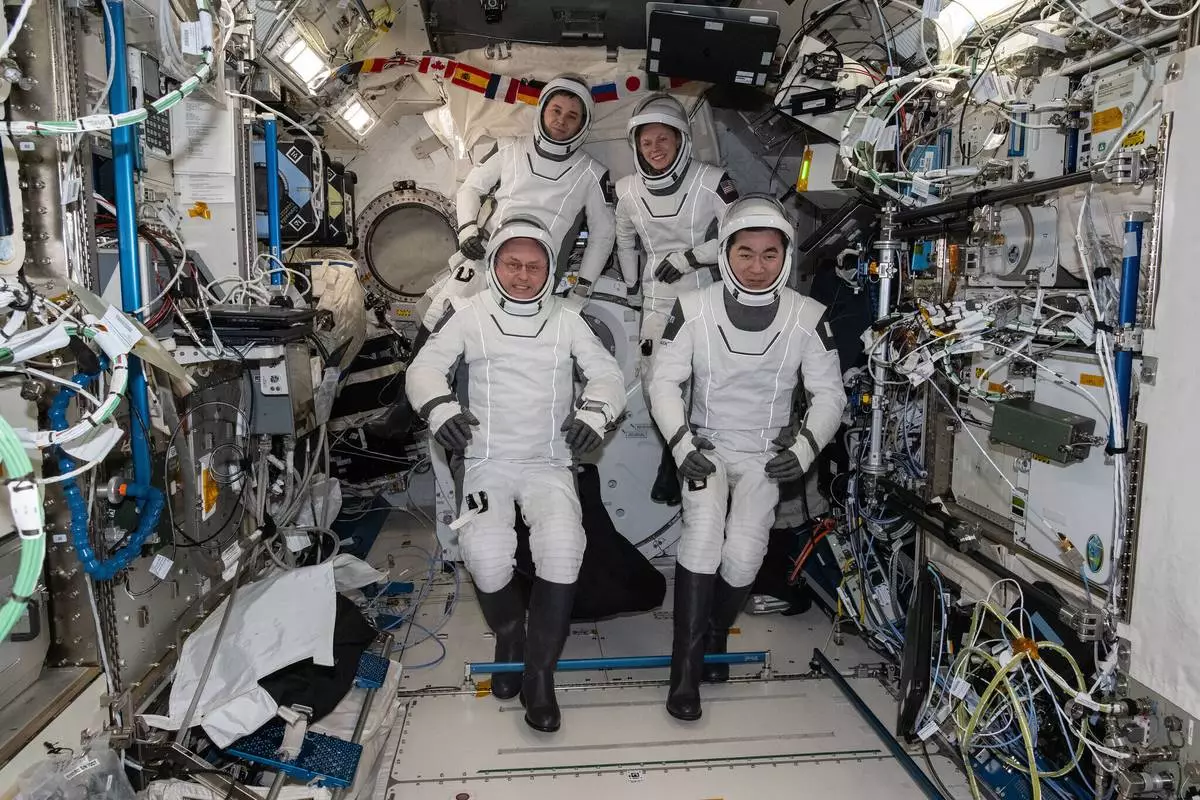
This photo provided by NASA shows clockwise from bottom left are, NASA astronaut Mike Fincke, Roscosmos cosmonaut Oleg Platonov, NASA astronaut Zena Cardman, and JAXA (Japan Aerospace Exploration Agency) astronaut Kimiya Yui gathering for a crew portrait wearing their Dragon pressure suits during a suit verification check inside the International Space Station’s Kibo laboratory module, Wednesday, Jan. 14, 2026. (NASA via AP)
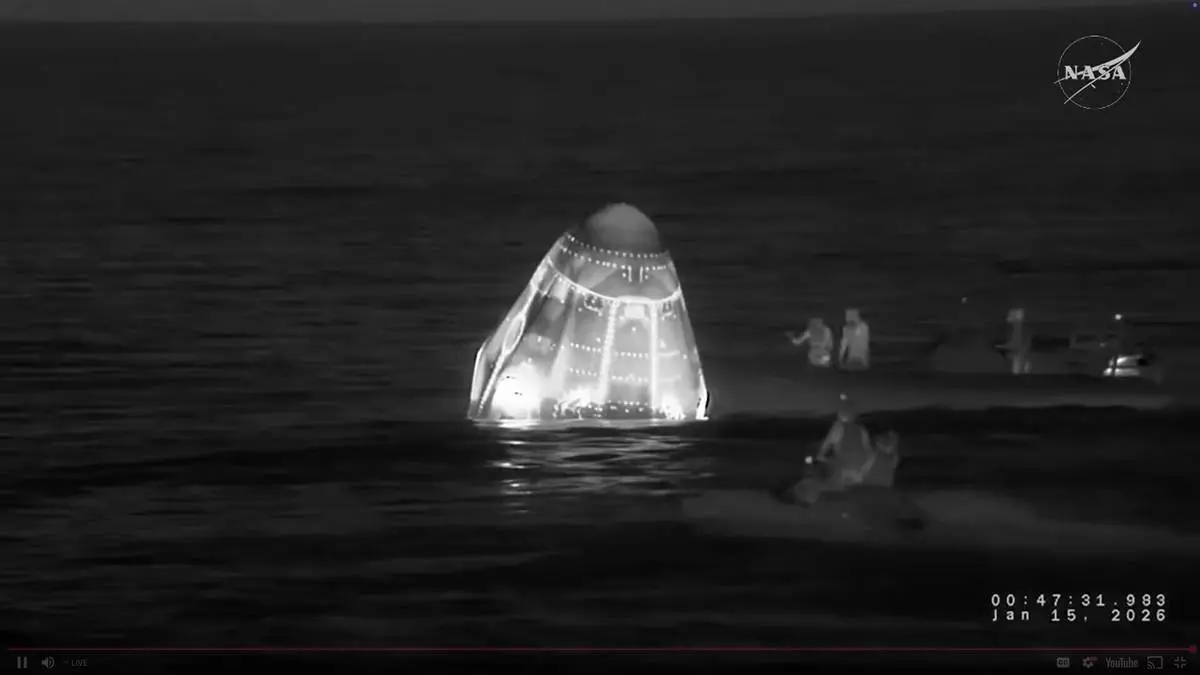
This screengrab from video provided by NASA shows recovery vessels approaching the NASA's SpaceX Crew-11 capsule to evacuate one of the crew members after they re-entered the earth in a middle-of-the-night splashdown near San Diego, Calif., Thursday, Jan. 15, 2026. (NASA via AP)
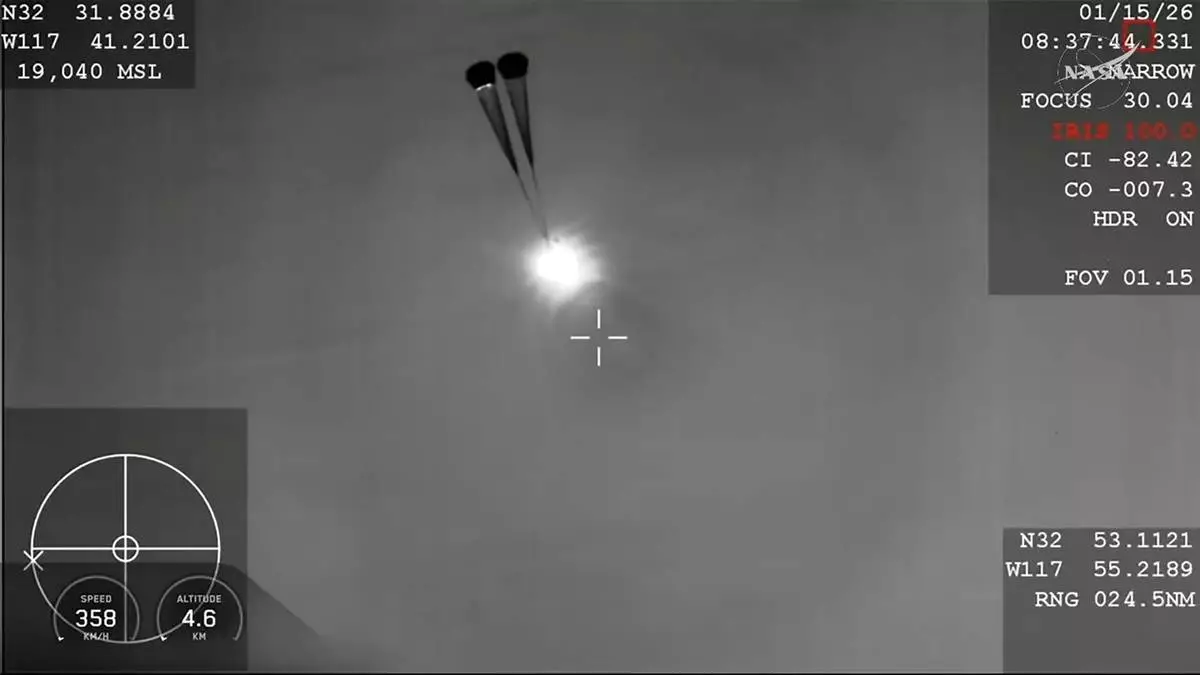
This screengrab from video provided by NASA shows the NASA's SpaceX Crew-11 members re entering the earth in a middle-of-the-night splashdown near San Diego, Calif., Thursday, Jan. 15, 2026. (NASA via AP)
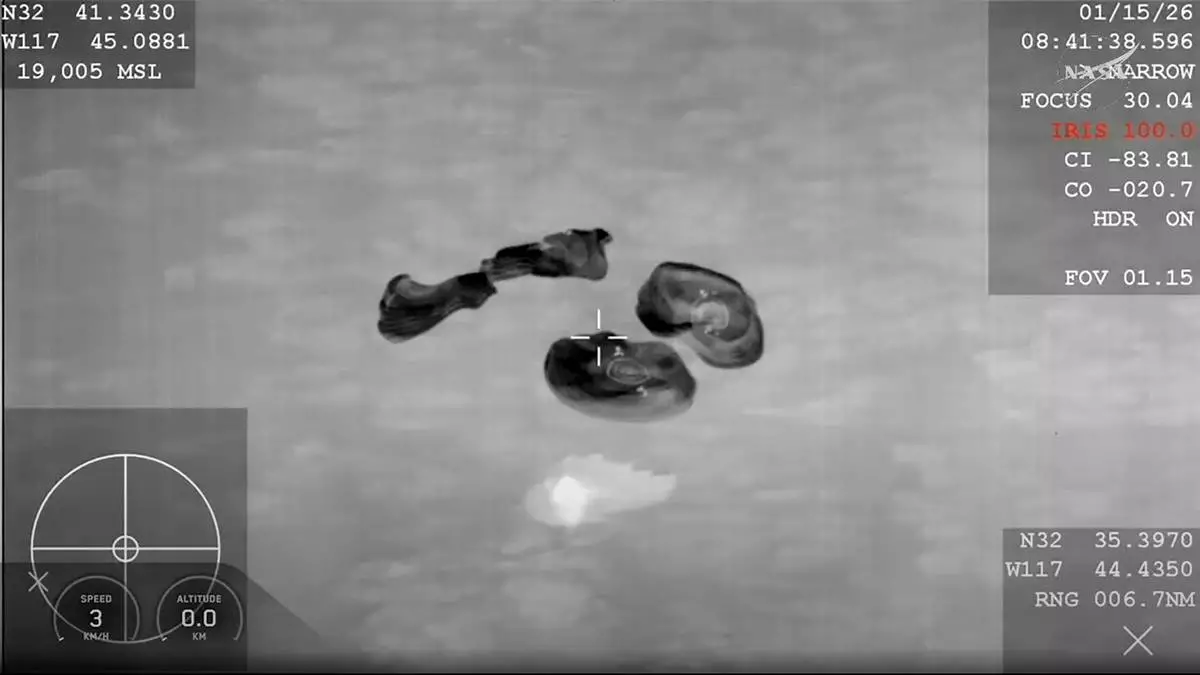
This screengrab from video provided by NASA shows the NASA's SpaceX Crew-11 members re entering the earth in a middle-of-the-night splashdown near San Diego, Calif., Thursday, Jan. 15, 2026. (NASA via AP)