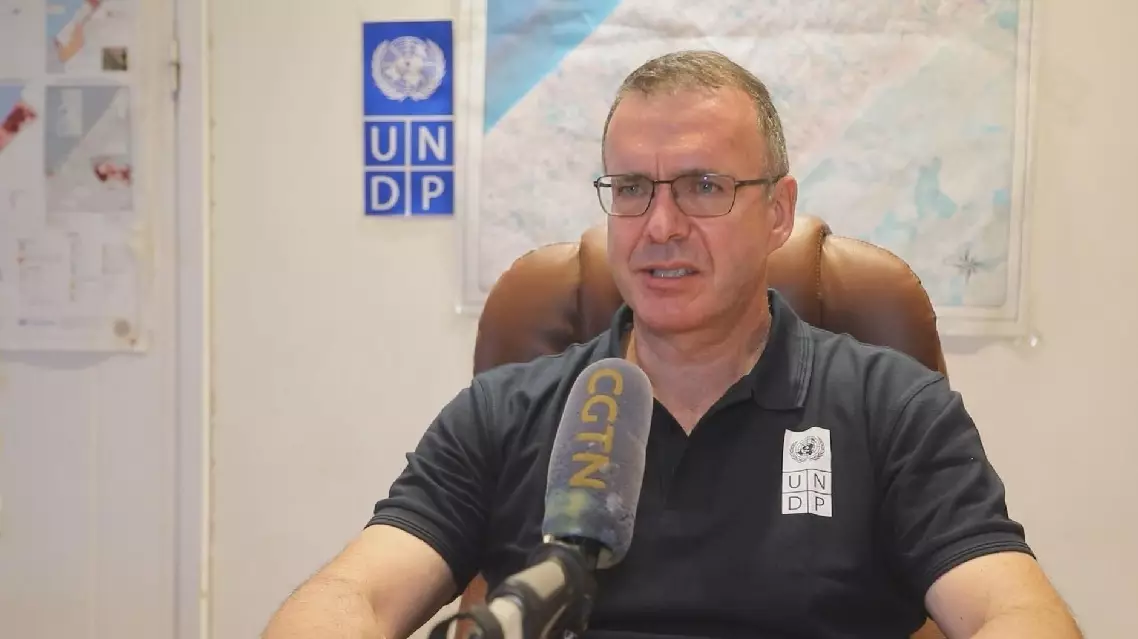
A ceasefire in Gaza Strip has brought hope to the residents who have been weary of the prolonged conflict, but the enclave is now facing daunting challenges -- reconstruction amid widespread destruction and poverty, Jaco Cilliers, United Nations Development Program (UNDP) special representative of the Administrator for the Palestinian People, said on Friday.
The UNDP special representative talked about the scale of the recovery process, the dangers of debris removal, and the logistical difficulties of rebuilding Gaza in an interview with the China Global Television Network (CGTN) in Gaza.
"We're very hopeful that the ceasefire would be sustained. People in Gaza are really tired of constant war and fighting. But we also have a very good sign that so many international countries are supporting the ceasefire. We saw in Egypt the solidarity with Palestinians, but also the intent of many international countries to continue to sustain the ceasefire. You know, it's an interesting situation. This morning I talked to some civil society organizations and they mentioned that the war in Gaza has ended, but the war against poverty in Gaza has now begun. And I think that's the future of people and how to come out of poverty and how to really sustain themselves will be very important moving forward," he said.
Cilliers said that the scale of destruction in Gaza presents a formidable obstacle to the reconstruction, adding that debris poses significant risks, including unexploded ordnances that endanger lives.
"One of the biggest challenges for the rebuilding efforts would be to focus on removing the debris. There's about 55 million tons of debris currently in Gaza. It is equal to 13 Great Pyramids of Giza. So it will be a massive undertaking. You can't start with the rebuilding process if you don't remove the rubble. And we see big challenges. There are unexploded ordinances or bombs still in the rubble that haven't exploded yet. That's very dangerous for people. I heard about somebody's child who yesterday picked up one of these ordinances and their arms were blown off. These are the realities of dangers that continue in spite of the ceasefire," he said.
Reconstruction efforts are further hampered by restricted access to essential materials, Cilliers noted.
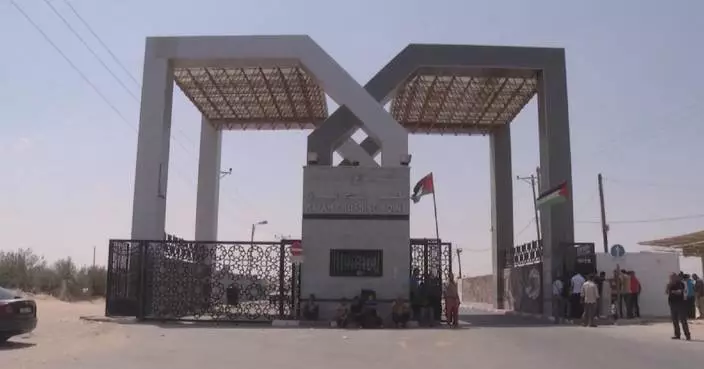
"So the reconstruction material would be very important in Gaza. At the moment, it's very difficult to bring in reconstruction material, even longer-term housing accommodation that we are planning to bring in, including prefab buildings or latrines for helping people with their sanitation needs. These are all things difficult to bring into Gaza at the moment. We hope that the borders will be opened. We hope that access will be provided to bring in this much-needed supplies as well," he said.
The ceasefire agreement between Israel and Hamas came into effect in the Gaza Strip at 12:00 noon local time (0900 GMT) on October 10.
Reconstruction in Gaza faces massive challenges: UNDP representative