As the Fourth Plenary Session of the 20th Central Committee of the Communist Party of China (CPC) approaches, international observers have highlighted China’s remarkable economic resilience and its role as a steady engine for worldwide growth and cooperation, amid a rapidly changing global landscape.
The session is scheduled to take place in Beijing from Oct 20-23. It is set to focus on deliberating recommendations for the formulation of the 15th Five-Year Plan (2026–2030) for national economic and social development. China's cycle of five-year plans serves as a comprehensive blueprint for mapping out the country's economic and social advancement, outlining goals, strategies, and priorities for each planning period.
In a recent statement, Dmitry Novikov, first deputy chairman of the Russian State Duma Committee on International Affairs, affirmed China's achievements under the 14th Five-Year Plan.
"[During the 14th Five-Year Plan period (2021-2025), China has achieved extraordinary accomplishments.] It must be recognized that these were attained against an extremely complex international backdrop. I believe that the leadership of the Communist Party of China is the source of China's development miracle and the key to its success. I look forward to China's next five-year plan bringing forth more remarkable development strategies and groundbreaking achievements," he explained. Echoing this sentiment, Takakage Fujita, secretary-general of the Association for Inheriting and Propagating the Murayama Statement, said that the 14th Five-Year Plan has significantly boosted China's economic development, accelerated the research and development of advanced technologies, and solidified China's role as a major driver of global economic growth.
"I am really looking forward to China's 15th Five-Year Plan, whose significance lies not only in advancing China's own development through well-structured planning but also in providing impetus for global progress. The vision of building a community with a shared future for mankind, which President Xi Jinping advocates, will also gain increasing support and resonance worldwide," he said.
International observers point out that China has become a cornerstone of sustainable world economic development. Chinese wisdom and experience offer valuable references and impetus for nations seeking development paths suited to their own conditions.
From Africa’s perspective, Ghanaian President John Dramani Mahama shared his observations.
"You look at the railway map today, high-speed trains and all that. I mean it's like a complete transformation. And so, China understands the need to have that kind of transformative investment. And that is why it supports Africa in investing in transformative infrastructure, and I think that's a good thing. I think because of China's solidarity with the Global South and seeing itself as a developing country too, it understands the needs of the developing world," he said.
Adding an academic and policy perspective, Miriam Nicado Garcia, president of the University of Havana, said that "China's development strategy boasts extensive coverage, with its development system having been laid out many years ago, which has led to remarkable progress in nearly every field. On the other hand, its policy planning is exceptionally clear, providing strong guarantees for national development. At present, we can draw upon the experience accumulated by China in the field of economic development. Meanwhile, I believe its solid political foundation also offers us significant scope for continued learning and cooperation."
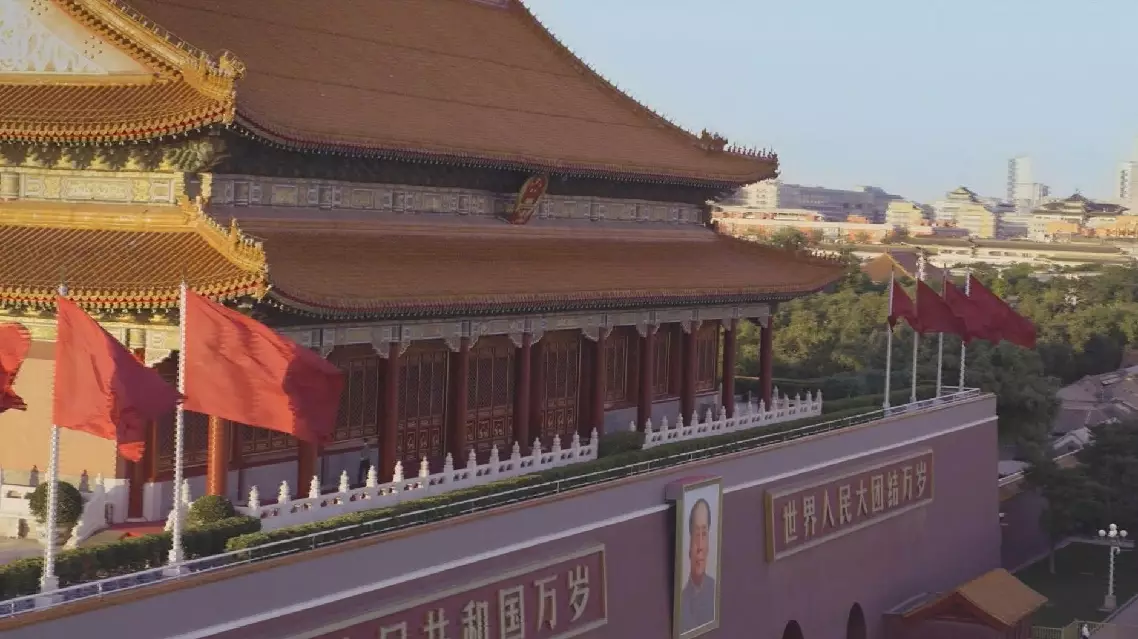
Global observers underscore China’s resilience, role in global growth ahead of CPC session

Global observers underscore China’s resilience, role in global growth ahead of CPC session