China's electric vehicle (EV) charging infrastructure has maintained rapid growth this year, with the total number of facilities reaching 18.06 million units by the end of September, up 54.5 percent from a year earlier, official data showed Monday.
Public EV charging facilities stood at about 4.48 million units, an increase of 40 percent year on year, according to the National Energy Administration.
Private charging facilities expanded at an even faster pace, jumping 60 percent to nearly 13.59 million units, the administration said.
The robust growth in charging infrastructure is in line with the steady expansion of China's new energy vehicle (NEV) market. From January to September, both production and sales of NEVs posted double-digit increases.
During the period, NEV production surged 35.2 percent year on year to about 11.24 million units, while sales jumped 34.9 percent to nearly 11.23 million units.
NEV sales accounted for 46.1 percent of the total sales of new vehicles during the period, according to the China Association of Automobile Manufacturers.
By the end of 2027, China aims to establish a nationwide network of 28 million charging facilities, with public charging capacity surpassing 300 million kilowatts -- sufficient to meet the demand of more than 80 million EVs, as outlined in a government plan on Oct 15.
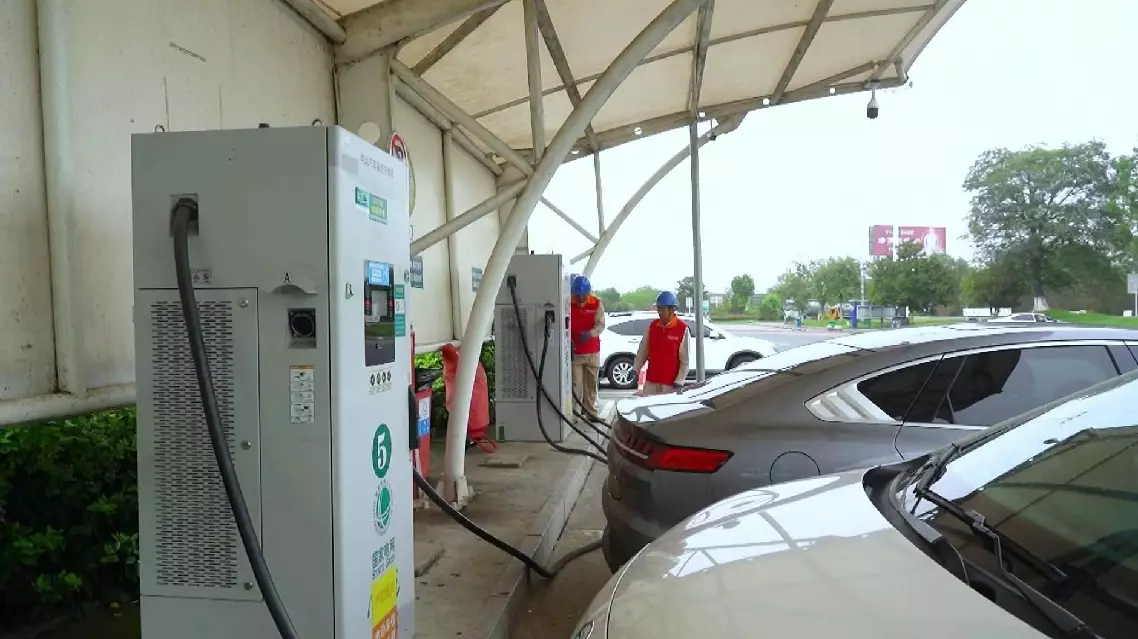
China's EV charging infrastructure expands 54.5 pct in single year: data
China's new-type energy storage industry has achieved notable results and established a complete industrial chain, a senior official with the Ministry of Industry and Information Technology said on Thursday.
In his opening speech at the 2026 World Energy Storage Conference held in Ningde City of east China's Fujian Province, Vice Minister of Industry and Information Technology Xiong Jijun highlighted the country's progress in the sector.
China's storage battery output exceeded 420 GWh in the first half of 2026, up about 110 percent year on year. The industry is advancing on multiple technological routes, with lithium batteries playing a leading role alongside sodium-ion and flow batteries, according to Xiong.
In terms of application scenarios, new-type energy storage is being increasingly deployed across a wide range of areas, including new energy power grids, industrial and commercial electricity consumption, data centers, and transportation, he noted.
Next, Xiong said, in developing the new energy storage industry, safety should be given top priority, and core competitiveness should be built with high-quality and safe products. In addition, enterprises will be urged to strengthen technological innovation.
"It is essential to closely follow the development trends of new-type storage energy storage technologies, increase investment in research and development, and promote the upgrading and development of materials, production processes and equipment. Efforts should be focused on making breakthroughs in key areas such as long-duration energy storage and intrinsic safety, accelerating the shift from scale expansion to innovation-driven development, and fostering healthy and orderly development of the industry," he said.
The 2026 World Energy Storage Conference, held from Wednesday to Friday, brought together participants to discuss cutting-edge technologies, prospects for the energy storage industry, and China's position in the global energy storage market.
Ningde City has hosted the conference three times previously, an event that has attracted representatives from governments, industries and academia in over 50 countries and regions.
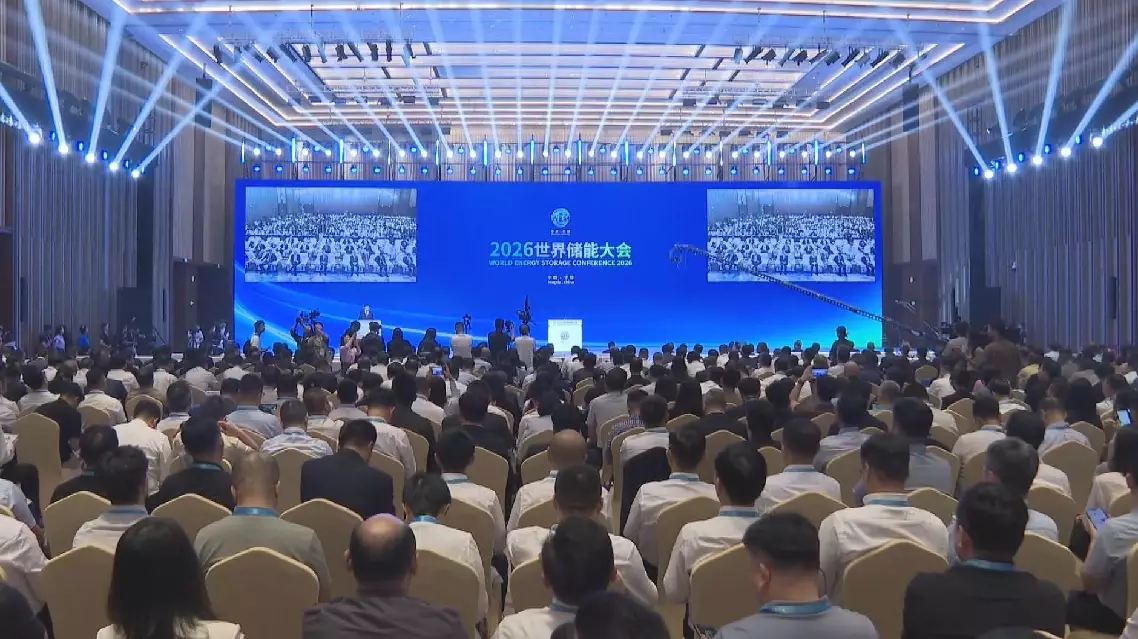
China has built complete industrial chain for energy storage: vice minister