NEW YORK (AP) — Props, mementos and photographs adorn Adam Driver ’s Brooklyn office. There’s an artwork Jim Jarmusch gave him for his 40th birthday, the doll from Leos Carax’s “Annette” and dozens of on-set photographs, including one of Driver and his son in the Millennium Falcon.
“A friend who saw all this said: ‘Oh, so you care,’” Driver says, chuckling.
Driver, 41, can come off as stoic but his passion for movies and, in particular, the filmmakers who make them, runs deep. In a relatively short amount of time, he’s worked with a litany of one-name directors: Scorsese. Coppola. Spike. Mann. Spielberg. Jarmusch. Soderbergh.
In a movie age where franchises, not filmmakers, have ruled the industry, Driver has stayed remarkably loyal to directors compelled to make personal films. He gamely followed Francis Ford Coppola into “Megalopolis” and helped Michael Mann realize his decades-long passion project, “Ferrari.”
This fall, he co-stars in his third Jarmusch movie, the Venice prize-winner “Father Mother Sister Brother.” All Jarmusch needed to do was ask, Driver says, and he was in, no matter the role.
While “Father Mother Sister Brother” was playing at the New York Film Festival, Driver met a reporter shortly before leaving to Budapest to shoot “Alone at Dawn” with Ron Howard. It’s a meaningful film for Driver, a former Marine. In it, he plays John Chapman, an Air Force combat controller who was killed fighting in Afghanistan in 2002.
“It deals with character and story and — just tying it with ‘Father Mother Sister Brother’ — that’s why I like these filmmakers so much,” Driver says. “They’re seemingly few and far between and are making films that feel like they were directed by a person.”
But Driver’s faith in filmmakers isn’t always shared by the powers that be in the industry. In a lengthy conversation that often touched on Driver’s concerns about current Hollywood trends, he revealed that he and Steven Soderbergh spent two years developing a “Star Wars” film that was ultimately nixed by the Walt Disney Co.
“I always was interested in doing another ‘Star Wars,’” says Driver, who starred as Kylo Ren in the trilogy kicked off by “The Force Awakens.” “I had been talking about doing another one since 2021. Kathleen (Kennedy) had reached out. I always said: With a great director and a great story, I’d be there in a second. I loved that character and loved playing him.”
Driver says he took a concept to Soderbergh for a film that would take place after 2019’s “The Rise of Skywalker.” That movie culminated in Ren’s redemption and apparent death. Driver had undertaken the trilogy with an arc in mind for Ren that inverted the journey of Darth Vader. As the trilogy evolved, it didn’t play out that way. Driver felt there was unfinished business for Kylo Ren, or as he was known before turning to the Dark Side, Ben Solo.
Soderbergh and Rebecca Blunt outlined a story that the group then pitched to Kennedy, Lucasfilm vice president Cary Beck and Lucasfilm chief creative officer Dave Filoni. They were interested, so the filmmakers then pulled in Scott Z. Burns to write a script. Driver calls the result “one of the coolest (expletive) scripts I had ever been a part of.”
“We presented the script to Lucasfilm. They loved the idea. They totally understood our angle and why we were doing it,” Driver says. “We took it to Bob Iger and Alan Bergman and they said no. They didn’t see how Ben Solo was alive. And that was that.”
“It was called ‘The Hunt for Ben Solo’ and it was really cool,” adds Driver. “But it is no more, so I can finally talk about it.”
Soderbergh, in a statement, said: “I really enjoyed making the movie in my head. I’m just sorry the fans won’t get to see it.”
Representatives for Disney and Lucasfilm declined comment.
It's been a period of transition for the feature-film operations of “Star Wars.” Kennedy, the longtime Lucasfilm president, is expected to step down by the end of the year. After a feature-film lull, numerous projects are in various stages of development or production including Jon Favreau's “The Mandalorian and Grogu,” Shawn Levy's “Starfighter” with Ryan Gosling, a film directed by Sharmeen Obaid-Chinoy featuring Daisy Ridley returning as Rey, a James Mangold-directed movie and a new saga helmed by Simon Kinberg.
For Driver, who starred in Soderbergh’s 2017 heist comedy “Logan Lucky,” the decision was mystifying. Who wouldn’t want to see a Soderbergh-directed “Star Wars” film?
“We wanted to be judicial about how to spend money and be economical with it, and do it for less than most but in the same spirit of what those movies are, which is handmade and character-driven,” Driver says. “‘Empire Strikes Back’ being, in my opinion, the standard of what those movies were. But he is, to me, one of my favorite directors of all time. He lives his code, lives his ethics, doesn’t compromise.”
Driver is reportedly attached to a pair of films that would reunite him with filmmakers he feels similarly about: Carax (“Annette”) and Mann. Mann's “Heat 2” recently moved from Warner Bros. to Amazon MGM’s United Artists after Warner Bros. balked at the film's cost.
“Watching filmmakers not get the money they need is frustrating,” Driver says. “I don’t think I’m a value add. But I’m always down for the cause because I love those filmmakers and their films. I’d rather do a Michael Mann anything.”
“Ferrari,” which starred Driver as Enzo Ferrari, was Mann’s first feature in eight years. It cost $95 million to make, but struggled at the box office, grossing $43.6 million worldwide. Coppola's “Megalopolis” was even pricier, at $120 million, but Coppola paid for it himself. To Driver, Coppola’s audacious sense of experimentation is what moviemaking is all about, and what’s missing from most filmmakers half Coppola’s age.
“The gesture of paying that much money for a film and him having the trust that an audience would go with him — or that he didn’t care, that this is how he wanted to do it — that to me is moving,” Driver says. “Maybe people don’t like them or they’re not ready for them. Maybe it’s boring to some, but it wasn’t boring making it.”
Regardless of its reception, “Megalopolis” has had a long-lasting effect on Driver.
“It felt like, in a way, you couldn’t go wrong with character because there was nothing that you could do that was a mistake,” he says. “That feeling, I’m like: How do I apply this to everything else? How do I take that feeling of what it felt like, that I can go anywhere and it’s not wrong, and apply it to something that’s a Jim Jarmusch movie.”
“Father Mother Sister Brother,” which Mubi will release Dec. 24 in theaters, is a triptych about adult children and their parents. The film's first chapter features Driver and Mayim Bialik as siblings visiting their hermetic father (Tom Waits). It's Driver's third film with Jarmusch, following “Patterson” (2016) and “The Dead Don't Die” (2019).
Driver is notoriously against watching the films he’s in, so he hasn’t watched Jarmusch’s film. But Driver has made some exceptions lately. He watched “Ferrari.” He watched 2023's “65.” He watched “Megalopolis” numerous times.
“I was trying to get over it, and I can’t,” Driver says, laughing. “We just did ‘Paper Tiger,’ this James Gray film, and he seems to be close to having a cut of it. And I just don’t want to watch it.
“I don’t want to look at my face,” he continues. “I don’t want to live with the regret of making a mistake.”
It's easy to chalk this up to the kind of thing actors — a strange breed — do. But it hints at what makes Driver a singularly intense, unrestrained screen presence (even on “SNL” ) and a staunch advocate for boundary-pushing filmmakers. Think too much about the audience, and you can lose sight of the things — character, filmmakers with vision — that drive movies.
“It makes you conscious of what an audience is watching and I want to retreat more and more into what’s going on internally for someone,” says Driver. “More than ever, I don’t want to concern myself with what’s happening externally. I don’t know if I even understand what character is. People behave outside of character all the time.
“I always like thinking that you can leave at any moment, that no one is holding characters to be in this room, only a script.”
This story has been updated to correct the title of an upcoming Ron Howard movie.
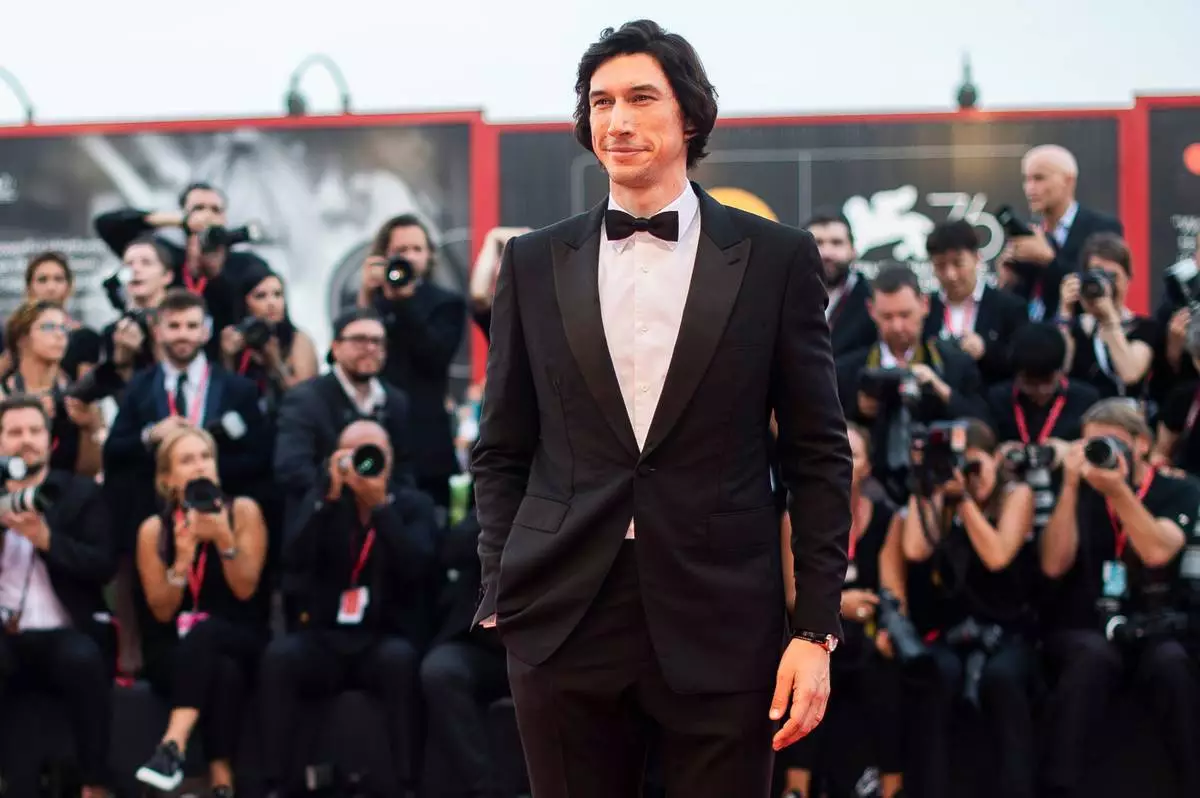
FILE - Actor Adam Driver appears at the premiere of the film "Marriage Story" at the 76th edition of the Venice Film Festival on Aug. 29, 2019. (Photo by Arthur Mola/Invision/AP, File)
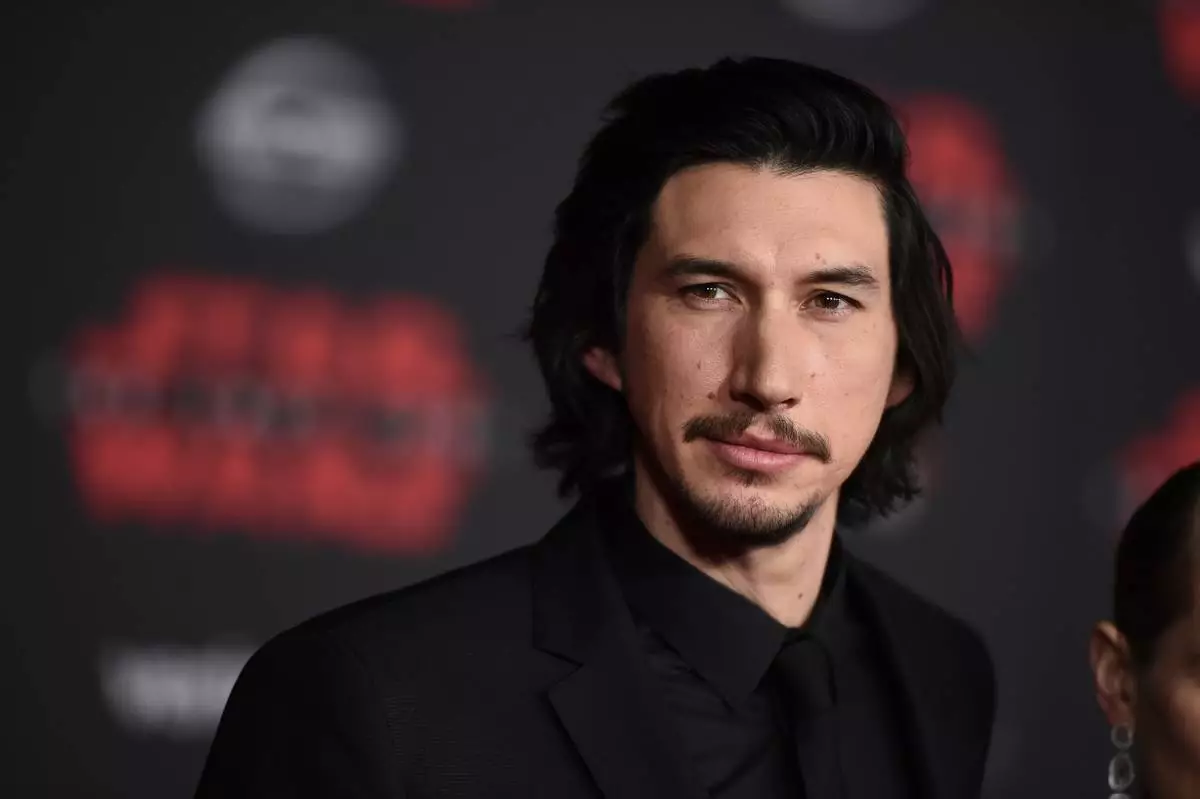
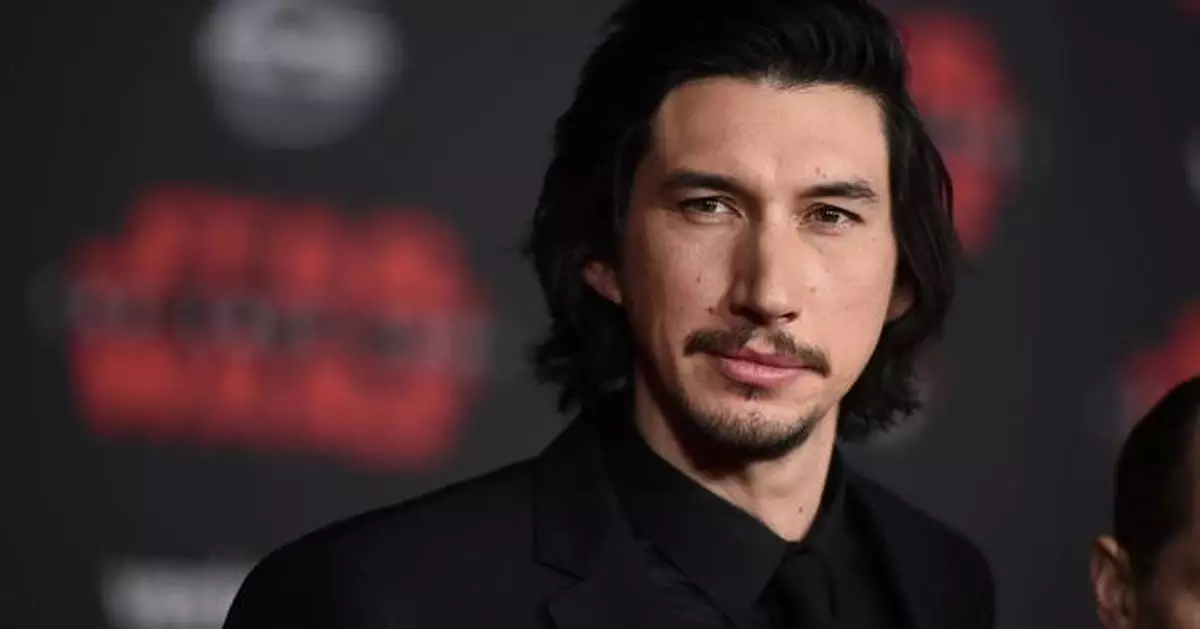
FILE - Adam Driver arrives at the Los Angeles premiere of "Star Wars: The Last Jedi" on Dec. 9, 2017. (Photo by Jordan Strauss/Invision/AP, File)