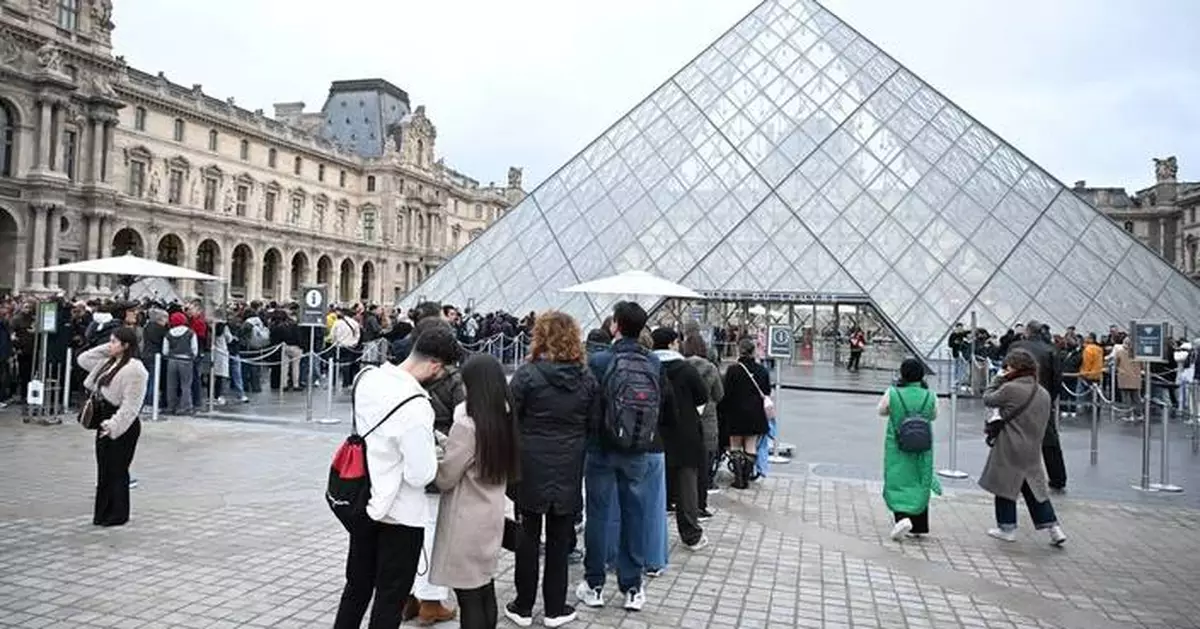
PARIS (AP) — The glittering sapphires, emeralds, and diamonds that once adorned France's royals could well be gone forever, experts say after a brazen, four-minute heist in broad daylight left the nation stunned and the government struggling to explain a new debacle at the Louvre.
Each stolen piece — an emerald necklace and earrings, two crowns, two brooches, a sapphire necklace and a single earring — represents the pinnacle of 19th century “haute joaillerie,” or fine jewelry. For the royals, they were more than decoration. The pieces were political statements of France's wealth, power and cultural import. They are so significant that they were among treasures saved from the government's 1887 auction of most royal jewels.
The Louvre reopened Wednesday for the first time since the heist Sunday morning, although the Apollo Gallery where the theft occurred remained closed.
Laure Beccuau, the Paris prosecutor whose office is leading the investigation, said Tuesday that in monetary terms, the stolen jewelry is worth an estimated $102 million (88 million euros) — a valuation that doesn’t include historical worth. About 100 investigators are involved in the police hunt for the suspects and the gems, she said.
The theft of the crown jewels left the French government scrambling — again — to explain the latest embarrassment at the Louvre, which is plagued by overcrowding and outdated facilities. Activists in 2024 threw a can of soup at the Mona Lisa. And in June, the museum was brought to a halt by its own striking staff, who complained about mass tourism. President Emmanuel Macron has announced that the Mona Lisa, stolen by a former museum worker in 1911 and recovered two years later, will get its own room under a major renovation.
Now the sparkling jewels, artifacts of a French culture of long ago, are likely being secretly dismantled and sold off in a rush as individual pieces that may or may not be identifiable as part of the French crown jewels, experts say.
“It’s extremely unlikely these jewels will ever be retrieved and seen again," said Tobias Kormind, managing director of 77 Diamonds, a major European diamond jeweler, said in a statement. “If these gems are broken up and sold off, they will, in effect, vanish from history and be lost to the world forever."
At once intimate and public, crown jewels are kept secured from the Tower of London to Tokyo's Imperial Palace as visual symbols of national identities.
The four suspected robbers split into two pairs, with two people aboard a truck equipped with a cherry picker they used to climb up to the Galerie d’Apollon and two others piloting motorbikes used in the gang's getaway, authorities said.
Taken, officials said, were eight pieces, part of a collection whose origin as crown jewels date back to the 16th century when King Francis I decreed that they belonged to the state. The Paris prosecutor’s office said that two men with bright yellow jackets broke into the gallery at 9:34 a.m. — half an hour past opening time — and left the room at 9:38 a.m. before fleeing on two motorbikes.
The missing pieces include two crowns, or diadems. One, given by Emperor Napoleon III to the Empress Eugenie in 1853 to celebrate their wedding, holds more than 200 pearls and nearly 2,000 diamonds. The second is a starry sapphire-and-diamond headpiece — and also a necklace and single earring— worn by, among others, Queen Marie-Amelie, French authorities said.
Also stolen: a necklace of dozens of emeralds and more than 1,000 diamonds that was a wedding gift from Napoleon Bonaparte to his second wife, Marie-Louise of Austria, in 1810. The matching earrings also were stolen. The thieves also made off with a reliquary brooch and a large bodice bow worn by Empress Eugenie — both pieces diamond-encrusted, French officials said.
The robbers dropped or abandoned a hefty ninth piece, which was damaged: a crown adorned with gold eagles, 1,354 diamonds and 56 emeralds, worn by Empress Eugenie.
Left untouched were other items in the crown jewel collection, which before the heist included 23 jewels, according to the Louvre. Remaining, for example, is the plum-sized Regent, a white diamond said to be the largest of its kind in Europe.
Beyond the monetary value of the stolen jewels, the emotional loss is keenly felt. Many have described France’s failure to secure its most precious items as a wounding blow to national pride.
“These are family souvenirs that have been taken from the French,” conservative lawmaker Maxime Michelet said Tuesday in Parliament, quizzing the government about security at the Louvre and other cultural sites.
“Empress Eugenie’s crown — stolen, then dropped and found broken in the gutter, has become the symbol of the decline of a nation that used to be so admired," Michelet said. “It is shameful for our country, incapable of guaranteeing the security of the world’s largest museum."
The theft was not the first Louvre heist in recent years. But it stood out for its forethought, speed and almost cinematic quality as one of the highest-profile museum thefts in living memory. In fact, it echoed the fictional theft from the Louvre of a royal crown by a “gentleman thief” in the French television show “Lupin” — which in turn is based on a 1905 series of stories.
The romance of such a theft is mostly a creation of showbiz, according to one theft investigator. Christopher A. Marinello, a lawyer with Art Recovery International, said he's never seen a “theft-to-order” by some shadowy secret collector.
“These criminals are just looking to steal whatever they can,” Marinello said. “They chose this room because it was close to a window. They chose these jewels because they figured that they could break them apart, take out the settings, take out the diamonds and the sapphires and the emeralds" overseas to "a dodgy dealer that’s willing to recut them and no one would ever know what they did.”
What happens now is a race against time both for the French authorities hunting the thieves and for the perpetrators themselves, who will have a hard time finding buyers for the pieces in all their royal glory.
“Nobody will touch these objects. They are too famous. It’s too hot. If you get caught you will end up in prison,” said Dutch art sleuth Arthur Brand. “You cannot sell them, you cannot leave them to your children.”
Kellman reported from London. Associated Press writer Mike Corder contributed from The Hague, Netherlands.
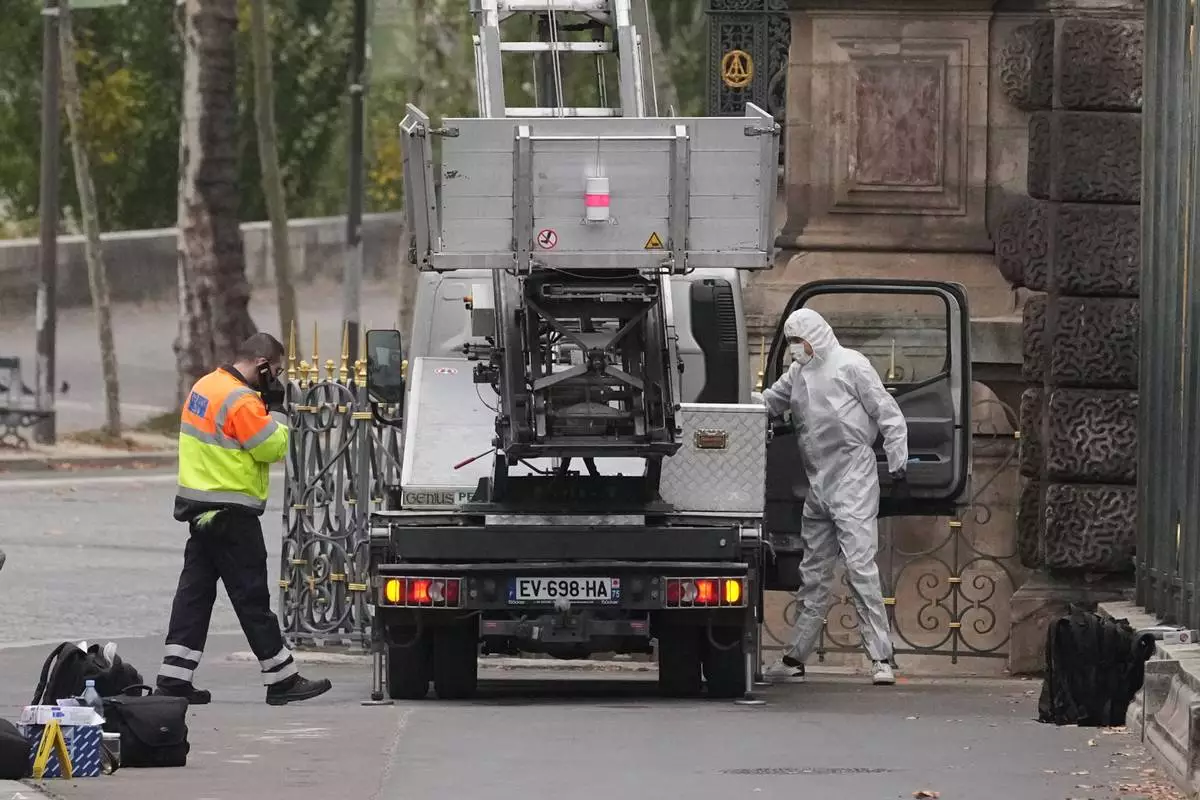
Police officers look for clues by a basket lift used by thieves Sunday, Oct. 19, 2025 at the Louvre museum in Paris. (AP Photo/Thibault Camus)
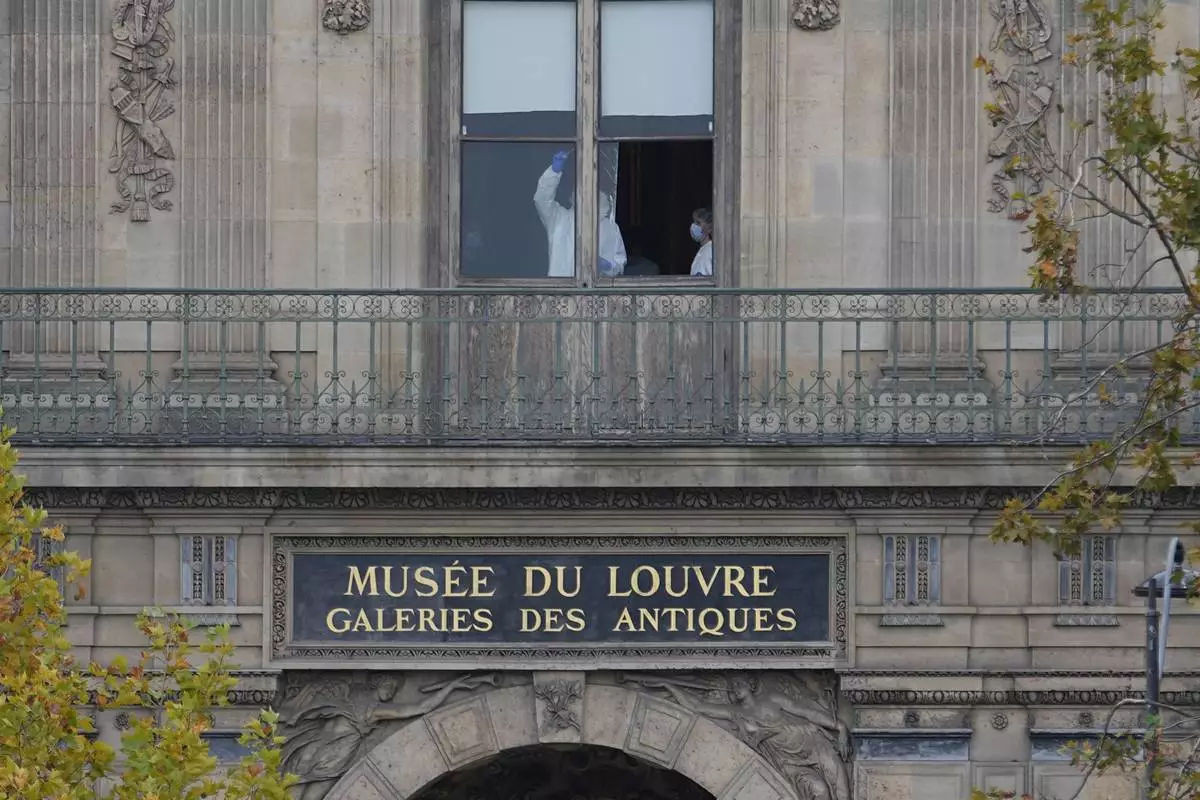
Police officers work inside the Louvre museum, Sunday, Oct. 19, 2025 in Paris. (AP Photo/Thibault Camus)
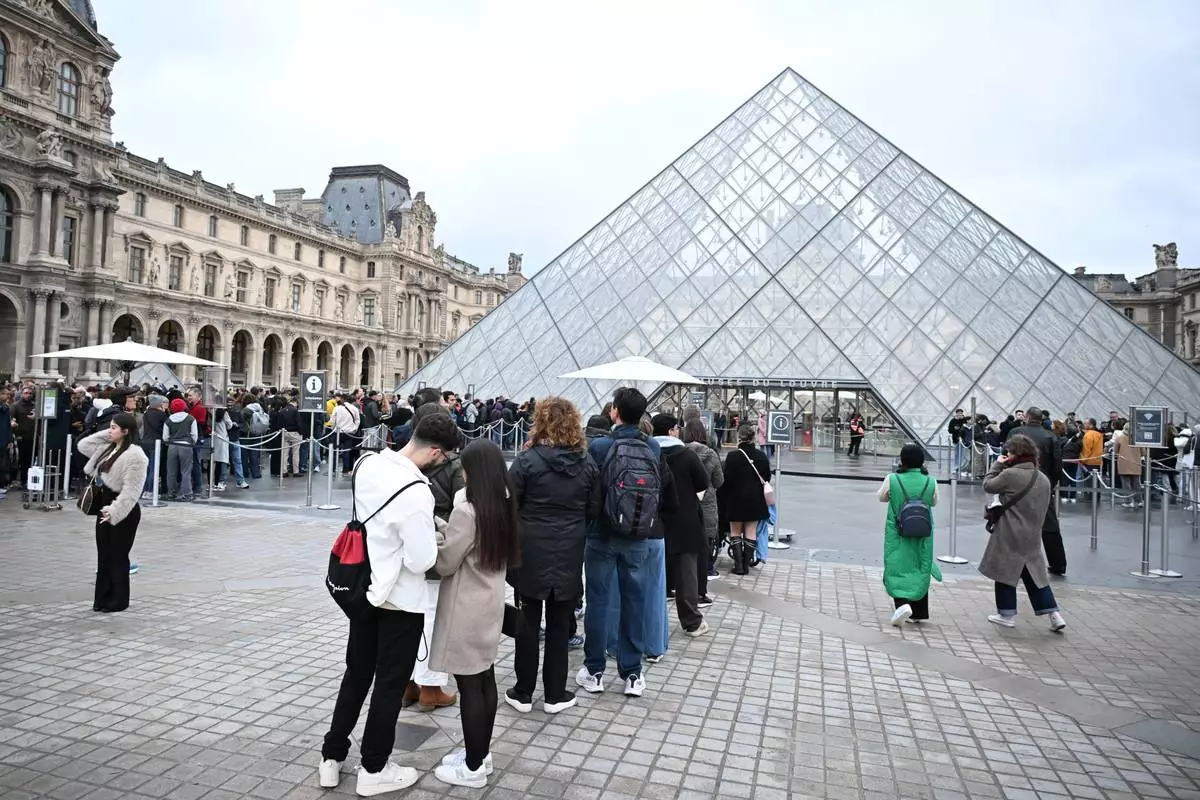
People queue outside the Louvre museum in Paris on Monday, Oct. 20, 2025, although it remains closed for the day after Sunday's jewels robbery. (AP Photo/Emma Da Silva)