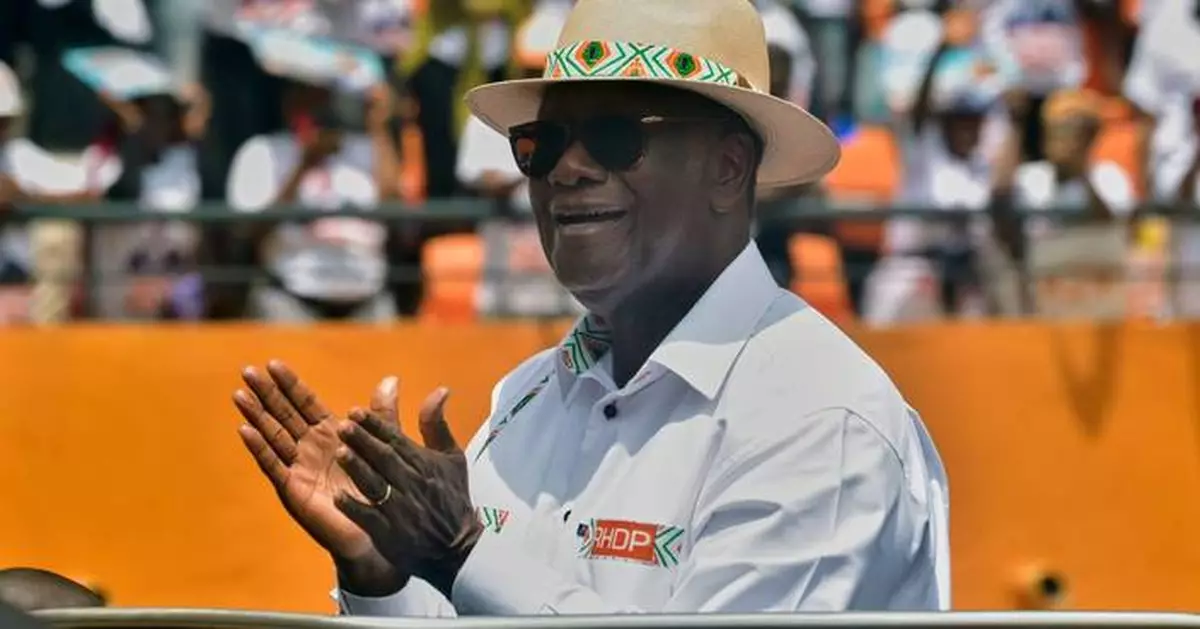
ABIDJAN, Ivory Coast (AP) — Placide Konan has been using his slam poetry shows to speak out against Ivory Coast President Alassane Ouattara’s bid for a fourth term in Saturday's election.
The 33-year-old in the capital, Abidjan, told The Associated Press he is frustrated by hardship in the country. Despite being one of West Africa's economic powerhouses and the world’s largest cocoa producer, it has growing inequality and a poverty rate of 37.5%. More than three-quarters of the population is under 35.
“People can no longer make ends meet, Konan said. “You have to be very lucky, or a bit of a magician, to be able to live comfortably,” he said of the vibrant port capital, which still basks in its role as host of the 2024 Africa Cup of Nations.
Analysts say the 83-year-old Ouattara is likely to win and extend his rule that began in 2011. Key opposition leaders have been disqualified, including former Credit Suisse chief executive Tidjane Thiam. A local court ruled that Thiam had French nationality, which Ivorian law does not allow for presidential candidates. He rejected the decision as foul play and gave up his French nationality in March.
Instead, Ouattara will face a weakened challenge from four candidates including Jean-Louis Billon, a former commerce minister, and Simone Gbagbo, a former first lady.
The election is the latest in a pattern of African long-term presidents on a collision course with mostly young citizens.
About 8.7 million people are registered to vote in the election amid fears of the violence that has been common around past ones.
The ban on key opposition leaders has prompted protests that authorities have tried to block. Hundreds of protesters have been arrested, with some sentenced to prison. The government has restricted public gatherings and deployed more than 40,000 security personnel. At least three people have been killed.
Critics say the government has exploited legal provisions to weaken the opposition, and they allege unfairness in the final list of candidates. The president has denied targeting the opposition.
The recent events "undermine stability at a time when (Ivory Coast), like other countries in West Africa, faces big challenges,” said Paul Melly, a consulting fellow with the Africa program at Chatham House.
Ouattara came to power following a political crisis in 2010 and 2011 after Laurent Gbagbo refused to concede defeat. About 3,000 people were killed in the unrest.
Ignoring calls to step down and brushing aside concerns over his age, Ouattara has said he seeks a fourth term due to the country's “unprecedented security, economic and monetary” challenges.
In a pitch to young people, Ouattara told a rally last week: “I have always been committed to offering the best to our youth so that you can start businesses, work, learn and be independent.”
He won a disputed third term in 2020 after he claimed that a 2016 constitutional change reset his years in office to zero. Nearly 100 people died after Ouattara’s victory, according to rights groups.
“Ouattara has almost exclusive control over the state apparatus,” said Séverin Yao Kouamé, a research professor at the country's University of Bouaké. “He has been able to build power relationships with all those who opposed him, from which he emerged victorious."
Ouattara’s supporters point to a relatively strong economy, a flurry of infrastructure development across the country and investments in the public sector on the back of increasing government earnings and foreign investment.
The country saw 6% economic growth in 2024, according to the World Bank.
“If you left Côte d’Ivoire to live abroad for a few years and came back today, you would not recognize your neighborhood,” said Assita Karamoko, a hairdresser in Abidjan who supports Ouattara, referring to the country by its French name.
A commuter train line in Abidjan is being expanded. In rural areas, more roads have been paved. What was once considered an Abidjan-centric economy is expanding.
“But it is still very hard to translate all of these into enough more jobs for young people. In terms of youth employment and business opportunity, there is still a long way to go,” Melly with Chatham House said.
Security is another challenge. Bordered to the north by conflict-hit Mali and Burkina Faso, Ivory Coast is under pressure to stop a push by armed groups into coastal West Africa. The two junta-led countries have severed ties with the regional bloc, leading to a breakdown in security cooperation.
Analysts regard the Ivorian military as one of the region’s most sophisticated, but as neighbors lose more ground to armed groups, Ivory Coast will have more to deal with.
“The security conditions are fragile and exposed in the north of the country," Melly said. "That is not the fault of the Ivorian government, (but) that is the reality of the regional situation.”
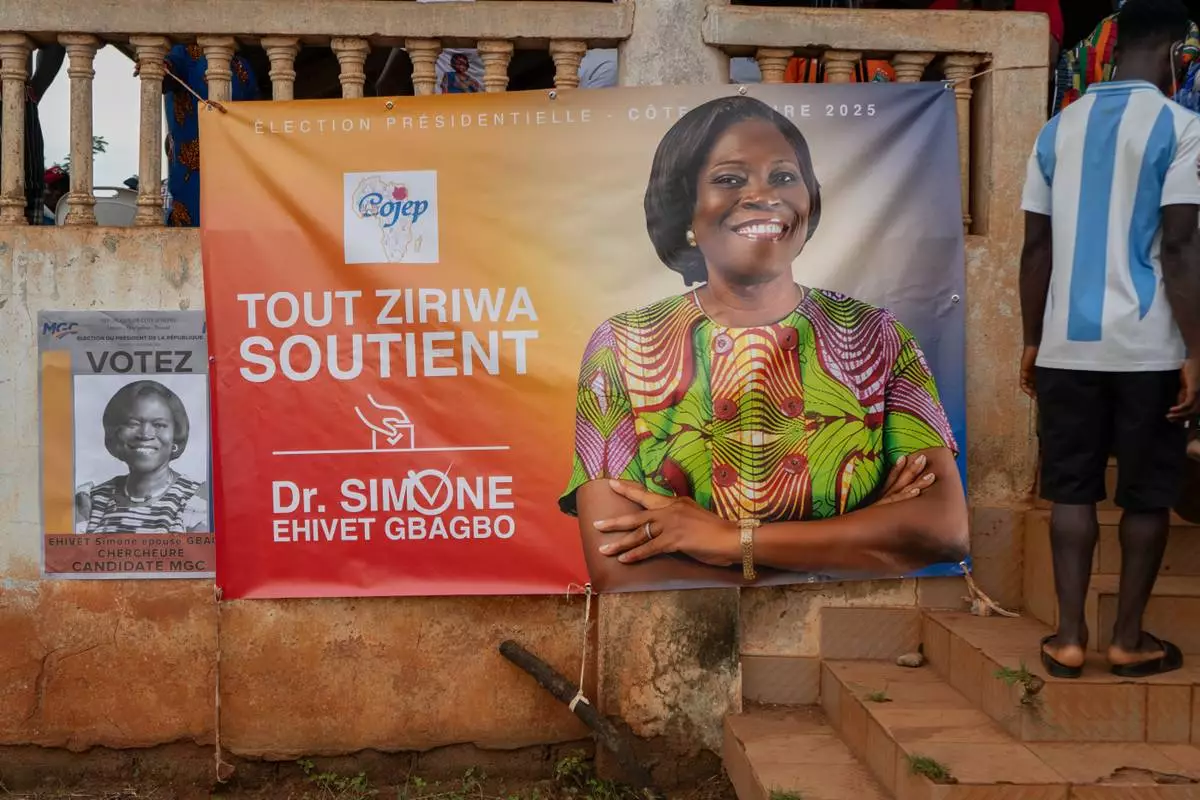
A campaign banner of presidential candidate Simone Ehivet Gbagbo is displayed on a wall during a campaign rally in Guiberoua, Ivory Coast, Tuesday, Oct 14, 2025 (AP Photo/ Marine Jeannin)
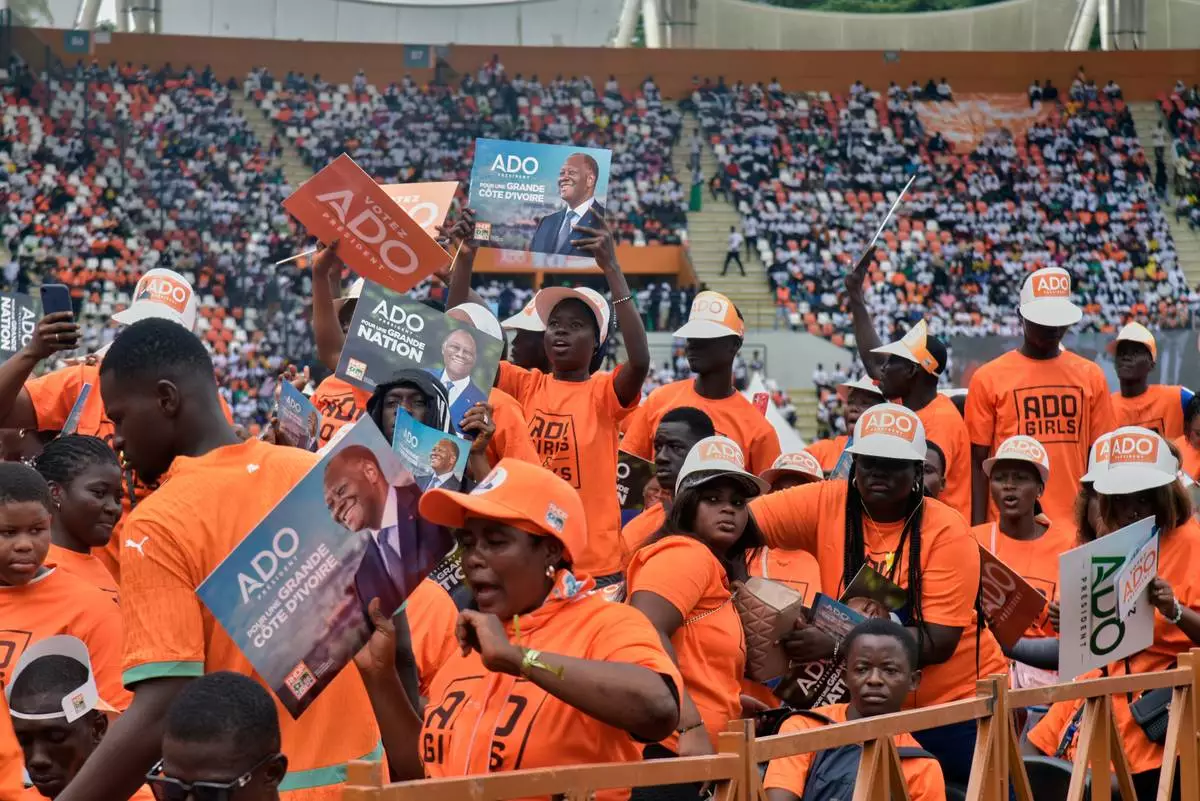
Supporters of President Alassane Ouattara hold posters during a campaign rally at the Félix Houphouët-Boigny Stadium in Abidjan, Ivory Coast, Saturday, Oct. 18, 2025. (AP Photo/Diomande Ble Blonde)
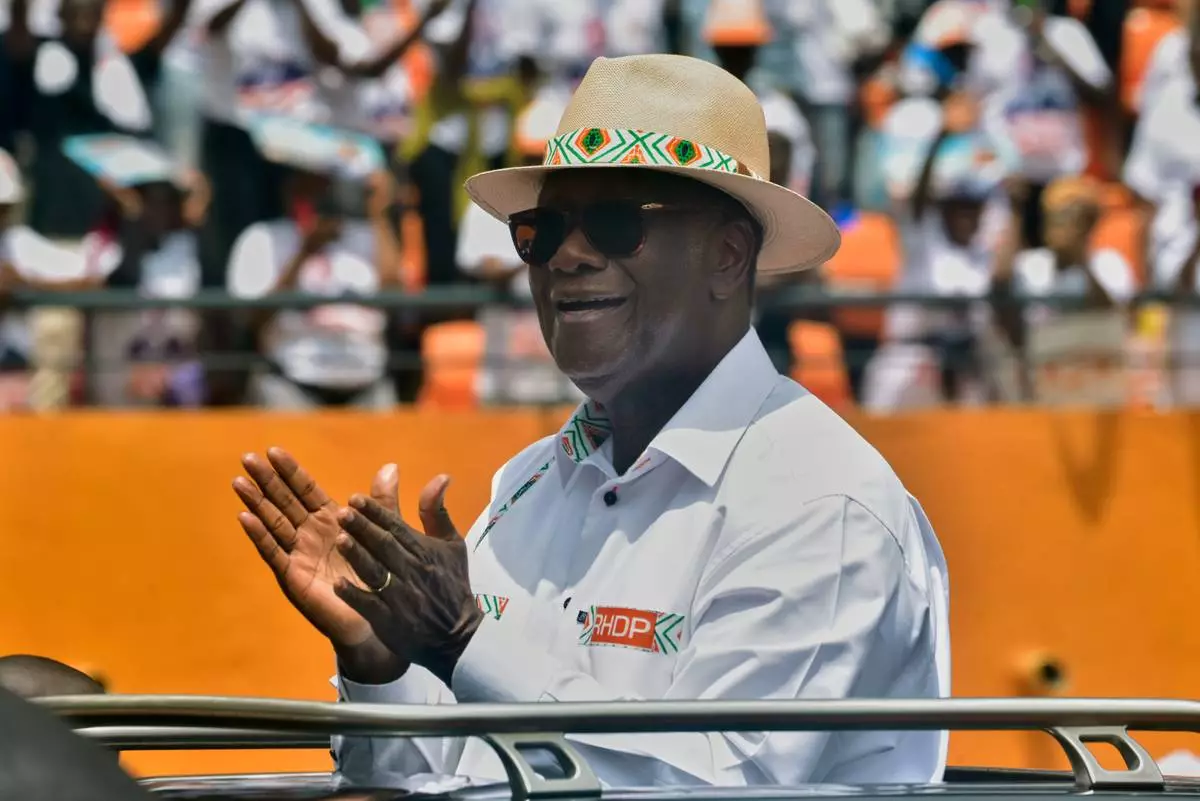
President Alassane Ouattara arrives at a campaign rally at the Félix Houphouët-Boigny Stadium in Abidjan, Ivory Coast, Saturday, Oct. 18, 2025. (AP Photo/Diomande Ble Blonde)
NEW YORK (AP) — Kamala Harris “wrote off rural America" during the 2024 presidential campaign and failed to attack Donald Trump with sufficient “negative firepower," according to a long-awaited post-election autopsy released on Thursday by the Democratic National Committee.
The committee's chair, Ken Martin, shared the 192-page report only after facing intense internal pressure from frustrated Democratic operatives concerned with his leadership. Martin had originally promised to release the autopsy, only to keep it under wraps for months because he was concerned it would be a distraction ahead of the midterms as Democrats mobilize to take back control of Congress.
On Tuesday, Martin apologized for his handling of the situation and conceded that the report was withheld because it “was not ready for primetime."
Although the autopsy criticizes Democrats' focus on “identity politics,” it sidesteps some of the most controversial elements of the 2024 campaign. The report does not address former President Joe Biden’s decision to seek reelection, the rushed selection of Harris to replace him on the ticket or the party's acrimonious divide over the war in Gaza.
“I am not proud of this product; it does not meet my standards, and it won’t meet your standards,” Martin wrote in an essay on Substack on Thursday. “I don’t endorse what’s in this report, or what’s left out of it. I could not in good faith put the DNC’s stamp of approval on it. But transparency is paramount.”
A spokesperson for Harris did not immediately respond to a request for comment.
The initial reaction from Democratic operatives was a mix of bafflement and anger over Martin's handling of the situation.
“Why not say this in 2024, or bring in more people to finish it, instead of turning this into the dumbest media cycle for 7-8 months?” Democratic strategist Steve Schale wrote on social media.
The postelection report, which was authored by Democratic consultant Paul Rivera, calls for “a renewed focus on the voters of Middle America and the South, who have come to believe they are not included in the Democratic vision of a stronger and more dynamic America for everyone.”
“Millions of Americans are suffering from poor access to healthcare, manufacturing and job losses, and a failing infrastructure, yet continue to be persuaded to vote against their best interests because they do not see themselves reflected in the America of the Democratic Party,” the report says.
The autopsy points to a reduction in support and training for Democratic state parties, voter registration shifts and “a persistent inability or unwillingness to listen to all voters.”
Thursday's release comes as Martin confronts a crisis of confidence among party officials who are increasingly concerned about the health of their political machine barely a year into his term. Some Democratic operatives have had informal discussions about recruiting a new chair, even though most believe that Martin’s job wasn't in serious jeopardy ahead of the midterm elections.
The report found that Harris and her allies failed to focus enough on Trump's negatives, especially his felony convictions. This was part of a broader criticism that Democrats' messaging is too focused on reason and winning arguments, “even in cycles when the electorate is defined by rage.”
“There was a decision in the 2024 Democratic leadership not to engage in negative advertising at the scale required,” the report states. “The Trump campaign and supportive Super PACs went full throttle against Vice President Harris, but there was not sufficient or similar negative firepower directed at Trump by Democrats.”
The report continues: “It was essential to prosecute a more effective case as to why Trump should have been disqualified from ever again taking office. The grounds were there, but the messaging did not make the case.”
Trump's attack on Harris' transgender policies were cited as a key contrast.
Specifically, the report suggested the Democratic nominee was “boxed” in by the Trump campaign's “very effective” ad that highlighted Harris' previous statement of support for taxpayer-funded gender-affirming surgeries for prison inmates.
Democratic pollsters believed that “if the Vice President would not change her position – and she did not – then there was nothing which would have worked as a response," the report said.
The report criticized Harris' outreach to key segments of America while condemning the party's focus on “identity politics.”
“Harris wrote off rural America, assuming urban/suburban margins would compensate. The math doesn’t work,” the report says. “You can’t lose rural areas by overwhelming margins and make it up elsewhere when rural voters are a significant share of the electorate. If Democrats are to reclaim leadership in the Heartland or the South, candidates must perform well in rural turf. Show up, listen, and then do it again.”
The report also references Democrats' underperformance with male voters of color.
“Male voters require direct engagement. The gender gap can be narrowed. Deploy male messengers, address economic concerns, and don’t assume identity politics will hold male voters of color,” it says.
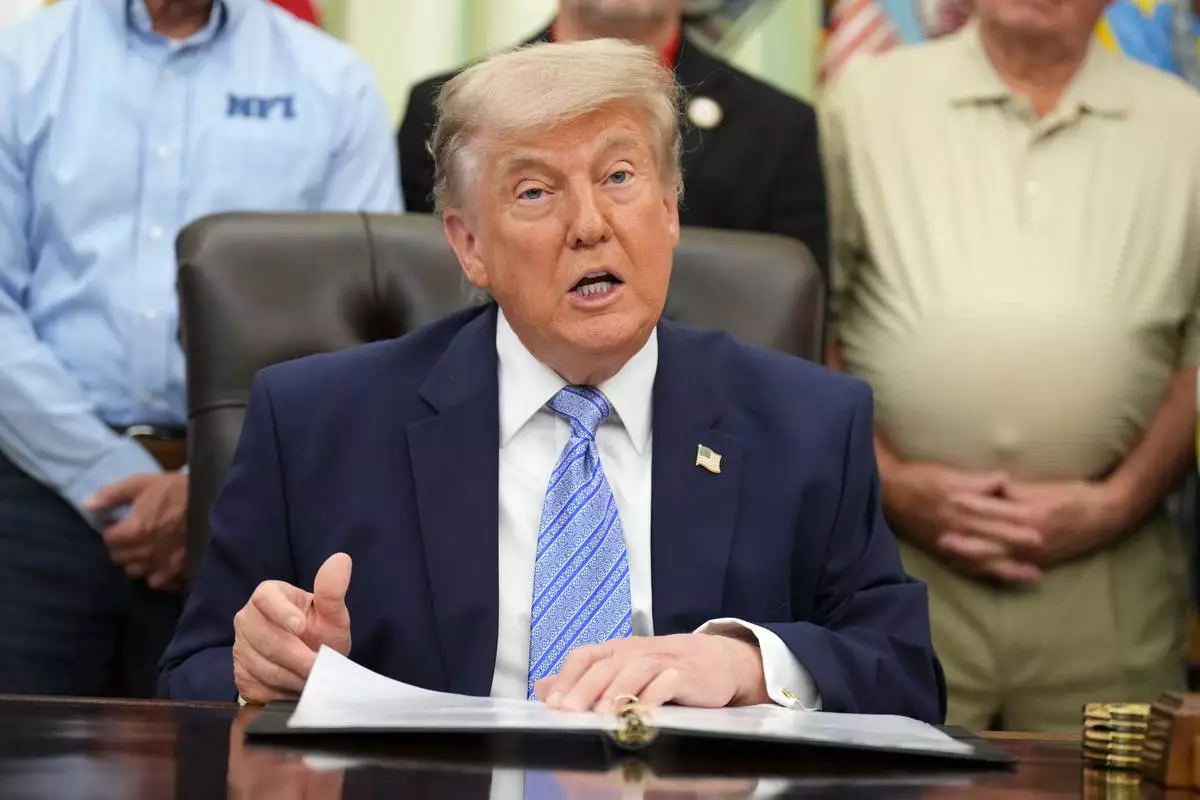
President Donald Trump speaks during an event about loosening a federal refrigerant rule, in the Oval Office at the White House, Thursday, May 21, 2026, in Washington. (AP Photo/Jacquelyn Martin)

Former Vice President Kamala Harris speaks during a fireside chat on Thursday, May 7, 2026, in Las Vegas. (AP Photo/Ty ONeil)
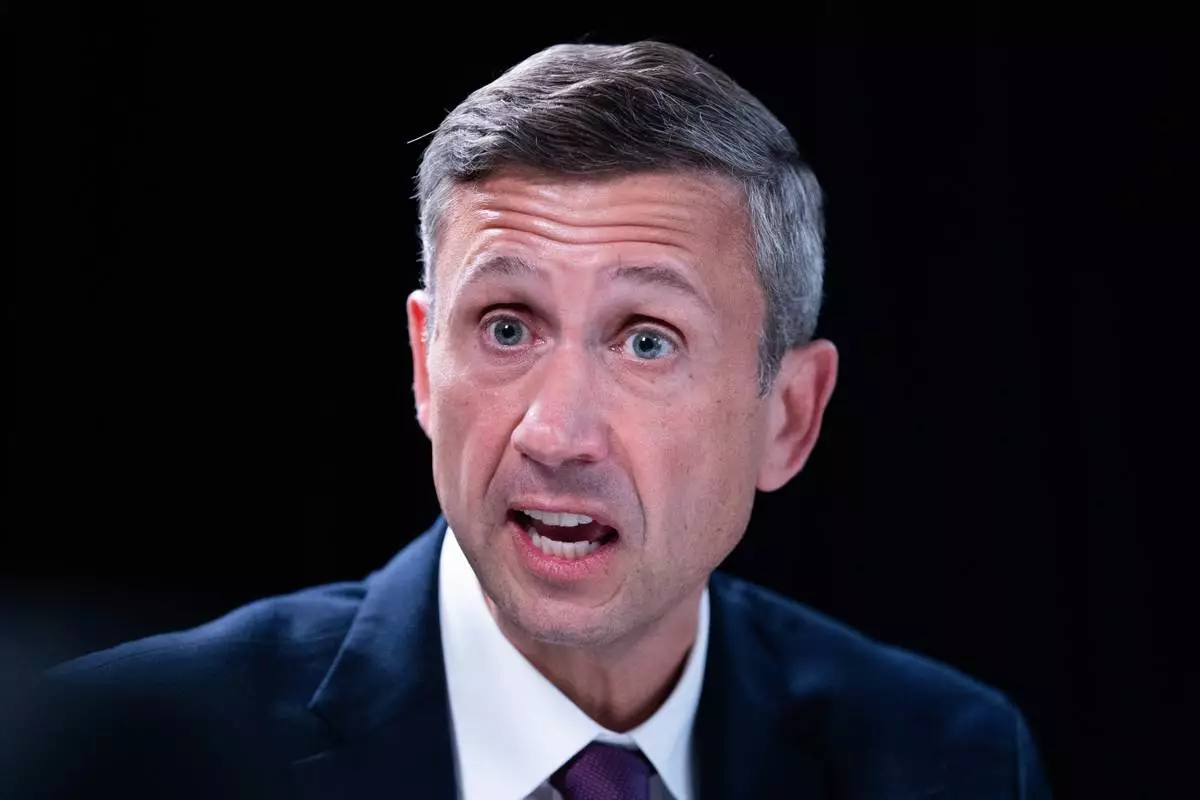
FILE - Democratic National Committee chair Ken Martin speaks during an interview with The Associated Press at DNC headquarters, Jan. 12, 2026, in Washington. (AP Photo/Allison Robbert, File)