Skip to Content Facebook Feature Image

Largest Milestone Payment Secured: Biokin, a Rising Chinese Pharmaceutical MNC

Business

Largest Milestone Payment Secured: Biokin, a Rising Chinese Pharmaceutical MNC
Business

Business

Largest Milestone Payment Secured: Biokin, a Rising Chinese Pharmaceutical MNC

2025-10-22 23:39 Last Updated At:23:55

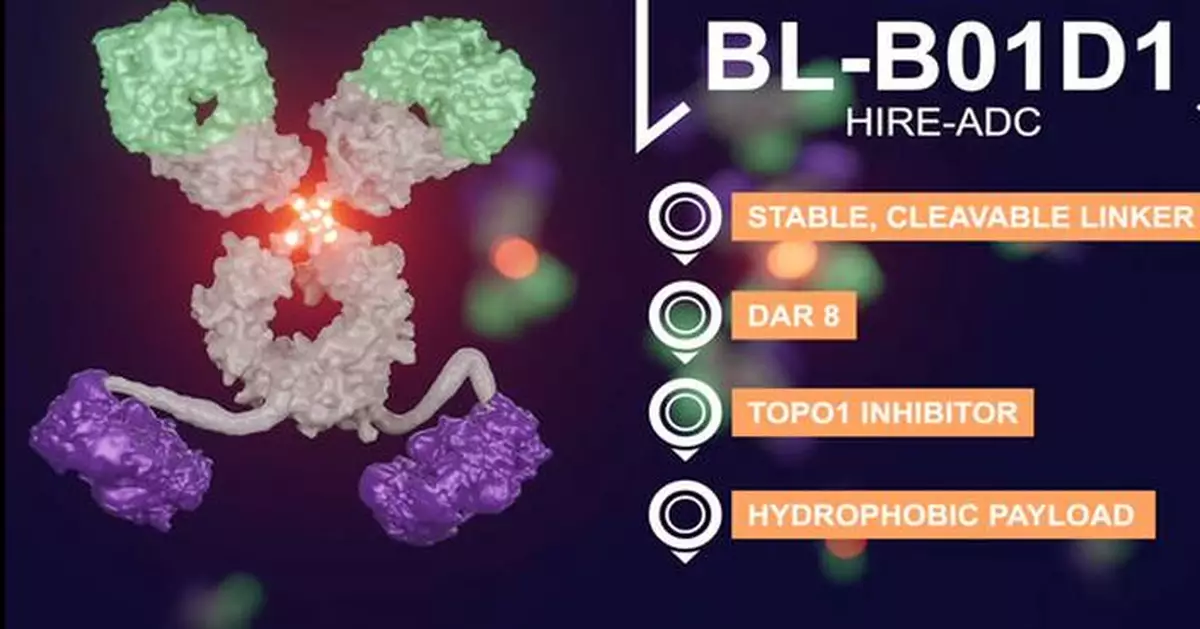
BEIJING, Oct. 22, 2025 /PRNewswire/ -- In October 2025, a partnership between Biokin—a rising star in China's innovative pharmaceutical sector—and global pharmaceutical leader BMS triggered a $250 million milestone payment. This is believed to be the largest antibody-drug conjugate (ADC) milestone payment among hundreds of out-licensing deals involving Chinese innovative drugs. Notably, the overall transaction had previously set a record for the total value of a single-drug asset license in China.

In recent years, China's dynamic pharmaceutical ecosystem has rapidly emerged as one of the world's leading sources of novel drug molecules. Such collaborations, however, often come with uncertainties in both China and the U.S. Following the $800 million upfront payment received in early 2024, Biokin's partnership with BMS has advanced smoothly once again. This progress has prompted skeptics to recognize iza-bren's blockbuster potential.

The momentum behind the collaboration stems from the continued validation of iza-bren's efficacy. At the 2025 World Congress on Lung Cancer (WCLC), after Dr. Fang Wenfeng presented domestic clinical data, a physician from the prestigious MD Anderson Cancer Center in the U.S. approached him, expressing hope the drug would launch in the U.S. as soon as possible.

Such a conversation would have been unimaginable in the past. Despite remarkable progress of China's biopharmaceutical industry over the past decade, nearly all first-in-class new drugs still originate from Western countries. While China has accelerated efforts to bring in overseas innovations, it has also strongly supported domestic pharmaceutical companies and clinical systems in pursuing innovation.

Dr. Fang works at the renowned Sun Yat-sen University Cancer Center (SYSUCC), where his team has conducted clinical research on iza-bren for several years. In a study of 50 patients with locally advanced or metastatic EGFR-mutated NSCLC—who had received first-line treatment with other drugs but no chemotherapy—iza-bren controlled tumor progression for over a year, nearly doubling the duration achieved by the current global standard of care.

More positive data about iza-bren emerged at the 2025 European Society for Medical Oncology (ESMO) Congress in mid-October. For the first time, results from the pivotal Phase III registration trial of this global first-in-class EGFR×HER3 bispecific ADC were reported: the drug achieved a twofold improvement in key efficacy endpoints in third-line or above treatment for nasopharyngeal carcinoma (NPC). The full study results were published in The Lancet, a leading international medical journal.

More than 40 clinical studies of iza-bren are currently underway worldwide, including 10 Phase III registration trials in China and 3 key registration studies overseas. Regulators in China and the U.S. have designated some of these studies as "Breakthrough Therapies" to expedite development. The drug is expected to launch first in China in 2026—three years earlier than its planned U.S. launch—marking a milestone moment for China's innovative pharmaceutical sector.

Growing industry consensus on iza-bren's blockbuster potential began at the 2023 ASCO Annual Meeting. At the time, Professor Zhang Li from SYSUCC first reported promising efficacy signals of the drug's Phase I trial.

Iza-bren's unique bispecific ADC technology and its ability to target two high-value antigens (EGFR and HER3) have endowed it with strong efficacy and broad applicability. This has attracted multinational pharma giants facing looming patent cliffs and eager to expand their ADC portfolios. BMS reached a global co-development and commercialization agreement with Biokin, the developer of iza-bren, at a potential total value of up to $8.4 billion.

Biokin distinguishes itself among China's biotech companies with its unconventional approach. It transitioned from a generic drug manufacturer, and its founder, Zhu Yi, holds no medical degrees from Europe or the U.S., nor has he worked at multinational pharmaceutical companies. Over a decade ago—when the Chinese government first began mapping out the blueprint for its innovative drug ecosystem—Zhu made a firm decision to go all-in on innovative drug R&D. In 2014, amid a global downturn in drug development, he established a lean scientific team in Seattle, U.S., marking the start of his drug R&D journey. Zhu fully leveraged the strengths of both the Chinese and U.S. biopharmaceutical ecosystems: in the U.S., he accessed resources that support early-stage innovation; in China, the efficient regulatory system, large pool of engineers, and abundant patient resources enabled the rapid translation of innovative ideas into reality.

Zhu negotiated distinctive terms with BMS: beyond the substantial financial offer, he secured overseas R&D and commercialization rights. He firmly believes the latter is essential for Biokin to truly join the ranks of global pharmaceutical companies. The establishment and progress of this ambitious collaboration model have empowered Biokin to send a strong message for China's biotech industry: to become a multinational company within five years.

Beyond iza-bren, Biokin also announced clinical trial results for T-bren, its second ADC drug in Phase III, at the ESMO Congress. Targeting common cancers such as lung, gastric, and breast cancer, T-bren also showed strong signals of becoming a best-in-class drug. Additionally, China's CDE recently approved Biokin's first antibody-radionuclide conjugate (ARC) drug to enter clinical trials.

Biokin's story has captured the market's attention. On China's mainland stock exchanges, its market value has surged 15-fold in just over two years. Now, Hong Kong's capital market is embracing the company. Amid the hesitation of onlookers, Biokin may well emerge as a global leader in biopharmaceuticals.

** The press release content is from PR Newswire. Bastille Post is not involved in its creation. **
Largest Milestone Payment Secured: Biokin, a Rising Chinese Pharmaceutical MNC


Largest Milestone Payment Secured: Biokin, a Rising Chinese Pharmaceutical MNC

  • New framework brings together Aon's Risk Capital and Human Capital data with public sentiment analysis from Gallup to create a portfolio view of risk
  • Creates further clarity into how risks compound across four megatrends, how resilience is built and activated and where targeted actions can most effectively influence performance
  • DUBLIN, Jan. 16, 2026 /PRNewswire/ -- Aon plc (NYSE: AON), a leading global professional services firm, announced today that it is releasing insights from a new, data-driven tool to help organizations build sustainable resilience and unlock growth: Aon's Resilience Quotient.

    Developed in collaboration with Gallup, Aon's Resilience Quotient responds to a critical insight: in a time of increasing populism and fragmented sources of information, quantitative data alone is not enough to make long-term decisions. Combining public sentiment on global issues with risk and people data and analytics enables greater clarity and confidence to invest and grow amidst uncertainty and volatility.

    By integrating Aon's proprietary Risk Capital and Human Capital analytics with the results of Gallup's World Poll covering 140 countries for more than 20 years, the firm's Resilience Quotient captures both objective conditions and subjective sentiment, revealing where sentiment signals hidden risks and potential opportunities to achieve greater resilience. This system-level view enables leaders to spot emerging risks sooner, prioritize resilience investments and move from reactive risk management to proactive decision-making.

    "When making decisions around investment, workforce or managing geopolitical risk, a portfolio view is far superior to a siloed perspective," said Greg Case, president and CEO of Aon. "Understanding sentiment can be an opportunity signal or an early warning. Leaders who are limited to only some of the relevant metrics risk missing the signals that matter most. Aon's Resilience Quotient delivers an integrated view to help organizations act decisively, strengthen resilience and unlock sustainable growth."

    Four interconnected megatrends – Trade, Technology, Weather and Workforce – are reshaping the global operating environment in ways that traditional models struggle to anticipate. Aon's Resilience Quotient provides a clearer view of the tradeoffs within these interactions: how trade volatility can amplify technology risk, how climate pressures influence workforce mobility and how sentiment can either reinforce resilience or heighten operational risk, even when the fundamentals appear strong.   

    To illustrate the insights from its Resilience Quotient, the firm published three case studies addressing some of the most relevant and urgent issues facing the 2026 global economy:

    • Realizing the Opportunity of AI: Securing Data Center Growth
      Data centers are the backbone of the digital economy and with nearly $1.3 trillion projected to be invested globally in data centers by 2030, their rapid expansion brings unprecedented risks. Aon's Resilience Quotient shows that resilience varies sharply at the sub-national level, often more than underlying risk. Within the U.S., Iowa emerges as the most resilient destination for data center development, combining very low overall risk with exceptionally strong trade and weather resilience.

      "Aon's Resilience Quotient shows that Iowa's resilience–risk balance is roughly twice the national median, demonstrating how governance quality, institutional confidence and preparedness materially shape long-term infrastructure outcomes," said Joe Peiser, CEO of Commercial Risk Solutions at Aon. "This underscores the opportunity for leaders who understand the combined effect of low risk, resilient trade and weather systems and a strong foundation of public trust — factors that ultimately determine where AI infrastructure can grow at scale."

    DUBLIN, Jan. 16, 2026 /PRNewswire/ -- Aon plc (NYSE: AON), a leading global professional services firm, announced today that it is releasing insights from a new, data-driven tool to help organizations build sustainable resilience and unlock growth: Aon's Resilience Quotient.

    Developed in collaboration with Gallup, Aon's Resilience Quotient responds to a critical insight: in a time of increasing populism and fragmented sources of information, quantitative data alone is not enough to make long-term decisions. Combining public sentiment on global issues with risk and people data and analytics enables greater clarity and confidence to invest and grow amidst uncertainty and volatility.

    By integrating Aon's proprietary Risk Capital and Human Capital analytics with the results of Gallup's World Poll covering 140 countries for more than 20 years, the firm's Resilience Quotient captures both objective conditions and subjective sentiment, revealing where sentiment signals hidden risks and potential opportunities to achieve greater resilience. This system-level view enables leaders to spot emerging risks sooner, prioritize resilience investments and move from reactive risk management to proactive decision-making.

    "When making decisions around investment, workforce or managing geopolitical risk, a portfolio view is far superior to a siloed perspective," said Greg Case, president and CEO of Aon. "Understanding sentiment can be an opportunity signal or an early warning. Leaders who are limited to only some of the relevant metrics risk missing the signals that matter most. Aon's Resilience Quotient delivers an integrated view to help organizations act decisively, strengthen resilience and unlock sustainable growth."

    Four interconnected megatrends – Trade, Technology, Weather and Workforce – are reshaping the global operating environment in ways that traditional models struggle to anticipate. Aon's Resilience Quotient provides a clearer view of the tradeoffs within these interactions: how trade volatility can amplify technology risk, how climate pressures influence workforce mobility and how sentiment can either reinforce resilience or heighten operational risk, even when the fundamentals appear strong.   

    To illustrate the insights from its Resilience Quotient, the firm published three case studies addressing some of the most relevant and urgent issues facing the 2026 global economy:

    "Aon's Resilience Quotient shows that Iowa's resilience–risk balance is roughly twice the national median, demonstrating how governance quality, institutional confidence and preparedness materially shape long-term infrastructure outcomes," said Joe Peiser, CEO of Commercial Risk Solutions at Aon. "This underscores the opportunity for leaders who understand the combined effect of low risk, resilient trade and weather systems and a strong foundation of public trust — factors that ultimately determine where AI infrastructure can grow at scale."

    • Workforce Transformation: AI Adoption and the Next Generation Workforce 
      The acceleration of AI adoption is transforming the workforce, but most organizations face a critical gap between the demand for AI skills and their readiness to adapt. The Resilience Quotient highlights how workforce engagement, trust and institutional preparedness are essential to harnessing AI's potential, making resilience the key differentiator between organizations that thrive through change and those that risk falling behind.

      "Aon's Resilience Quotient equips leaders to navigate rapid AI change with confidence," said Lisa Stevens, chief administrative officer at Aon. "These insights help create the conditions for early‑career employees to build the skills and confidence they need — so instead of losing a generation of talent, we cultivate one that is more capable and resilient than ever."

    "Aon's Resilience Quotient equips leaders to navigate rapid AI change with confidence," said Lisa Stevens, chief administrative officer at Aon. "These insights help create the conditions for early‑career employees to build the skills and confidence they need — so instead of losing a generation of talent, we cultivate one that is more capable and resilient than ever."

    • Rethinking Humanitarian Finance: A New Approach to Forced Migration
      Over 120 million people are currently displaced by conflict, climate and systemic crises, reshaping societies and economies worldwide. Aon's Resilience Quotient highlights Venezuela and Colombia to illustrate the tradeoffs between investing resources at the source of migration — supporting those facing institutional erosion, food insecurity and economic collapse — or directing investment to more stable countries like Colombia that are absorbing people fleeing unlivable conditions.

      "Forced displacement results from extreme weather and man-made disasters like conflict and economic failure," said Bridget Gainer, chief public affairs officer at Aon. "If we could leverage the forecasting and financial capability of insurance to better predict and more quickly mitigate the impact of this volatility, we could help create conditions that allow populations to remain and rebuild in their home countries."

    "Forced displacement results from extreme weather and man-made disasters like conflict and economic failure," said Bridget Gainer, chief public affairs officer at Aon. "If we could leverage the forecasting and financial capability of insurance to better predict and more quickly mitigate the impact of this volatility, we could help create conditions that allow populations to remain and rebuild in their home countries."

    "Resilience is not a single blueprint, it's the way systems mitigate, adapt and transform under pressure. Aon's Resilience Quotient functions as a pressure gauge, surfacing the trade‑offs and early signals that help leaders strengthen resilience where it matters most," said Joe Daly, managing partner at Gallup. "We're proud to collaborate with Aon to combine Gallup's global sentiment analytics with Aon's Risk Capital and Human Capital data, turning confidence into actionable insight."

    New insights from Aon's Resilience Quotient suggest that going forward, resilience priorities will shift from static risk management to dynamic, localized strategies. As disruptions become more complex and frequent, organizations will need to tailor resilience investments to specific geographies, sectors and even sub-regional contexts. Aon's Resilience Quotient is supported with a real-time analytics and AI-enabled insights platform, built by Quantum Rise, providing deeper visibility into evolving risk and resilience signals as conditions change.

    Aon and Gallup will join global decision-makers at the World Economic Forum Annual Meeting to advance these critical discussions on restoring confidence and unlocking sustainable growth.

    Learn more about Aon's Resilience Quotient and explore the case studies here.

    About Aon
    Aon plc (NYSE: AON) exists to shape decisions for the better — to protect and enrich the lives of people around the world. Through actionable analytic insight, globally integrated Risk Capital and Human Capital expertise, and locally relevant solutions, our colleagues provide clients in over 120 countries with the clarity and confidence to make better risk and people decisions that help protect and grow their businesses.

    Follow Aon on LinkedInXFacebook and Instagram. Stay up-to-date by visiting Aon's newsroom and sign up for news alerts here.

    Media Contact
    mediainquiries@aon.com
    Toll-free (U.S., Canada and Puerto Rico): +1 833 751 8114
    International: +1 312 381 3024

    ** The press release content is from PR Newswire. Bastille Post is not involved in its creation. **

    Aon's Resilience Quotient Cuts Through Uncertainty and Volatility to Help Businesses Move from Risk to Resilience and Growth

    Aon's Resilience Quotient Cuts Through Uncertainty and Volatility to Help Businesses Move from Risk to Resilience and Growth

Recommended Articles