WASHINGTON (AP) — North Korean hackers have pilfered billions of dollars by breaking into cryptocurrency exchanges and creating fake identities to get remote tech jobs at foreign companies, according to an international report on North Korea's cyber capabilities.
Officials in Pyongyang orchestrated the clandestine work to finance research and development of nuclear arms, the authors of the 138-page report found. The review was published by the Multilateral Sanctions Monitoring Team, a group that includes the U.S. and 10 allies and was set up last year to observe North Korea's compliance with U.N. sanctions.
North Korea also has used cryptocurrency to launder money and make military purchases to evade international sanctions tied to its nuclear program, the report said. It detailed how hackers working for North Korea have targeted foreign businesses and organizations with malware designed to disrupt networks and steal sensitive data.
Despite its small size and isolation, North Korea has heavily invested in offensive cyber capabilities and now rivals China and Russia when it comes to the sophistication and capabilities of its hackers, posing a significant threat to foreign governments, businesses and individuals, the investigators concluded.
Unlike China, Russia and Iran, North Korea has focused much of its cyber capabilities to fund its government, using cyberattacks and fake workers to steal and defraud companies and organizations elsewhere in the world.
Aided in part by allies in Russia and China, North Korea's cyber actions have "been directly linked to the destruction of physical computer equipment, endangerment of human lives, private citizens’ loss of assets and property, and funding for the DPRK’s unlawful weapons of mass destruction and ballistic missile programs," the report said, using the acronym for North Korea's official name, the Democratic People’s Republic of Korea.
The monitoring group is made up of the U.S., Australia, Canada, France, Germany, Italy, Japan, the Netherlands, New Zealand, South Korea and the United Kingdom. It was created last year after Russia vetoed a resolution directing a U.N. Security Council panel of experts to monitor Pyongyang’s activities. The team’s first report, issued in May, looked at North Korea’s military support for Russia.
Earlier this year, hackers linked to North Korea carried out one of the largest crypto heists ever, stealing $1.5 billion worth of ethereum from Bybit. The FBI later linked the theft to a group of hackers working for the North Korean intelligence service.
Federal authorities also have alleged that thousands of IT workers employed by U.S. companies were actually North Koreans using assumed identities to land remote work. The workers gained access to internal systems and funneled their salaries back to North Korea's government. In some cases, the workers held several remote jobs at the same time.
A message left with North Korea's mission to the U.N. was not immediately returned on Wednesday.

People perform during the ceremony marking the 80th anniversary of the founding of the ruling Workers' Party at the May Day Stadium in Pyongyang, North Korea, Thursday, Oct. 9, 2025. (AP Photo/Jon Chol Jin)
WASHINGTON (AP) — The Supreme Court is casting doubt on President Donald Trump’s restrictions on birthright citizenship in a consequential case that was magnified by Trump’s unparalleled presence in the courtroom.
Conservative and liberal justices on Wednesday questioned whether Trump's order declaring that children born to parents who are in the United States illegally or temporarily are not American citizens comports with either the Constitution or federal law.
Trump, the first sitting president to attend arguments at the nation’s highest court, spent just over an hour inside the courtroom for arguments made by the Republican administration's top Supreme Court lawyer, Solicitor General D. John Sauer. The president departed shortly after lawyer Cecillia Wang began her presentation in defense of broad birthright citizenship.
Trump heard Sauer face one skeptical question after another. Justices asked about the legal basis for the order and voiced more practical concerns.
“Is this happening in the delivery room?” Justice Ketanji Brown Jackson asked, drilling down into the logistics of how the government would actually figure out who’s entitled to citizenship and who’s not.
Justice Clarence Thomas sounded the most likely among the nine justices to side with Trump.
“How much of the debates around the 14th Amendment had anything to do with immigration?” Thomas asked, pointing out that the purpose of the amendment was to grant citizenship to Black people, including freed slaves.
The justices are hearing Trump’s appeal of a lower-court ruling from New Hampshire that struck down the citizenship restrictions, one of several courts that have blocked them. They have not taken effect anywhere in the country.
The case frames another test of Trump's assertions of executive power that defy long-standing precedent for a court that has largely ruled in the president's favor — but with some notable exceptions that Trump has responded to with starkly personal criticisms of the justices. A definitive ruling is expected by early summer.
The birthright citizenship order, which Trump signed the first day of his second term, is part of his Republican administration’s broad immigration crackdown.
Birthright citizenship is the first Trump immigration-related policy to reach the court for a final ruling. The justices previously struck down global tariffs Trump had imposed under an emergency powers law that had never been used that way.
Trump reacted furiously to the late February tariffs decision, saying he was ashamed of the justices who ruled against him and calling them unpatriotic.
He issued a preemptive broadside against the court on Sunday on his Truth Social platform. “Birthright Citizenship is not about rich people from China, and the rest of the World, who want their children, and hundreds of thousands more, FOR PAY, to ridiculously become citizens of the United States of America. It is about the BABIES OF SLAVES!,” the president wrote. “Dumb Judges and Justices will not a great Country make!”
Trump's order would upend the long-standing view that the Constitution’s 14th Amendment, ratified in 1868, and federal law since 1940 confer citizenship on everyone born on American soil, with narrow exceptions for the children of foreign diplomats and those born to a foreign occupying force.
The 14th Amendment was intended to ensure that Black people, including former slaves, had citizenship, though the Citizenship Clause is written more broadly. “All persons born or naturalized in the United States, and subject to the jurisdiction thereof, are citizens of the United States and of the State wherein they reside,” it reads.
In a series of decisions, lower courts have struck down the executive order as illegal, or likely so, under the Constitution and federal law. The decisions have invoked the high court's 1898 ruling in Wong Kim Ark, which held that the U.S.-born child of Chinese nationals was a citizen.
The Trump administration argues that the common view of citizenship is wrong, asserting that children of noncitizens are not “subject to the jurisdiction” of the United States and therefore are not entitled to citizenship.
The court should use the case to set straight “long-enduring misconceptions about the Constitution’s meaning,” wrote Sauer, the solicitor general.
No court has accepted that argument, and lawyers for pregnant women whose children would be affected by the order said the Supreme Court should not be the first to do so.
“We have the president of the United States trying to radically reinterpret the definition of American citizenship,” said Cecillia Wang, the American Civil Liberties Union legal director who is facing off against Sauer at the Supreme Court.
More than one-quarter of a million babies born in the U.S. each year would be affected by the executive order, according to research by the Migration Policy Institute and Pennsylvania State University’s Population Research Institute.
While Trump has largely focused on illegal immigration in his rhetoric and actions, the birthright restrictions also would apply to people who are legally in the United States, including students and applicants for green cards, or permanent resident status.
Associated Press writer Darlene Superville contributed to this report.
Follow the AP’s coverage of the U.S. Supreme Court at https://apnews.com/hub/us-supreme-court.
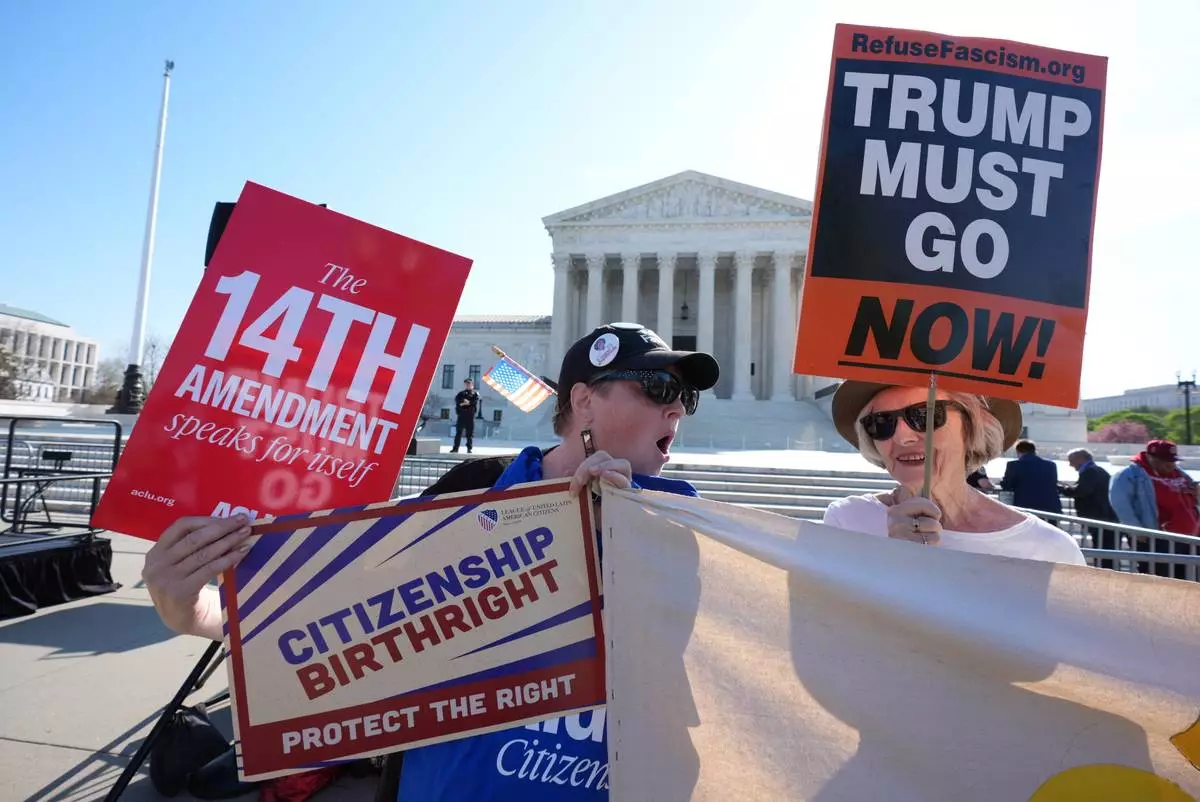
Pro and anti-Trump demonstrators rally outside the U.S. Supreme Court, before justices hear oral arguments on whether President Donald Trump can deny citizenship to children born to parents who are in the United States illegally or temporarily, on Capitol Hill, in Washington, Wednesday, April 1, 2026. (AP Photo/J. Scott Applewhite)
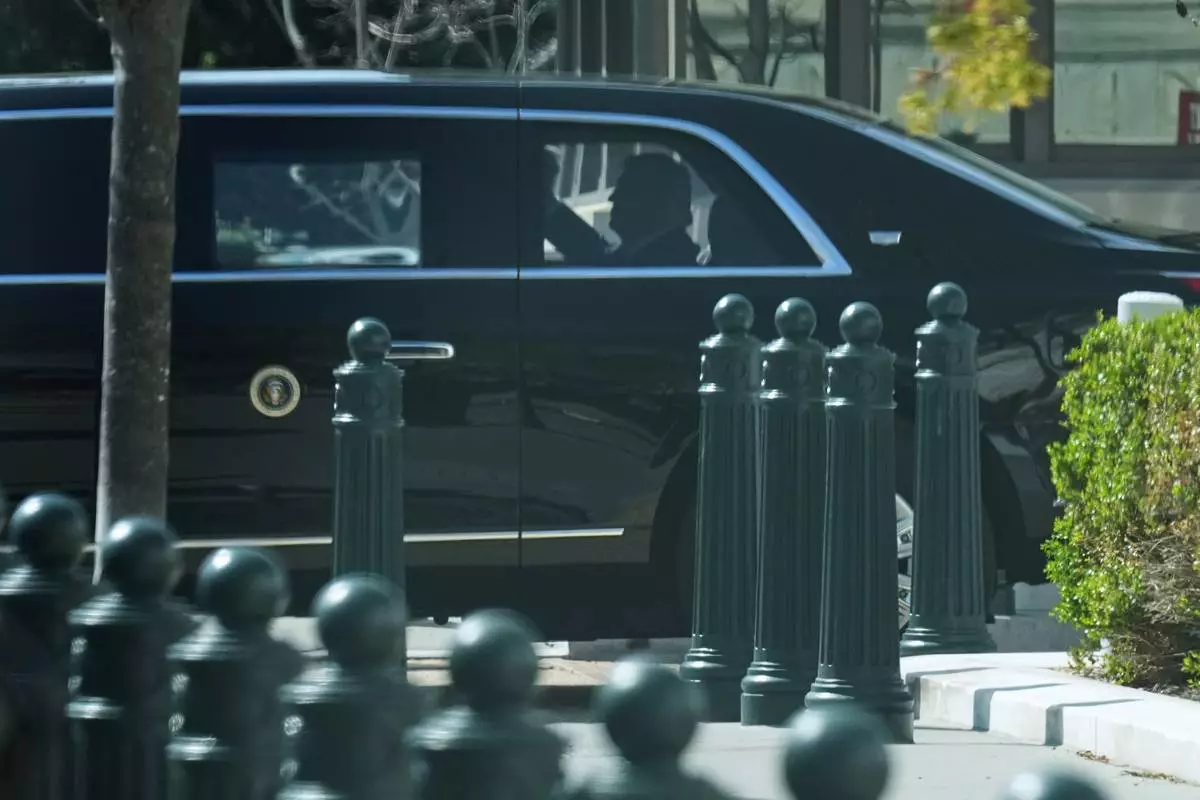
President Donald Trump leaves the U.S. Supreme Court, Wednesday, April 1, 2026, in Washington. (AP Photo/Mark Schiefelbein)
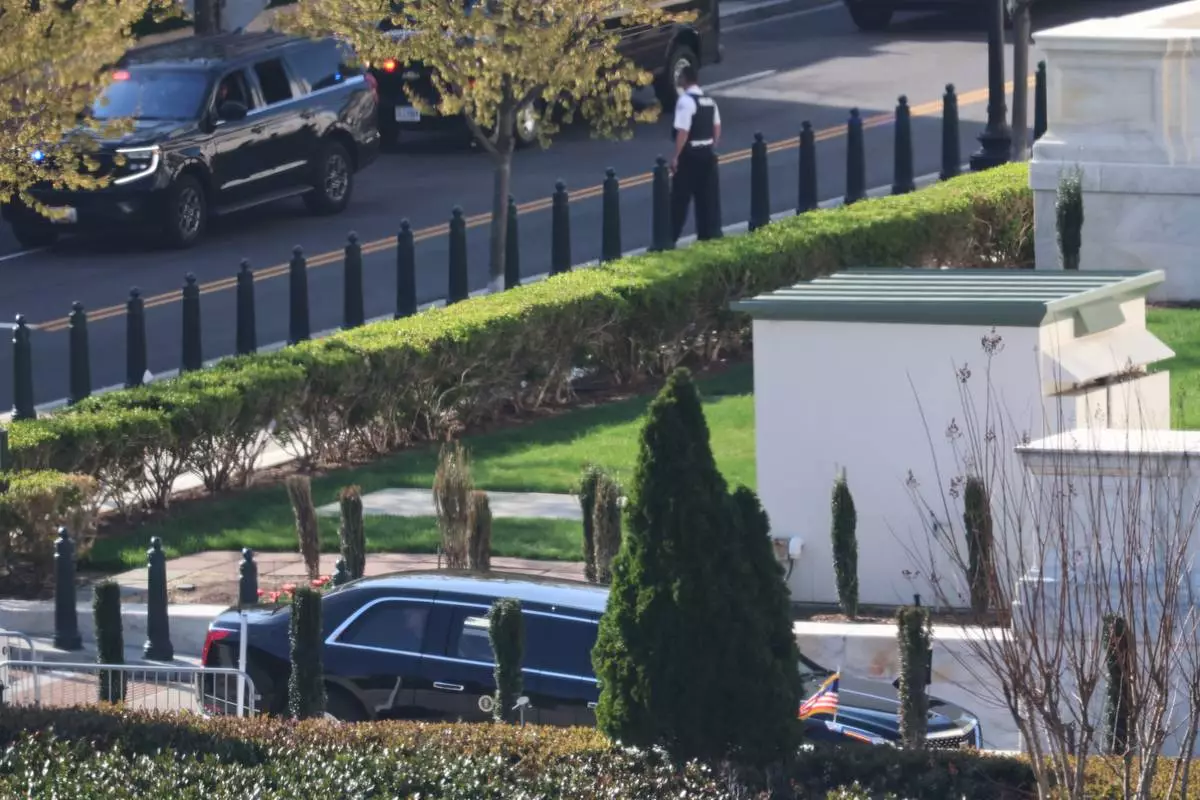
President Donald Trump's motorcade arrives at the U.S. Supreme Court, Wednesday, April 1, 2026, in Washington. (AP Photo/Tom Brenner)
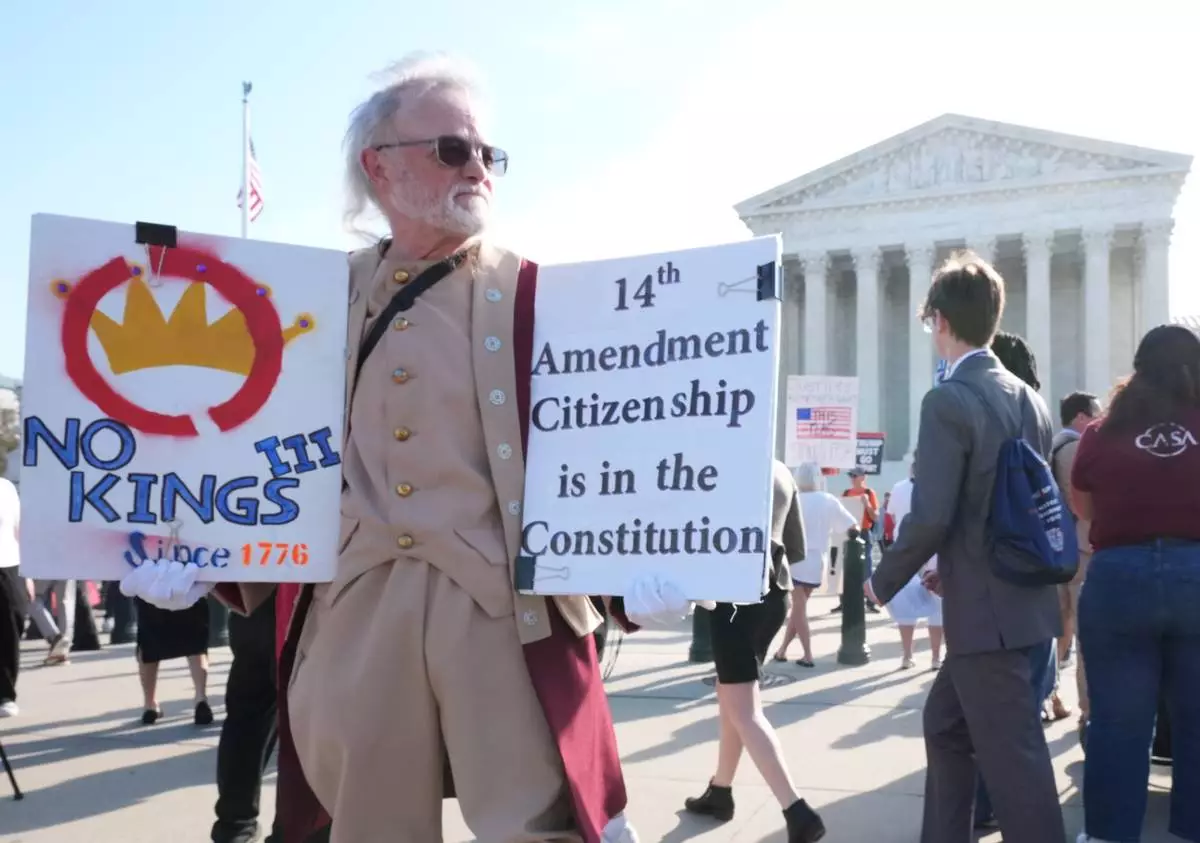
Pro and anti-Trump demonstrators rally outside the U.S. Supreme Court, before justices hear oral arguments on whether President Donald Trump can deny citizenship to children born to parents who are in the United States illegally or temporarily, on Capitol Hill, in Washington, Wednesday, April 1, 2026. (AP Photo/J. Scott Applewhite)
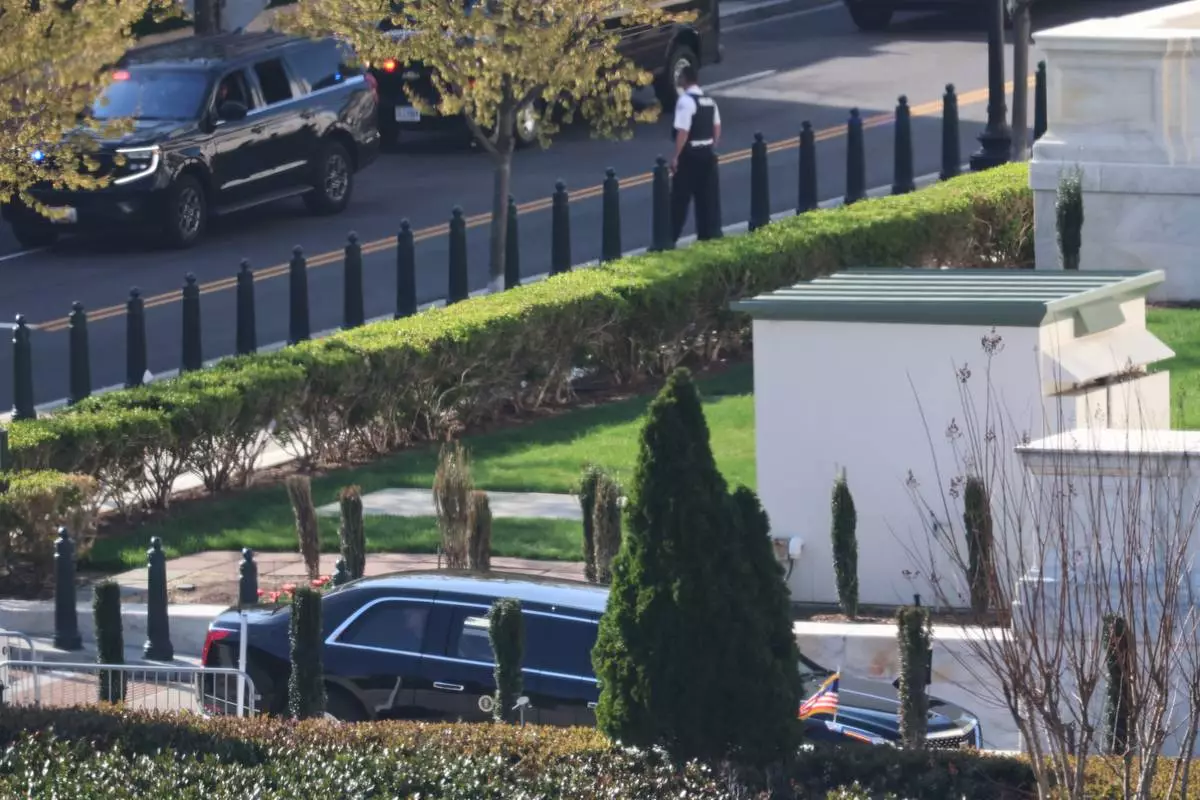
President Donald Trump's motorcade arrives at the U.S. Supreme Court, Wednesday, April 1, 2026, in Washington. (AP Photo/Tom Brenner)
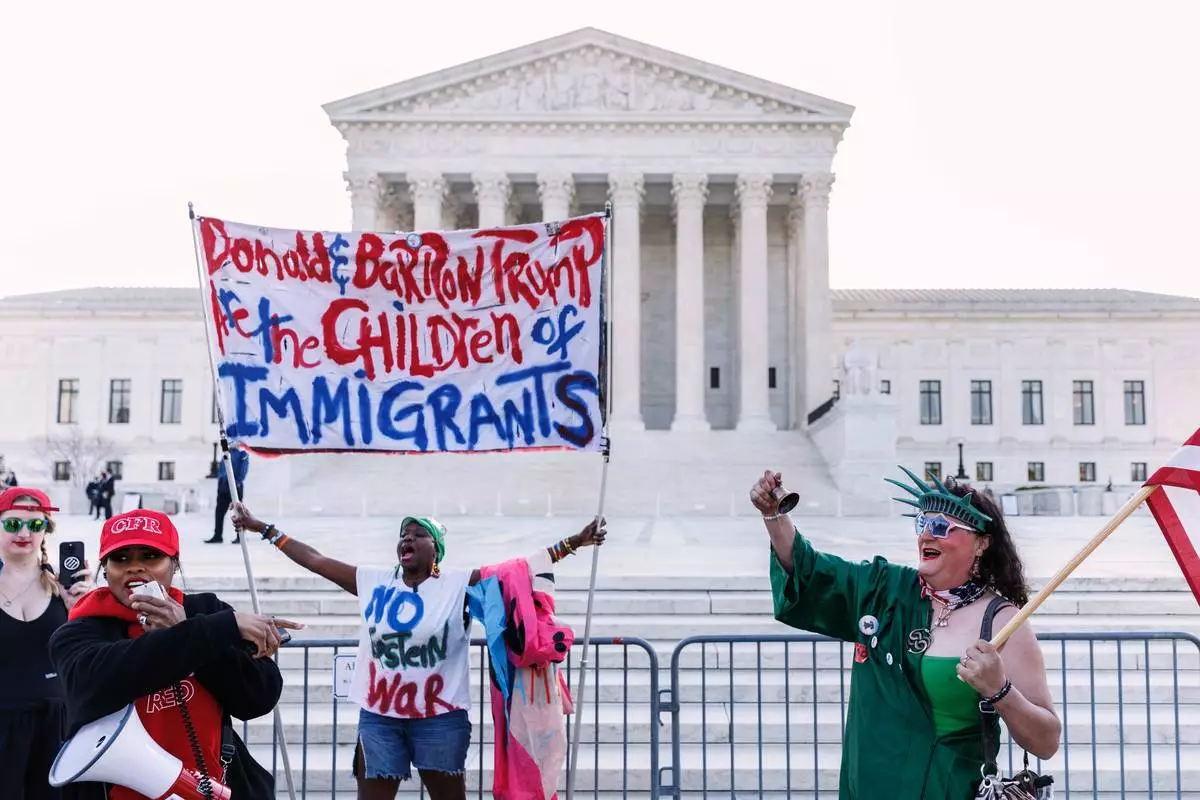
Demonstrators holding opposing views verbally engage ahead of President Donald Trump's arrival at the U.S. Supreme Court, Wednesday, April 1, 2026, in Washington. (AP Photo/Tom Brenner)
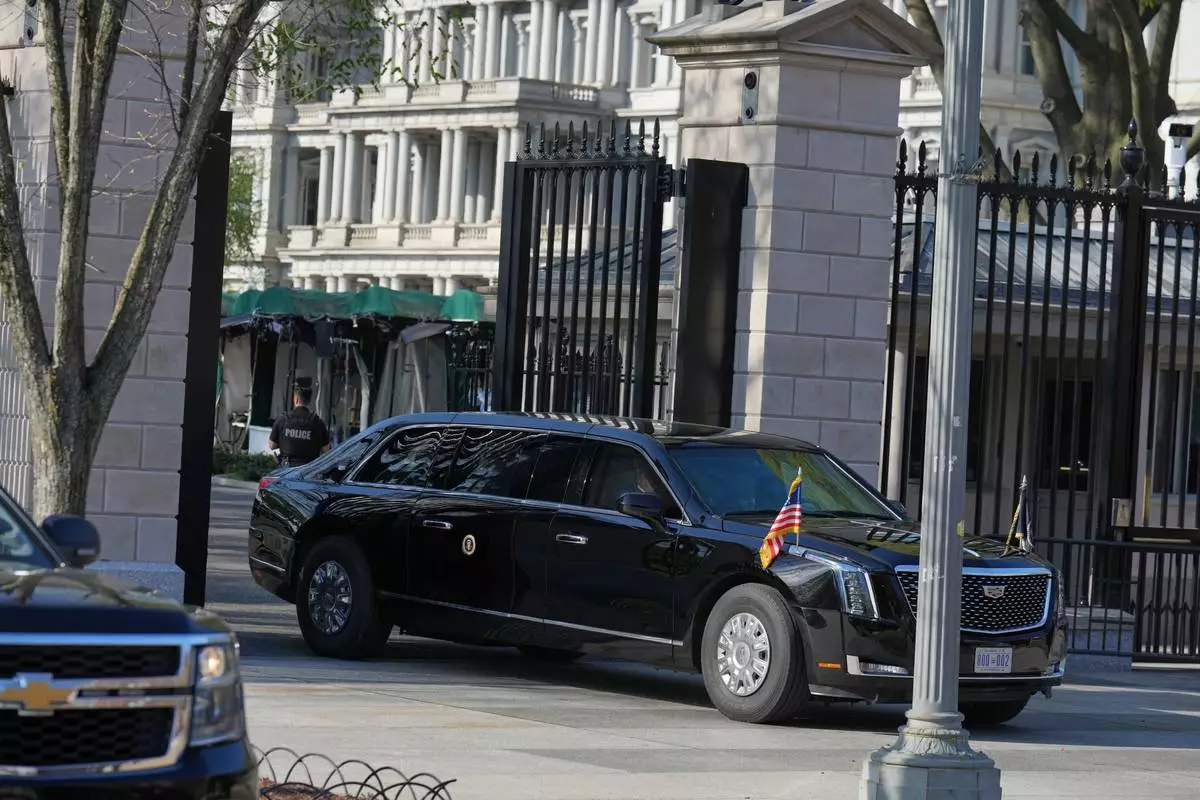
President Donald Trump's limo exits the White House en route to the Supreme Court, Wednesday, April 1, 2026, in Washington. (AP Photo/Mark Schiefelbein)
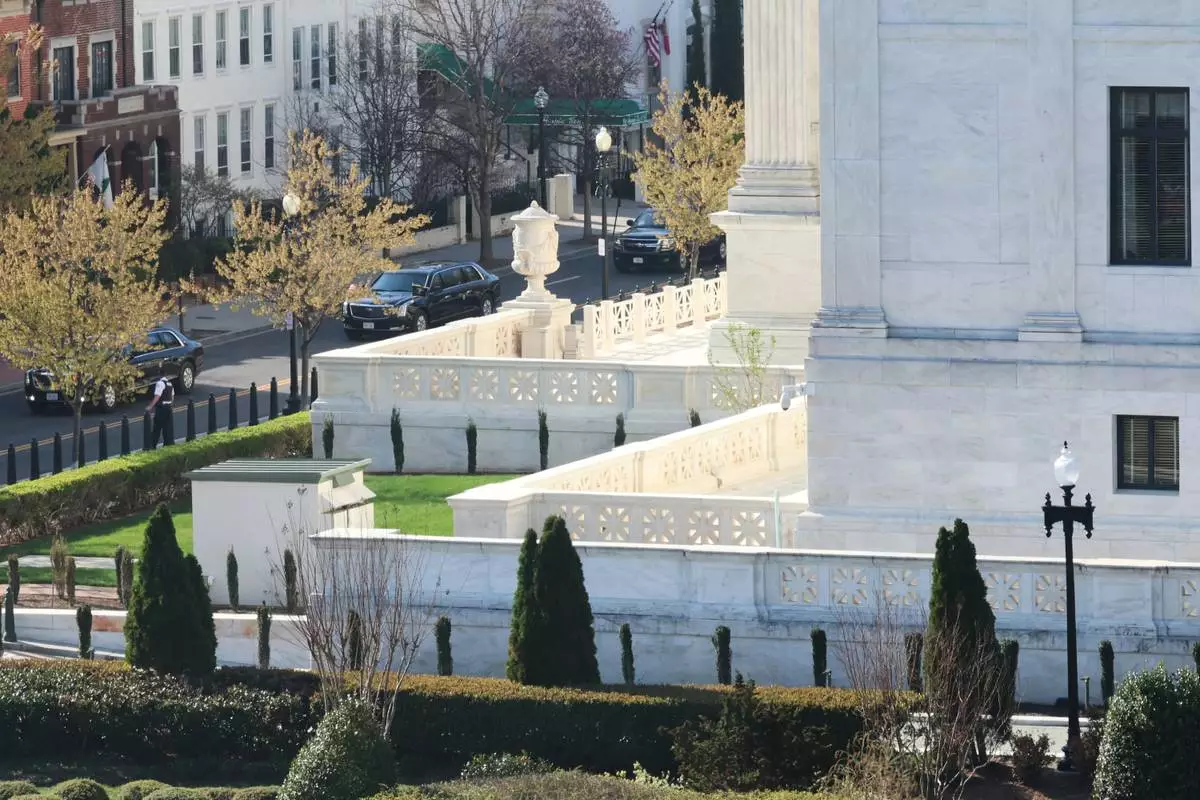
President Donald Trump's motorcade arrives at the U.S. Supreme Court, Wednesday, April 1, 2026, in Washington. (AP Photo/Tom Brenner)

Pro and anti-Trump demonstrators rally outside the U.S. Supreme Court, before justices hear oral arguments on whether President Donald Trump can deny citizenship to children born to parents who are in the United States illegally or temporarily, on Capitol Hill, in Washington, Wednesday, April 1, 2026. (AP Photo/J. Scott Applewhite)
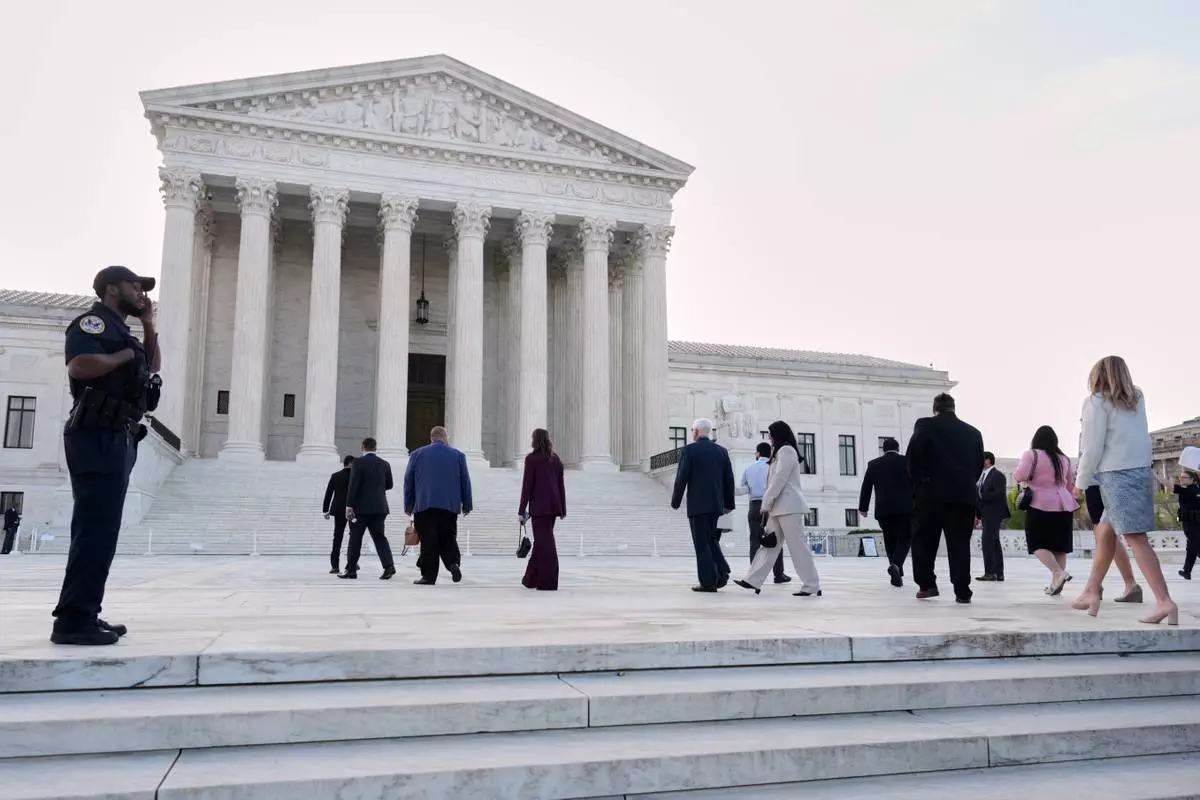
People arrive to walk inside the U.S. Supreme Court, on Capitol Hill in Washington, Wednesday, April 1, 2026. The Supreme Court justices will hear oral arguments today on whether President Donald Trump can deny citizenship to children born to parents who are in the United States illegally or temporarily. (AP Photo/J. Scott Applewhite)
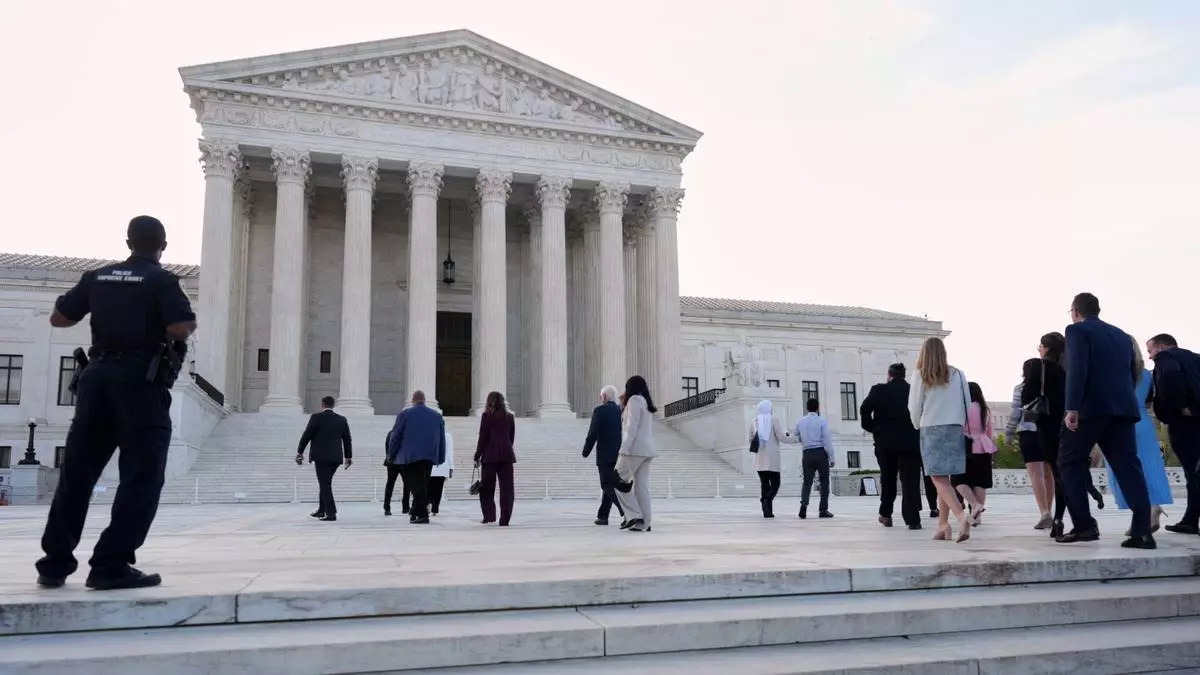
People arrive to walk inside the U.S. Supreme Court, on Capitol Hill in Washington, Wednesday, April 1, 2026. The Supreme Court justices will hear oral arguments today on whether President Donald Trump can deny citizenship to children born to parents who are in the United States illegally or temporarily. (AP Photo/J. Scott Applewhite)
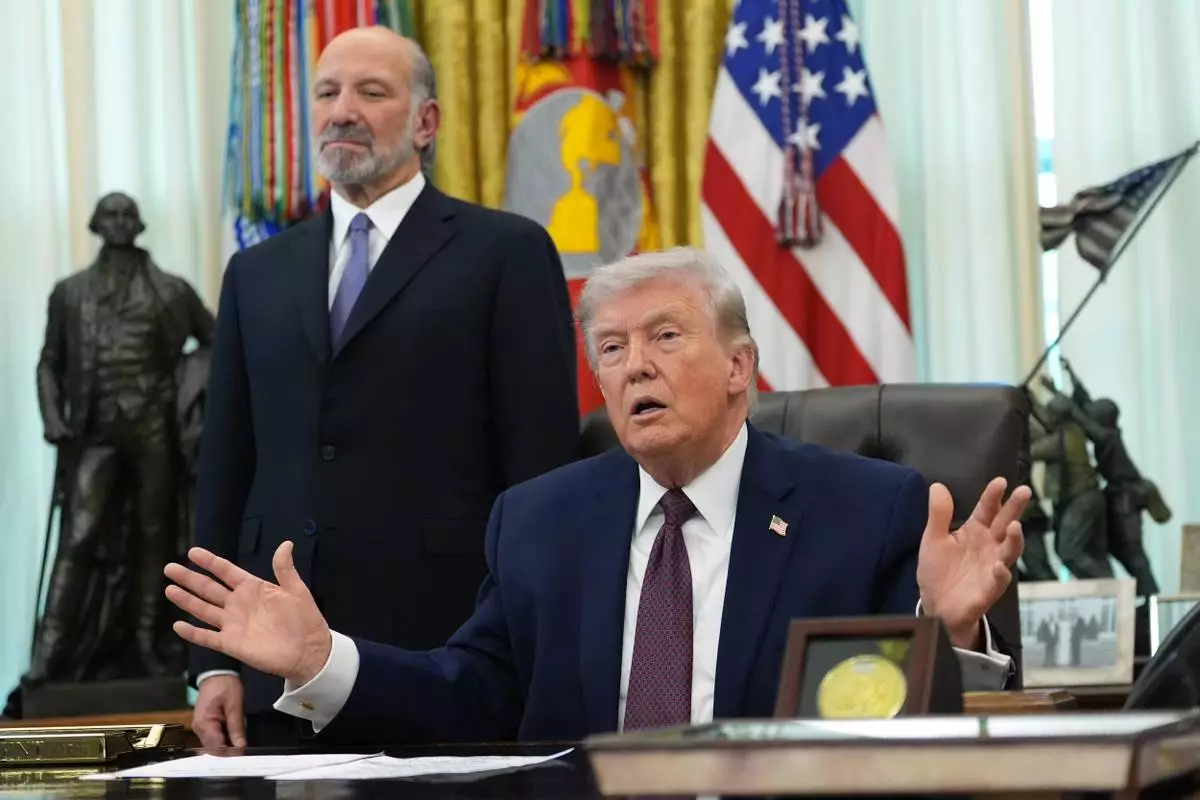
President Donald Trump answers questions from reporters after signing an executive order in the Oval Office of the White House Tuesday, March 31, 2026, in Washington, as Commerce Secretary Howard Lutnick listens. (AP Photo/Alex Brandon)
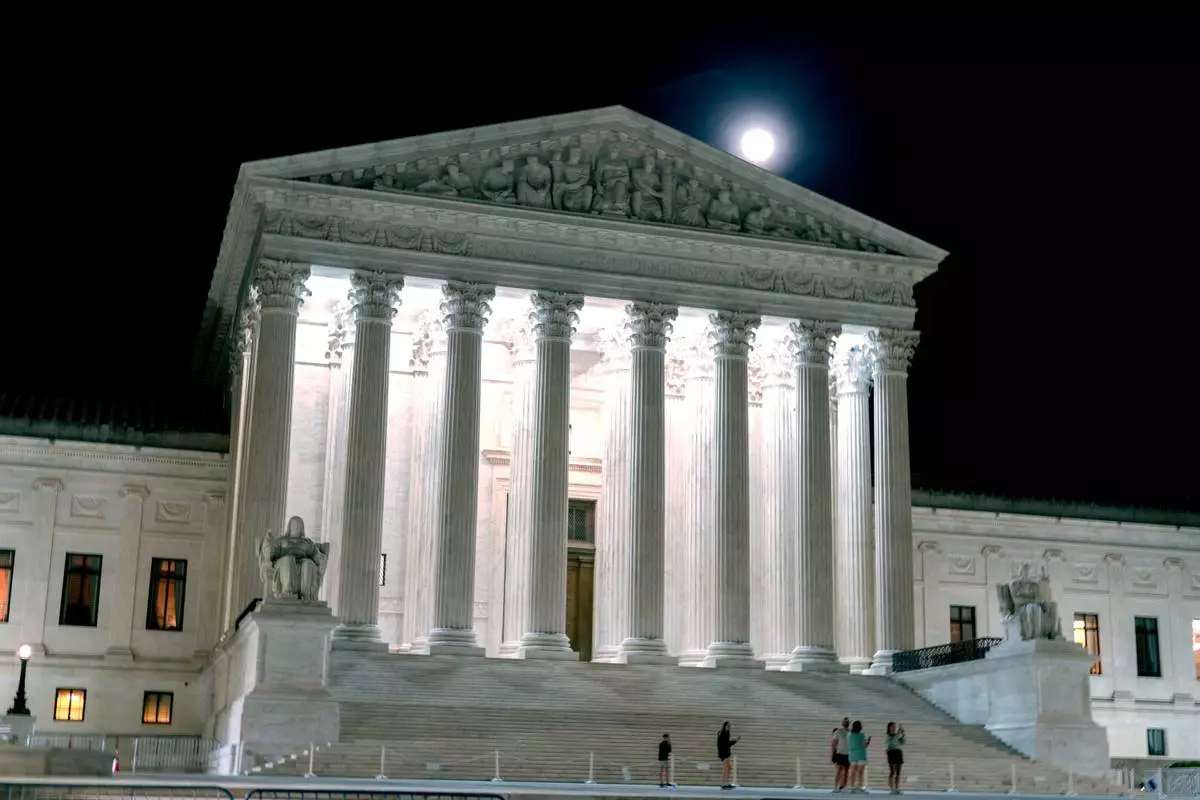
The U.S. Supreme Court is seen as the moon rises Tuesday, March 31, 2026, in Washington. (AP Photo/Jose Luis Magana)