More than 20 high school students from Frankfurt, Germany took part in Kung Fu classes and other athletic activities with students in south China's Guangzhou City, forging friendships and building mutual understanding during their visit from Oct. 13 to 22.
The visit was part of the 21st reciprocal visits between Anna-Schmidt-Schule in Frankfurt and Zhixin High School in Guangzhou under their exchange program.
For the German students, experiencing traditional Chinese martial arts was eye-opening.
"I feel like that it's a really exciting experience, and just trying something different," said Louisa, one of the German students.
"I think Kung Fu is not for fighting, it's for protecting yourself, for defense. It was a good exercise," said Alex, another German student, reflecting his growing understanding of the cultural significance behind the practice.
Chinese students at the high school also expressed gratitude for the opportunity to learn from the young Germans.
"It's fun spending time with the friends from Germany. And we also exchange ideas, which makes me feel very happy," said Ruan Ziyi, a student at Zhixin High School.
"I think they have a strong sense of collective honor and are full of passion during competitions, demonstrating excellent comprehensive quality," said Wu Zirui, another student at the school.
At the same time, the students from Frankfurt recognizes similar qualities in their Guangzhou counterparts.
"It's the first time that I've played with so many Chinese people. And I think that the Chinese people are very, very sporty. I think it's amazing how everyone puts everything for the sport," said German student David.
Guangzhou and Frankfurt established friendship-city relations in 1988 and have maintained close ties ever since.
Over the years, Zhixin High School in Guangzhou and Frankfurt's Anna-Schmidt-Schule have organized 20 rounds of educational and cultural exchanges varying from choir and dance performances to reciprocal visits and joint classes.
To date, Guangzhou has established friendly-city relationships with 109 overseas cities as well as 158 sister-school relationships with overseas schools.

German, Chinese students enhance friendship through sports during exchange visit
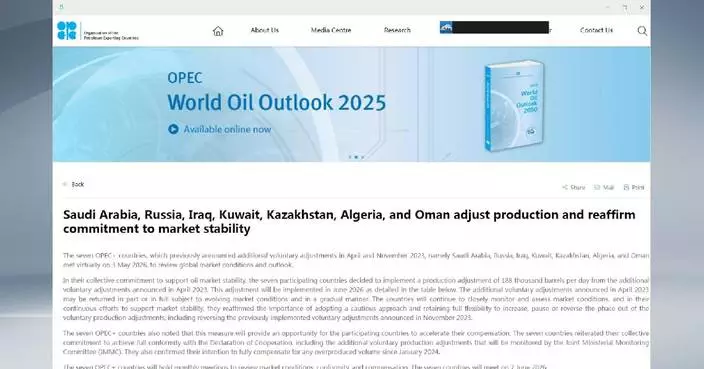
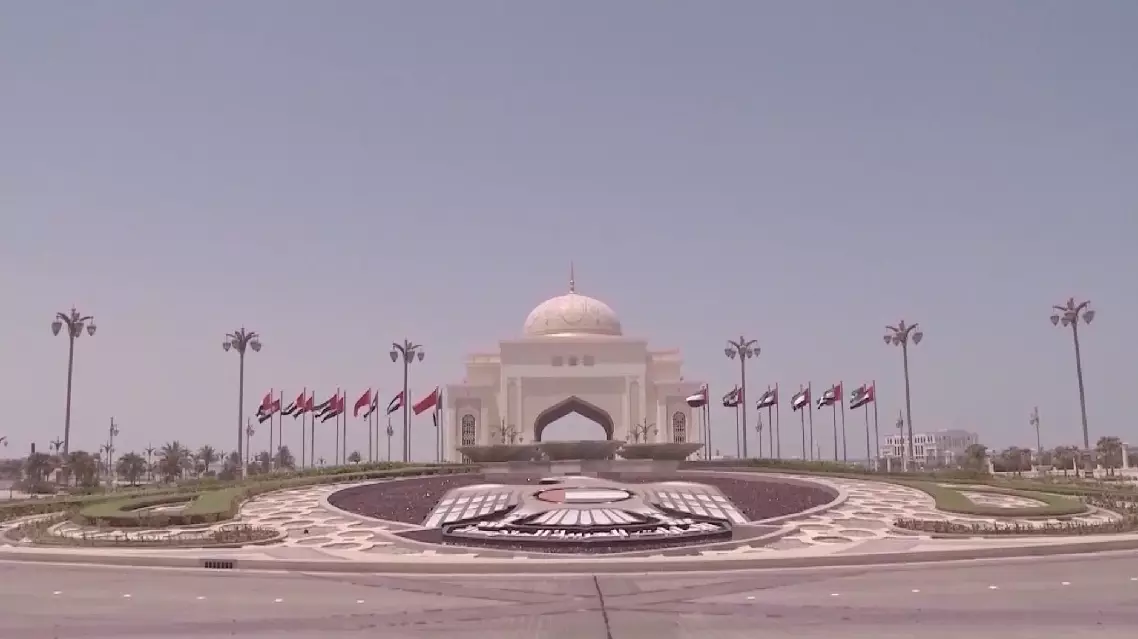
The United Arab Emirates' (UAE) exit from the Organization of the Petroleum Exporting Countries (OPEC) and the broader OPEC+ is unlikely to jolt oil markets in the short term, but sets the stage for lower prices once the Iran conflict ends and Gulf exports resume, experts said.
Effective Friday, the UAE formally withdrew from OPEC in a move poised to reshape global oil markets. The decision came amid heightened geopolitical tensions driven by the ongoing Iran conflict.
The UAE Energy Minister Suhail Al Mazrouei said the timing was chosen to cause the least market disruption. But analysts say the exit reflects the UAE's long-simmering frustrations over production quotas that no longer align with its capacity.
"It gives the UAE flexibility to move from a quota within OPEC of 3.3 million barrels a day to 5 million barrels a day in 2027. It won't radically change the pricing. It will make more energy available. So, it will take some of the price pressures off," said John Defterios, senior advisor for APCO Worldwide, a global advisory firm, and also senior fellow at the Center for Energy and Materials of the World Economic Forum.
While immediate market impact remains muted amid wartime volatility, experts anticipate meaningful shifts once regional stability returns.
"It has no impact right now, because obviously oil prices right now depend on the state of the war and whether exports can start freely through the Gulf and so on. But assume, once the war is over and a normal transit resumes, I would expect the UAE will move quickly to increase production and try to refill some of that storage that was drained. And that should mean, in general, lower prices for oil importers, for oil consumers. In the longer term, yes, I think also probably it means lower prices," said Robin Mills, CEO of Qamar Energy, a Dubai-based independent consultancy company.
The UAE's departure highlights structural tensions within OPEC+. As a low-cost producer with billions invested in upstream expansion, Abu Dhabi increasingly chafed against collective quotas.
However, other members, including Iraq and Kazakhstan, also sought higher production allowances.
"This pressure has been building up for some time. But Saudi Arabia was also in a difficult position. If it agreed to grant higher production levels to the UAE, then it would have to grant them to Iraq as well. Kazakhstan wanted more [allowance as well]. Everybody wants special treatment," said Mills.
Strategically, the move aligns with the UAE's broader vision to diversify its economy.
"They made this announcement ahead of a very important forum, Make It In the Emirates, which displays what the UAE is doing in terms of diversification outside of oil and gas. So, they want that revenue from oil and gas -- the extra 50 billion dollars a year to go into greater diversification. It's advanced manufacturing, it's artificial intelligence, it's the next wave of financial services, and it is trade," said Defterios.
The exit also signals a broader recalibration of legacy energy institutions in a world confronting new climate imperatives, geopolitical fragmentation, and energy transition pressures.
"I do think it shows definitely a world in which there's a new energy reality, there's a new climate reality, there's a new geopolitical reality. And these legacy institutions have to adapt. And if they don't, then of course, their members will either leave or at least won't take them seriously," said Mills.
UAE's OPEC exit long expected, may ease oil prices after Iran war ends: experts