A Chinese envoy on Wednesday called on the Syrian transitional government to honor its commitments to fighting terrorism.
The key to solving the Syria issue lies in advancing an inclusive political process, Fu Cong, China's permanent representative to the United Nations (UN), told the UN Security Council.
The prolonged turmoil in Syria has provided space for the proliferation of terrorism, said Fu, adding that foreign terrorist fighters have exploited the chaos in Syria to gain strength, which not only poses a direct threat to Syria's own security, but also severely undermines regional peace and stability.
"The Syrian transitional government has repeatedly stated that Syria will not pose a threat to any country. We urge the transitional government to honor this commitment, earnestly fulfill its counter-terrorism obligations, and take firm and effective measures to combat all terrorist organizations listed by the Security Council, including the East Turkistan Islamic Movement, in order to earn the trust of the international community through concrete actions," said Fu.
Noting that cuts in aid by developed donor countries have further strained the supply-demand gap in Syria's humanitarian assistance, Fu said the UN should further strengthen its coordinating role, increase and expedite the delivery of aid, and support Syria in enhancing its endogenous development capacity in order to fundamentally address humanitarian and development challenges.
China calls on Israel to stop its military operations against Syria and withdraw immediately from Syrian territory, Fu said, adding that all parties should continue to provide constructive support and assistance and refrain from exploiting the situation for self-interest.
In adjusting its sanctions related to Syria, the Security Council should fully consider Syria's counter-terrorism and security situation as well as the complex implications that any adjustments may entail, said Fu.
China will continue to work with the international community to help Syria achieve security, stability and development at an early date, and embark on a development path that suits its own national conditions, he said.
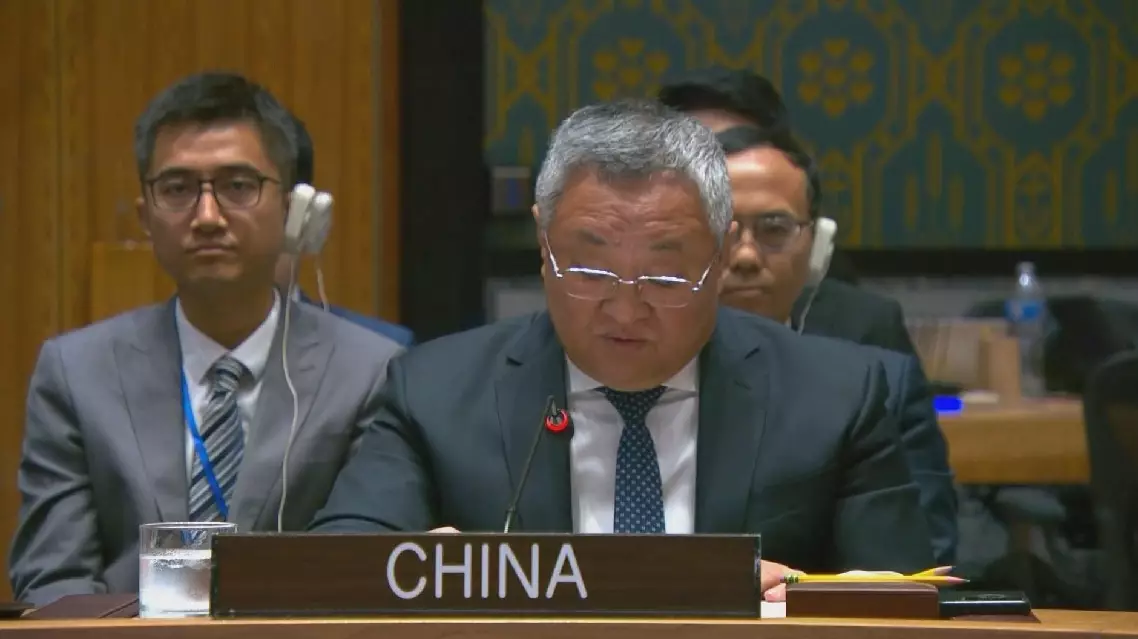
Chinese envoy calls on Syrian transitional gov't to fight terrorism
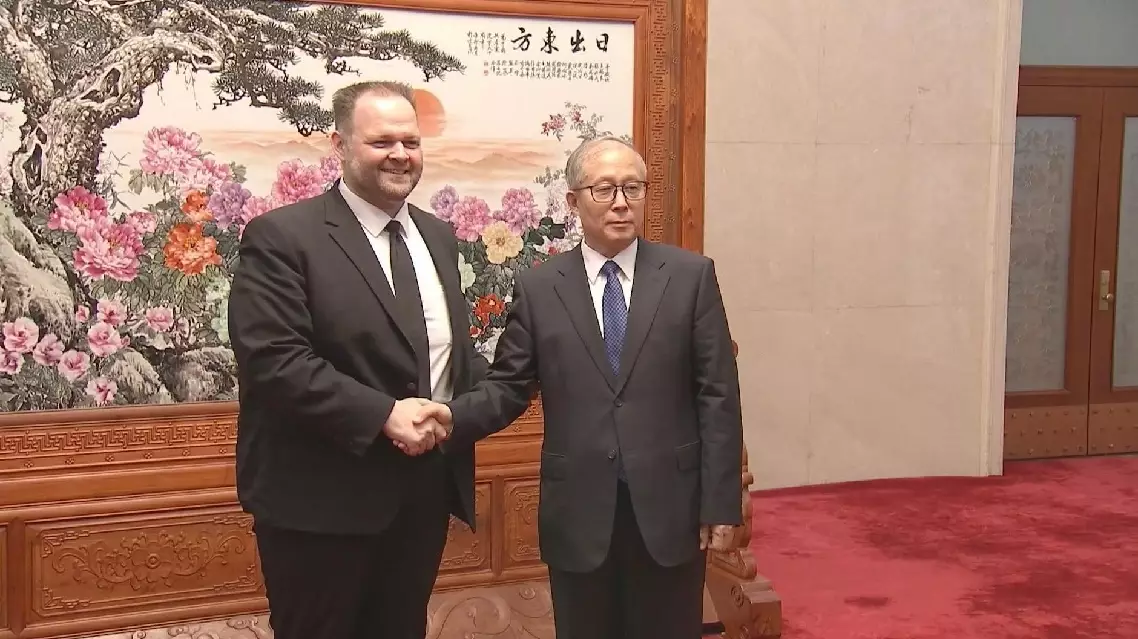
China's two major power grid operators -- the State Grid Corporation of China (State Grid) and China Southern Power Grid (CSG) -- reported a surge in investment in the first quarter of 2026, underscoring efforts to strengthen infrastructure construction and support high-quality socioeconomic development in China.
The State Grid said it completed fixed-asset investment worth 129 billion yuan (about 18.77 billion U.S. dollars) in the first three months of this year, up 37 percent the corresponding period of the previous year. The spending has driven more than 250 billion yuan (36 billion U.S. dollars) of investment across the wider industrial chain.
Key projects such as the Panxi ultra-high-voltage (UHV) alternating current (AC) line and the Anhui-Hubei back-to-back direct current (DC) project have seen ground broken for their construction, while several west-to-east power transmission projects have been upgraded.
Investment in connecting renewable energy generation to the grid was reported to have exceeded 10 billion yuan (1.45 billion U.S. dollars) from January to March, a year-on-year rise of more than 50 percent.
The CSG also reported robust growth in investment in the three-month period, with fixed-asset investment reaching 38.45 billion yuan (5.58 billion U.S. dollars), up about 50 percent from a year earlier.
Among its achievements, the company completed and commissioned 80 key projects, including the 220 kV cross-sea power grid interconnection project, which was officially put into operation on March 20. The project ended years of grid isolation on the Weizhou Island in south China by linking it to the main power system of the Guangxi Zhuang Autonomous Region.
The construction of 17 other major energy projects, including one linking the power grid of the Xizang Autonomous Region in southwest China with that of Guangdong Province in south China, is advancing rapidly. These projects are expected to bolster regional industries, the maritime economy, digital collaboration and the transition to green energy.
"By accelerating major project construction, investment during the 15th Five-Year Plan period (2026-2030) is expected to approach 1 trillion yuan (145 billion U.S. dollars), driving a further 2 trillion yuan (290 billion U.S. dollars) of investment across upstream and downstream industries," said Dong Yanle, deputy general manager of the Engineering Construction Department under the China Southern Power Grid.
China ramps up power grid investment in January-March to boost growth