The railway freight volume of northwest China's Xinjiang Uygur Autonomous Region since the beginning of this year has hit 200 million tons, a milestone achieved 19 days earlier than in 2024, according to China Railway Urumqi Group Co., Ltd.
The milestone was marked when a freight train loading 3,500 tons of coal departed on Wednesday from Zhundong Railway Station on the Urumqi-Jiangjunmiao Railway.
During the period, outbound coal shipments from Xinjiang amounted to over 75.9 million tons, growing by 6.93 percent year on year.
Xinjiang has pioneered a "Smart Railway Port plus Local Rapid Customs Clearance" model, which has significantly reduced clearance times for cross-border cargo and boosted vehicle turnover efficiency by over 20 percent.
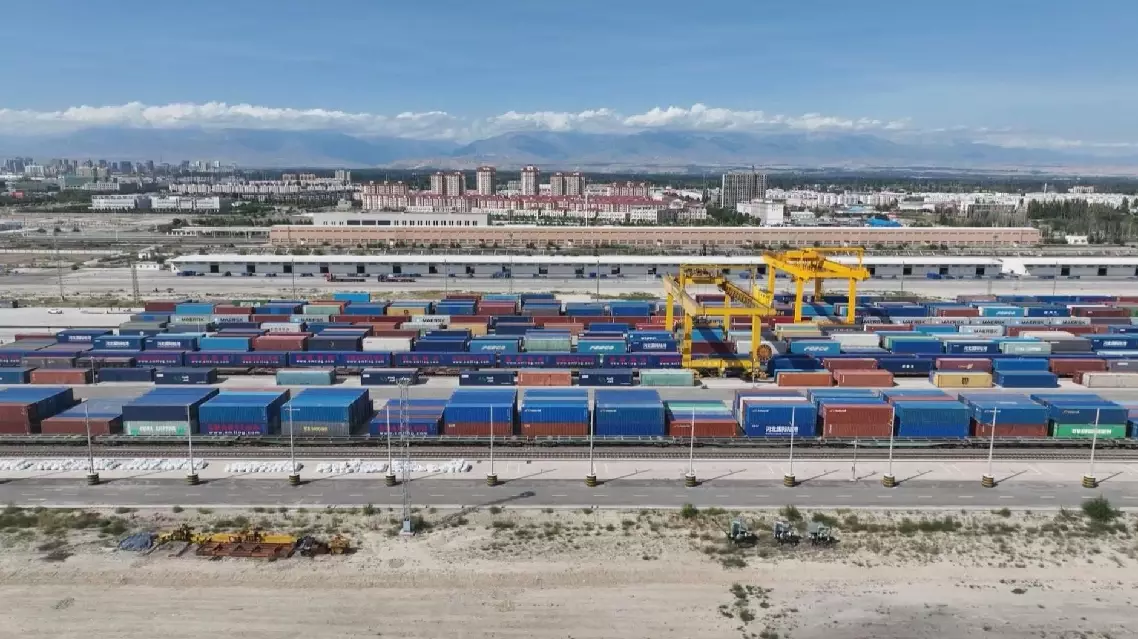
Xinjiang's railway freight volume reaches 200 mln tons
Saudi Arabia and Pakistan have reaffirmed that they will not seek normalization of ties with Israel, rejecting U.S. President Donald Trump's call for the two countries to join the Abraham Accords.
Saudi Arabia's position on the Palestinian issue remains unchanged, a Saudi source told Al Arabiya TV on Monday.
The source affirmed the need for "an irreversible pathway to a Palestinian state".
The remarks came after U.S. President Donald Trump urged Muslim-majority and regional countries to normalize relations with Israel and join the Abraham Accords before the U.S. reaches a peace agreement with Iran.
Saudi Arabia has repeatedly said it would not normalize relations with Israel without the establishment of a Palestinian state.
Pakistani Defense Minister Khawaja Asif said on Tuesday that Pakistan will not join any agreement to normalize ties with Israel, adding that the country will not accept any deal that "conflicts with its fundamental ideologies".
Trump on Monday urged Saudi Arabia, Qatar, Egypt, Jordan, Turkey and Pakistan -- countries involved in mediating U.S.-Iran talks -- to immediately join the Abraham Accords, warning that otherwise they should not participate in the mediation.
He added that if a U.S.-Iran deal is reached, Iran should also join the agreement.
The Abraham Accords, brokered by the United States in 2020 during Trump's first term, were established between the Israeli government and Arab countries including the United Arab Emirates, Bahrain, Sudan and Morocco, aimed at rapidly advancing the normalization of relations between Israel and Arab countries.
Before the outbreak of the latest round of Israeli-Palestinian conflict in October 2023, the United States had been pushing for normalization between Saudi Arabia and Israel.
After the conflict erupted, Saudi Arabia suspended normalization talks with Israel.

Saudi Arabia, Pakistan reject Trump's Abraham Accords demand