THE HAGUE, Netherlands (AP) — International Criminal Court judges on Thursday rejected a challenge to jurisdiction in the case of former Philippine President Rodrigo Duterte, who is accused of involvement in dozens of killings as part of his so-called war on drugs when in office.
Defense lawyers for the 80-year old Duterte argued that because the Philippines left the court before prosecutors opened a formal investigation into the mass killings, the ICC didn't have the authority to continue with the proceedings.
A pretrial panel of judges dismissed the motion. Countries can't “abuse” their right to withdraw from the Rome Statute “by shielding persons from justice in relation to alleged crimes that are already under consideration,” the 32-page decision says.
Prosecutors announced in February 2018 that they would open a preliminary investigation into the violence. In a move that human rights activists say was aimed at escaping accountability, Duterte, who was president at the time, announced a month later that the Philippines would leave the court.
The investigation was formally opened in 2021.
Nick Kaufman, Duterte's lead lawyer, said that he plans to continue the challenge to the jurisdiction. The defense “anticipated this decision and will appeal it," he told The Associated Press.
The charges against Duterte date from Nov. 1, 2011, when he was still mayor of the southern city of Davao, to March 16, 2019, when the withdrawal became effective.
Last month, judges postponed a pretrial hearing over concerns about Duterte’s health. His lawyers asked for the proceedings to be delayed indefinitely, saying their client is “not fit to stand trial.” The court also decided that Duterte must remain in detention, because he's a flight risk.
The Duterte administration moved to suspend the global court’s investigation before, arguing in late 2021 that Philippine authorities were already looking into the same allegations and the ICC — a court of last resort — therefore didn’t have jurisdiction.
Appeals judges at the ICC rejected those arguments and ruled in 2023 that the investigation could resume.
Duterte was arrested in March and sent to the court in The Hague. He denies the charges of crimes against humanity.
The ICC has been investigating mass killings in crackdowns overseen by Duterte when he served as mayor and later as president of the Philippines. Estimates of the death toll of the crackdown during Duterte’s presidential term vary, from the more than 6,000 that the national police have reported and up to 30,000 claimed by human rights groups.
This story has been updated to correct the spelling of lawyer Kaufman.

FILE - A general view of the exterior of the International Criminal Court is seen in The Hague, Netherlands, March 12, 2025. (AP Photo/Omar Havana, File)
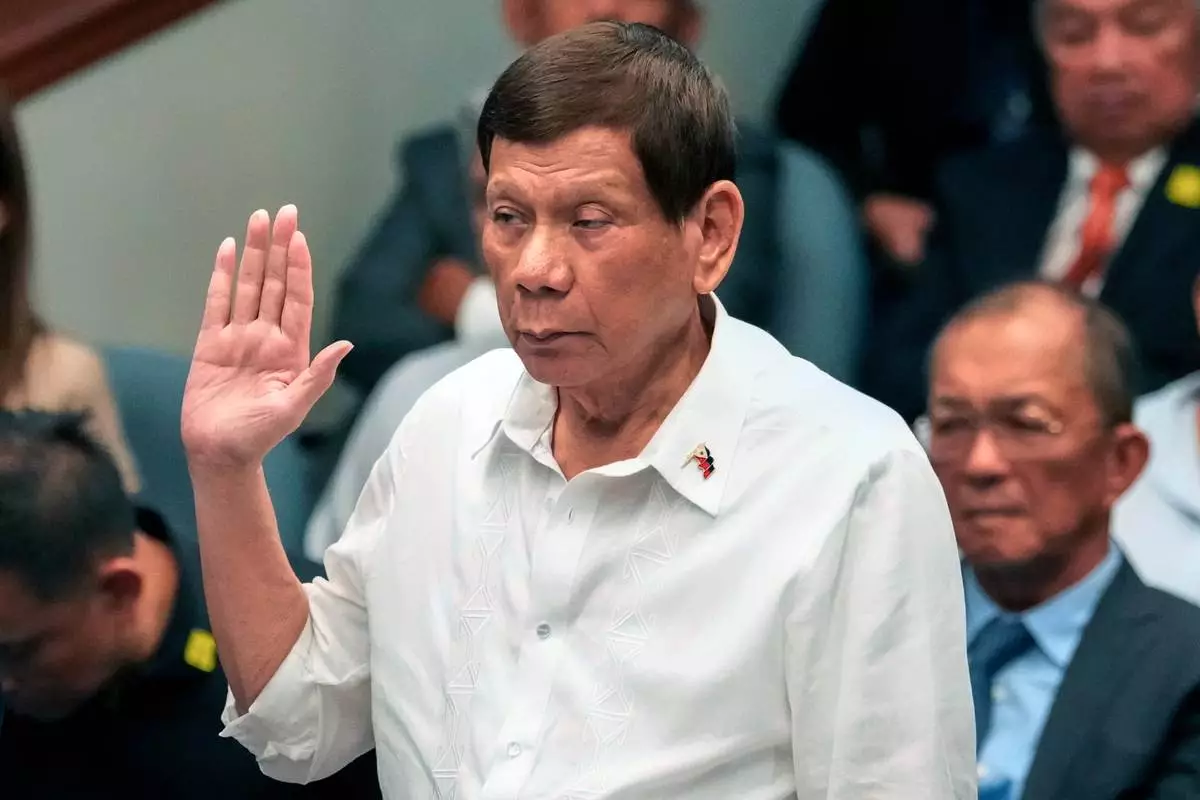
FILE - Former Philippine President Rodrigo Duterte takes oath during a senate inquiry on the so-called war on drugs during his administration at the Philippine Senate, on Oct. 28, 2024, in Manila, Philippines. (AP Photo/Aaron Favila, File)
JOHANNESBURG (AP) — Torrential rains and flooding have killed more than 100 people in South Africa, Mozambique and Zimbabwe, and authorities warned Friday that more severe weather was expected across several countries in southern Africa.
South Africa has reported at least 19 deaths in two of its northern provinces following heavy rains that began last month and led to severe flooding.
Tourists and staff members were evacuated this week by helicopter from flooded camps to other areas in the renowned Kruger National Park, which is closed to visitors while parts of it are inaccessible because of washed out roads and bridges, South Africa's national parks agency said.
In neighboring Mozambique, the Institute for Disaster Management and Risk Reduction said 103 people had died in an unusually severe rainy season since late last year. Those deaths were from various causes including electrocution from lightning strikes, drowning in floods, infrastructure collapse caused by the severe weather and cholera, the institute said.
The worst flooding in Mozambique has been in the central and southern regions, where more than 200,000 people have been affected, thousands of homes have been damaged, while tens of thousands face evacuation, the World Food Program said.
Zimbabwe’s disaster management agency said that 70 people have died and more than 1,000 homes have been destroyed in heavy rains since the beginning of the year, while infrastructure including schools, roads and bridges collapsed.
Flooding has also hit the island nation of Madagascar off the coast of Africa as well as Malawi and Zambia. Authorities in Madagascar said 11 people died in floods since late November.
The United States' Famine Early Warning System said flooding was reported or expected in at least seven southern African nations, possibly due to the presence of the La Nina weather phenomenon that can bring heavy rains to parts of southeastern Africa.
South African President Cyril Ramaphosa visited flood-stricken areas in the northern Limpopo province on Thursday and said that region had received around 400 millimeters (more than 15 inches) of rain in less than a week. He said that in one district he visited “there are 36 houses that have just been wiped away from the face of the Earth. Everything is gone ... the roofs, the walls, the fences, everything.”
The flooding occurred in the Limpopo and Mpumalanaga provinces in the north, and the South African Weather Service issued a red-level 10 alert for parts of the country for Friday, warning of more heavy rain and flooding that poses a threat to lives and could cause widespread infrastructure damage.
The huge Kruger wildlife park, which covers some 22,000 square kilometers (7,722 square miles) across the Limpopo and Mpumalanga provinces, has been impacted by severe flooding and around 600 tourists and staff members have been evacuated from camps to high-lying areas in the park, Kruger National Park spokesperson Reynold Thakhuli said.
He couldn't immediately say how many people there were in the park, which has been closed to visitors after several rivers burst their banks and flooded camps, restaurants and other areas. The parks agency said precautions were being taken and no deaths or injuries had been reported at Kruger.
The South African army sent helicopters to rescue other people trapped on the roofs of their houses or in trees in northern parts of the country, it said. An army helicopter also rescued border post officers and police officers stranded at a flooded checkpoint on the South Africa-Zimbabwe border.
Southern Africa has experienced a series of extreme weather events in recent years, including devastating cyclones and a scorching drought that caused a food crisis in parts of a region that often suffers food shortages.
The World Food Program said more than 70,000 hectares (about 173,000 acres) of crops in Mozambique, including staples such as rice and corn, have been waterlogged in the current flooding, worsening food insecurity for thousands of small-scale farmers who rely on their harvests for food.
Imray reported from Cape Town, South Africa. AP writers Charles Mangwiro in Maputo, Mozambique, and Farai Mutsaka in Harare, Zimbabwe, contributed to this report.
AP Africa news: https://apnews.com/hub/africa
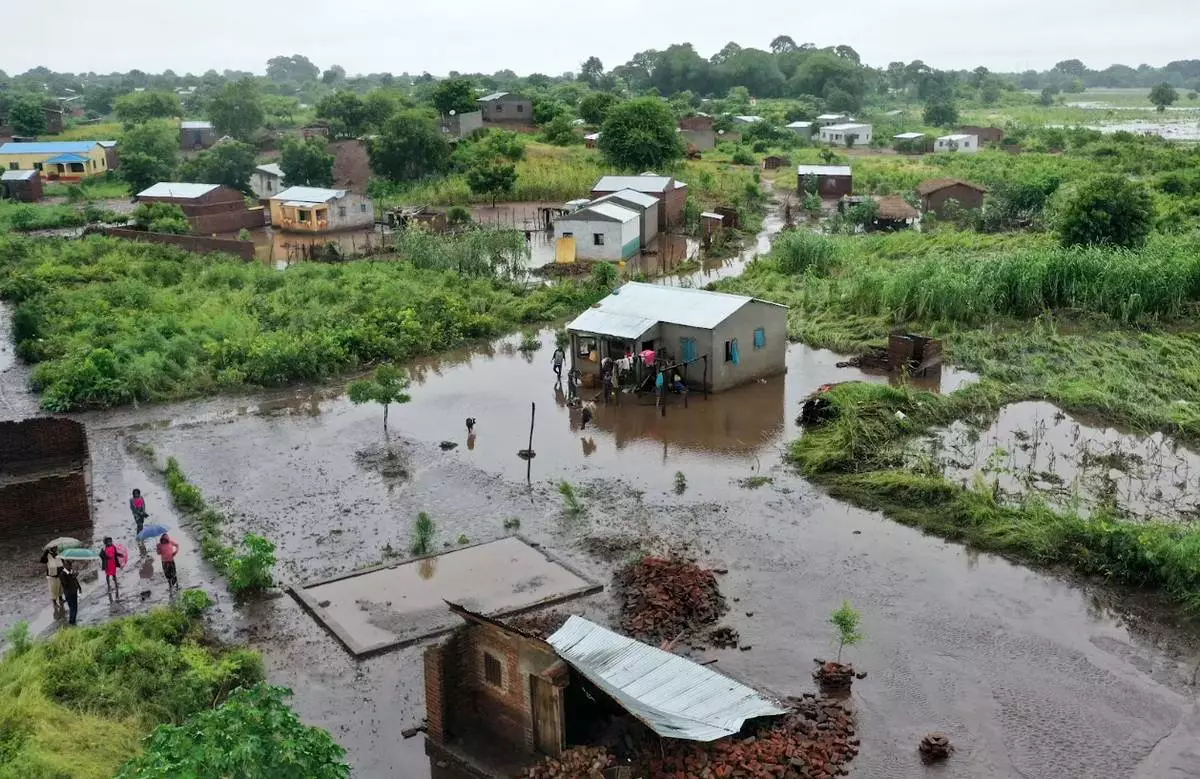
This image made from video shows the scene after flooding in Tete Province, Mozambique, Thursday, Jan. 15, 2026. (AP Photo)
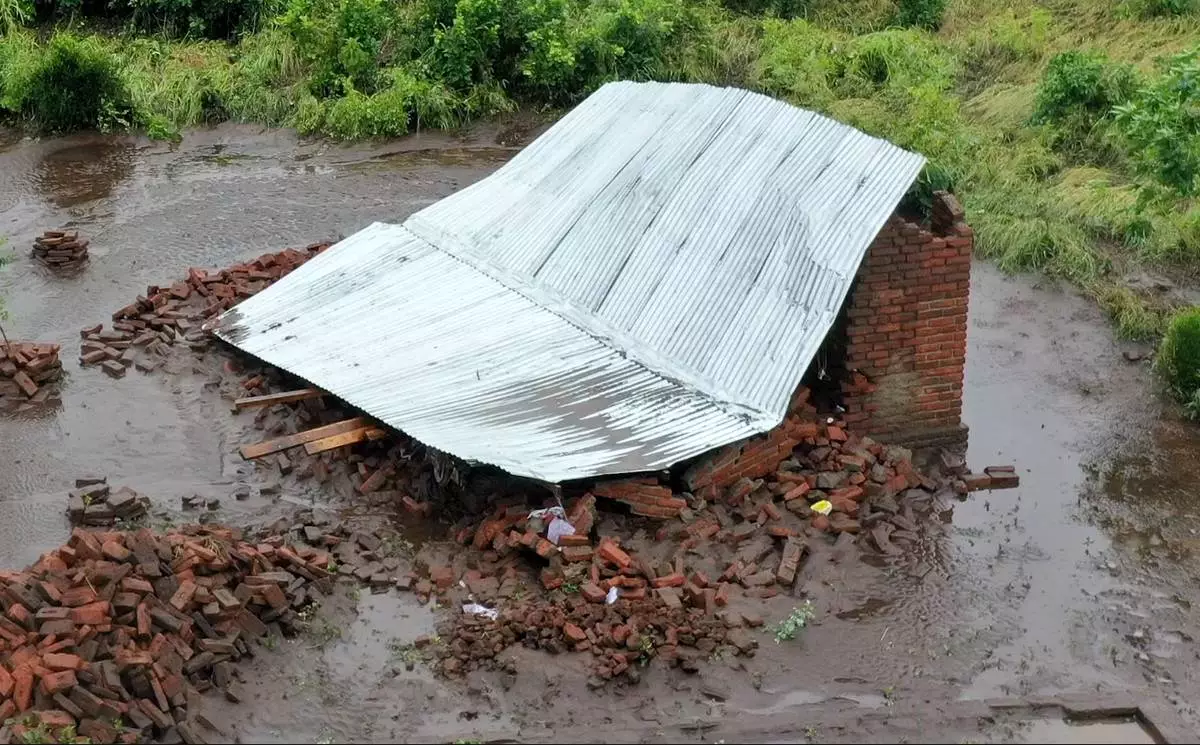
This image made from video shows the scene after flooding in Tete Province, Mozambique, Thursday, Jan. 15, 2026. (AP Photo)
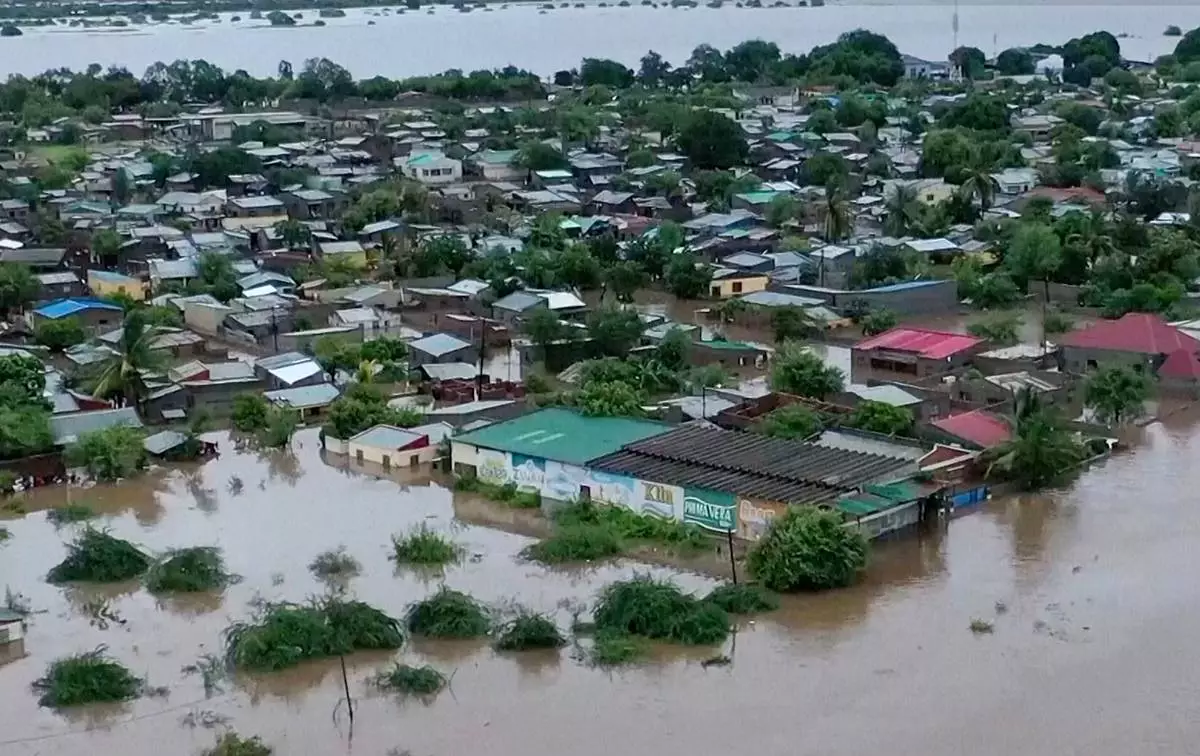
This image made from video shows the scene after flooding in Tete Province, Mozambique, Thursday, Jan. 15, 2026. (AP Photo)