Skip to Content Facebook Feature Image

Social Security recipients get a 2.8% cost-of-living boost in 2026, average of $56 per month

News

Social Security recipients get a 2.8% cost-of-living boost in 2026, average of $56 per month
News

News

Social Security recipients get a 2.8% cost-of-living boost in 2026, average of $56 per month

2025-10-25 00:02 Last Updated At:00:10

WASHINGTON (AP) — The Social Security Administration's annual cost-of-living adjustment will go up by 2.8% in 2026, translating to an average increase of more than $56 for retirees every month, agency officials said Friday.

The benefits increase for nearly 71 million Social Security recipients will go into effect beginning in January. And increased payments to nearly 7.5 million people receiving Supplemental Security Income will begin on Dec. 31.

Friday’s announcement was meant to be made last week but was delayed because of the federal government shutdown.

The cost-of-living adjustment, or COLA, for retirees and disabled beneficiaries is financed by payroll taxes collected from workers and their employers, up to a certain annual salary, which is slated to increase to $184,500 in 2026, from $176,100 in 2025.

Recipients received a 2.5% cost-of-living boost in 2025 and a 3.2% increase in their benefits in 2024, after a historically large 8.7% benefit increase in 2023, brought on by record 40-year-high inflation.

The smaller increase for 2026 reflects moderating inflation. The agency will notify recipients of their new benefit amount by mail in early December.

Some seniors say the cost-of-living adjustment won't help much in their ability to pay for their daily expenses. Linda Deas, an 80-year-old Florence, South Carolina, resident said "it does not match the affordability crisis we are having right now.”

Deas, a retired information systems network operations specialist, moved to South Carolina from New York in 2022 to be closer to family. She says her monthly rent has increased by $400 in the past two years.

She listed other items that have become more expensive for her in the past two years, including auto insurance and food. "If you have been into the supermarkets lately you will notice how prices are going up, not down,” she said.

Deas is not alone in feeling that costs are getting out of control. Polling from the AARP shows that older Americans are increasingly struggling to keep up in today’s economy. The poll states that only 22% of Americans over age 50 agree that a COLA of right around 3% for Social Security recipients is enough to keep up with rising prices, while 77% disagree. That sentiment is consistent across political party affiliations, according to the AARP.

In Deas' case, the MIT Living Wage Calculator estimates that an adult living alone in Florence, South Carolina, would spend per year $10,184 for housing, $3,053 for medical expenses and $3,839 for food.

AARP CEO Myechia Minter-Jordan said the COLA is “a lifeline of independence and dignity, for tens of millions of older Americans,” but even with the annual inflation-gauged boost in income, “older adults still face challenges covering basic expenses.”

Social Security Administration Commissioner Frank Bisignano said in a statement Friday that the annual cost-of-living adjustment “is one way we are working to make sure benefits reflect today’s economic realities and continue to provide a foundation of security.”

Emerson Sprick, the Bipartisan Policy Center’s director of retirement and labor policy, said in a statement that cost-of-living increases “can’t solve all the financial challenges households face or all the shortcomings of the program.”

The latest COLA announcement comes as the Social Security Administration has been navigating almost a year of turmoil, including the termination of thousands of workers as part of the Trump administration's efforts to shrink the size of the federal workforce. Trump administration officials have also made statements they later walked back that raised concerns about the future of the program.

Treasury Secretary Scott Bessent said in July that the Republican administration was committed to protecting Social Security hours after he said in an interview that a new children’s savings program President Donald Trump signed into law “is a back door for privatizing Social Security.”

And in September, Bisignano had to walk back comments that the agency is considering raising the retirement age to shore up Social Security. “Raising the retirement age is not under consideration at this time by the Administration,” Bisignano said at the time in an e-mailed statement to The Associated Press.

“I think everything’s being considered, will be considered,” Bisignano said in the statement when asked whether raising the retirement age was a possibility to maintain the old age program’s solvency.

In addition, the Social Security Administration faces a looming bankruptcy date if it is not addressed by Congress. The June 2025 Social Security and Medicare trustees’ report states that Social Security’s trust funds, which cover old age and disability recipients, will be unable to pay full benefits beginning in 2034. Then, Social Security would only be able to pay 81% of benefits.

Social Security benefits were last reformed roughly 40 years ago, when the federal government raised the eligibility age for the program from 65 to 67.

While a permanent solution for shoring up the benefits program has not been passed into law, both the Trump and Biden administrations have recently signed into law new benefits for retirees, which are expected to boost their finances.

The Trump administration, as part of Republicans’ tax and spending bill, gave tax relief to many seniors through a temporary tax deduction for seniors aged 65 and over, which applies to all income — not just Social Security. However, those who won’t be able to claim the deduction include the lowest-income seniors who already don’t pay taxes on Social Security, those who choose to claim their benefits before they reach age 65 and those above a defined income threshold.

Additionally, former President Joe Biden in 2024 repealed two federal policies — the Windfall Elimination Provision and the Government Pension Offset — that previously limited Social Security payouts for roughly 2.8 million people, including largely former public workers.

These measures have accelerated the insolvency of the old-age benefits program.

Sprick at the Bipartisan Policy Center said “there have been longstanding questions about whether benefits are adequate for low-income seniors, which should inspire urgency among policymakers to work toward broader reforms instead of ignoring Social Security’s long-term solvency."

Follow the AP's coverage of the U.S. Social Security Administration at https://apnews.com/hub/us-social-security-administration.
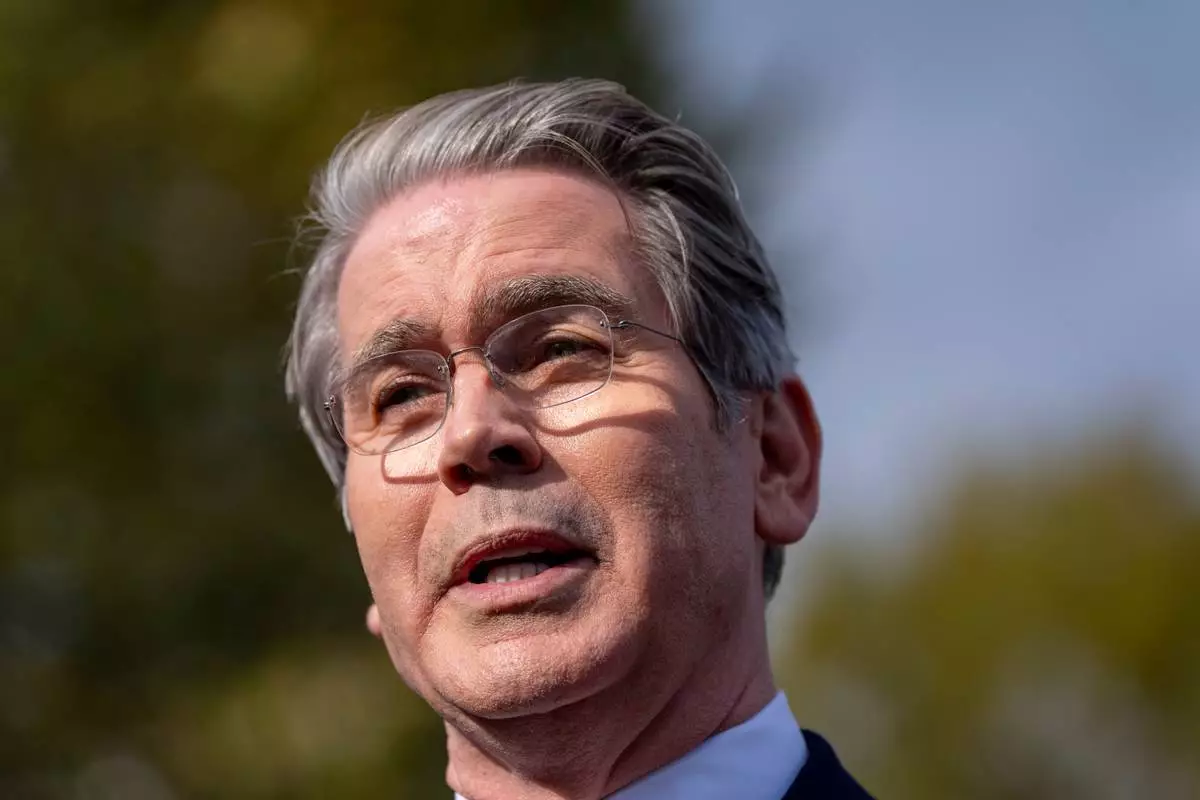
Treasury Secretary Scott Bessent speaks with reporters at the White House, Wednesday, Oct. 22, 2025, in Washington. (AP Photo/Alex Brandon)
Treasury Secretary Scott Bessent speaks with reporters at the White House, Wednesday, Oct. 22, 2025, in Washington. (AP Photo/Alex Brandon)

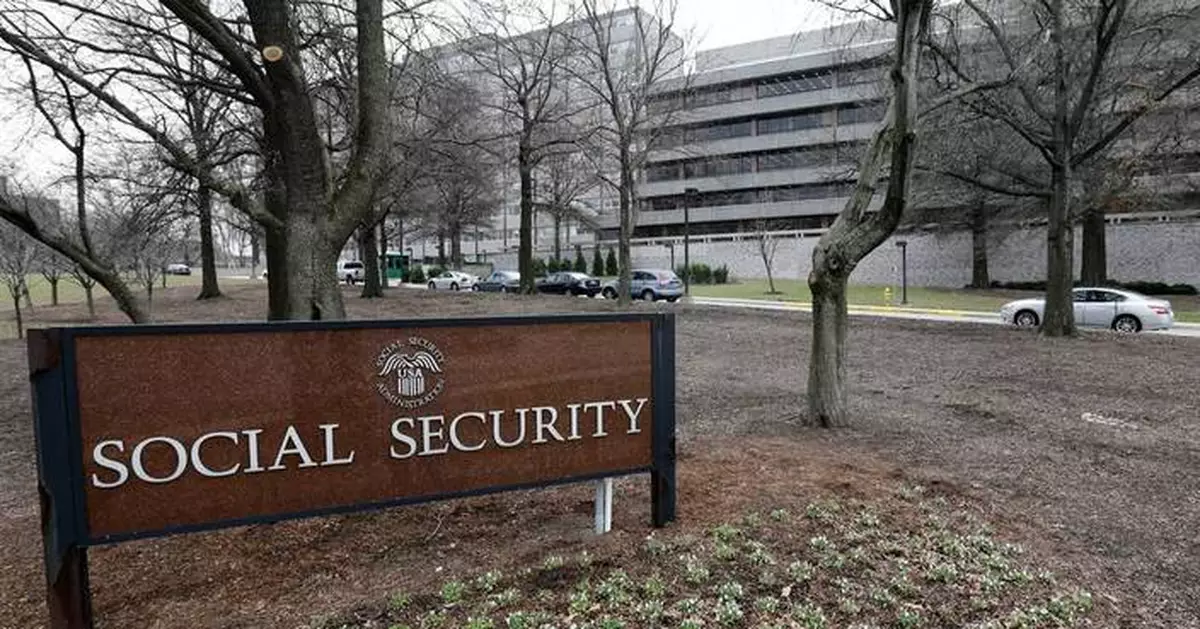
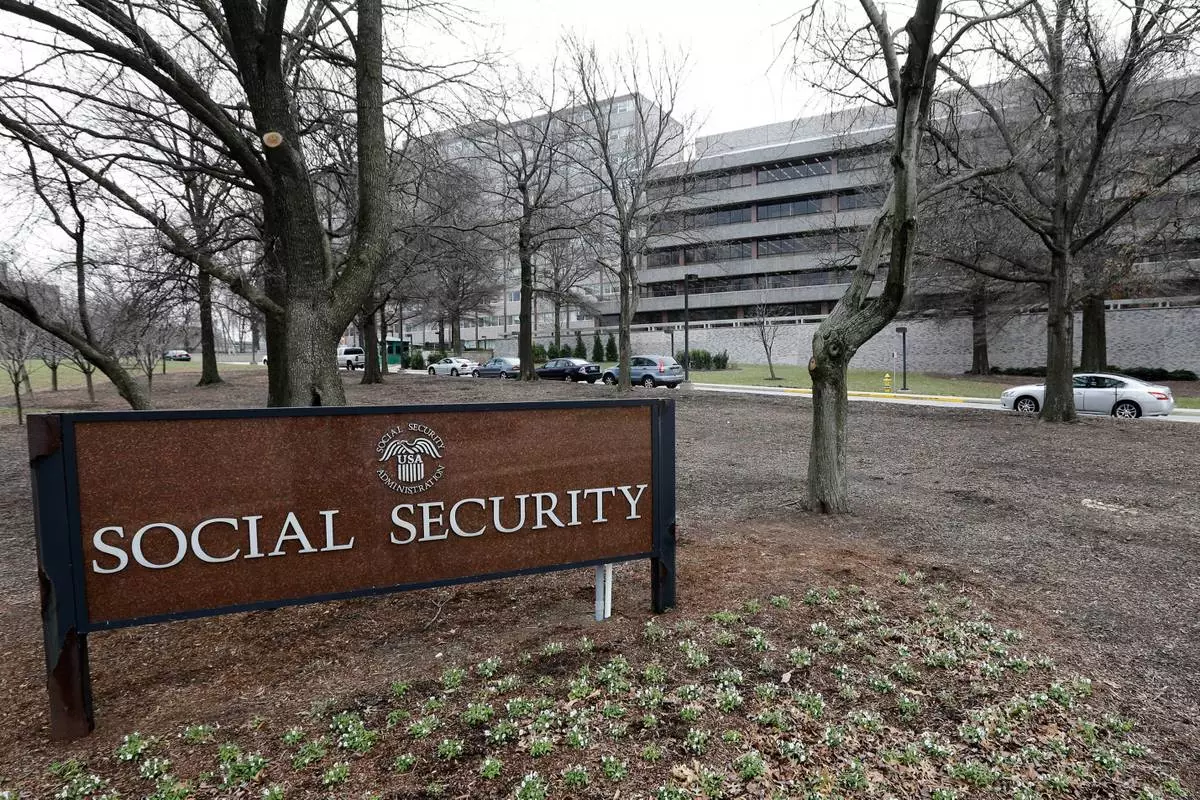
FILE - The Social Security Administration's main campus is seen in Woodlawn, Md., Jan. 11, 2013. (AP Photo/Patrick Semansky, File)


FILE - The Social Security Administration's main campus is seen in Woodlawn, Md., Jan. 11, 2013. (AP Photo/Patrick Semansky, File)

HAMIMA, Syria (AP) — A trickle of civilians left a contested area east of Aleppo on Thursday after a warning by the Syrian military to evacuate ahead of an anticipated government military offensive against Kurdish-led forces.

Government officials and some residents who managed to get out said the Kurdish-led Syrian Democratic Forces prevented people from leaving via the corridor designated by the military along the main road leading west from the town of Maskana through Deir Hafer to the town of Hamima.

The SDF denied the reports that they were blocking the evacuation.

In Hamima, ambulances and government officials were gathered beginning early in the morning waiting to receive the evacuees and take them to shelters, but few arrived.

Farhat Khorto, a member of the executive office of Aleppo Governorate who was waiting there, claimed that there were "nearly two hundred civilian cars and hundreds of people who wanted to leave” the Deir Hafer area but that they were prevented by the SDF. He said the SDF was warning residents they could face “sniping operations or booby-trapped explosives” along that route.

Some families said they got out of the evacuation zone by taking back roads or going part of the distance on foot.

“We tried to leave this morning, but the SDF prevented us. So we left on foot … we walked about seven to eight kilometers until we hit the main road, and there the civil defense took us and things were good then,” said Saleh al-Othman, who said he fled Deir Hafer with more than 50 relatives.

Yasser al-Hasno, also from Deir Hafer, said he and his family left via back roads because the main routes were closed and finally crossed a small river on foot to get out of the evacuation area.

Another Deir Hafer resident who crossed the river on foot, Ahmad al-Ali, said, “We only made it here by bribing people. They still have not allowed a single person to go through the main crossing."

Farhad Shami, a spokesman for the SDF, said the allegations that the group had prevented civilians from leaving were “baseless.” He suggested that government shelling was deterring residents from moving.

The SDF later issued a statement also denying that it had blocked civilians from fleeing. It said that “any displacement of civilians under threat of force by Damascus constitutes a war crime" and called on the international community to condemn it.

“Today, the people of Deir Hafer have demonstrated their unwavering commitment to their land and homes, and no party can deprive them of their right to remain there under military pressure,” it said.

The Syrian army’s announcement late Wednesday — which said civilians would be able to evacuate through the “humanitarian corridor” from 9 a.m. to 5 p.m. Thursday — appeared to signal plans for an offensive against the SDF in the area east of Aleppo. Already there have been limited exchanges of fire between the two sides.

Thursday evening, the military said it would extend the humanitarian corridor for another day.

The Syrian military called on the SDF and other armed groups to withdraw to the other side of the Euphrates River, to the east of the contested zone. The SDF controls large swaths of northeastern Syria east of the river.

The tensions in the Deir Hafer area come after several days of intense clashes last week in Aleppo city that ended with the evacuation of Kurdish fighters and government forces taking control of three contested neighborhoods.

The fighting broke out as negotiations have stalled between Damascus and the SDF over an agreement reached last March to integrate their forces and for the central government to take control of institutions including border crossings and oil fields in the northeast.

Some of the factions that make up the new Syrian army, which was formed after the fall of former President Bashar Assad in a rebel offensive in December 2024, were previously Turkey-backed insurgent groups that have a long history of clashing with Kurdish forces.

The SDF for years has been the main U.S. partner in Syria in fighting against the Islamic State group, but Turkey considers the SDF a terrorist organization because of its association with Kurdish separatist insurgents in Turkey.

Despite the long-running U.S. support for the SDF, the Trump administration has also developed close ties with the government of interim Syrian President Ahmad al-Sharaa and has so far avoided publicly taking sides in the clashes in Aleppo.

Ilham Ahmed, head of foreign relations for the SDF-affiliated Kurdish-led administration in northeast Syria, at a press conference Thursday said SDF officials were in contact with the United States and Turkey and had presented several initiatives for de-escalation. She said that claims by Damascus that the SDF had failed to implement the March agreement were false.

——

Associated Press journalist Hogir Al Abdo in Qamishli, Syria, contributed.

Members of the Syrian military police stand at a humanitarian crossing declared by the Syrian army in the village of Hamima, in the eastern Aleppo countryside, near the front line with the Kurdish-led Syrian Democratic Forces in Deir Hafer, Syria, Thursday, Jan. 15, 2026. (AP Photo/Ghaith Alsayed)

Members of the Syrian military police stand at a humanitarian crossing declared by the Syrian army in the village of Hamima, in the eastern Aleppo countryside, near the front line with the Kurdish-led Syrian Democratic Forces in Deir Hafer, Syria, Thursday, Jan. 15, 2026. (AP Photo/Ghaith Alsayed)

Members of the Syrian Civil Defense, stand next to their vehicles at a humanitarian crossing declared by the Syrian army in the village of Hamima, in the eastern Aleppo countryside, near the front line with the Kurdish-led Syrian Democratic Forces in Deir Hafer, Syria, Thursday, Jan. 15, 2026. (AP Photo/Ghaith Alsayed)

Members of the Syrian Civil Defense, stand next to their vehicles at a humanitarian crossing declared by the Syrian army in the village of Hamima, in the eastern Aleppo countryside, near the front line with the Kurdish-led Syrian Democratic Forces in Deir Hafer, Syria, Thursday, Jan. 15, 2026. (AP Photo/Ghaith Alsayed)

A displaced Syrian family rides in the back of a truck near a humanitarian crossing declared by the Syrian army next to a river in the village of Rasm Al-Abboud, in the eastern Aleppo countryside, near the front line with the Kurdish-led Syrian Democratic Forces in Deir Hafer, Syria, Thursday, Jan. 15, 2026. (AP Photo/Omar Albam)

A displaced Syrian family rides in the back of a truck near a humanitarian crossing declared by the Syrian army next to a river in the village of Rasm Al-Abboud, in the eastern Aleppo countryside, near the front line with the Kurdish-led Syrian Democratic Forces in Deir Hafer, Syria, Thursday, Jan. 15, 2026. (AP Photo/Omar Albam)

Displaced Syrian children and women ride in the back of a truck near a humanitarian crossing declared by the Syrian army in the village of Hamima, in the eastern Aleppo countryside, near the front line with the Kurdish-led Syrian Democratic Forces in Deir Hafer, Syria, Thursday, Jan. 15, 2026. (AP Photo/Omar Albam)

Displaced Syrian children and women ride in the back of a truck near a humanitarian crossing declared by the Syrian army in the village of Hamima, in the eastern Aleppo countryside, near the front line with the Kurdish-led Syrian Democratic Forces in Deir Hafer, Syria, Thursday, Jan. 15, 2026. (AP Photo/Omar Albam)

Displaced Syrians at a river crossing near the village of Jarirat al Imam, in the eastern Aleppo countryside, near the front line with the Kurdish-led Syrian Democratic Forces in Deir Hafer, Syria, Thursday, Jan. 15, 2026. (AP Photo/Omar Albam)

Displaced Syrians at a river crossing near the village of Jarirat al Imam, in the eastern Aleppo countryside, near the front line with the Kurdish-led Syrian Democratic Forces in Deir Hafer, Syria, Thursday, Jan. 15, 2026. (AP Photo/Omar Albam)

Recommended Articles