SÖLDEN, Austria (AP) — Still recovering from a horrifying downhill crash in January 2024, Norwegian skier Aleksander Aamodt Kilde knows his body will never be the same again.
He hopes, though, it will heal well enough for him to win races again.
“The leg will never be 100 percent, no,” Kilde said on the eve of Sunday's season opener of the men’s World Cup season.
“It is like crashing a car and taking it to the people who can fix it, it will never be the same car again,” he said. “But you can still make the car super fast.”
Kilde, the 2020 overall champion and winner of 21 World Cup races, is still some ways away from lining up at the start gate of a race and he adds to a long list of injured absentees for the traditional first giant slalom of the season on the Rettenbach glacier in the Austrian Alps.
Kilde underwent surgery for a severe cut and nerve damage in his right calf and two torn ligaments in his shoulder after crashing with the finish in sight at the classic Lauberhorn downhill in Wengen.
While “nerves take a long time to heal” in his leg, the shoulder has been causing him the most problems since. An infection prompted another surgery a year ago and forced him to sit out the entire 2024-25 season. Doctors ultimately took a strand of his hamstring muscle to fix his shoulder.
“The shoulder is limited in movement,” Kilde said. “When you ski, the move you do is always forward. And if you can’t lift your arms forwards, you are pretty much (done for).”
And then there’s the ongoing mental battle.
“I had tough days where I just wanted to rip my arm off. I was just like: ‘This is so ridiculous, I hate this,’” Kilde said. “There has been so much uncertainty. This uncertainty has really brought thoughts to my head that I’d never thought I was going to have: Retiring? Is it ever going to be OK? My shoulder, is it ever going to be able to lift anything again?”
Staying patient helped Kilde, as did leaning “on the support that I have,” which includes his fiancee, Mikaela Shiffrin. During Kilde’s recovery, Shiffrin had two crashes that kept her away from the slopes, too, though the American standout returned both times after nearly two months.
Kilde returned to skiing last summer and even joined the Norwegian team for their preparation camp in Chile, where he saw gradual improvements.
“It’s incredible how the body adapts, which is one of the reasons I see myself skiing again," Kilde said. "Because I know I am capable of adapting.”
However, a small setback followed this week. Kilde knew he wasn’t ready to race Sunday, but he still tried to ski the race hill – one of the steepest and most challenging GS courses of the circuit.
“I was standing in the start, and my head wanted to do something, but I didn’t have enough training yet to do it, so I started but I could not really make it," Kilde said. “So, that was tough mentally, but I believe that’s part of the journey.”
He hopes to start racing again at speed events in Colorado: first at a super-G in Copper Mountain on Nov. 27 — 22 months after his crash — then at a downhill in Beaver Creek a week later.
Ultimately, his eyes are set on the Milan-Cortina Winter Games in February, and on winning his first Olympic gold medal after taking bronze in the super-G and silver in the combined event in 2022.
“I feel like it’s Olympics where I start with blank pages. Hopefully I am a little bit like a dark horse, and I can just go in and hammer,” he said.
Kilde’s recovery process is part of a movie, “Downhill Skiers – Ain’t No Mountain Steep Enough”, which covers the 2024-25 downhill season and has been released this month.
Seeing the film made him feel like “being in a rollercoaster flight for two hours,” Kilde said.
“Wow, it’s kind of crazy,” he said. “I don’t want to be remembered as the guy that crashed. I want to be remembered for being the guy that crashed, came back and showed the world that he can do it.”
Eric Willemsen on X: https://x.com/eWilmedia
AP skiing: https://apnews.com/hub/alpine-skiing

FILE - Norway's Aleksander Aamodt Kilde falls during an alpine ski, men's World Cup downhill race, in Wengen, Switzerland, Saturday, Jan. 13, 2024. (AP Photo/Alessandro Trovati, file)

FILE - Norway's Aleksander Aamodt Kilde attends an alpine ski, women's World Cup giant slalom, in Soelden, Austria, Saturday, Oct. 26, 2024. (AP Photo/Marco Trovati, File)
JOHANNESBURG (AP) — Torrential rains and flooding have killed more than 100 people in South Africa, Mozambique and Zimbabwe, and authorities warned Friday that more severe weather was expected across several countries in southern Africa.
South Africa has reported at least 19 deaths in two of its northern provinces following heavy rains that began last month and led to severe flooding.
Tourists and staff members were evacuated this week by helicopter from flooded camps to other areas in the renowned Kruger National Park, which is closed to visitors while parts of it are inaccessible because of washed out roads and bridges, South Africa's national parks agency said.
In neighboring Mozambique, the Institute for Disaster Management and Risk Reduction said 103 people had died in an unusually severe rainy season since late last year. Those deaths were from various causes including electrocution from lightning strikes, drowning in floods, infrastructure collapse caused by the severe weather and cholera, the institute said.
The worst flooding in Mozambique has been in the central and southern regions, where more than 200,000 people have been affected, thousands of homes have been damaged, while tens of thousands face evacuation, the World Food Program said.
Zimbabwe’s disaster management agency said that 70 people have died and more than 1,000 homes have been destroyed in heavy rains since the beginning of the year, while infrastructure including schools, roads and bridges collapsed.
Flooding has also hit the island nation of Madagascar off the coast of Africa as well as Malawi and Zambia. Authorities in Madagascar said 11 people died in floods since late November.
The United States' Famine Early Warning System said flooding was reported or expected in at least seven southern African nations, possibly due to the presence of the La Nina weather phenomenon that can bring heavy rains to parts of southeastern Africa.
South African President Cyril Ramaphosa visited flood-stricken areas in the northern Limpopo province on Thursday and said that region had received around 400 millimeters (more than 15 inches) of rain in less than a week. He said that in one district he visited “there are 36 houses that have just been wiped away from the face of the Earth. Everything is gone ... the roofs, the walls, the fences, everything.”
The flooding occurred in the Limpopo and Mpumalanaga provinces in the north, and the South African Weather Service issued a red-level 10 alert for parts of the country for Friday, warning of more heavy rain and flooding that poses a threat to lives and could cause widespread infrastructure damage.
The huge Kruger wildlife park, which covers some 22,000 square kilometers (7,722 square miles) across the Limpopo and Mpumalanga provinces, has been impacted by severe flooding and around 600 tourists and staff members have been evacuated from camps to high-lying areas in the park, Kruger National Park spokesperson Reynold Thakhuli said.
He couldn't immediately say how many people there were in the park, which has been closed to visitors after several rivers burst their banks and flooded camps, restaurants and other areas. The parks agency said precautions were being taken and no deaths or injuries had been reported at Kruger.
The South African army sent helicopters to rescue other people trapped on the roofs of their houses or in trees in northern parts of the country, it said. An army helicopter also rescued border post officers and police officers stranded at a flooded checkpoint on the South Africa-Zimbabwe border.
Southern Africa has experienced a series of extreme weather events in recent years, including devastating cyclones and a scorching drought that caused a food crisis in parts of a region that often suffers food shortages.
The World Food Program said more than 70,000 hectares (about 173,000 acres) of crops in Mozambique, including staples such as rice and corn, have been waterlogged in the current flooding, worsening food insecurity for thousands of small-scale farmers who rely on their harvests for food.
Imray reported from Cape Town, South Africa. AP writers Charles Mangwiro in Maputo, Mozambique, and Farai Mutsaka in Harare, Zimbabwe, contributed to this report.
AP Africa news: https://apnews.com/hub/africa
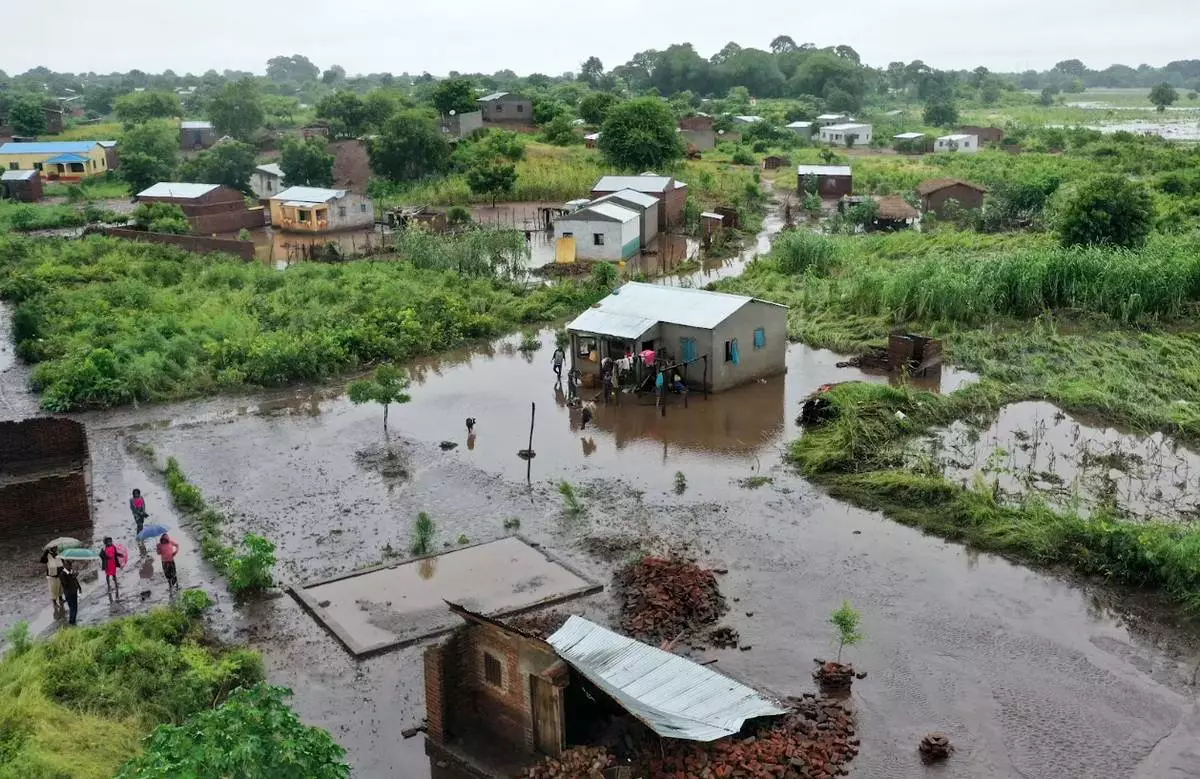
This image made from video shows the scene after flooding in Tete Province, Mozambique, Thursday, Jan. 15, 2026. (AP Photo)
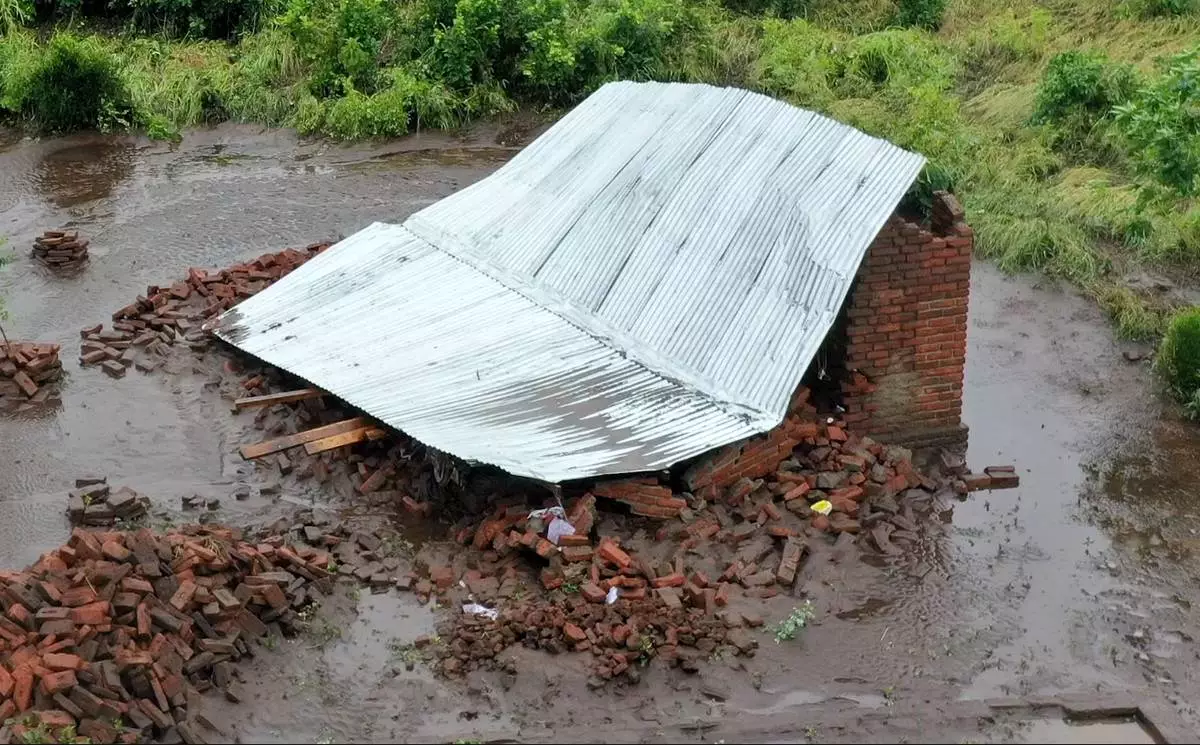
This image made from video shows the scene after flooding in Tete Province, Mozambique, Thursday, Jan. 15, 2026. (AP Photo)
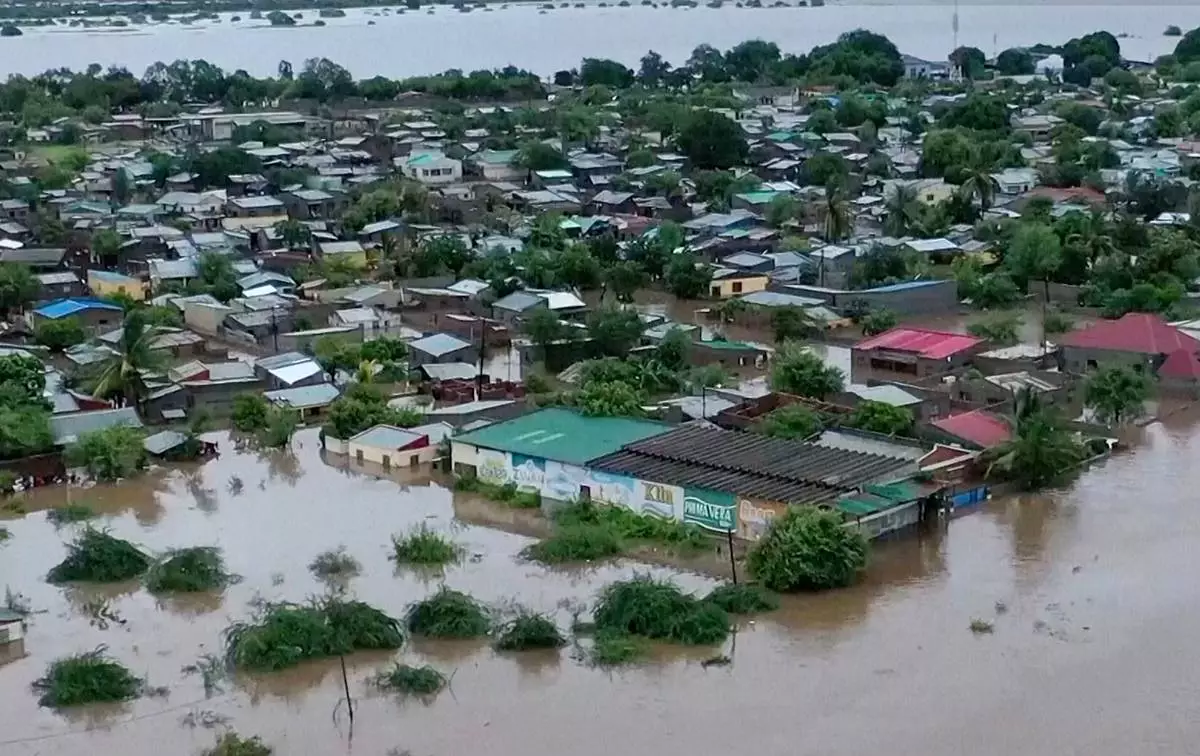
This image made from video shows the scene after flooding in Tete Province, Mozambique, Thursday, Jan. 15, 2026. (AP Photo)