A new shipping report uses big data to chart the South China Sea's rise as one of the world's densest and most vital maritime arteries, revealing a dynamic network of ports, routes, and cargo that flows through everyday life.
Released on Friday, the Report on Shipping Safety and Development in the South China Sea (2025) presents a comprehensive analysis of maritime traffic in the region through the three key elements of shipping, namely ports, routes, and cargo, offering a multidimensional view of the South China Sea's dynamic map.
"The South China Sea has an impressive shipping record, it handles 40 percent of global port calls, nearly 40 percent of crude oil, and 34 percent of natural gas shipments. You could say the South China Sea is a central hub for global maritime trade," said Jia Peng, director of the Engineering Research Center of Intelligent Technologies and Equipment for Integrated Transportation Systems under the Ministry of Education of Dalian Maritime University.
In fact, these numbers are even more remarkable. The South China Sea links four major economic zones: China-Japan-Korea, ASEAN, Australia and Africa. Its economic value per unit of sea area far exceeds that of other maritime regions.
"I've been to all the world's busiest seas, and the South China Sea has the densest shipping routes globally. That's because it has many surrounding countries and its shipping routes connect to so many ports. With a wide variety of cargo types, the shipping system in the South China Sea functions just as a high-speed, precision machine," said Kuang Haibo, dean at the Institute for Dalian Northeast Asia International Shipping Center.
A unique 'sea overpass' has been formed by ships, cargo, and routes, enabling the South China Sea to operate efficiently with heavy traffic and high throughput.
"Many Chinese ports, I think, have very good service. When you go to the ports in Zhoushan, Ningbo, you see the port development. The equipment for the ship cargo operation is different from when you go to other Asian countries. There is need for collaboration between the nations," said Philip Koduah, former Ghanaian tanker captain.
In this maritime transport network, major ports like Singapore and Hong Kong serve as key hubs in the global container transshipment system. At the same time, ports such as Qinzhou, Kaohsiung, Laem Chabang and Surabaya act as peripheral diverters, helping to flexibly ease the pressure on the core ports. This is the remarkable "sea overpass" of the South China Sea.
Thanks to the efficient collaboration of smart port management, collection and distribution capabilities, and streamlined customs clearance, it has miraculously achieved the highest average number of port calls, but with shorter anchoring and berthing time.
"In 2023, nearly 76 percent of crude oil imports to China, Japan, and South Korea passed through the South China Sea. About 21 percent of the world's iron ore and nearly 21 percent of global soybean shipments were transported via this route. In short, the South China Sea can be regarded as the vital arteries for the global flow of resources," said Jia.
"Port and logistics cooperation between China and ASEAN help contribute to bilateral trust building, primarily rooted in fostering a predictable business environment where transparency prevails," said Ong Tee Keat, former Minister of Transport of Malaysia and also president of the Belt and Road Initiative Caucus for Asia Pacific.
At the same time, ports around the South China Sea are making visible progress in their commitment to green transformation.
"At the Yangpu International Container Terminal, 100 percent of container trucks are now powered by electricity, reducing carbon emissions by over 3,000 tons annually. The terminal also promotes the use of shore power, cutting an additional 1,000 tons of emissions each year," said Du Chengcai, deputy general manager of Production Operation Center of Hainan Harbor and Shipping International Port Company.
With this vibrant and dynamic "sea overpass", countries around South China Sea are connecting with the world, empowering one another, looking to the future, and becoming brave and innovative partners in this era.
"Countries like Malaysia has a national goal to want to bring ourselves to become a high income nation by 2050. So the matured shipping system within ASEAN itself is going to be a remarkable boost towards Malaysia's achieving of that goal," said Peter T.C. Chang, visiting senior fellow at the ISEAS-Yusof Ishak Institute in Singapore.
"Indonesia as a country consists of 1,000 islands. So it means these oceans have important positions for Indonesia's development. All the countries living on the South China Sea's territories have responsibility to maintain security and the stability," said Veronika S. Saraswati, director of the Indonesia-China Partnership Studies Institute.
Since the 15th century, large Chinese-built sailing ships pioneered routes from the South China Sea to South America and Europe. Yet they were never free from the threats of typhoons, tsunamis and maritime accidents.
"This is the Great BERYL, a Hong Kong vessel. She is going to Rizhao (city in east China's Shandong Province). Now she is passing the South China Sea. If the vessels have any incident, they will contact the Chinese MSA (Maritime Safety Administration) for assistance," said Koduah.
According to the report, China's maritime rescue capabilities have not only established a comprehensive rescue and support system across the South China Sea, but have also built a robust safety net through a wide range of public maritime safety services, ensuring smooth and reliable flow from major shifting arteries to the micro-level logistics.
"Conducting joint drills like maritime accident response is to enhance operational rapport and crisis-response confidence," said Ong.
This land that was once shaped by monsoons, is breaking free from cycles of limitation, moving from isolation to openness and from the margins to the center. It is now drawing more partners to explore new routes together, setting sail toward the stars and the sea.
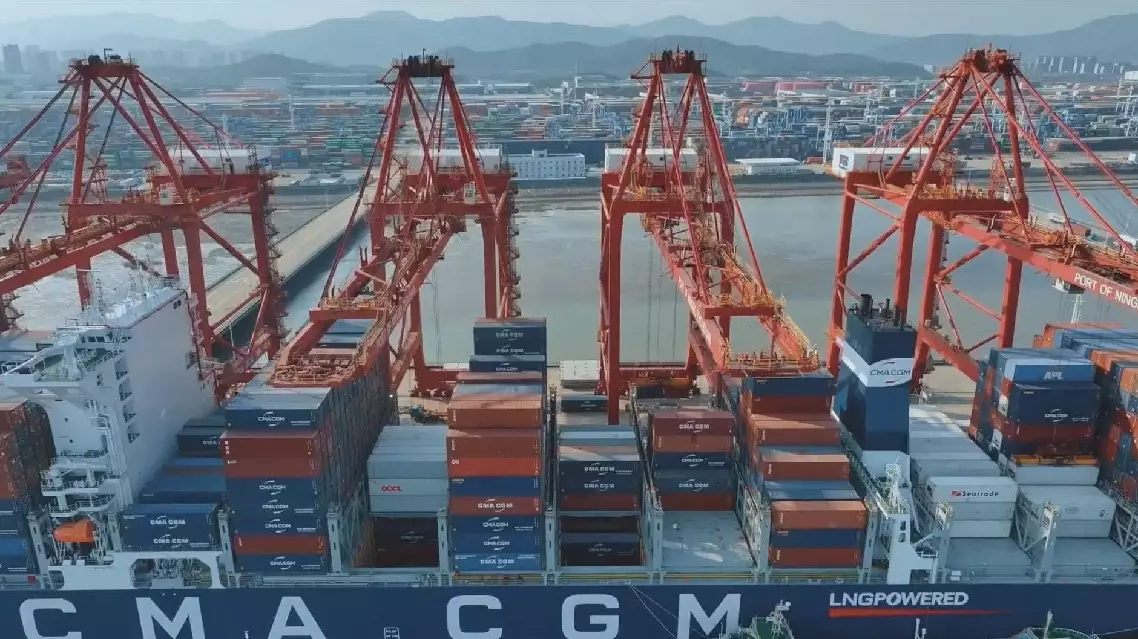
New report maps South China Sea's rise as key global shipping artery
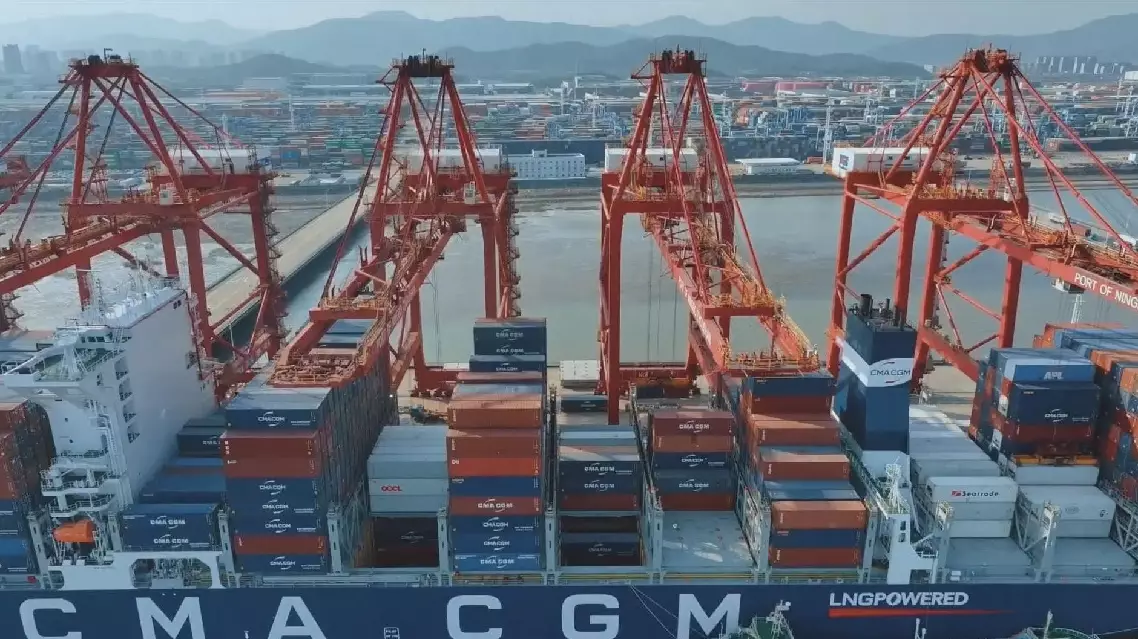
New report maps South China Sea's rise as key global shipping artery