Recent U.S. trade pressure is unexpectedly bringing Southeast Asian nations and China closer together, strengthening their economic partnership through the Regional Comprehensive Economic Partnership (RCEP) trade agreement, analysts say.
U.S. trade protectionism have accelerated economic integration within RCEP -- the world's largest free trade deal, with all 15 member countries pledging to deepen ties. Several additional economies have applied to join it.
"So it's just a matter of time, getting the parameters right to make sure that parties that come and join us are of the same mind, and having the same basic principles of wanting to promote trade and regional integration," said Rebecca Sta Maria, former executive director of the Asia-Pacific Economic Cooperation (APEC) Secretariat in Malaysia.
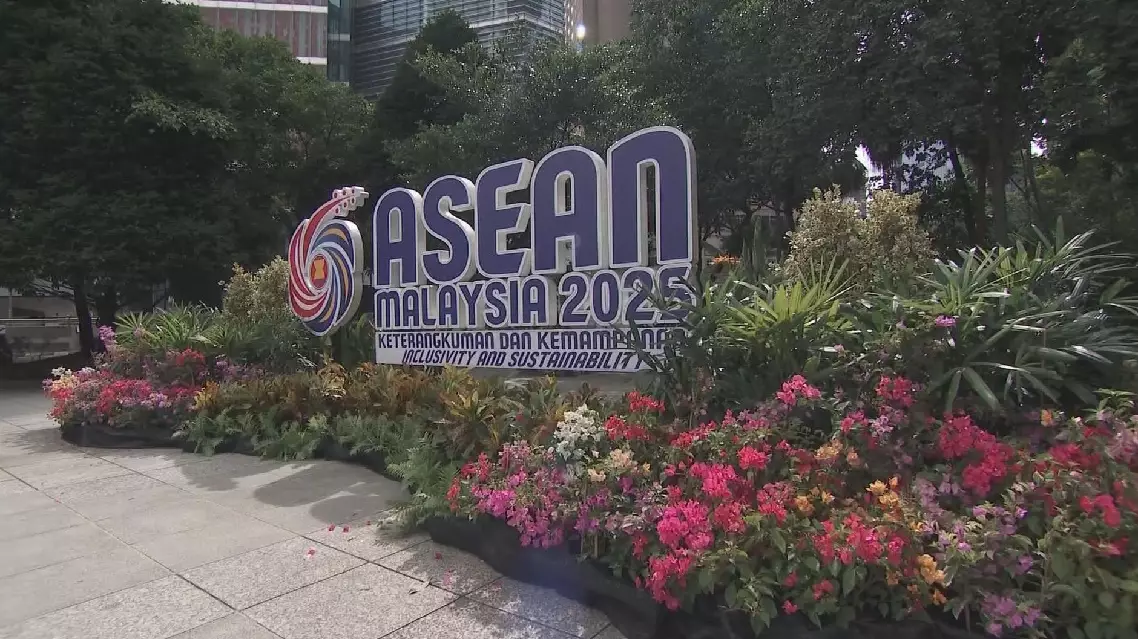
Like fellow ASEAN members, Malaysia, which holds the rotating ASEAN chairmanship for 2025, faces an uncertain trade partnership with the U.S. due to fluctuating tariffs.
China and ASEAN, meanwhile, have agreed to upgrade their existing free trade agreement, aiming to further boost trade and investment, and targeting emerging sectors like the digital and green economies.
"ASEAN has comprehensively displaced the EU as China's greatest trading partner, currently up to 142 percent of EU-China trade and almost 190 percent of China-U.S. trade. So this is going to go on, continually," said Bunn Nagara, director and senior fellow from the Belt and Road Initiative Caucus for Asia-Pacific.
None of this means that ASEAN will spurn U.S. trade or investment, though analysts say relations between ASEAN and America moving forward will be tempered by a new sense of wariness.
"ASEAN countries are trying to realign their supply change to buffer against the impact of the trade war. That is a short-term impact. I think the medium- and long-term impact is this: the kind of trust that we have had on the U.S. and more broadly, the Western-led economic order, has been seriously undermined," said Peter Tc Chang, former deputy director of the Institute of China Studies, University of Malaysia.
U.S. tariffs push ASEAN, China closer together: analysts