As China's population of ages 60 and above surpassed 300 million in 2024, and the country faces rising demand for high-quality elderly care, international players are bringing global solutions to the market.
For thousands of years, filial piety has been a cornerstone of Chinese society. Traditionally, Chinese people express it by staying close to their aging parents.
But today, urban life and changing lifestyles are quietly reshaping that tradition, as more seniors express a desire to age with independence.
"I have stayed in both my son's and daughter's homes before. As I used to live alone, I never felt quite at ease living with them," said Dai Leyi, a care facility resident in Shanghai.
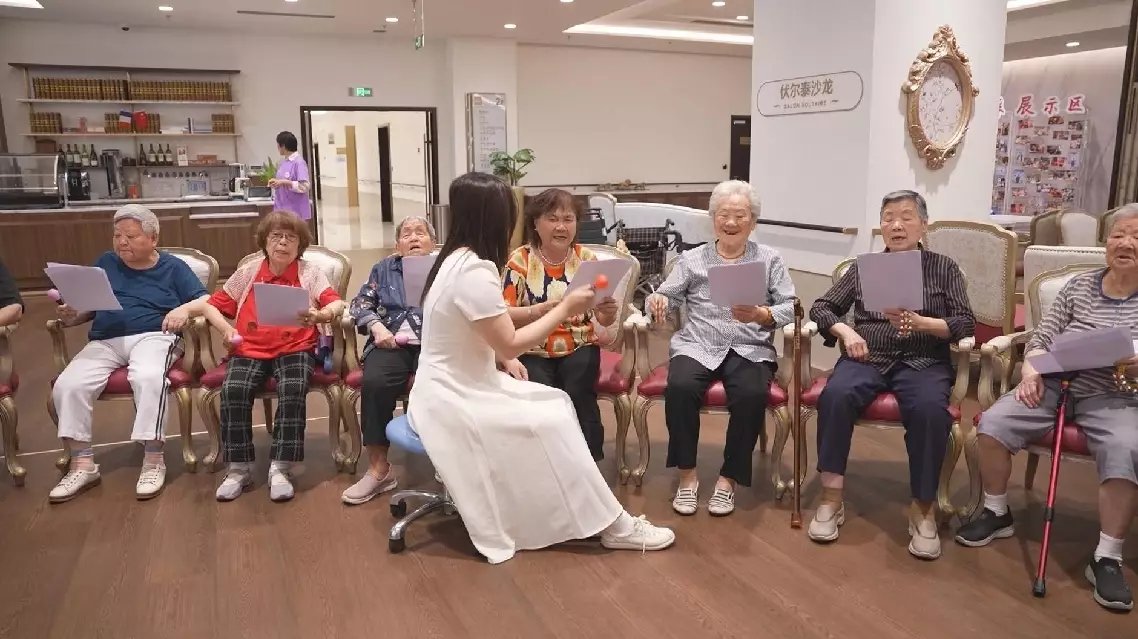
Seniors at the nursing home said, like many others, they once had doubts about moving into a facility - but later found this place warm and vibrant - nothing like what they had feared. They decided to stay.
"People here truly care for one another, and we really hit it off. Our relationships feel like a big family," another senior from the facility named Chen Jiejing said.
This facility is operated by a French elderly care group that has been in China for over a decade, drawing on more than 30 years of global experience.
A major domestic study on aging shows that over 40 million elderly Chinese are either fully or partially disabled. Around 15 million are living with dementia — often struggling with memory loss, emotional outbursts, and confusion.
As the senior population continues to grow, the demand for more professional elderly care is becoming increasingly urgent. And international providers, with their extensive experience, may offer valuable solutions.
In another facility, which is run by a Japanese company specializing in dementia care, located in Chengdu, southwest China's Sichuan Province, caregivers say emotional support, tailored to each patient's condition, plays an important role in helping them improve.
Here, seniors are also encouraged to help one another and join group activities. These small acts help restore a sense of self-worth and belonging.
These approaches aren't new - they stem from decades of practice in countries that began aging earlier.
At the core of these foreign practices, they say, is a deep respect, not only for the seniors, but also for the staff who care for them.
"One of our biggest strengths is how we bring human-oriented values into everyday care. We've built a system that supports and empowers our staff. When they feel respected and valued, they naturally pass that warmth and respect on to the elderly," said Xing Shanshan, an official with the Chinese branch of the French elderly care group.
These institutions are part of a growing trend. In recent years, China has expanded its foreign investment catalogue to encourage overseas participation in the senior care sector.
"Services such as elderly care and medical care are the key areas of China's new round of high-level opening up. We have continuously expanded institutional opening up of rules, regulations, management and standards," said Zhao Jing, associate professor from the International Cooperation Center of the National Development and Reform Commission.
These policy changes reflect the government's commitment to expanding elderly care options and meeting the diverse needs of an aging population.
Today, filial piety remains at the heart of Chinese values still, and is now supported by modern systems, professional care, and communities.
More seniors are choosing for themselves how they want to grow old - enjoying their later years with freedom, with dignity, and with one another.
China transforms elderly care by blending tradition with global expertise