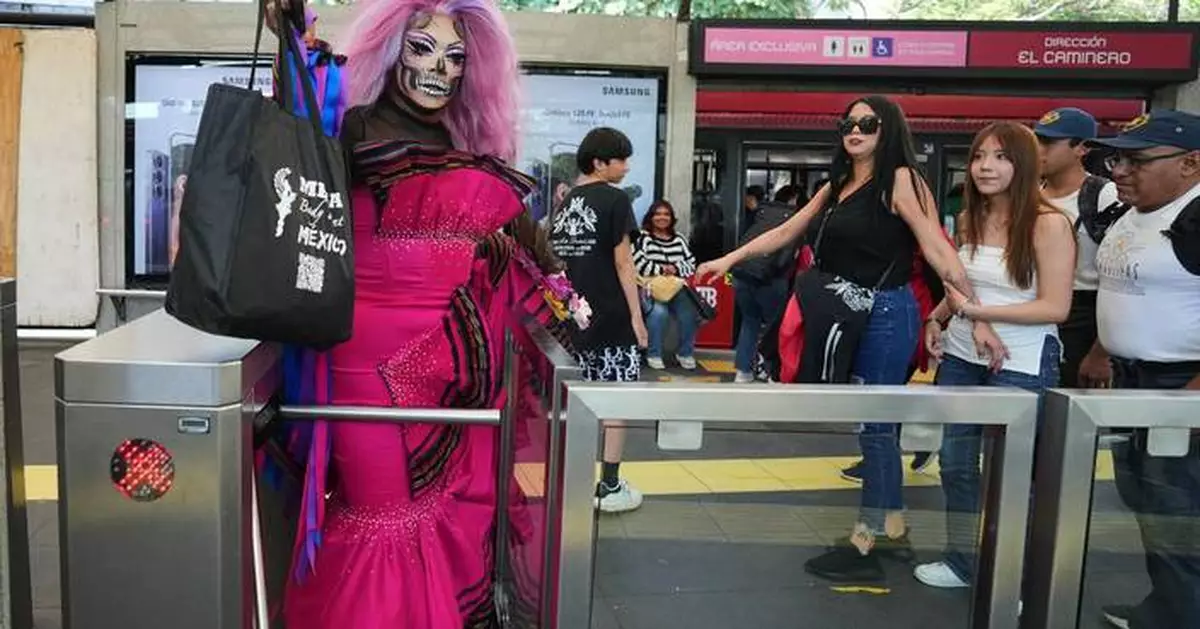
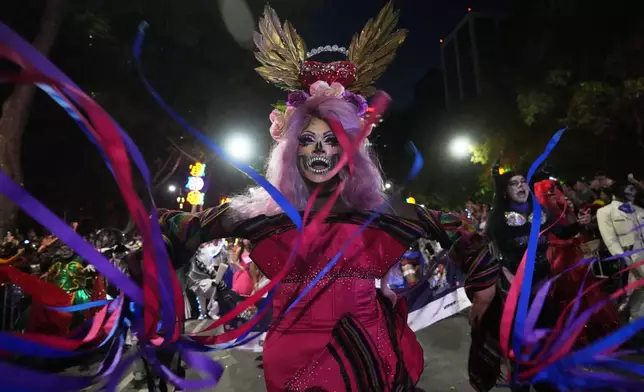
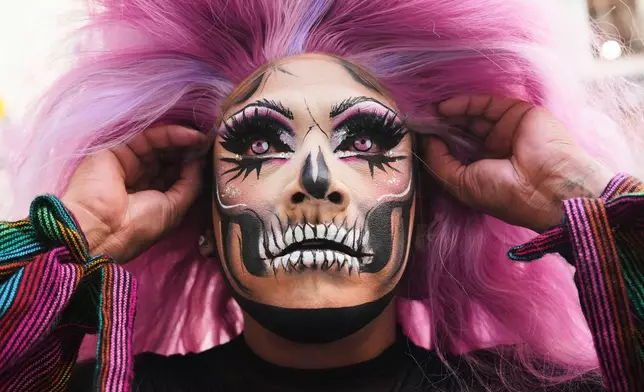
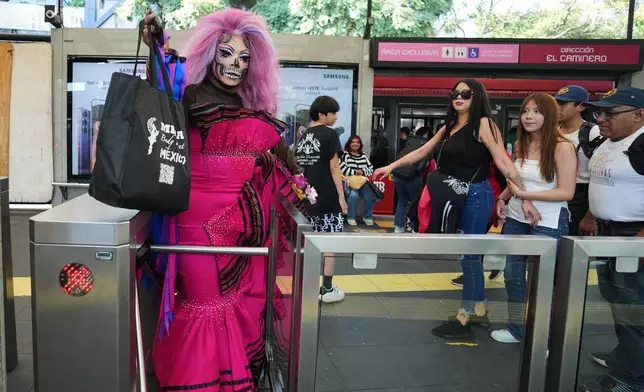
MEXICO CITY (AP) — Walking in a pink dress inspired by Mexican folk art with a mermaid-style silhouette, drag artist Ángel Arumir adjusts his flower crown on top of his purple wig as he steps into a sea of skeletons.
Around him, thousands of people in vibrant costumes and skull-like makeup gather for Mexico City’s annual Catrina parade, a tribute to one of Mexico’s most iconic symbols of the Day of the Dead.
Click to Gallery
Drag artist Angel Arumir takes part in the annual Day of the Dead Catrina parade in Mexico City, Sunday, Oct. 26, 2025. (AP Photo/Claudia Rosel)
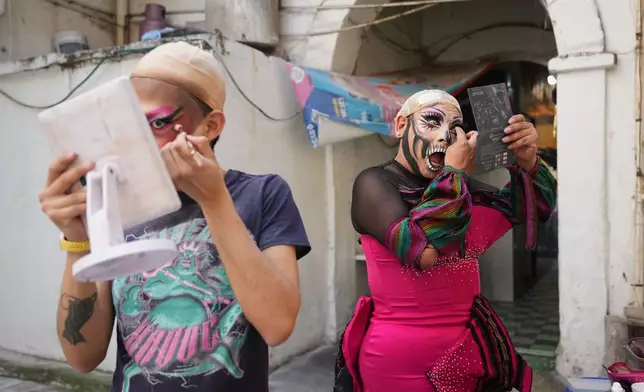
Drag artists apply makeup for the Day of the Dead Catrina parade in Mexico City, Sunday, October. 26, 2025. (AP Photo/Claudia Rosel)
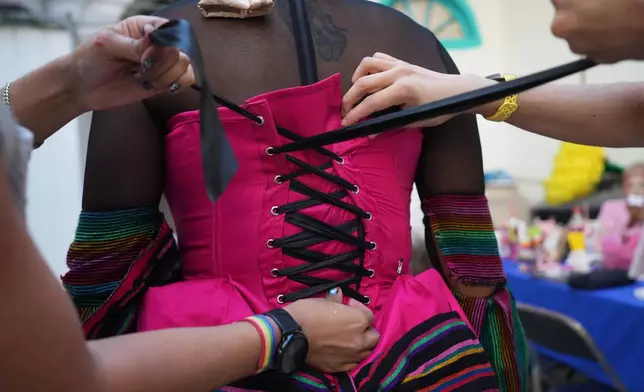
Drag artists prepare a costume ahead of the annual Day of the Dead Catrina parade in Mexico City, Sunday, Oct. 26, 2025. (AP Photo/Claudia Rosel)
Drag artist Angel Arum fits his wig for the Day of the Dead Catrina parade in Mexico City, Sunday, Oct. 26, 2025. (AP Photo/Claudia Rosel)
Drag artist Angel Arum leaves bus station on the way to the annual Day of the Dead Catrina parade in Mexico City, Sunday, Oct. 26, 2025. (AP Photo/Claudia Rosel)
The holiday begins Oct. 31, remembering those who died in accidents. It continues Nov. 1 to recall those who died in childhood and then on Nov. 2 celebrates those who died as adults.
The Catrina is a skeleton often dressed in elegant clothing that has turned into a symbol of the country’s annual celebration. But Arumir’s collective, Exoticas, is giving their own twist to the Mexican tradition.
Exóticas, made up of nearly 200 LGBTQ+ artists, stylists and designers, was one of more than 40 groups marching in this year’s parade.
“This day is our chance to show our art and our hearts with dignity,” said Arumir, 42, who has spent nearly two decades performing in drag. “It has been difficult to gain our place in events related to our traditions.”
Other groups represent a wide range of social causes, each adding its own rhythm, color and message to the streets. They include mothers demanding justice for Mexico’s disappeared, collectives honoring pre-Hispanic traditions and fans dressed to celebrate their favorite music genres.
For Arumir and his fellow performers, the festival offers a rare moment of safety and solidarity in a country where LGBTQ+ people, and especially transgender women, face high levels of violence.
More than 80 queer people were murdered in Mexico last year, ranking second in Latin America and the Caribbean to only Colombia for this community, according to Sin Violencia LGTBQ+, a regional network that tracks such violence.
Transgender women accounted for 55 of those deaths, said Jair Martínez, a Mexican activist who is part of the network. He noted that discrimination against them has increased in the last five years as they have become more visible. “Before, many of these women worked in clandestine spaces,” Martínez said. “Now they have more exposure in public and that could explain why we’ve seen more violence towards them.”
Preparing for the parade is a yearlong labor of love. Between jobs and family responsibilities, Arumir and his team sketch designs, sew costumes and experiment with makeup, channeling their passion for drag and Mexican symbols into every detail.
Each dress is unique, with vibrant colors and designs made for the occasion. Some of the costumes carry powerful messages. One performer, Rich González, traveled from Tijuana to take part, wearing an outfit that honors members of the LGBTQ+ community who have been killed in the northern Mexican city long haunted by cartel violence. In black and adorned with colorful crosses cascading down the trailing train of a skeleton figure, González wears it proudly among friends he made when he first marched last year.
Also among those marching is 18-year-old Santiago Mercado, who is participating for the first time.
“This is a chance to celebrate our culture in a space where we can keep fighting for our rights,” he said.
The Catrina parade is a relatively new tradition. It began in 2014, when makeup artist Jessica Esquivias gathered friends to celebrate Mexican icons and push back against the growing popularity of Halloween imagery on store shelves.
What started as a small circle of creatives showing off their craft has grown into one of Mexico City’s biggest pre– Day of the Dead events, drawing tens of thousands of participants and spectators downtown.
The Catrina herself was born from satire more than a century ago. The tall skeleton in a feathered hat first appeared in the early 1900s, drawn by artist José Guadalupe Posada to mock Mexico’s upper class and its obsession with European elegance, a reminder that death spares no one, rich or poor.
Today, the Catrina spirit of defiance finds new meaning in Arumir’s work. “I want Exóticas to be an inclusive space where anyone can join and be themselves in freedom and safety,” he said.
As the parade rolls through downtown Mexico City, Arumir and his group dance to traditional Latino pop songs while people crowd the sidewalks, lifting their phones and smiling back at them.
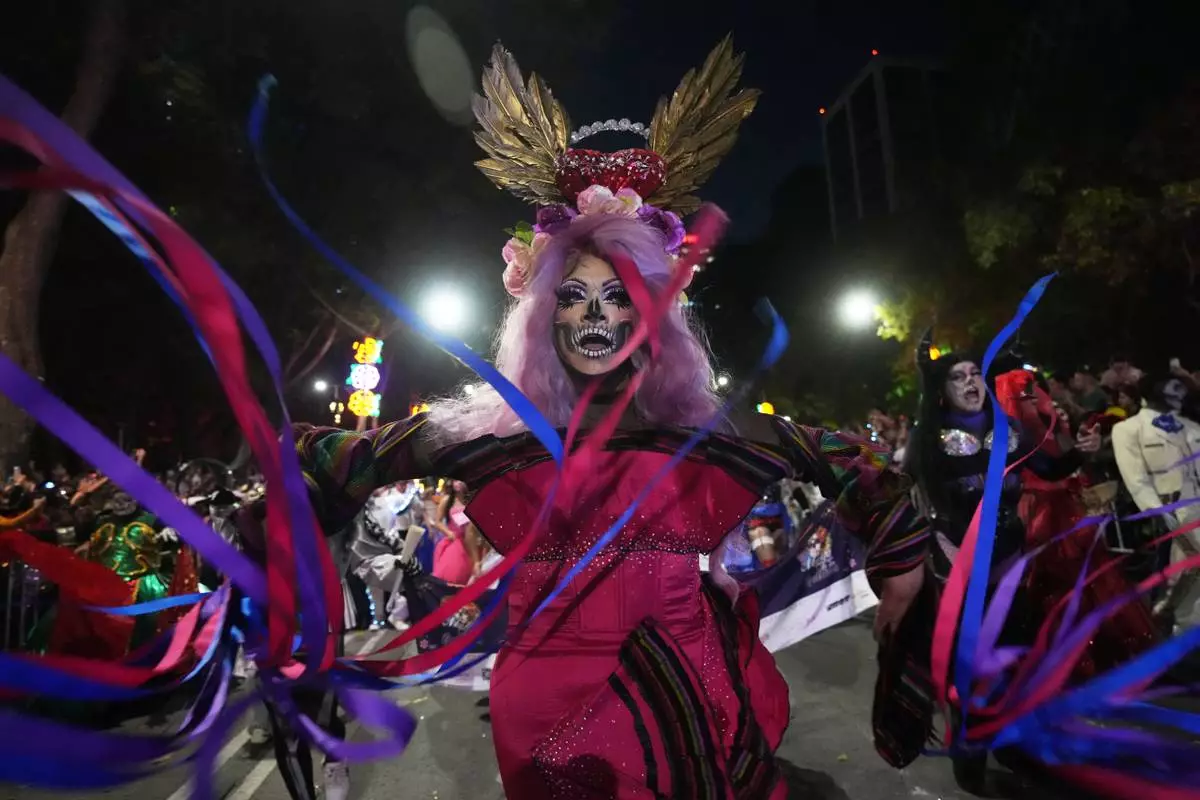
Drag artist Angel Arumir takes part in the annual Day of the Dead Catrina parade in Mexico City, Sunday, Oct. 26, 2025. (AP Photo/Claudia Rosel)
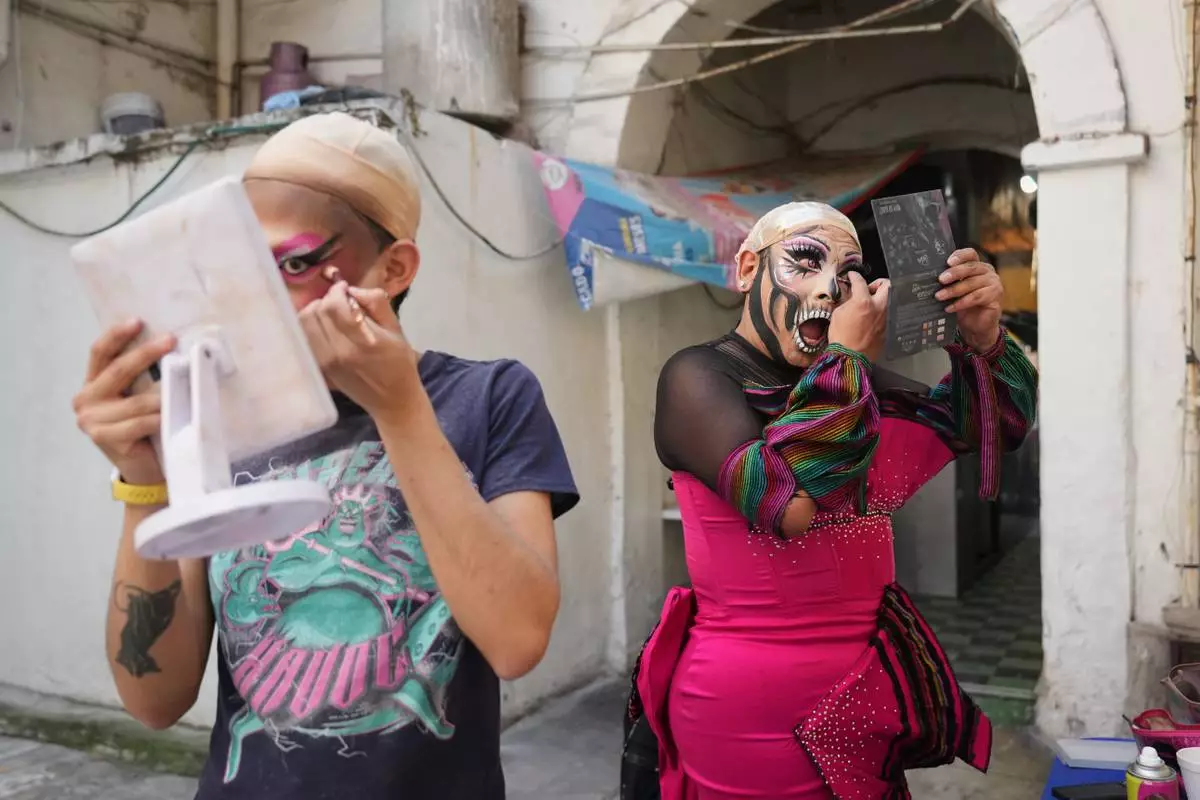
Drag artists apply makeup for the Day of the Dead Catrina parade in Mexico City, Sunday, October. 26, 2025. (AP Photo/Claudia Rosel)
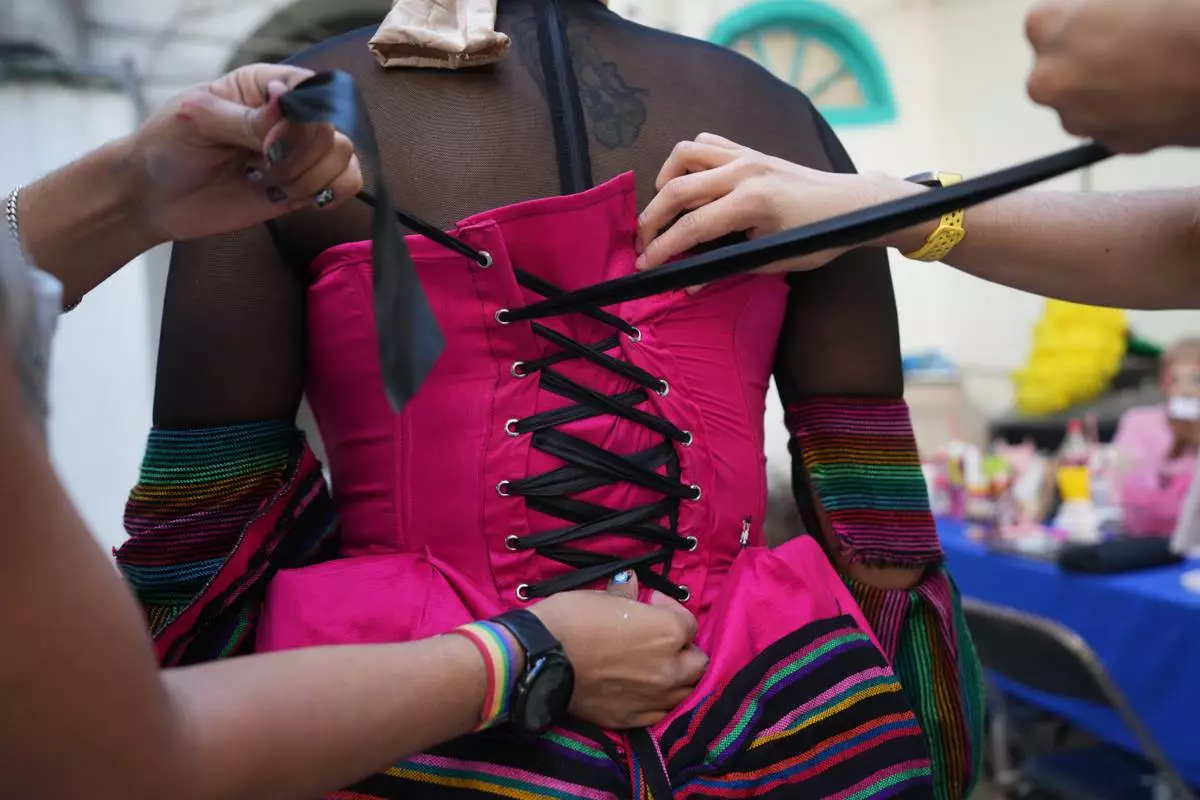
Drag artists prepare a costume ahead of the annual Day of the Dead Catrina parade in Mexico City, Sunday, Oct. 26, 2025. (AP Photo/Claudia Rosel)
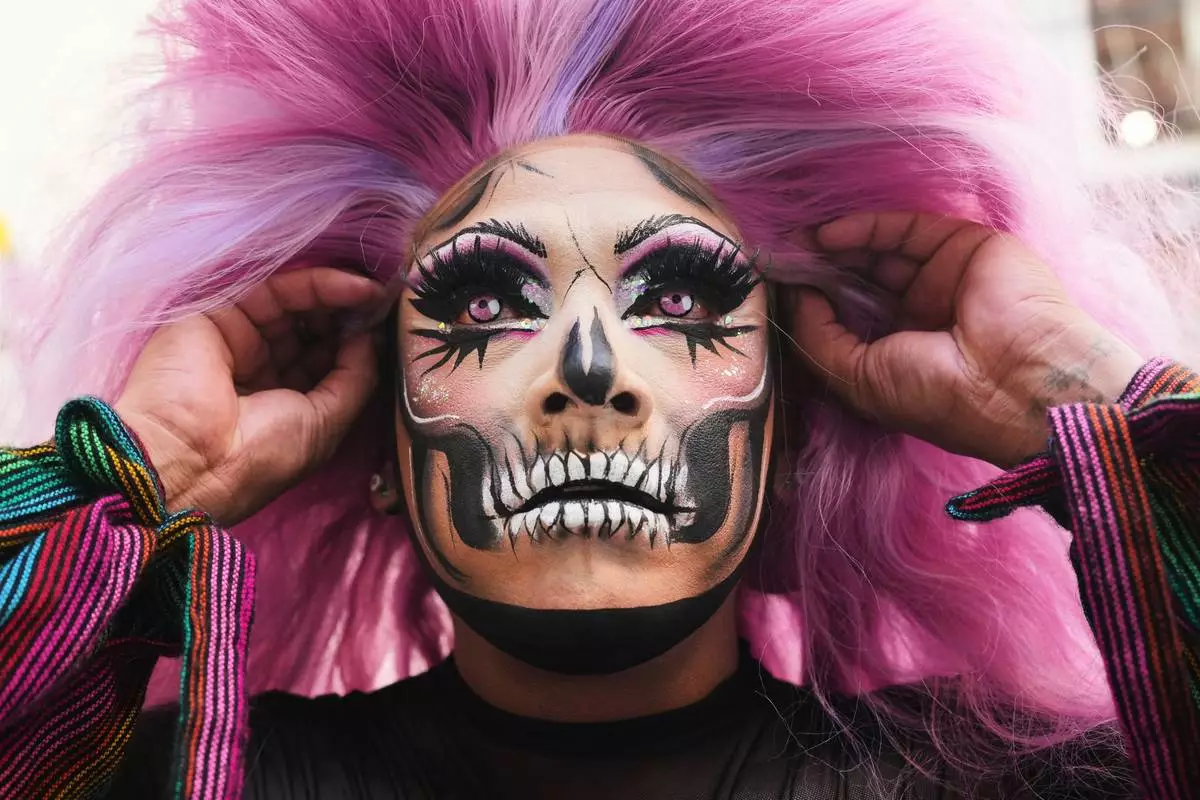
Drag artist Angel Arum fits his wig for the Day of the Dead Catrina parade in Mexico City, Sunday, Oct. 26, 2025. (AP Photo/Claudia Rosel)
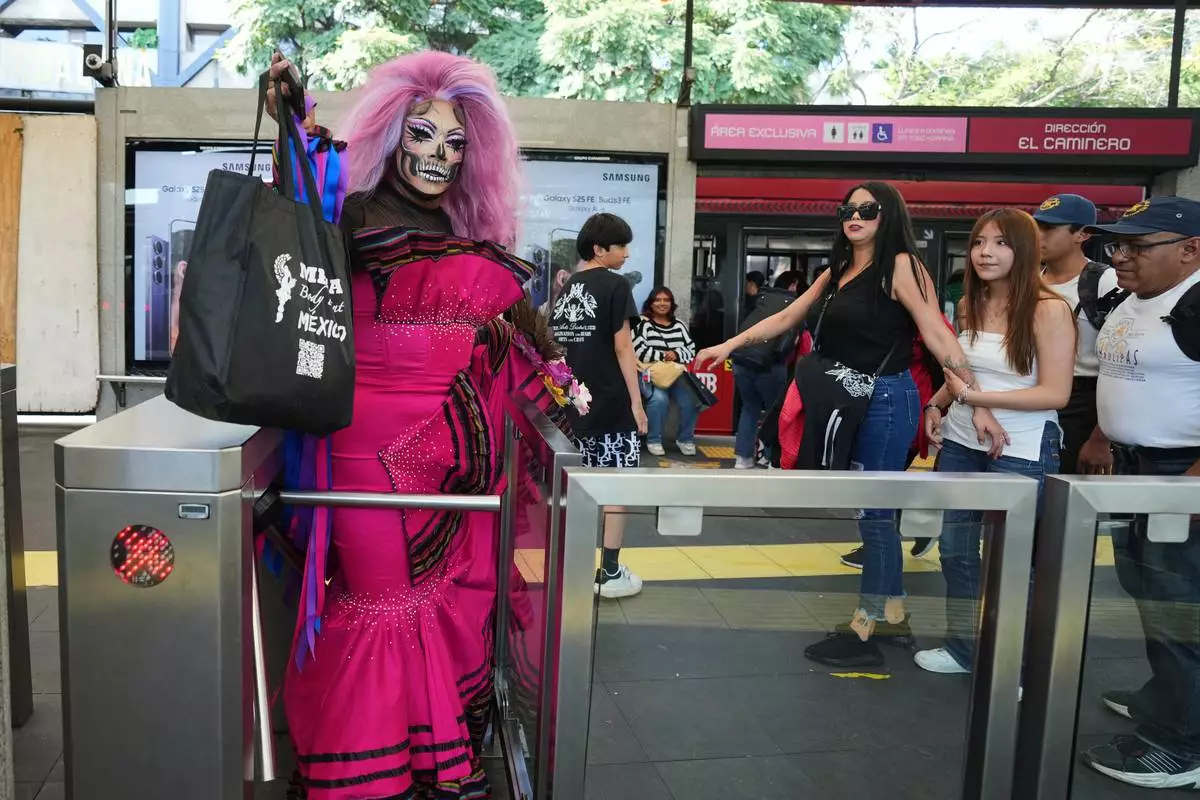
Drag artist Angel Arum leaves bus station on the way to the annual Day of the Dead Catrina parade in Mexico City, Sunday, Oct. 26, 2025. (AP Photo/Claudia Rosel)
HAVANA (AP) — Cuban soldiers wearing white gloves marched out of a plane on Thursday carrying urns with the remains of the 32 Cuban officers killed during a stunning U.S. attack on Venezuela as trumpets and drums played solemnly at Havana's airport.
Nearby, thousands of Cubans lined one of the Havana’s most iconic streets to await the bodies of colonels, lieutenants, majors and captains as the island remained under threat by the administration of U.S. President Donald Trump.
The shoes of Cuban soldiers clacked as they marched stiff-legged into the headquarters of the Ministry of the Armed Forces, next to Revolution Square, with the urns and placed them on a long table next to the pictures of those slain so people could pay their respects.
Thursday’s mass funeral was only one of a handful that the Cuban government has organized in almost half a century.
Hours earlier, state television showed images of more than a dozen wounded people accompanied by Cuban Foreign Minister Bruno Rodríguez arriving Wednesday night from Venezuela. Some were in wheelchairs.
The official announcer indicated that they were “combatants” who had been “wounded” in Venezuela. They were greeted by the Minister of the Interior, Lázaro Alberto Álvarez, and the Minister of the Revolutionary Armed Forces, Álvaro López Miera.
Those injured and the bodies of those killed arrived as tensions grow between Cuba and U.S., with President Donald Trump recently demanding that the Caribbean country make a deal with him before it is “too late.” He did not explain what kind of deal.
Trump also has said that Cuba will no longer live off Venezuela's money and oil. Experts warn that the abrupt end of oil shipments could be catastrophic for Cuba, which is already struggling with serious blackouts and a crumbling power grid.
Officials unfurled a massive flag at Havana's airport as President Miguel Díaz-Canel, clad in military garb as commander of Cuba's Armed Forces, stood silent next to former President Raúl Castro, with what appeared to be the relatives of those slain looking on nearby.
Cuban Interior Minister Lázaro Alberto Álvarez Casa said Venezuela was not a distant land for those killed, but a “natural extension of their homeland.”
“The enemy speaks to an audience of high-precision operations, of troops, of elites, of supremacy,” Álvarez said in apparent reference to the U.S. “We, on the other hand, speak of faces, of families who have lost a father, a son, a husband, a brother.”
Álvarez called those slain “heroes,” saying that they were example of honor and “a lesson for those who waver.”
“We reaffirm that if this painful chapter of history has demonstrated anything, it is that imperialism may possess more sophisticated weapons; it may have immense material wealth; it may buy the minds of the wavering; but there is one thing it will never be able to buy: the dignity of the Cuban people,” he said.
Thousands of Cubans lined a street where motorcycles and military vehicles thundered by with the remains of those killed.
“They are people willing to defend their principles and values, and we must pay tribute to them,” said Carmen Gómez, a 58-year-old industrial designer, adding that she hopes no one invades given the ongoing threats.
When asked why she showed up despite the difficulties Cubans face, Gómez replied, "It’s because of the sense of patriotism that Cubans have, and that will always unite us.”
Cuba recently released the names and ranks of 32 military personnel — ranging in age from 26 to 60 — who were part of the security detail of Venezuelan President Nicolás Maduro during the raid on his residence on January 3. They included members of the Revolutionary Armed Forces and the Ministry of the Interior, the island’s two security agencies.
Cuban and Venezuelan authorities have said that the uniformed personnel were part of protection agreements between the two countries.
Meanwhile, a demonstration was planned for Friday across from the U.S. Embassy in an open-air forum known as the Anti-Imperialist Tribune. Officials have said they expect the demonstration to be massive.
“People are upset and hurt. There’s a lot of talk on social media; but many do believe that the dead are martyrs” of a historic struggle against the United States, analyst and former diplomat Carlos Alzugaray told The Associated Press.
In October 1976, then-President Fidel Castro led a massive demonstration to bid farewell to the 73 people killed in the bombing of a Cubana de Aviación civilian flight financed by anti-revolutionary leaders living in the U.S. Most of the victims were Cuban athletes returning to their island.
In December 1989, officials organized “Operation Tribute” to honor the remains of more than 2,000 Cuban combatants who died in Angola during Cuba’s participation in the war that defeated the South African army and ended the apartheid system. In October 1997, memorial services were held following the arrival of the remains of guerrilla commander Ernesto “Che” Guevara and six of his comrades, who died in 1967.
A day before the remains of those slain arrived in Cuba, U.S. Secretary of State Marco Rubio announced $3 million in relief aid to help the island recover from the catastrophic Hurricane Melissa, which struck in late October.
The first flight took off from Florida on Wednesday, and a second flight was scheduled for Friday. A commercial vessel also will deliver food and other supplies.
“We have taken extraordinary measures to ensure that this assistance reaches the Cuban people directly, without interference or diversion by the illegitimate regime,” Rubio said, adding that the U.S. government was working with Cuba's Catholic Church.
The announcement riled Cuban Foreign Minister Bruno Rodríguez.
“The U.S. government is exploiting what appears to be a humanitarian gesture for opportunistic and politically manipulative purposes,” he said in a statement. “As a matter of principle, Cuba does not oppose assistance from governments or organizations, provided it benefits the people and the needs of those affected are not used for political gain under the guise of humanitarian aid.”
Coto contributed from San Juan, Puerto Rico.
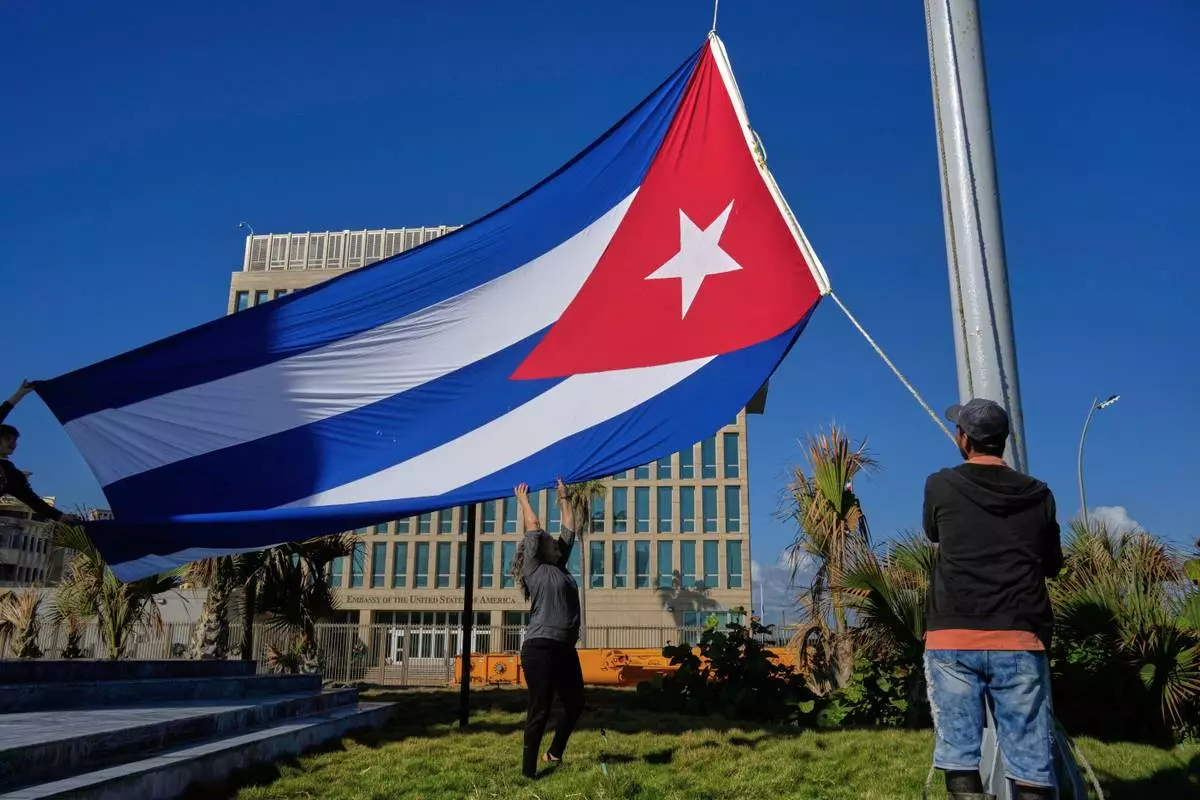
Workers fly the Cuban flag at half-staff at the Anti-Imperialist Tribune near the U.S. Embassy in Havana, Cuba, Monday, Jan. 5, 2026, in memory of Cubans who died two days before in Caracas, Venezuela during the capture of Venezuelan President Nicolas Maduro by U.S. forces. (AP Photo/Ramon Espinosa)