Cooperation in the semiconductor industry between China and South Korea has fueled friendship and empowered bilateral relations, emerging as a shining example of win-win partnership.
The heart of this partnership lies in Chizhou City of east China's Anhui Province, home to the China-South Korea semiconductor industrial park.
In 2023, the city of Chizhou became a sister city with Gyeongju, the host city of the 32nd APEC Economic Leaders' Meeting. Since then, cooperation between the two cities has flourished.
Ahead of this year's APEC summit, a reporter from China Global Television Network (CGTN) joined a counterpart from Maeil Broadcasting Network (MBN) on a visit to the industrial park to explore how technology is driving bilateral synergy.
The two reporters put on VR glasses to learn about the process of producing semiconductor chips, the foundation of many electronic devices. The immersive experience helped to break down the complex process of semiconductor production in an understandable and interesting presentation.
Even for a semiconductor powerhouse like South Korea, chip manufacturing is difficult to develop alone.
China, with its policy support and vast market, has achieved rapid development in semiconductor technology. This allows the two countries to build a shared environment for semiconductor cooperation.
In Chizhou, the cooperative industrial park has become a crucial hub for semiconductor companies from both sides, ranging from chip manufacturing to integrated circuit testing.
At one company operating in the park, engineers from South Korea were testing chips.
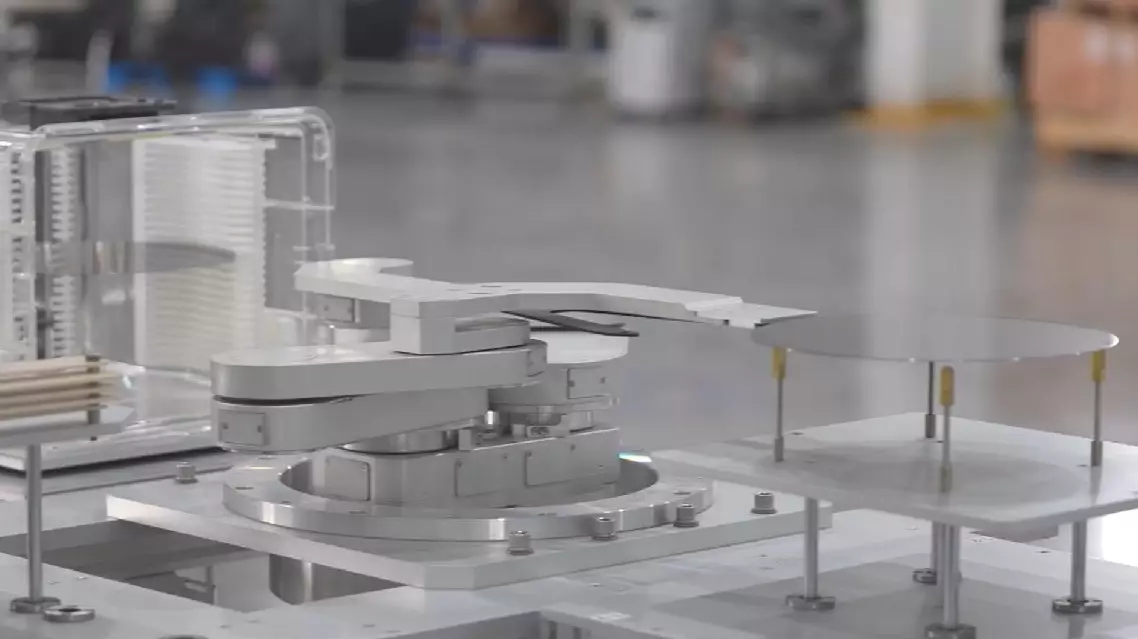
"This robot is driving the control part only for testing now. The real products for sales are there," said Park Hyoun-bin, an electrical equipment engineer of Anhui Hongxin Vacuum Equipment Co.
Through joint research and development, the company provides customized services in the fields of semiconductors and photovoltaic systems.
"This product is made with bearing parts. We need to insert it from the inside. We need to check it against the drawing." said Lee Won-gu, a design engineer of the company.
China's vast market offers tremendous growth opportunities for semiconductor businesses, while the active involvement of South Korean enterprises contributes to local economic development.
Win-win industrial cooperation can also lead to closer connections between people from both countries. During their time in China, Lee said hotpot has become his favorite Chinese food, while Park said he loves all things culinary from China.
Semiconductor cooperation contributes to China-South Korea bilateral relations