TOKIO--(BUSINESS WIRE)--Okt 27, 2025--
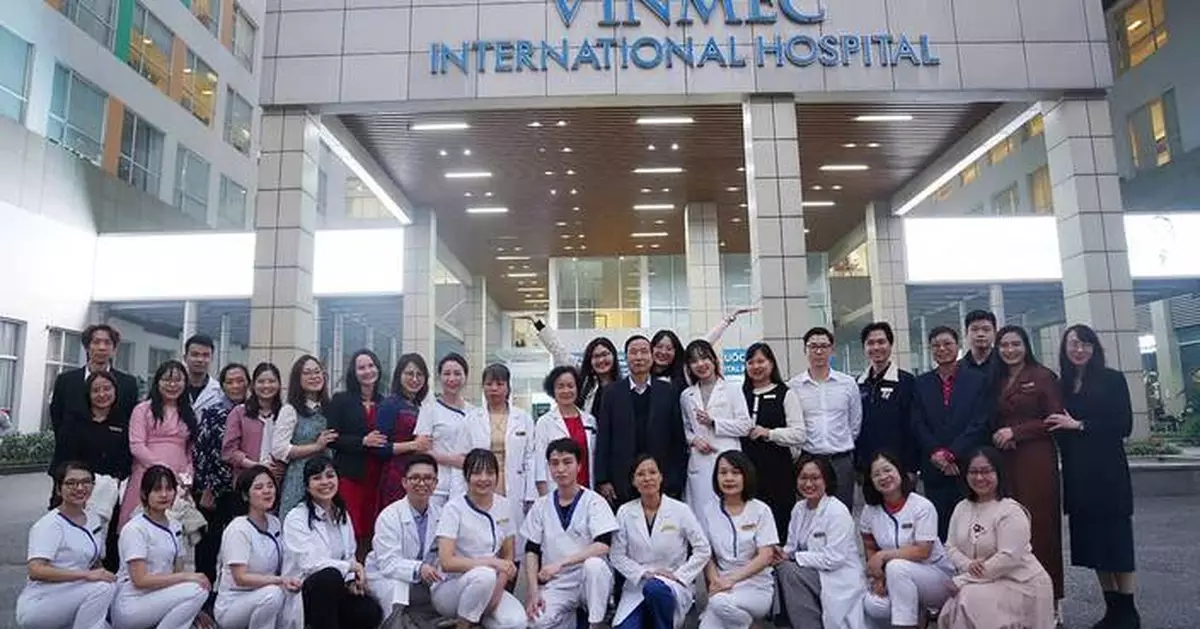
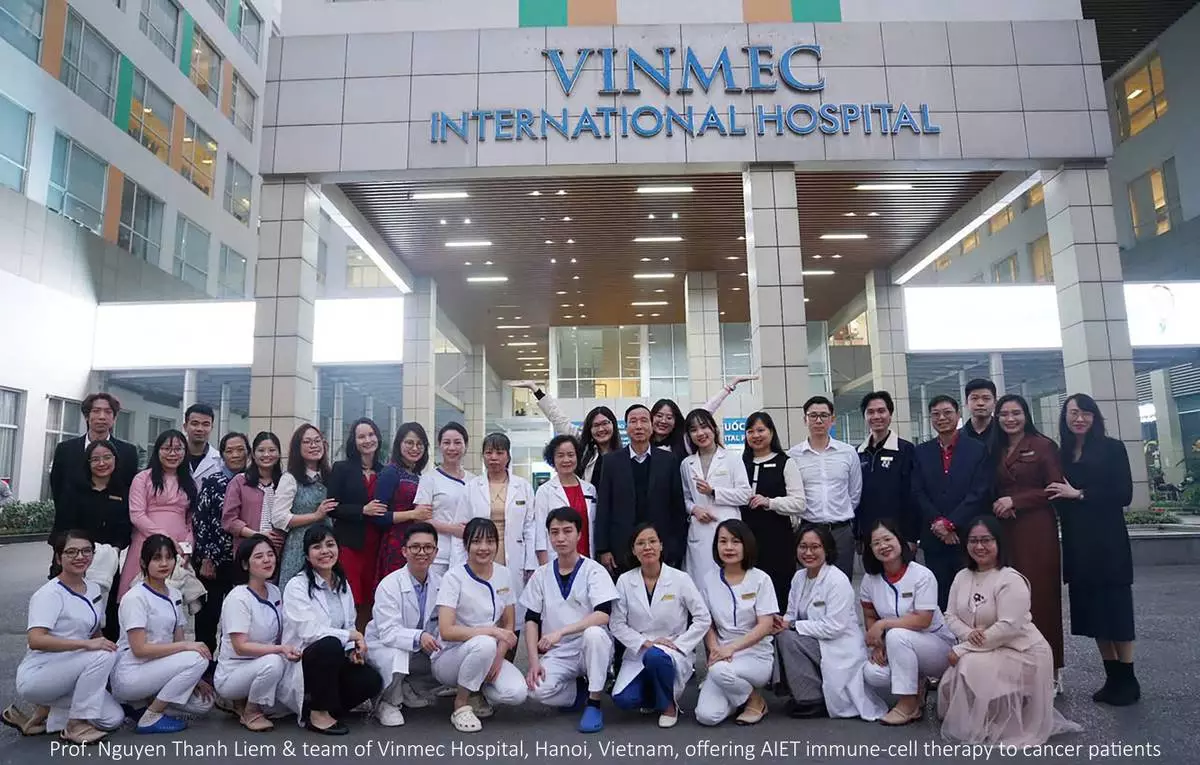
Eine deutlich verlängerte Überlebenszeit und verbesserte Lebensqualität (QoL) für Krebspatienten durch autologe zellbasierte AIET-Immuntherapie unter Verwendung der natürlichen Killerzellen (NK-Zellen) und T-Zellen der Patienten hat das Vinmec Hospital in Vietnam zu einem aufstrebenden Ziel für den Medizintourismus zur Krebsbehandlung in asiatischen Ländern gemacht. Diese Errungenschaft wurde von Professor Nguyen Thanh Liem auf der NCRM NICHE 2025 vorgestellt. Er würdigte die Unterstützung beim Technologietransfer durch die GN Corporation aus Japan, die die Umsetzung standardisierter AIET-Protokolle in Übereinstimmung mit den japanischen Vorschriften und damit den Patienten bei Vinmec seit 2018 den Zugang zu dieser Behandlung ermöglicht.
Diese Pressemitteilung enthält multimediale Inhalte. Die vollständige Mitteilung hier ansehen: https://www.businesswire.com/news/home/20251026034477/de/
AIET nutzt die NK- und T-Lymphozyten der Patienten neben konventionellen Behandlungen, erhöht die Wirksamkeit der Behandlung um 20–30 % und verbessert die Überlebensrate erheblich. In zwei klinischen Studien am Vinmec-Krankenhaus in den Jahren 2016–2021 bei Krebserkrankungen im fortgeschrittenen Stadium:
Bei über 100 Patienten, darunter Patienten mit Brust-, Eierstock-, Schilddrüsen- und Kopf-Hals-Krebs im Spätstadium, verbesserte AIET die Überlebensraten und erhöhte die Lebensqualität mit messbaren Verbesserungen in folgenden Bereichen: Appetit, Schlaflosigkeit, Schläfrigkeit, Mundtrockenheit, Übelkeit, Depressionen, Müdigkeit, allgemeine Symptombelastung und körperliche Funktionsfähigkeit. AIET verursacht praktisch keine Nebenwirkungen, da es die eigenen Zellen der Patienten ohne fremde biologische Materialien oder Feeder-Schichten während der Kultivierung verwendet.
Die AIET-Zelltherapie wurde offiziell gemäß den vietnamesischen Vorschriften für regenerative Medizin, die sich an Japans Gesetz zur Sicherheit regenerativer Medizin orientieren, für die Anwendung im Vinmec-Krankenhaus zugelassen.
AIET-Behandlungsprotokoll (ein Zyklus):
Je nach Fortschreiten und Stadium der Krebserkrankung können 2 bis 6 Zyklen erforderlich sein, so Prof. Liem.
Prof. Liem wüdigte die herausragende interdisziplinäre Forschung der GN Corporation, die zu Zelltherapie-Lösungen geführt hat, die an Krankenhäuser und Institute weltweit übertragen werden.
Die GN Corporation und NCRM arbeiten nun mit SoulSynergy Ltd. aus Mauritius, einem zugelassenen Zellverarbeitungslabor, zusammen, um Patienten in Mauritius und auf dem afrikanischen Kontinent in Japan praktizierte zellbasierte Therapien anzubieten.
Die Ausgangssprache, in der der Originaltext veröffentlicht wird, ist die offizielle und autorisierte Version. Übersetzungen werden zur besseren Verständigung mitgeliefert. Nur die Sprachversion, die im Original veröffentlicht wurde, ist rechtsgültig. Gleichen Sie deshalb Übersetzungen mit der originalen Sprachversion der Veröffentlichung ab.
Originalversion auf businesswire.com ansehen:https://www.businesswire.com/news/home/20251026034477/de/
CONTACT: Samuel JK Abraham
info@gncorporation.com
KEYWORD: JAPAN VIET NAM SOUTHEAST ASIA ASIA PACIFIC
INDUSTRY KEYWORD: SCIENCE BIOTECHNOLOGY RESEARCH SURGERY ONCOLOGY HEALTH HOSPITALS HEALTH TECHNOLOGY
SOURCE: GN Corporation Co Ltd
Copyright Business Wire 2025.
PUB: 10/27/2025 07:13 AM/DISC: 10/27/2025 07:12 AM
http://www.businesswire.com/news/home/20251026034477/de
Professor Nguyen Thanh Liem, Director, Institute of Stem Cell and Genetic Technology Research at Vinmec International Hospital, Hanoi, Vietnam and his team have successfully implemented the technology transfer of Autologous Immune Enhancement Therapy (AIET) from Japan and demonstrated its safety and efficacy as an adjuvant in combination with standard of care in various cancers. Prof. Liem, a renowned pediatric surgeon and pioneer in regenerative medicine, has received numerous prestigious honors, including the 2018 Nikkei Asia Prize for Science & Technology, the Ho Chi Minh Prize, the Hero of Labor Medal, and the Vietnamese Talent Award. In 2025, he was named among the world's most influential scientists by a Stanford University, USA research group. Driven by a passion to improve cancer patients’ quality of life, Prof. Liem successfully brought AIET to Vietnam in 2018 transferred by GN Corporation, Japan, technically supported by Nichi-In Centre for Regenerative Medicine (NCRM)
KAMPALA, Uganda (AP) — Uganda’s presidential election was plagued by widespread delays Thursday in addition to a days-long internet shutdown that has been criticized as an anti-democratic tactic in a country where the president has held office since 1986.
Some polling stations remained closed for up to four hours after the scheduled 7 a.m. start time due to “technical challenges," according to the nation's electoral commission, which asked polling officers to use paper registration records to ensure the difficulties did not “disenfranchise any voter.”
President Yoweri Museveni, 81, faces seven other candidates, including Robert Kyagulanyi, a musician-turned-politician best known as Bobi Wine, who is calling for political change.
The East African country of roughly 45 million people has 21.6 million registered voters. Polls were expected to close at 4 p.m., but voting was extended one hour until 5 p.m. local time. Results are constitutionally required to be announced in 48 hours.
In the morning, impatient crowds gathered outside polling stations expressing concerns over the delays. Umaru Mutyaba, a polling agent for a parliamentary candidate, said it was “frustrating” to be waiting outside a station in the capital Kampala.
“We can’t be standing here waiting to vote as if we have nothing else to do," he said.
Wine, the candidate, alleged electoral fraud, noting that biometric voter identification machines were not working at polling places and claiming that there was “ballot stuffing.”
Wine wrote in a post on X that his party's leaders had been arrested. “Many of our polling agents and supervisors abducted, and others chased off polling stations,” the post said.
Museveni told journalists he was notified that biometric machines weren't working at some stations and that he supported the electoral body's decision to revert to paper registration records. He did not comment on allegations of fraud.
Ssemujju Nganda, a prominent opposition figure and lawmaker seeking reelection in Kira municipality, told The Associated Press he had been waiting in line to vote for three hours.
Nganda said the delays likely would lead to apathy and low turnout in urban areas where the opposition has substantial support. "It’s going to be chaos,” he said.
Nicholas Sengoba, an independent analyst and newspaper columnist, said delays to the start of voting in urban, opposition areas favored the ruling party.
Emmanuel Tusiime, a young man who was among dozens prevented from entering a polling station in Kampala past closing time said the officials had prevented him from participating.
“My vote has not been counted, and, as you can see, I am not alone," he said he was left feeling “very disappointed.”
Uganda has not witnessed a peaceful transfer of presidential power since independence from British colonial rule six decades ago.
Museveni has served the third-longest term of any African leader and is seeking to extend his rule into a fifth decade. The aging president’s authority has become increasingly dependent on the military led by his son, Muhoozi Kainerugaba.
Museveni and Wine are reprising their rivalry from the previous election in 2021, when Wine appealed to mostly young people in urban areas. With voter turnout of 59%, Wine secured 35% of the ballots against Museveni’s 58%, the president’s smallest vote share since his first electoral campaign three decades ago.
The lead-up to Thursday's election produced concerns about transparency, the possibility of hereditary rule, military interference and possible vote tampering.
Uganda's internet was shut down Tuesday by the government communications agency, which cited misinformation, electoral fraud and incitement of violence. The shutdown has affected the public and disrupted critical sectors such as banking.
There has been heavy security leading up to voting, including military units deployed on the streets this week.
Amnesty International said security forces are engaging in a “brutal campaign of repression,” citing a Nov. 28 opposition rally in eastern Uganda where the military blocked exits and opened fire on supporters, killing one person.
Museveni urged voters to come out in large numbers during his final rally Tuesday.
“You go and vote, anybody who tries to interfere with your freedom will be crushed. I am telling you this. We are ready to put an end to this indiscipline,” he said.
The national electoral commission chairperson, Simon Byabakama, urged tolerance among Ugandans as they vote.
“Let us keep the peace that we have,” Byabakama said late Wednesday. “Let us be civil. Let us be courteous. Let’s be tolerant. Even if you know that this person does not support (your) candidate, please give him or her room or opportunity to go and exercise his or her constitutional right."
Authorities also suspended the activities of several civic groups during the campaign season. That Group, a prominent media watchdog, closed its office Wednesday after the interior ministry alleged in a letter that the group was involved in activities “prejudicial to the security and laws of Uganda.”
Veteran opposition figure Kizza Besigye, a four-time presidential candidate, remains in prison after he was charged with treason in February 2025.
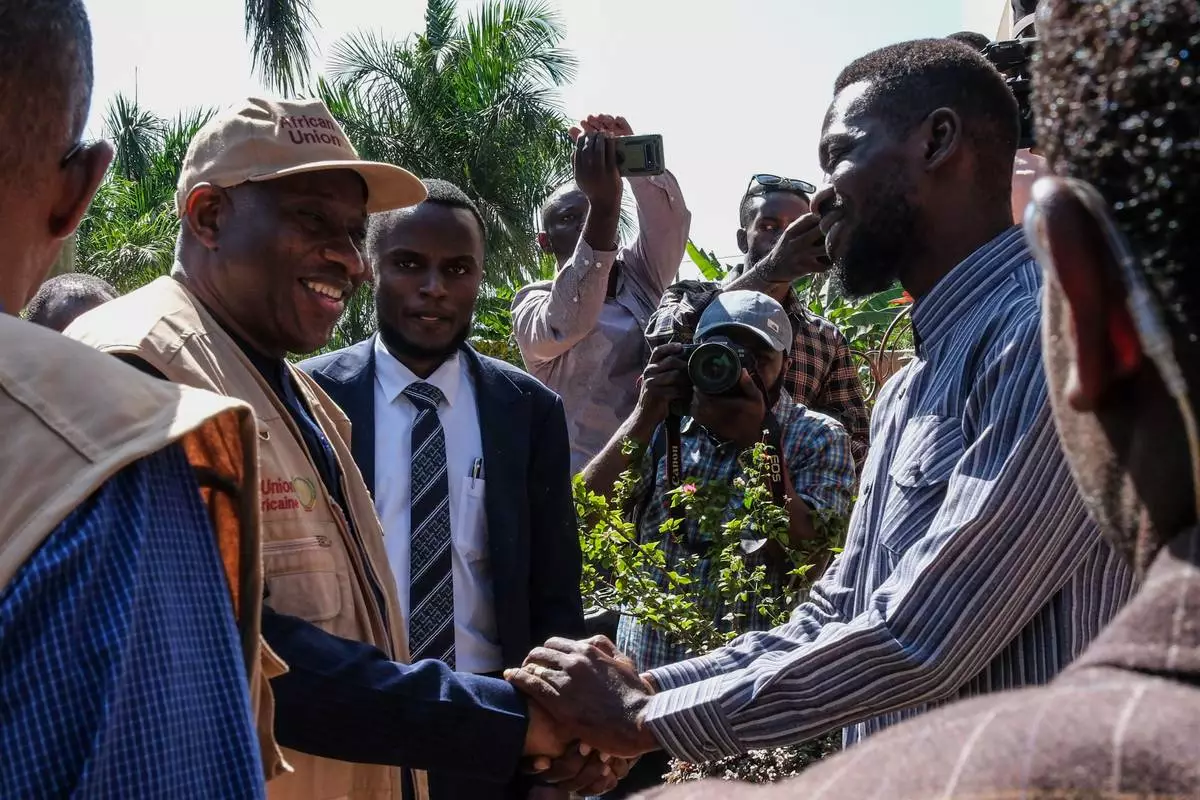
Uganda opposition presidential candidate Robert Kyagulanyi Ssentamu, known as Bobi Wine, right, greets election observers, including former Nigerian President Goodluck Jonathan, at his home in Magere village on the outskirts of Kampala, Uganda, Wednesday, Jan. 14, 2026. (AP Photo/Hajarah Nalwadda)
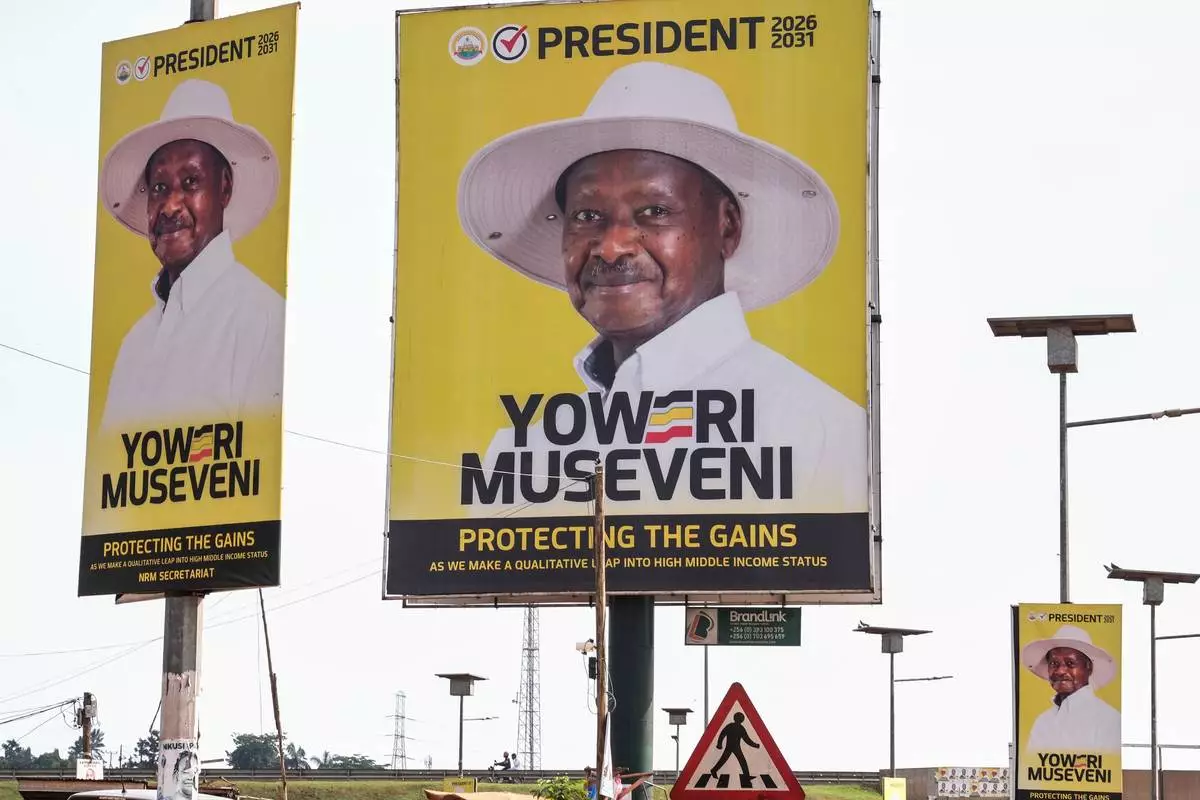
Billboards of Uganda President and National Resistance Movement (NRM) presidential candidate Yoweri Museveni are seen in Kampala, Uganda, Tuesday, Jan. 13, 2026. (AP Photo/Samson Otieno)
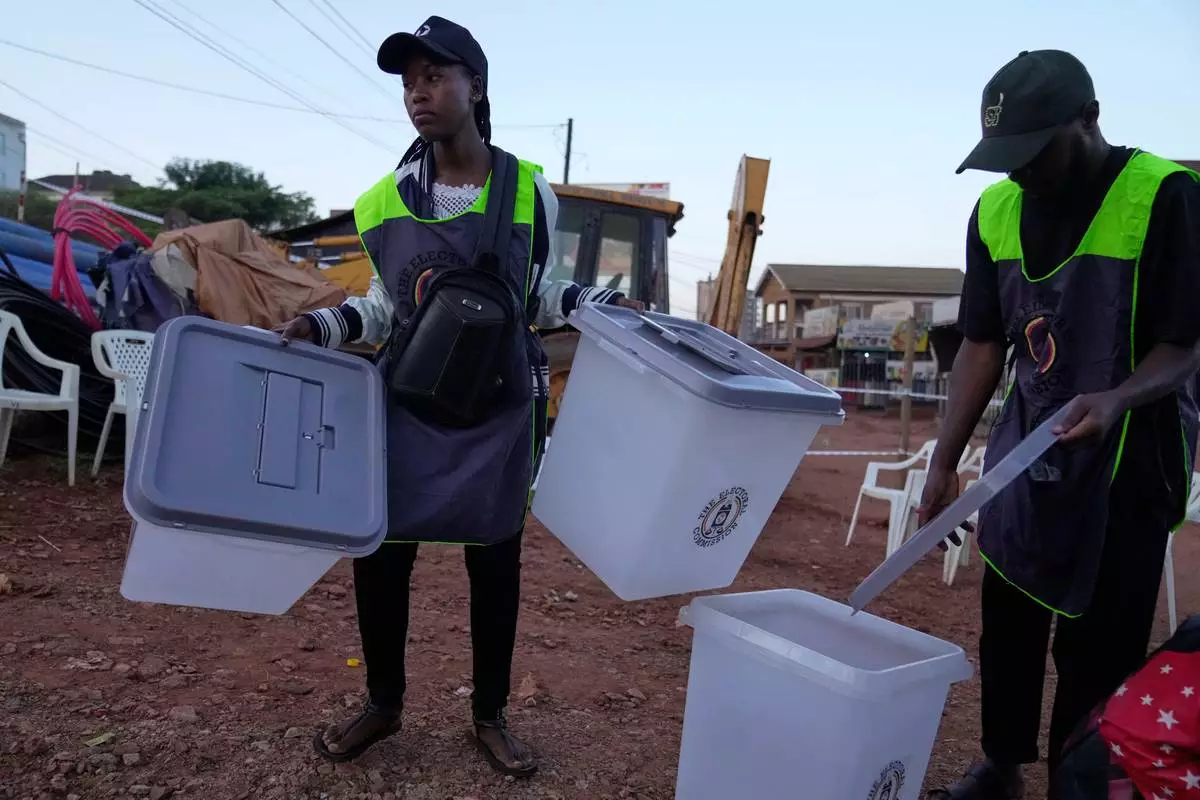
Electoral workers deliver ballot boxes to a polling station during presidential election in Kampala, Uganda, Thursday, Jan. 15, 2026. (AP Photo/Brian Inganga)
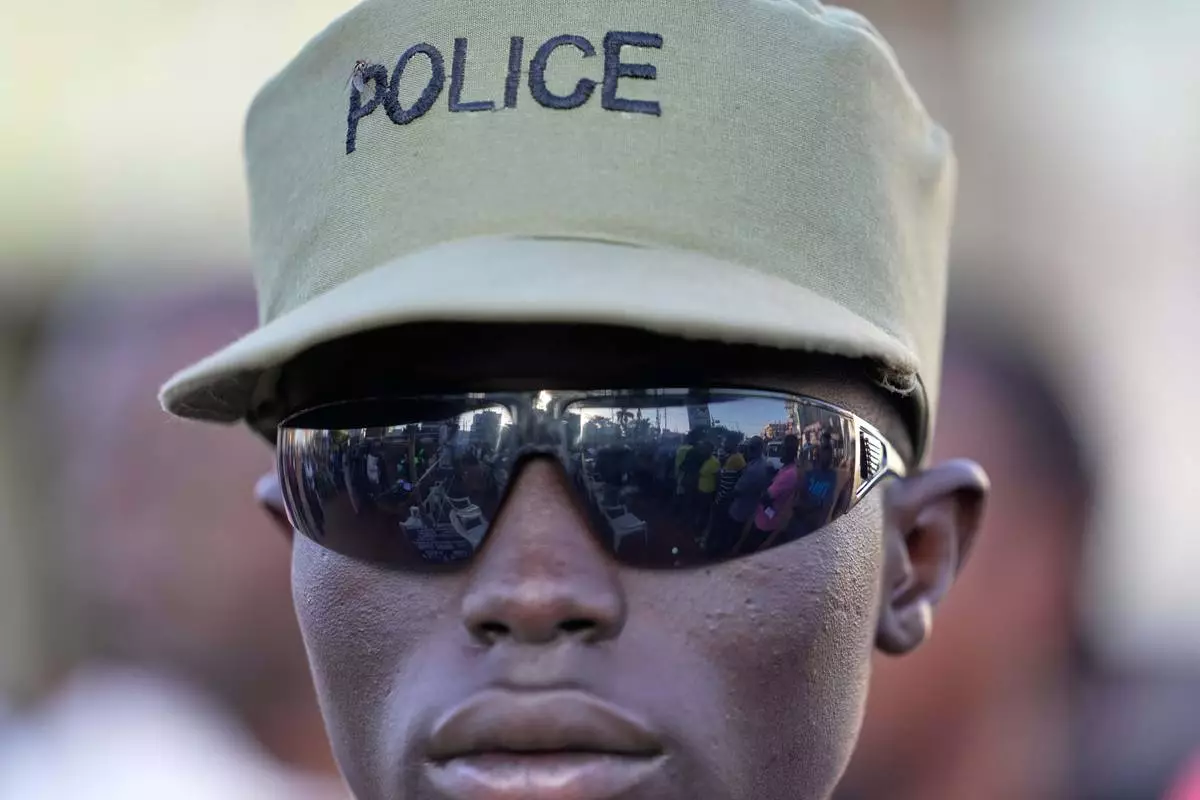
Voters are reflected in a police officer's sunglasses as they wait in line after voting failed to start on time due to system failures during presidential election in Kampala, Uganda, Thursday, Jan. 15, 2026. (AP Photo/Brian Inganga)
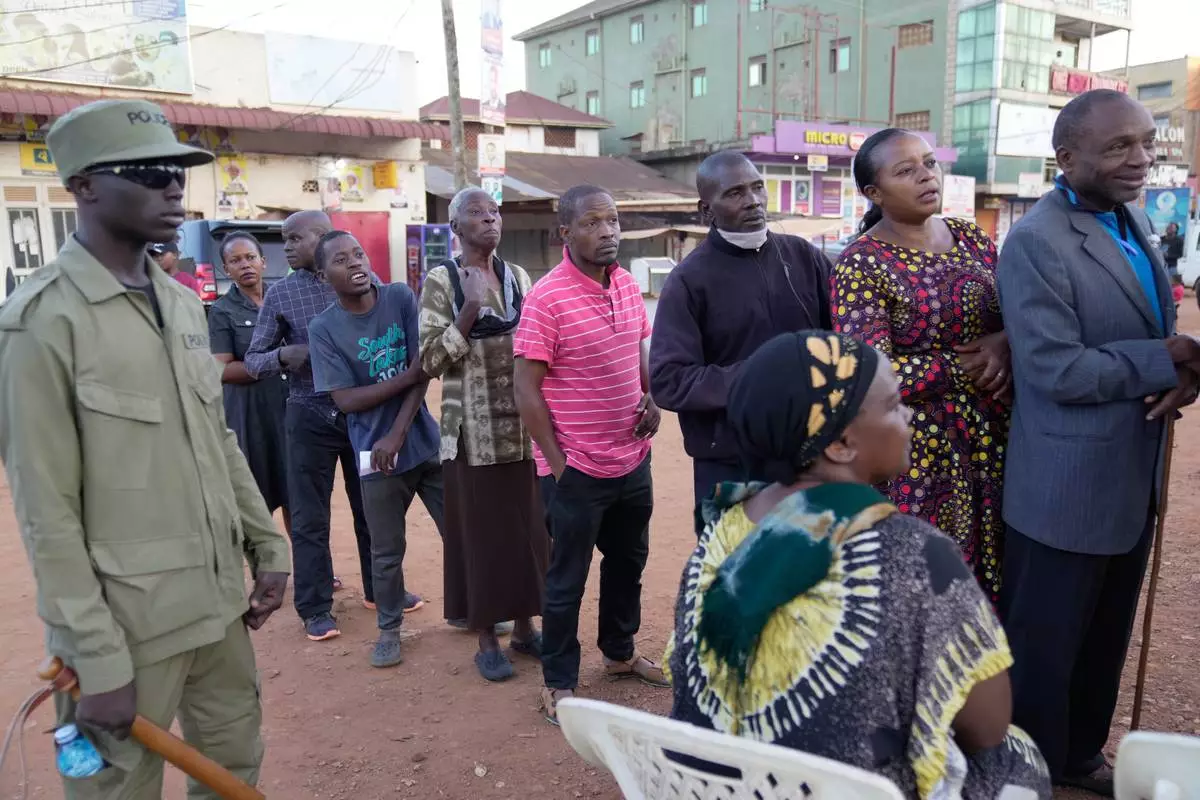
Voters wait to cast their ballots during the presidential election in Kampala, Uganda, Thursday, Jan. 15, 2026. (AP Photo/Brian Inganga)